0

In this article

  • Why Do You Need a Special Newborn Baby Hair Brush?
  • What to Look for in a Comb for Newborn Baby?
  • Types of Infant Grooming Tools
  • How to Safely Use a Hair Brush for Newborn Baby?
  • Managing Cradle Cap with Your Grooming Tools
  • Maintaining Your Baby Grooming Tools
  • Conclusion

Best Comb & Hair Brush for Newborn Baby Guide

Discover the best comb and hair brush for your newborn baby. Learn how to care for delicate scalps, manage cradle cap safely, and choose gentle, non-toxic grooming tools.
 

article image

Dr. Nallapu Siri

Welcoming a newborn into your home brings immense joy, along with a series of questions about how to care for them in the best possible way. From feeding to bathing, every small detail plays a role in keeping your baby comfortable and healthy. One often overlooked yet important item in your baby care routine is a high-quality newborn baby hair brush.

While it may seem like a simple accessory, the right grooming tools can support your baby’s scalp health in subtle but meaningful ways. Newborns have delicate skin, fine hair follicles, and soft areas on the scalp that require a very gentle approach. Using appropriate tools may help keep the scalp clean, evenly distribute natural oils, and reduce the chances of dryness or flaking.

Whether your baby has a full head of hair or very fine strands, gentle brushing can also become a calming part of your daily routine. It offers a moment of bonding while helping you care for your baby’s sensitive scalp safely and comfortably. In this guide, we will explore what to look for in a newborn hair brush and comb, along with safe and practical tips for everyday use.
 

Why Do You Need a Special Newborn Baby Hair Brush?

You might wonder why a regular, smaller version of an adult brush is not suitable for your baby. The reason lies in the unique structure of an infant’s scalp. A baby’s skin is thinner and more delicate, which makes it more prone to irritation, dryness, or minor scratches if handled with the wrong tools.

Using a specialised newborn baby hair brush may offer several gentle care benefits:

  • Stimulates Blood Flow: Light brushing can help stimulate tiny blood vessels beneath the scalp. This may support healthy circulation and contribute to overall scalp wellness.
  • Relaxes the Baby: The scalp contains many sensitive nerve endings. A soft, gentle brushing motion can feel soothing and may help calm your baby, especially as part of a bedtime routine.
  • Helps Manage Cradle Cap: Cradle cap, also known as infantile seborrhoeic dermatitis, is a common condition that causes flaky or scaly patches on the scalp. A soft-bristled brush may help loosen these flakes gently without irritating the skin.
  • Protects the Fontanelles: Babies have soft areas on their heads where the skull bones have not yet fused. Specially designed baby brushes are made to be gentle enough to glide over these areas without applying unnecessary pressure.

Choosing the right brush ensures that grooming remains a safe, soothing, and beneficial part of your baby’s daily care routine.
 

What to Look for in a Comb for Newborn Baby?

When choosing grooming tools for your baby, safety and gentleness should always come first. Unlike adult combs, which often have rigid and sharper teeth, a comb for newborn baby care needs to be specifically designed to protect delicate skin and fine hair.
Here are the key features to consider when selecting a newborn comb or brush:

1. Ultra-Soft Bristles

When choosing a brush, softness is essential. The bristles should be gentle enough to glide over the scalp without causing friction or discomfort. Natural goat hair is often considered a preferred option because it is soft, lightweight, and may help distribute the scalp’s natural oils evenly.

Soft, BPA-free silicone brushes are another suitable choice, particularly during bath time. They may help in gently loosening flakes associated with cradle cap while remaining easy to clean and hygienic.

2. Rounded, Gentle Teeth

If you are selecting a newborn baby hair comb, pay close attention to the shape of the teeth. They should be wide-set and have smooth, rounded tips rather than sharp edges.

This design allows the comb to move through fine or slightly damp hair without pulling, snagging, or scratching the scalp. It also helps ensure that grooming remains a comfortable and safe experience for your baby.

3. Non-Toxic Materials

Choosing safe materials is especially important for newborn care. Babies may be more sensitive to certain chemicals, so it is advisable to look for grooming tools made from gentle, non-toxic materials.

Options such as natural wood or food-grade, BPA-free plastic are commonly preferred. A wooden newborn hair comb may also help reduce static, allowing the hair to stay smoother and easier to manage during grooming.

4. Ergonomic Design

Practical design plays an important role in everyday use. Since you may often be holding your baby with one hand, a comb or brush with an easy-to-grip, ergonomic handle can make the process more controlled and comfortable.

A well-designed baby comb for newborn care allows for better handling, helping you groom your baby gently and safely without unnecessary slips or pressure on the scalp.
 

Types of Infant Grooming Tools

To care for your baby’s hair and scalp effectively, it can be helpful to have a small set of specialised tools. Many parents choose a newborn baby comb set, which usually includes different options suited for various needs as the baby grows.

The Soft-Bristle Brush

This is the most commonly used newborn brush, often made from natural goat hair or very soft synthetic fibres. It is best suited for use on dry hair.

A soft-bristle brush may help smooth fine hair, gently stimulate the scalp, and provide a calming, massage-like effect. It is not intended for detangling but rather for maintaining scalp comfort and evenly spreading natural oils.

The Detangling Comb

A wide-toothed comb is useful if your baby has thicker, longer, or slightly curly hair. Babies often lie on their backs for extended periods, which can sometimes lead to mild tangling, especially at the back of the head.

Using a gentle, wide-toothed comb allows you to ease out knots carefully without pulling or causing discomfort to the scalp.

The Cradle Cap Brush or Comb

This type of tool is typically made from soft silicone and features flexible, rounded bristles or massage nubs. It is mainly used during bath time along with a mild baby shampoo.

It may help loosen and lift the flaky patches associated with cradle cap in a gentle manner. Some grooming sets also include a fine-toothed comb designed specifically to remove loosened flakes from the hair after washing.
 

How to Safely Use a Hair Brush for Newborn Baby?

Even when using the gentlest tools, the way you handle your baby’s hair and scalp matters. A calm, careful approach helps ensure grooming is both safe and soothing.

Step 1: Choose the Right Time

Pick a moment when your baby is relaxed and comfortable. After a warm bath or just before bedtime often works well. If your baby seems unsettled, it is best to wait until they are calm.

Step 2: Prepare the Hair

If your baby has thicker hair that tangles easily, avoid brushing it completely dry. Lightly dampen the hair with water or use a mild, baby-safe leave-in conditioner if recommended. This may help reduce pulling and make brushing smoother.

Step 3: Use Gentle Strokes

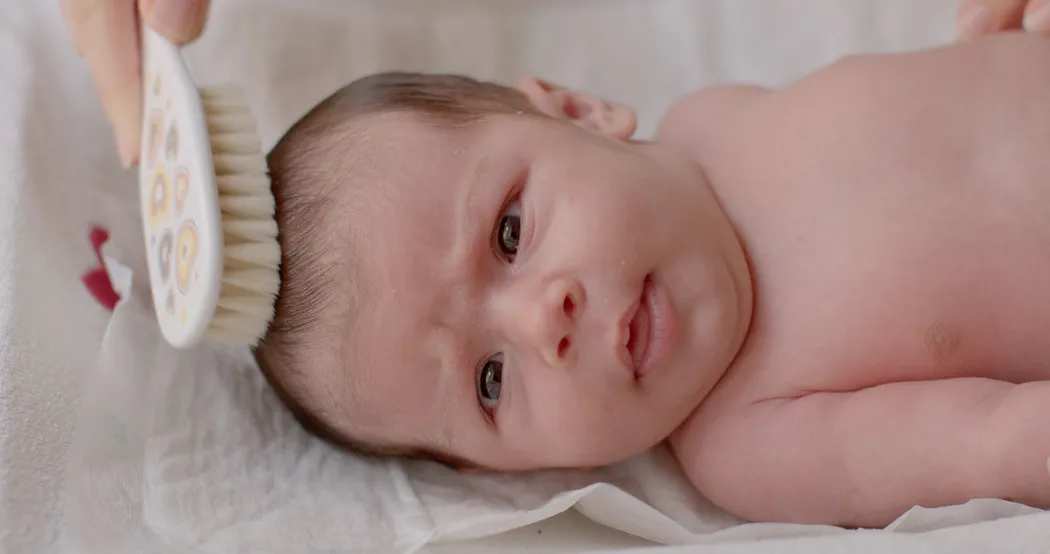
Hold the newborn baby hair brush lightly and use soft, downward strokes. Start from the crown and move towards the forehead and the back of the head. Avoid applying pressure, especially over the soft areas of the scalp.

Step 4: Detangle Carefully

If you come across a knot, switch to a newborn baby hair comb. Gently hold the hair near the scalp to minimise pulling, and slowly work through the tangle from the ends. This helps reduce discomfort and protects delicate hair roots.
 

Managing Cradle Cap with Your Grooming Tools

Cradle cap is a common and harmless condition seen in many infants. It is not contagious and does not reflect poor hygiene. While it often clears on its own, some parents prefer to gently manage the flakes using appropriate grooming tools.

Here is a safe and commonly recommended approach for managing cradle cap at home:

  • Apply an emollient: Around 15 to 30 minutes before bath time, apply a small amount of mineral oil, baby oil, or petroleum jelly to the affected areas. This may help soften the flakes and make them easier to remove.
  • Wash the scalp: Gently wet your baby’s hair and apply a mild, tear-free baby shampoo. This helps cleanse the scalp without causing irritation.
  • Massage the scalp: While the shampoo is still on the scalp, use a soft silicone newborn baby hair brush to massage in gentle circular motions. This may help loosen the softened flakes without damaging the skin.
  • Comb it out: After rinsing, use a fine-toothed cradle cap comb to carefully lift away any loosened flakes from the hair. Work slowly and gently to avoid pulling.
  • Avoid picking: Do not scratch or pick at the flakes using your fingers or any sharp objects. This may irritate the skin and increase the risk of infection.

If the cradle cap appears severe, spreads beyond the scalp, or shows signs of redness or inflammation, it is advisable to consult your paediatrician for further guidance.

Explore Cradle Cap Remedies Here
 

Maintaining Your Baby Grooming Tools

Keeping your baby’s grooming tools clean is an important part of maintaining scalp health. Over time, brushes and combs can collect oil, dead skin, and dust, which may lead to bacterial buildup if not cleaned regularly.

  • Cleaning a comb: Wash your baby’s comb once a week using warm water and a small amount of mild baby shampoo. Gently scrub between the teeth with a soft brush, rinse thoroughly, and allow it to air dry completely before the next use.
  • Cleaning a soft-bristle brush: Natural bristle brushes need gentle handling. Lightly swirl the bristles in a bowl of warm, soapy water without soaking the entire brush. Rinse carefully, press out excess water with a clean towel, and place the brush bristle-side down to air dry. Avoid soaking wooden handles, as this may cause damage over time.
     

Conclusion

Caring for your baby’s hair and scalp can be simple and reassuring with the right approach. Choosing a well-designed newborn baby hair brush and a gentle, rounded comb may help protect delicate skin, support scalp comfort, and assist in managing common concerns such as cradle cap.

By focusing on soft, non-toxic materials and using light, careful strokes, grooming can become a calm and enjoyable part of your daily routine. It also offers a valuable moment of connection, helping your baby feel relaxed and cared for.

If you ever notice unusual scalp changes or have concerns, it is always best to consult your paediatrician for guidance tailored to your baby’s needs.

Explore Baby Hair & Scalp Care Essentials Here
 

FAQS 

When can I start brushing my newborn's hair?

You can begin from the first few days after birth. Even if your baby has very fine hair, using a soft-bristled brush with light, gentle strokes may help keep the scalp clean and comfortable. The key is to avoid pressure and keep the motion soothing.

How often should I use a newborn baby hair brush?

A soft brush can be used once daily, often as part of a calming routine. However, hair washing should generally be limited to a few times a week to prevent the scalp from becoming dry. Gentle, consistent care is usually sufficient.

Can I use a regular adult comb on my baby?

It is best to avoid this. Adult combs tend to have harder, sharper teeth that may irritate or scratch a baby’s delicate scalp. A comb designed specifically for infants, with smooth and rounded tips, is a safer option.

Does brushing a baby's hair make it grow faster?

Brushing may support scalp circulation and overall hair health, but it does not directly increase the speed of hair growth. Hair growth patterns, thickness, and texture are largely influenced by genetics.

What is the safest way to remove cradle cap?

A gentle approach works best. Applying a small amount of oil to soften the flakes, followed by washing with a mild baby shampoo, and then using a soft brush or fine-toothed comb to remove loosened flakes may help. Avoid scratching or picking, as this can irritate the skin.

Apollo 247 Floating Action Button