0

Best Fever Syrups for Babies (Age-Wise Guide)

Discover the best fever syrups for babies by age, including safe paracetamol and ibuprofen options, dosage tips, and when to consult a doctor for your child.

article image

Dr. Mayank

When your little one feels unusually warm to the touch and seems cranky or lethargic, it is completely natural for parents to feel anxious. Fever is one of the most common symptoms in childhood, and it is actually a healthy sign that your child’s immune system is actively fighting off an infection.

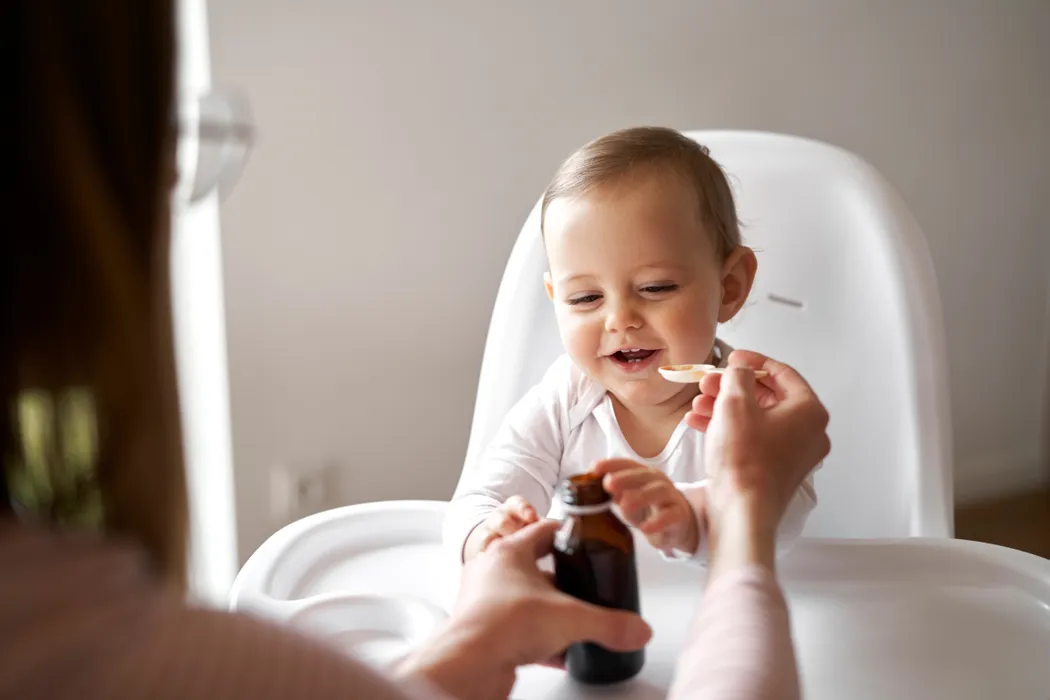
While a low-grade temperature might simply require some extra rest, cuddles, and fluids, a higher temperature often calls for a reliable baby fever syrup to help bring down the heat and relieve discomfort. However, knowing exactly which medication is safe - and in what dosage - can be confusing. In this comprehensive guide, we will walk you through everything you need to know to safely choose and administer the right syrup for baby fever, carefully broken down by your child’s age.
 

Understanding Fever in Babies and Children

Before rushing to the medicine cabinet, it helps to understand what constitutes a fever. According to the Centers for Disease Control and Prevention (CDC) and paediatricians worldwide, a normal body temperature is around 98.6°F (37°C). A true medical fever is generally defined as a core body temperature of 100.4°F (38°C) or higher.

It is highly recommended to use a digital thermometer to get an accurate reading. Rectal thermometers provide the most accurate measurements for infants, while forehead or ear thermometers are generally fine for older toddlers and children.

Important Note: The goal of using a baby fever syrup is not necessarily to bring the temperature down to a perfect "normal," but rather to relieve your child's discomfort so they can sleep, eat, and stay hydrated.
 

The Right Syrup for Baby Fever: Active Ingredients

When shopping over the counter, you will find dozens of brands. However, nearly all safe, paediatrician-approved pediatric fever reducers rely on one of two active ingredients:

1. Acetaminophen (Paracetamol): Safe for most infants and children from birth (under doctor supervision) and onwards. It effectively reduces pain and fever.

2. Ibuprofen: A nonsteroidal anti-inflammatory drug (NSAID) that relieves pain, reduces inflammation, and lowers fever. It is generally 
approved only for babies who are at least 6 months old.

Never give Aspirin: Never give aspirin to children or teenagers, as it is linked to Reye's syndrome, a rare but life-threatening condition.
 

Load more products

Age-Wise Guide to Baby Fever Syrup

The most crucial rule in pediatric medicine is that dosing should always be based on your child's weight, not just their age. However, age helps determine which active ingredients are safe to use. Below is an age-by-age breakdown to help you navigate finding the correct baby fever syrup.

1. Newborns and Young Infants (0 to 3 Months)

If your baby is under three months old, a fever of 100.4°F (38°C) or higher is considered a medical emergency. Because young infants do not have fully developed immune systems, minor infections can become severe very quickly.

  • You should never give a new born baby fever syrup without direct instructions from a paediatrician.
  • Whether you are wondering about a 1 month baby fever syrup or looking for a 2 month baby fever syrup, the medical advice remains identical: take your baby to the doctor or emergency room immediately.
  • Even if your baby is slightly older and you need a 3 month baby fever syrup (or search for a 3 months baby fever syrup), a medical evaluation is absolutely critical before giving them any over-the-counter medicine.

2. Older Infants (4 to 6 Months)

Once babies cross the three-month mark, fevers are generally less life-threatening, though they still require careful monitoring. Acetaminophen is the standard medication for this age group.

  • If your child is teething or experiencing a mild post-vaccination fever, you might look for a 4 month baby fever syrup. Always use the oral syringe provided with the package.
  • When giving a 5 month baby fever syrup, ensure you check your child's most recent weight to calculate the correct milligrams (mg).
  • By the time your baby hits the half-year mark, you can discuss using a 6 month baby fever syrup with your doctor. Ibuprofen is generally approved at this age. Whether the packaging refers to it as a 6 months baby fever syrup or infant drops, make sure you double-check the concentration on the label.

3. Active Babies (7 to 11 Months)

In this phase, babies are crawling, putting objects in their mouths, and exploring the world. This often exposes them to mild viral bugs like the common cold.

  • For a 7 month baby fever syrup, you can safely use either infant acetaminophen or infant ibuprofen.
  • If you are purchasing an 8 month baby fever syrup (often labeled generally, but suitable as an 8 months baby fever syrup), make sure you do not mix different medicine brands to avoid accidental double dosing.
  • Parents seeking a 9 months baby fever syrup should remember to prioritize hydration. Offer extra breastmilk, formula, or small sips of water.
  • When administering a 10 month baby fever syrup, always check if the formula is an infant drop or a standard syrup. Any 10 months baby fever syrup will have specific milliliter (mL) lines on the syringe.
  • Finally, for an 11 month baby fever syrup (or an 11 months baby fever syrup), continue relying strictly on your baby's weight. Transitioning from drops to liquid suspension can sometimes confuse parents, so consult your pharmacist if you are unsure.

4. Toddlers (1 to 2 Years)

Toddlers are incredibly active, and a sudden fever can make them unusually fussy and sleepy. The formulations for this age group often change from concentrated infant drops to standard liquid suspensions.

  • When selecting a one year baby fever syrup, you will find fruit-flavoured liquid suspensions that are easier for toddlers to swallow.
  • If your child is a bit older, a 2 year baby fever syrup will require a larger volume (mL) per dose. A standard dosing cup or a larger oral syringe is usually included in the box. Keep the medicine out of reach, as the sweet flavours can tempt toddlers to drink it like juice.

5. Preschoolers and Young Kids (3 to 7 Years)

As children enter preschool and grade school, they are exposed to a whole new world of germs. Luckily, their bodies are better equipped to handle fevers.

  • For a 3 years baby fever syrup or a 4 years baby fever syrup, liquid suspensions remain highly popular, as many young kids still struggle to swallow pills.
  • A 5 years baby fever syrup will require a significantly larger dose than what you gave them as an infant. Never guess the dose; read the weight chart on the back of the bottle.
  • When dealing with older children, a 6 year baby fever syrup or a 7 years baby fever syrup might be swapped out for chewable tablets or orally disintegrating powders. However, liquid syrups remain highly effective and fast-acting for quick relief at these ages.
     
Load more products

Important Safety Tips When Giving Fever Medicine

Administering medication to a child requires caution. Keep these best practices in mind:

  • Always Use the Provided Device: Never use a regular kitchen spoon to measure a baby fever syrup. Kitchen spoons are not standardised and can lead to dangerous under-dosing or over-dosing. Always use the dosing syringe or cup that comes with the medicine.
  • Keep Them Hydrated: Fever causes the body to lose fluids rapidly. Focus on offering plenty of breastmilk, formula, water, or pediatric electrolyte solutions to prevent dehydration.
  • Dress Lightly: Do not bundle up a feverish child in heavy blankets, even if they have the chills. Dress them in a single layer of light, breathable clothing to help heat escape their body.
  • Store Safely: Always store syrups up high and out of sight in a locked cabinet. Child-resistant caps are helpful but not completely child-proof.
     
Load more products

Conclusion

Choosing the right fever syrup for your baby does not have to be overwhelming when you understand the basics. Focus on age-appropriate options, rely on trusted ingredients like paracetamol and ibuprofen (when suitable), and always dose according to your child’s weight for maximum safety.

While fever is usually a normal response to infection, your priority should be keeping your child comfortable, hydrated, and well-rested. And if you ever feel unsure about symptoms, dosage, or medication choice, do not hesitate to consult your paediatrician. With the right knowledge and careful approach, you can manage your child’s fever confidently and safely.

Disclaimer: This article is for informational purposes only and does not constitute medical advice. Always consult your pediatrician or a qualified healthcare provider before giving any medication to your child.
 

FAQs

When should I worry about my baby's fever?

You should seek immediate medical attention if your baby is under 3 months old and has a fever of 100.4°F (38°C) or higher. For older babies, call a doctor if the fever exceeds 104°F (40°C), lasts for more than 3 days, or is accompanied by severe lethargy, a stiff neck, persistent vomiting, or a rash.

Can I alternate acetaminophen and ibuprofen?

While some paediatricians suggest alternating acetaminophen and ibuprofen for stubborn fevers, this can easily lead to dosing mistakes. Always consult your paediatrician before alternating medications, and keep a strict written log of what time each medicine was given.

How long does it take for a baby fever syrup to work?

Most liquid fever reducers take about 30 to 45 minutes to begin working, with peak effectiveness occurring at around the 1-to-2-hour mark. Remember, the medicine may only lower the temperature by 1 to 2 degrees, which is completely normal and usually enough to make the child comfortable.

Should I wake my sleeping baby to give them fever medicine?

Generally, no. Sleep is one of the best ways for your child's body to heal and fight off an infection. If your baby is resting peacefully, there is usually no need to wake them up just to administer medication.

What is the safest syrup for baby fever?

Both acetaminophen and ibuprofen are considered highly safe when given at the correct, weight-based dosage. Acetaminophen is safe from 2 months of age (with a doctor's okay), while ibuprofen is strictly for babies 6 months and older. Never give your child aspirin.

Apollo 247 Floating Action Button