0

In this article

  • How Do Pregnancy Tests Work?
  • Types of Home Pregnancy Test Kits
  • When Is the Best Time to Take a Pregnancy Test?
  • How Soon After Sex Can You Take a Pregnancy Test?
  • If You Have Irregular Periods, When Should You Test?
  • Signs That Suggest You Should Take a Pregnancy Test
  • Why Can Testing Too Early Give Incorrect Results?
  • Best Practices for Accurate Pregnancy Testing
  • Interpreting Your Pregnancy Test Results
  • Why Is Morning Urine the Most Reliable?
  • When to See a Doctor?
  • Top Pregnancy Test Kits Available on Apollo Pharmacy
  • 1. Prega News Advance Pregnancy Rapid Single Step Test Kit
  • 2. Prega News Pregnancy Test Kit
  • 3. Firstchek hCG Pregnancy Test Kit 1’s
  • 4. I-Can Pregnancy Kit
  • 5. Dr Morepen Pregnancy Test Kit
  • Understanding Test Sensitivity Levels
  • Pregnancy Testing After IVF or Fertility Treatment
  • Can You Test at Night?
  • Conclusion

Best Time for a Pregnancy Test

Know the best time for a pregnancy test, how it works, when to test after sex, accuracy tips, and the best pregnancy test kits for reliable results.

article image

Apollo Pharmacy

Finding out whether you may be pregnant is a significant moment often filled with excitement, anticipation, and a fair amount of nervousness. While pregnancy test kits are simple to use, the timing of the test plays a massive role in how accurate your result will be. Testing too early can lead to faint lines, confusion, or false negatives.

This comprehensive guide explains the best time to take a pregnancy test, how pregnancy kits work, signs to look for, mistakes to avoid, and what to do after you get your results. It also includes recommended pregnancy kits available on Apollo Pharmacy.

How Do Pregnancy Tests Work?

Before understanding the right time to test, it helps to know what a pregnancy test detects.

The Role of hCG

Home pregnancy tests work by identifying human chorionic gonadotropin (hCG), a hormone produced shortly after a fertilised egg settles into the uterus. This usually happens 6 to12 days after ovulation. Once implantation occurs, hCG levels begin to rise quickly, doubling every couple of days in early pregnancy.

Types of Home Pregnancy Test Kits

Most home kits fall under two broad types:

1. Strip or cassette tests

These require collecting urine and placing drops on a small testing window.

2. Midstream or digital tests

These can be used directly in the urine stream and often provide clearer "Pregnant" or "Not  Pregnant" readings. Although all kits detect hCG, their sensitivities vary, which is why timing your Test correctly is so important.

When Is the Best Time to Take a Pregnancy Test?

1. The Best Time of Day: Use Your First Morning Urine

For the highest chance of an accurate result:

Test using your first urine of the day.

Why this matters:

1.     Overnight, urine becomes naturally concentrated.
2.     hCG levels are highest after several hours of rest.
3.     The chances of a faint or unclear line are significantly reduced.

2. The Best Day: After Your Missed Period

For the most reliable results, Test:

  • One week after your missed period, or
  • At least 14 days after ovulation

Even though some tests claim early detection, many women produce detectable hCG later due to delayed implantation. Testing too soon may give misleading results.

3. Testing Before Your Missed Period and How Reliable Is It?

Some high-sensitivity tests can detect hCG 4 to6 days before your period, but accuracy at this stage is only 50–60%.

Testing early commonly leads to:

  • Very faint lines
  • Unclear or "shadow" results
  • False negatives

To achieve over 99% accuracy, always test after your missed period.

How Soon After Sex Can You Take a Pregnancy Test?

A pregnancy test cannot detect pregnancy immediately after intercourse.

Here's what really happens:

  • Fertilisation: within 24 hours after sex
  • Implantation: about 6 to12 days later
  • Detectable hCG: around 10 to 14 days after ovulation

So, if you test too early after intercourse, the result will be negative even when conception has occurred.

If You Have Irregular Periods, When Should You Test?

For women with unpredictable cycles, pinpointing ovulation can be tricky. Here are practical options:

Option 1: Test 21 days after unprotected sex

This timeframe ensures that enough hCG is present if pregnancy has occurred.

Option 2: Test if you notice persistent early signs

Common early pregnancy symptoms include:

  • Tender or swollen breasts
  • Mild cramps
  • Fatigue
  • A sudden increase in urination
  • Light spotting
  • Nausea

If these continue for about a week, a test may be helpful.

Option 3: Use ovulation prediction kits

These kits help identify fertile days, making it easier to estimate when your next period is due.

Signs That Suggest You Should Take a Pregnancy Test
 

Even before your period is late, your body may signal hormonal changes. Look out for:

1. Missed period

The most reliable early sign of pregnancy.

2. Implantation spotting

Light pink or brown spotting that lasts a day or two can occur 10 to14 days after conception.

3. Breast changes

Tenderness, enlargement, or darkening of the areola.

4. Frequent urination

Early hormonal changes increase blood flow to the kidneys.

5. Morning sickness

Nausea may start around the 4th to 6th week of pregnancy.

6. Unusual fatigue

Progesterone increases can cause sleepiness or exhaustion.
If you notice several of these together, consider testing even before your expected period

Why Can Testing Too Early Give Incorrect Results?

Timing is everything. Testing too soon may lead to:

1. False Negatives

This happens when:

  • hCG levels are too low to detect
  • Urine is diluted
  • The Test is taken incorrectly
  • Implantation occurred later than expected

2. Confusing Evaporation Lines

Grey or colourless lines may appear if the Test is read after the recommended time window.

3. Chemical Pregnancy Detection

Very early pregnancies may fail before implantation progresses. Testing too early may miss this, causing unnecessary emotional stress.

Best Practices for Accurate Pregnancy Testing

To ensure dependable results:

  • Always use the first morning urine
  • Avoid drinking excess water before testing
  • Follow the test instructions carefully
  • Check the expiry date
  • Wait for the recommended reading time (usually 3 to 5 minutes)

If unsure, repeat the Test after 48 to 72 hours
Digital tests can help remove guesswork.

Interpreting Your Pregnancy Test Results

1. Positive Result

A result showing:

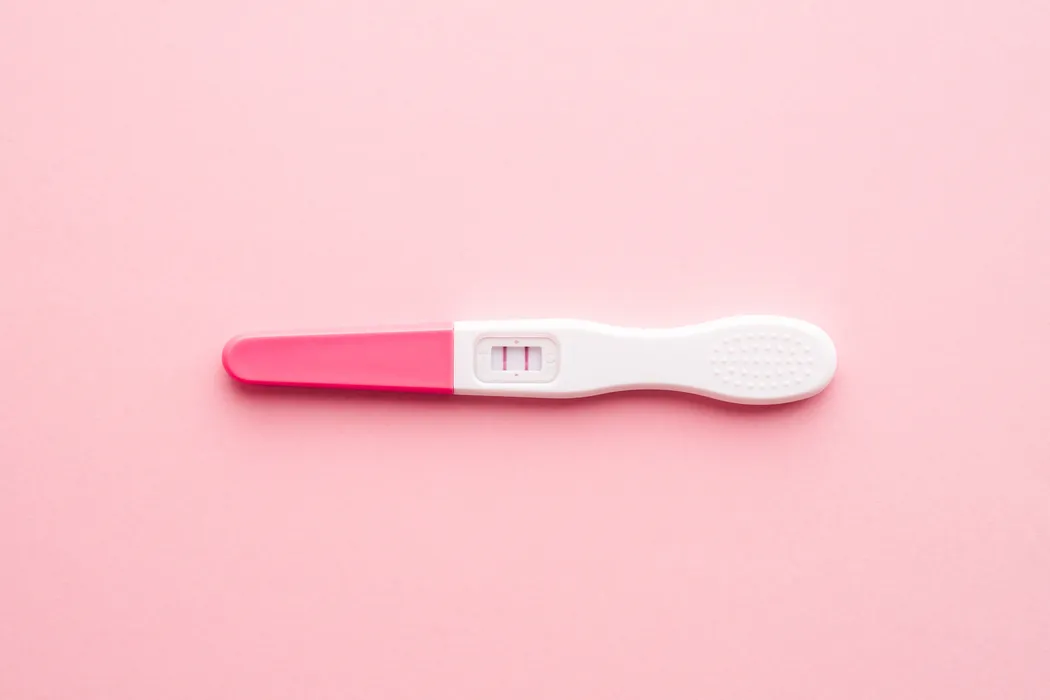
  • Two pink/blue lines
  • A "+" symbol
  • The word "Pregnant"
  • Is almost always accurate, even if the line is faint.

Next steps:

  • Schedule a visit with your gynaecologist
  • Start prenatal vitamins with folic acid
  • Avoid alcohol, smoking, and unnecessary medication

2. Negative Result

A negative test does not always mean you're not pregnant.
If negative:

  • Retest after 2 to 3 days
  • Consider stress, travel, illness, or hormonal changes as causes of delay
  • Visit a doctor if your period does not arrive after a week

3. Invalid Result

If the control line is missing, the Test did not work. Use a fresh kit.

Why Is Morning Urine the Most Reliable?

Your body continuously produces hCG, but morning samples are more concentrated. This is especially important in a very early pregnancy.

You may test anytime if:

  • You're more than 2 weeks late
  • hCG levels are already high (5 to 6 weeks pregnant)
  • You're using a highly sensitive digital kit

When to See a Doctor?
 

Speak to a healthcare professional if:

  • Your period is late by more than 10 to 14 days
  • You get mixed test results
  • You have pregnancy symptoms despite negative tests
  • You experience heavy bleeding or severe pain
  • A blood test or ultrasound may be needed.

Blood hCG Tests

Blood tests pick up tiny amounts of hCG and can detect pregnancy 7 to 10 days after ovulation.

Top Pregnancy Test Kits Available on Apollo Pharmacy

Apollo Pharmacy offers a range of reliable pregnancy test kits that provide quick, private, and easy at-home testing. Here's a simplified overview of the top options available.

1. Prega News Advance Pregnancy Rapid Single Step Test Kit

A convenient midstream test that doesn't require a dropper or cup. Results appear in minutes, making it ideal for quick, mess-free testing.

Buy Prega News Advance Rapid Single Step Test Kit Here

2. Prega News Pregnancy Test Kit

A classic, affordable strip test that detects hCG levels with clear line indicators. Best used after a missed period.

Buy Prega News Pregnancy Test Kit

3. Firstchek hCG Pregnancy Test Kit 1’s

A rapid device that checks the hCG hormone levels in urine. Best results with the first morning urine sample. The method requires only 2 drops of urine & gives clear results within 5 minutes. Two pink lines indicate a positive result, while 1 pink line indicates a negative pregnancy result. 

Buy Firstchek hCG Urine Pregnancy Test Kit Here

4. I-Can Pregnancy Kit

It is a one-step urine pregnancy test device. The test gives the best result when checked on a missed period. Avoid excess fluid intake before sample taking to ensure accuracy of the test result. 

Buy I-can Pregnancy Kit Here

5. Dr Morepen Pregnancy Test Kit

An easy and simple-to-use kit. Detects hCG hormone level in as few as 3 drops of urine. It can be used to check pregnancy at any time of the day. It gives results in 5 minutes, where two purple lines indicate positive and 1 line indicates a negative pregnancy.

Buy Dr Morepen Pregnancy Test Kit Here 

Understanding Test Sensitivity Levels

Highly sensitive tests are helpful for early detection, but early testing may still be confusing.

Sensitivity LevelEarliest Detection
10 mIU/mL4–6 days before missed period
20–25 mIU/mLOn the day of the missed period
40–50 mIU/mL3–7 days after missed period

Pregnancy Testing After IVF or Fertility Treatment

  • After IUI: Test after 14 days
  • After IVF: Test on day 12 to 14 post-transfer

Testing too early may detect hCG from trigger injections, causing false positives.

Can You Test at Night?
 

Yes, but accuracy may drop if:

  • You have consumed a lot of liquids
  • It's before your missed period
  • Your urine is diluted

If you need to test at night, avoid drinking excessive fluids for a few hours beforehand.

Conclusion

A pregnancy test can be a life-changing moment. Knowing when to test helps you avoid unnecessary stress, improve accuracy, and build confidence in your results. Whether you are planning for pregnancy or trying to understand a delayed period, timing your Test correctly makes the entire experience smoother and more reassuring.
For trusted, easy-to-use pregnancy test kits delivered to your doorstep, explore the full range available on Apollo Pharmacy and choose the one that best fits your comfort and timing needs.

Explore products for pregnancy tests

Apollo 247 Floating Action Button