Chicken pox is often considered a common childhood illness, but in newborn babies it requires much closer medical attention. Because newborn immune systems are still immature, the infection can become more serious than it is in older children. If a newborn is exposed to chicken pox, parents should act quickly because early medical care can significantly reduce complications. This guide explains how chicken pox affects newborn babies, what symptoms to watch for, how treatment works, and how infection can be prevented.
Chicken Pox in Newborn Baby:Symptoms,Treatment & Prevention
Learn the symptoms of chicken pox in newborn babies, how it spreads, treatment options, warning signs, and prevention tips for newborn safety.
Dr. Yusuf
What Causes Chicken Pox in a Newborn?
Chicken pox is caused by the varicella-zoster virus. It spreads very easily through:
- Direct contact with skin blisters
- Coughing or sneezing droplets
- Contact with infected secretions
A newborn may become infected in three main ways.
1. Exposure During Pregnancy
If a mother develops chicken pox during pregnancy, especially early pregnancy, the baby may be affected before birth. This is called congenital varicella.
2. Exposure Around Delivery
This is the highest-risk period. If a mother develops chicken pox from 5 days before delivery to 2 days after birth, the newborn may not receive enough protective maternal antibodies.
This can lead to severe neonatal infection.
3. Exposure After Birth
A newborn may also catch chicken pox from:
- Family members
- Siblings
- Caregivers
- Visitors with active infection
Because the virus spreads easily, close contact matters.


Symptoms of Chicken Pox in a Newborn
Symptoms may appear 10 to 21 days after exposure, depending on timing.
Early Symptoms
Before rash appears, babies may show:
- Fever
- Fussiness
- Poor feeding
- Unusual sleepiness
According to Mayo Clinic guidance, any fever in a newborn requires urgent medical review.
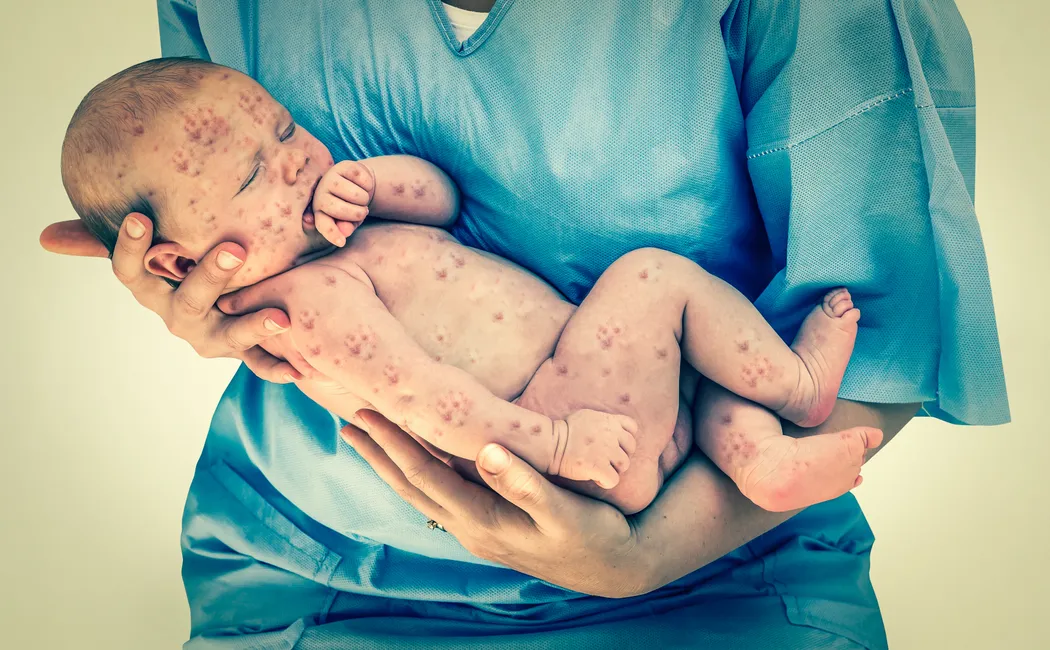
Rash Stages
The rash usually develops in stages.
Stage 1: Red Spots
Small red bumps usually begin on:
- Face
- Chest
- Back
Stage 2: Fluid-Filled Blisters
The bumps turn into tiny blisters.
These are fragile and may break easily.
Stage 3: Scabbing
Blisters dry and form crusts.
New spots may continue appearing for several days.
Rash Distribution in Newborns
In newborns, rash may also appear on:
- Scalp
- Mouth
- Diaper area
Because newborn skin is delicate, lesions may look widespread quickly.
Why Is Chicken Pox More Serious in Newborns?
Newborn immunity is not fully developed. Because of this, the virus may spread beyond the skin. Possible complications include:
- Pneumonia
- Brain inflammation
- Liver involvement
- Secondary bacterial skin infection
According to Centers for Disease Control and Prevention guidance, newborn chicken pox always requires careful medical assessment.
Treatment for Chicken Pox in Newborn Babies
Treatment depends on age, severity, and exposure timing.
Varicella-Zoster Immune Globulin (VZIG)
If a baby has been exposed but symptoms are not yet severe, doctors may give VZIG. This contains protective antibodies that help reduce disease severity. It works best soon after exposure.
Antiviral Treatment
If infection is confirmed or severe, doctors may prescribe:
Acyclovir: This antiviral medicine helps slow viral replication. In newborns, it is often given in hospital.
Supportive Home Care
If the baby is medically stable, supportive care helps comfort.
Fever Care
Only use fever medicine if prescribed by a doctor. Never give aspirin.
Skin Care
Dress the baby in loose soft cotton clothing.
Prevent Scratching
Soft mittens may help prevent scratching and skin infection.
Hydration
Continue regular breastfeeds or formula feeds. Frequent feeding supports hydration.
Breastfeeding During Maternal Chicken Pox
Breast milk still offers valuable antibodies. If the mother has active lesions, feeding plans should be discussed with a doctor depending on lesion location and exposure risk.
Prevention of Chicken Pox in Newborns
Because newborns cannot receive chicken pox vaccine yet, protection depends on surrounding immunity.
Vaccinate Family Members
The best protection is ensuring close family members are vaccinated.
Avoid Exposure to Active Infection
Anyone with active chicken pox should avoid contact until all lesions crust over.
Hand Hygiene
Wash hands carefully before touching the baby.
Limit Sick Visitors
Avoid contact with anyone who may have active infection.
When to Seek Emergency Medical Care?
Seek urgent medical help if your baby develops:
- Fever of 100.4°F (38°C) or higher
- Breathing difficulty
- Poor feeding
- Weakness
- Blisters with pus
- Very low activity
Signs of Serious Breathing Difficulty
Urgent signs include:
- Fast breathing
- Chest pulling in
- Grunting
- Bluish lips
These need immediate emergency care.
When to Consult a Paediatrician Immediately?
Call a doctor urgently if:
- Exposure is known
- Rash appears
- Mother develops chicken pox near delivery
Early treatment matters most.

Conclusion
Chicken pox in newborn babies needs immediate medical attention because newborn immunity is still developing. With early recognition, antiviral treatment, and careful monitoring, most babies recover well. The most important step is never waiting if exposure or symptoms are suspected.
FAQS
FAQS
Can a newborn survive chickenpox?
Yes, a newborn can absolutely survive chickenpox, provided they receive immediate and appropriate medical care. Early intervention with immune globulin (VZIG) or antiviral medications significantly increases the chances of a full recovery and prevents life-threatening complications.
Can I continue to breastfeed if I have chickenpox?
If you develop chickenpox, you should pump your breast milk and have a healthy caregiver feed it to your baby. Breast milk contains essential antibodies that can help protect the infant, but bringing the baby close to your body exposes them to the infectious lesions on your skin. Consult your doctor for personalised advice.
How long is a baby with chickenpox contagious?
A person with chickenpox is contagious from 1 to 2 days before the rash appears until all the blisters have completely dried and crusted over. This process usually takes about a week to 10 days. During this time, the baby should be kept away from other infants, pregnant women, and individuals with weakened immune systems.
Do newborns get the chickenpox vaccine?
No, newborns do not receive the chickenpox (varicella) vaccine. Their immune systems are not mature enough to respond safely to the live-attenuated virus used in the vaccine. The Centers for Disease Control and Prevention (CDC) recommends the first dose of the chickenpox vaccine be given between 12 and 15 months of age.
What is the difference between neonatal varicella and standard chickenpox?
Standard chickenpox usually occurs in older children and is typically a mild illness. Neonatal varicella specifically refers to an infection in a newborn (usually acquired when the mother is infected just before or after delivery). Neonatal varicella is far more dangerous due to the infant's lack of maternal antibodies and immature immune system, leading to a much higher risk of internal organ damage.


