0

In this article

  • What is Cradle Cap?
  • Why You Need a Cradle Cap Brush?
  • Step-by-Step: How to Safely Remove Flakes
  • Tips for Choosing the Right Cradle Cap Brush for Babies
  • Cleaning and Maintaining Your Tools
  • When to See a Paediatrician?
  • Conclusion

Cradle Cap Brush: How to Safely Remove Flakes

Learn how to use a cradle cap brush safely to remove flakes from your baby’s scalp. Discover step-by-step care tips, do’s and don’ts, and when to see a doctor.
 

article image

Apollo Pharmacy


Bringing a new baby home is an exciting journey filled with wonderful firsts. But as you admire your little one, you might notice thick, yellow, or brown crusty patches on their scalp. If you are seeing these scaly patches, don't panic! This is a very common and harmless condition known as cradle cap.

While cradle cap does not bother your baby, many parents prefer to gently remove the flakes for aesthetic and hygiene reasons. The safest and most effective tool for this delicate job is a cradle cap brush.

In this comprehensive guide, we will explore what causes these flaky patches, how to treat them at home, and exactly how to use a cradle cap brush safely without irritating your baby’s sensitive skin.
 

What is Cradle Cap?


Before we talk about removing the flakes, it is helpful to understand what you are dealing with. In the medical world, cradle cap is known as infantile seborrheic dermatitis. It is essentially the baby version of dandruff.

Common signs of cradle cap include:

  • Thick, crusty, yellow, or brown scales on the scalp.
  • Greasy or oily patches of skin.
  • Mild redness underneath the flakes.

Similar flakes appearing on the eyebrows, ears, or diaper area (less common).

What Causes It?

Many parents worry that cradle cap is caused by poor hygiene, but this is entirely a myth. According to medical experts, cradle cap is completely natural. It is generally believed to be caused by a combination of two things:

1. Overactive Sebaceous Glands: Hormones passed from the mother to the baby before birth can cause the baby’s oil (sebaceous) glands to produce too much sebum (oil).
2. A Natural Yeast: A harmless yeast called Malassezia grows in the sebum along with bacteria, which can lead to the buildup of dead skin cells and oily flakes.

The good news? Cradle cap is not contagious, it is not an allergic reaction, and it rarely causes your baby any discomfort or itchiness.
 

Why You Need a Cradle Cap Brush?

If cradle cap is harmless, why do anything at all? Most cases will clear up on their own by the time your baby turns one. However, thick scale buildup can sometimes trap sweat, harbour bacteria, or simply look unsightly.

You should never pick or scratch at the flakes with your fingernails. Scratching can pull out your baby’s hair, cause microscopic tears in their fragile skin, and introduce bacteria, leading to an infection.

Instead, a specialised tool is recommended. A cradle cap brush for babies is designed specifically with ultra-soft, flexible bristles - usually made of food-grade silicone or soft sponge. These brushes provide gentle friction that naturally loosens the scales from the scalp without scratching the skin.


Explore Baby Scalp Care Products Here
 

Step-by-Step: How to Safely Remove Flakes

Treating your baby's scalp requires patience and a gentle touch. Follow this paediatrician-approved, step-by-step routine to safely clear away the buildup.

Step 1: Soften the Scales with Oil

Before you begin brushing, you need to soften the crusty patches. Dry brushing can pull the skin and cause discomfort.

Massage a small amount of pure mineral oil, baby oil, or petroleum jelly onto your baby’s scalp. (Note: Many dermatologists now advise against using olive oil, as it may actually feed the yeast that causes cradle cap).

Leave the oil on the scalp for 10 to 15 minutes. This allows the thick scales to loosen and lift away from the skin.

Step 2: Wash the Scalp

Once the flakes are softened, it is time for a bath.

  • Wet your baby’s head with warm water.
  • Apply a small amount of gentle, tear-free baby shampoo.

Lather the shampoo into the hair. The soap will help wash away the excess oil so it does not remain on the scalp and cause more buildup.

Step 3: Gently Massage and Brush

While the shampoo is still on your baby's head, reach for your brush.

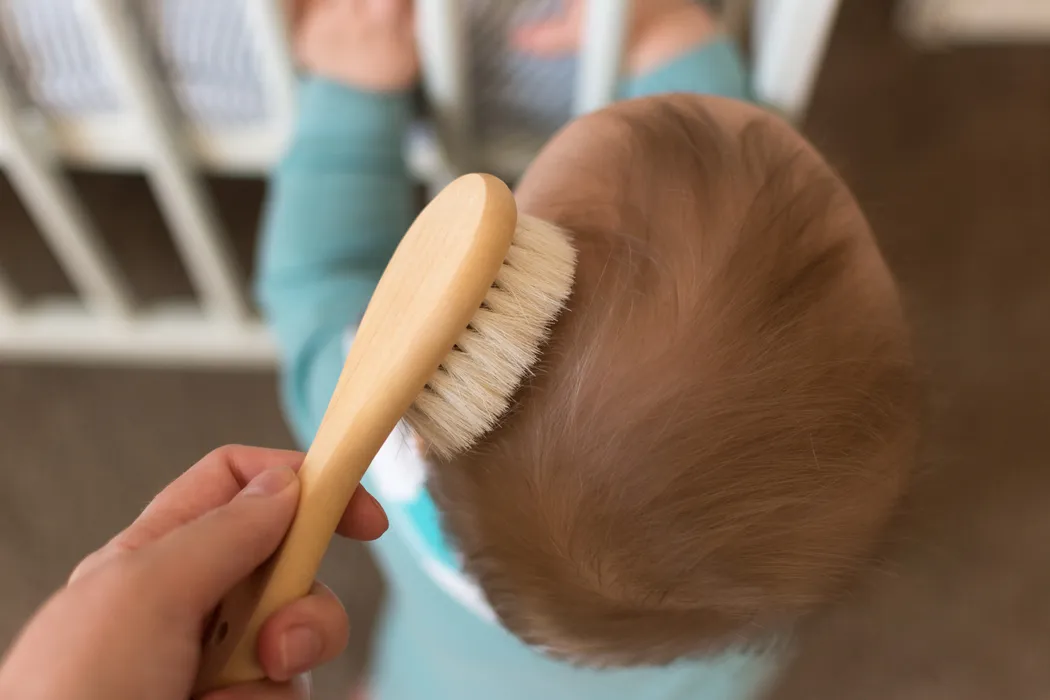
Using your cradle cap brush, massage the soapy scalp in small, gentle, circular motions. The soft bristles will safely exfoliate the skin and catch the loose flakes.

If your baby has thicker hair or stubborn flakes, you might also use a cradle cap comb. Many baby grooming kits feature a dual-sided tool with a brush on one end and a fine-toothed comb on the other. After brushing, you can gently glide the comb through the hair to catch and lift the loosened scales out of the hair strands. Be extremely careful not to scrape the comb against the actual scalp.

Step 4: Rinse Thoroughly

Rinse your baby’s head thoroughly with warm water, ensuring all the shampoo, oil, and freed flakes are washed away.

Gently pat the head dry with a soft, clean towel. Do not rub vigorously.
 

Tips for Choosing the Right Cradle Cap Brush for Babies

When shopping for baby care items, the options can be overwhelming. If you are looking to buy a cradle cap brush for babies, keep these important features in mind:

  • Material: Look for 100% BPA-free, food-grade silicone. Silicone is naturally anti-bacterial, incredibly soft, and easy to clean.
  • Bristle Texture: The bristles should feel like small, flexible rubber massagers, not stiff plastic.
  • Grip and Handle: Babies are squirmy during bath time! Choose a brush with an ergonomic grip or a suction cup handle so it doesn’t slip out of your soapy hands.
  • Easy to Clean: Avoid brushes with deep, unreachable crevices where water can get trapped, as this can lead to mould growth.
     

Cleaning and Maintaining Your Tools

Because cradle cap involves oil, dead skin, and naturally occurring yeast, keeping your baby’s grooming tools sanitary is crucial.


After every use, wash the brush and the cradle cap comb thoroughly with hot water and antibacterial soap. Ensure you remove any trapped flakes or hair. Let the tools air dry completely in a well-ventilated area before putting them away.

What to Avoid When Treating Cradle Cap?

While treating your baby at home is generally safe, there are a few common mistakes parents should avoid:

  • Do Not Pick: As mentioned earlier, never use your fingernails or tweezers to peel off flakes. Let the water, oil, and brush do the work.
  • Do Not Leave Oil Overnight: Leaving oil on your baby’s head for long periods without washing it out can actually trap more dead skin cells and worsen the condition. Always wash the oil out.
  • Avoid Adult Shampoos: Never use adult dandruff shampoos on a baby unless explicitly instructed by a paediatrician. These contain harsh chemicals (like salicylic acid or strong zinc pyrithione) that are too abrasive for infant skin and can be dangerous if they get into your baby's eyes.
  • Don't Over-Wash: Washing your baby’s hair every single day can dry out their scalp, prompting the sebaceous glands to produce even more oil. Stick to washing the hair two to three times a week.
     

When to See a Paediatrician?

In most cases, cradle cap is harmless and can be managed effectively at home. However, you should consult your baby’s paediatrician if you notice any of the following signs:

The cradle cap spreads beyond the scalp to the face, neck, or body.

  • The affected skin becomes bright red, swollen, or feels hot to the touch.
  • The patches begin to ooze fluid, bleed, or crust over with pus (signs of infection).
  • Your baby seems excessively itchy, agitated, or uncomfortable.
    The condition does not improve at all after a few weeks of consistent home treatment.

Your paediatrician can prescribe a mild medicated shampoo or a gentle hydrocortisone cream if the inflammation is severe.
 

Conclusion

Cradle cap is a common and harmless condition that many babies experience in their early months. While it may look concerning, it rarely causes discomfort and usually clears up on its own over time. Using a cradle cap brush correctly can help gently remove flakes, keep your baby’s scalp clean, and improve its appearance without causing irritation.
The key is to be patient, gentle, and consistent with your care routine. Avoid harsh methods, follow safe practices, and always prioritise your baby’s comfort. With the right approach, you can manage cradle cap effectively at home.
If you ever notice signs of irritation, infection, or no improvement despite regular care, do not hesitate to consult your paediatrician. A little extra guidance can ensure your baby’s scalp stays healthy and protected.
 

Apollo 247 Floating Action Button