Cradle Cap vs Dry Skin: Key Differences to Look For
If you are still struggling to determine whether it is cradle cap vs dry skin, comparing the two side-by-side can make it much easier. Here is a breakdown of the defining features of each:
Colour of the Flakes
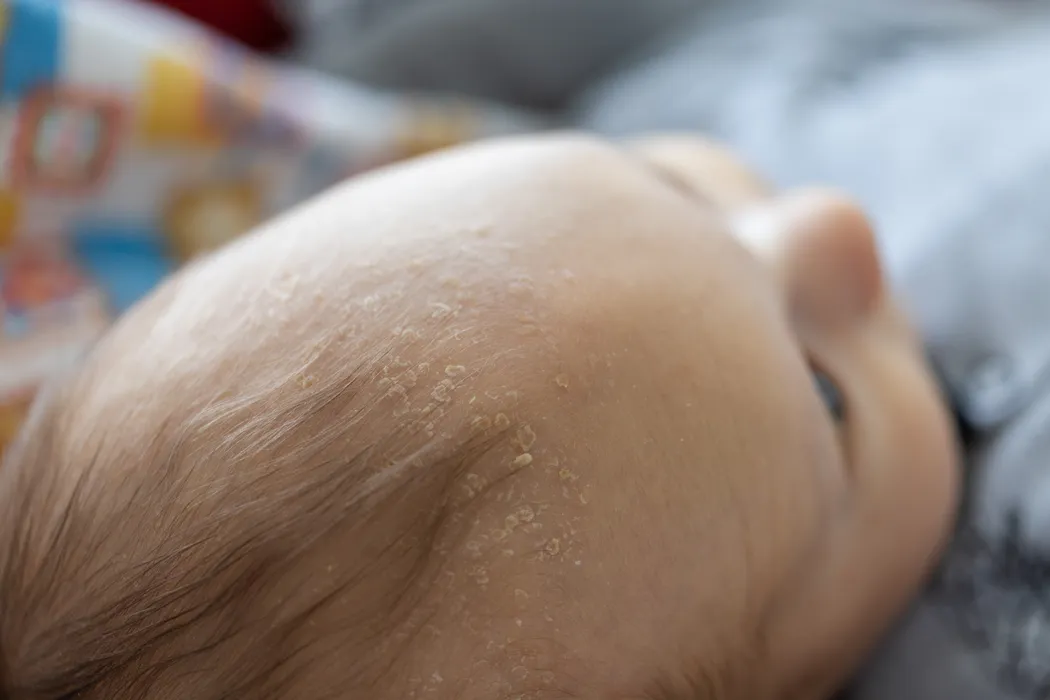
Dry skin typically produces very fine, powdery flakes that are bright white in colour and resemble ordinary dandruff. These flakes often look light and dusty on the surface of the scalp. In contrast, the cradle cap forms thicker, more noticeable flakes that tend to be yellow, brownish, or slightly dark in appearance. These scales may look waxy or crust-like and often sit in patches rather than scattering loosely. The colour difference is often the first visual clue parents notice when comparing cradle cap vs dry skin.
Texture
When you gently touch the affected area, dry skin usually feels rough, tight, and dry, almost like lightly sandpapered skin. The flakes are delicate and brittle, breaking apart easily with minimal contact. The cradle cap, however, has a very different texture. The scales tend to feel greasy, oily, and waxy due to the buildup of natural skin oils. Because of this oily coating, the flakes often appear thicker and more compact on the baby’s scalp.
Adherence
One of the easiest ways to tell the difference is by observing how easily the flakes come off. Dry skin flakes are very loose and will often fall away naturally onto your baby’s clothing or shoulders. Sometimes they may even disappear when the scalp is lightly brushed. Cradle cap scales, on the other hand, tend to stick firmly to the scalp because they are bound together by excess sebum (oil). This makes them more difficult to remove and they usually require gentle softening with oil and careful brushing.
Location
Although both conditions can appear on the scalp, their distribution on the body can vary significantly. Dry skin often appears on multiple areas of the body, including the arms, legs, cheeks, and torso, especially in colder or drier environments. It tends to develop
wherever the skin loses moisture. Cradle cap, however, usually appears in areas where oil glands are most active. These include the scalp, eyebrows, behind the ears, the sides of the nose, and sometimes the folds of the neck or diaper area.
Smell
Another subtle difference is the presence of scent. Dry skin generally has no noticeable smell because it is simply a lack of moisture in the skin barrier. Cradle cap, however, may sometimes have a mild, slightly sour or oily odor. This occurs because of the combination of excess sebum and naturally occurring yeast on the scalp. While the smell is usually faint and harmless, it can sometimes be noticeable if the buildup of scales is thick.