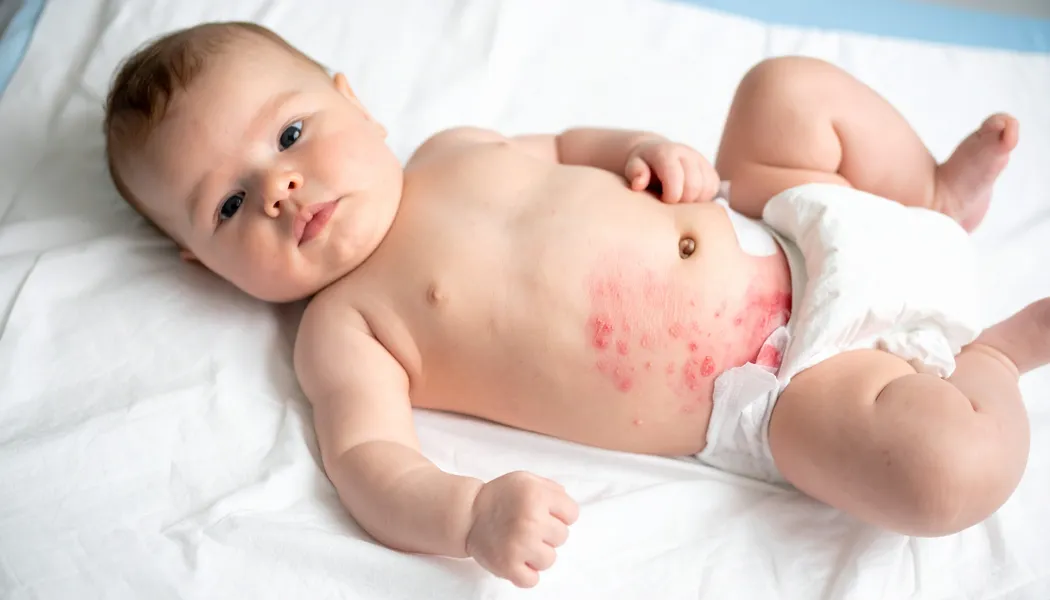
Not all diaper rashes look the same, and the way they appear can give you a better idea of what might be causing them. Recognising the type of rash can help you choose the right care and know when to seek medical advice.
1. Irritant Contact Dermatitis (Mild Rash)
This is the most common type of diaper rash. It usually shows up as pink or light red patches on areas that come in direct contact with the diaper, such as the buttocks, thighs, and genital area. The skin may look slightly dry or irritated but is often not very severe. In many cases, the skin folds remain unaffected, which helps distinguish it from other types.
2. Yeast Diaper Rash (Candidiasis)
A yeast rash develops when a fungus called Candida grows in the warm, moist environment of the diaper area. This type of rash tends to look more intense, with deep red, slightly raised skin. It often appears within skin folds and may spread beyond the main area. Small red spots or bumps around the edges are also quite common and can be a noticeable sign.
3. Bacterial Diaper Rash
In some cases, irritated skin can become infected with bacteria. This type of rash may appear bright red and more inflamed than usual. The skin can look moist, may ooze, or form a crust. It might also feel warmer than the surrounding areas. Since bacterial infections can worsen quickly, they usually need medical attention.
4. Allergic Reaction Diaper Rash
Sometimes, a baby’s skin may react to certain products such as diapers, wipes, soaps, or detergents. This can lead to redness, irritation, or a rash that appears soon after introducing a new product. If the rash improves after stopping the product, it may have been the trigger. Babies with sensitive skin are more likely to experience this type of reaction.
5. Severe or Blistering Rashes
If a rash is not managed early, it can become more severe. The skin may appear raw, very red, or even start to bleed in some areas. In some cases, small fluid-filled blisters may develop. These should be handled carefully, as the skin is more vulnerable to infection at this stage. It’s best to avoid touching or disturbing the area and seek medical advice if it looks severe.
Explore Baby Rash Cream Here