0

Understanding Diaper Rash: Causes, Symptoms and Treatment

Understand diaper rash causes, symptoms, and treatment with simple care tips to soothe your baby’s skin and prevent future irritation.

article image

Dr. Mayank

Parenthood brings its own rhythm, from feeding times to sleep routines and everything in between. Along the way, most parents also come across diaper rash at some point. It can be unsettling to notice red, irritated skin on your baby’s bottom, especially if they seem uncomfortable or fussy.

Diaper rash is quite common and may affect many babies during their early months and years. In most cases, it is manageable with simple care and the right approach.
Whether you are dealing with diaper rash in a newborn or noticing it during the toddler stage, understanding what causes it and how to manage it can make things easier. This guide looks at the common symptoms, possible reasons behind diaper rash, and practical ways to soothe and protect your baby’s skin.
 

Common Causes of Diaper Rash


Understanding what leads to diaper rash can make it easier to manage and prevent. In many cases, it develops due to a combination of moisture, friction, and how sensitive a baby’s skin is at that stage.


Here are some of the more common reasons:

  • Prolonged moisture: Leaving a wet or soiled diaper on for longer periods can irritate the skin. When urine and stool stay in contact with the skin, they may gradually break down its natural barrier, making it more vulnerable to redness and soreness.
  • Chafing and rubbing: Tight diapers or constant friction from clothing can cause irritation, especially around the thighs and waist. Over time, this repeated rubbing may lead to inflamed or slightly raw skin.
  • Changes in diet: As babies start semi-solids or try new foods, their stool may change in consistency and frequency. This can make the diaper area more prone to irritation, particularly if diaper changes become more frequent.
  • Antibiotic use: Antibiotics can disturb the natural balance of bacteria in the body. When this balance is affected, it may allow yeast to grow more easily in warm, moist areas like the diaper region, leading to more stubborn rashes.
  • Sensitive skin: Some babies have naturally delicate or reactive skin. Conditions such as eczema can make them more likely to develop irritation, even with mild triggers like moisture, wipes, or certain diaper materials.
     

Diaper Rash Types and Symptoms

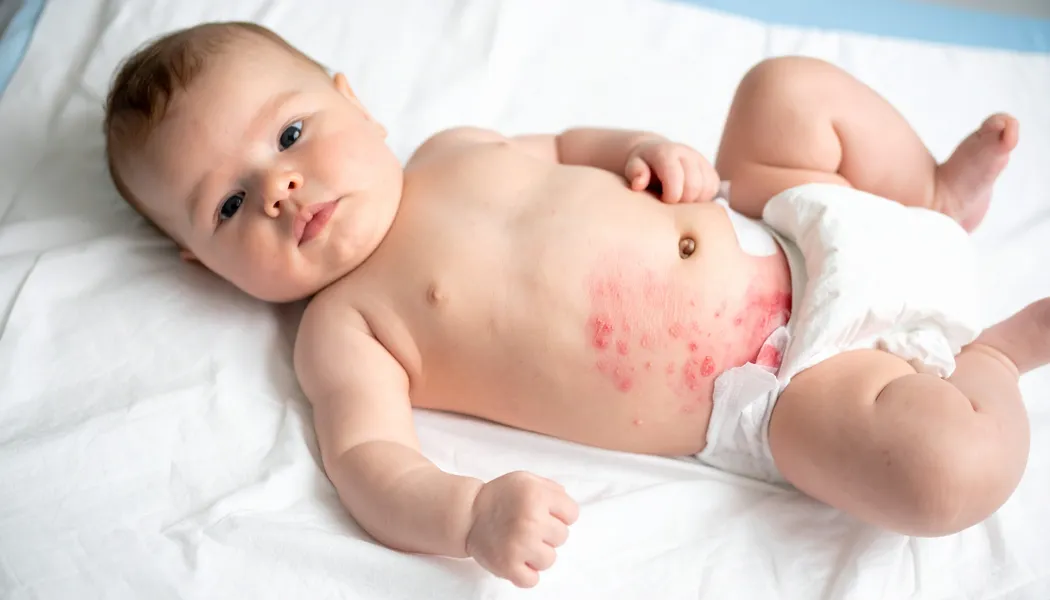
Not all diaper rashes look the same, and the way they appear can give you a better idea of what might be causing them. Recognising the type of rash can help you choose the right care and know when to seek medical advice.

1. Irritant Contact Dermatitis (Mild Rash)

This is the most common type of diaper rash. It usually shows up as pink or light red patches on areas that come in direct contact with the diaper, such as the buttocks, thighs, and genital area. The skin may look slightly dry or irritated but is often not very severe. In many cases, the skin folds remain unaffected, which helps distinguish it from other types.

2. Yeast Diaper Rash (Candidiasis)

A yeast rash develops when a fungus called Candida grows in the warm, moist environment of the diaper area. This type of rash tends to look more intense, with deep red, slightly raised skin. It often appears within skin folds and may spread beyond the main area. Small red spots or bumps around the edges are also quite common and can be a noticeable sign.

3. Bacterial Diaper Rash

In some cases, irritated skin can become infected with bacteria. This type of rash may appear bright red and more inflamed than usual. The skin can look moist, may ooze, or form a crust. It might also feel warmer than the surrounding areas. Since bacterial infections can worsen quickly, they usually need medical attention.

4. Allergic Reaction Diaper Rash

Sometimes, a baby’s skin may react to certain products such as diapers, wipes, soaps, or detergents. This can lead to redness, irritation, or a rash that appears soon after introducing a new product. If the rash improves after stopping the product, it may have been the trigger. Babies with sensitive skin are more likely to experience this type of reaction.

5. Severe or Blistering Rashes

If a rash is not managed early, it can become more severe. The skin may appear raw, very red, or even start to bleed in some areas. In some cases, small fluid-filled blisters may develop. These should be handled carefully, as the skin is more vulnerable to infection at this stage. It’s best to avoid touching or disturbing the area and seek medical advice if it looks severe.


Explore Baby Rash Cream Here
 

Load more products

Diaper Rash Treatment: Healing Your Baby’s Skin

When your baby is uncomfortable, it’s natural to look for quick relief. The good news is that most diaper rashes tend to improve with simple, consistent care at home. The key is to keep the area clean, dry, and protected so the skin has a chance to heal without further irritation.

How To Help Diaper Rash Settle Faster?

A simple way to remember the basics of diaper rash care is the ABCDE approach. Following these steps regularly may help the skin recover more comfortably and reduce the chances of the rash getting worse.

  • A – Air out: Giving your baby some diaper-free time each day may help reduce moisture build-up. Even a few short periods without a diaper can allow the skin to stay dry and support natural healing.
  • B – Barrier protection: Applying a thick, visible layer of diaper rash cream during each diaper change helps create a protective shield. This layer sits on top of the skin and may prevent urine and stool from irritating already sensitive areas.
  • C – Clean gently: Use lukewarm water and a soft cloth, or mild, fragrance-free wipes. Gentle cleaning helps remove irritants without damaging sensitive skin. It may also help to dab instead of wiping when the skin looks very sore.
  • D – Diaper changes: Change diapers as soon as they become wet or soiled. Keeping the area clean and dry reduces prolonged contact with moisture, which is one of the main triggers for diaper rash.
  • E – Evaluate triggers: Over time, you may notice patterns such as reactions to certain wipes, diapers, or foods. Identifying these early can help you make small changes and prevent repeated flare-ups.

What Is a Diaper Rash Cream?

A diaper rash cream is a topical product designed to protect and soothe the skin. Instead of being absorbed, it forms a layer over the surface, helping to block moisture and reduce friction. This protective barrier allows the skin underneath to recover more comfortably.
Most commonly used options include:

  • Zinc oxide creams: These are thicker and tend to stay on the skin for longer periods. They form a strong barrier and are often used when the rash appears more red, inflamed, or persistent. They may also help reduce further irritation while the skin heals.
  • Petroleum jelly-based products: These are smoother and slightly lighter in texture. They help reduce friction and protect the skin from moisture, making them useful for everyday use or mild irritation. They are often easy to apply and remove during diaper changes.

In many cases, using a suitable cream regularly, along with good hygiene practices, is enough to manage diaper rash. If the rash does not improve after a few days, or if it starts to look more severe, it may need a different approach. A paediatrician can help guide the next steps and suggest appropriate treatment if required.
 

How to Prevent Diaper Rash?

Preventing diaper rash often comes down to simple, consistent care. A few small habits followed regularly can help keep your baby’s skin healthy and reduce the chances of irritation.

  • Change diapers frequently: Check your baby’s diaper every couple of hours and change it as soon as it is wet or soiled. This is especially important for newborns, as frequent stools can keep the skin exposed to moisture for longer periods.
  • Choose gentle wipes: Some wipes may contain fragrance or alcohol that can irritate delicate skin. Using plain water with a soft cloth, or fragrance-free wipes, may be a gentler option, especially if your baby already has sensitive skin.
  • Pat, don’t scrub: When cleaning the area, gently pat the skin dry instead of rubbing. Scrubbing can cause tiny breaks in the skin, making it more prone to irritation and discomfort.
  • Use a preventive barrier: Applying a thin layer of a barrier product, such as petroleum jelly or a mild diaper rash cream, during diaper changes may help protect the skin from moisture even before a rash appears.
  • Avoid tight diapers: A diaper that is too snug can trap heat and moisture. Leaving a little room for airflow may help keep the area drier and reduce friction against the skin.

Following these steps consistently may help lower the chances of diaper rash and keep your baby more comfortable during the day and night.


Explore Diapering Essentials Here
 

When to See a Doctor?

Most diaper rashes can be managed at home with regular care. However, if the rash does not improve or starts to look more severe, it may need medical attention. Keeping an eye on certain signs can help you decide when to consult a doctor.

  • No improvement after a few days: If the rash does not get better within 2 to 3 days despite keeping the area clean, dry, and protected, it may need a closer look.
    Fever along with the rash: If your baby develops a fever at the same time, it could point to an infection rather than simple irritation.
  • Oozing, bleeding, or blisters: Skin that looks raw, starts oozing, or develops fluid-filled bumps may indicate deeper irritation or infection and should be checked.
    Rash spreading beyond the diaper area: If the redness spreads to areas like the arms, face, or scalp, it may not be a typical diaper rash and could require further evaluation.
  • Unusual discomfort or pain: If your baby seems unusually irritable, very uncomfortable, or in pain during urination or passing stool, it may be a sign that the rash has worsened.

In such cases, a paediatrician can assess the condition and suggest appropriate treatment. This may include medicated creams, antifungal treatments, or antibiotics, depending on the underlying cause.
 

Explore Diapering Essentials Here
 

Load more products

Conclusion

Diaper rash is a common part of early childhood and something most parents deal with at some point. While it can be uncomfortable for your baby, it is usually manageable with simple, consistent care and the right products.Understanding the possible causes, recognising early signs, and following a basic care routine can make a noticeable difference. Small steps, such as keeping the area clean and dry and using a suitable barrier cream, may help prevent the rash from worsening.

At the same time, it helps to stay observant. If something doesn’t seem right or the rash is not improving, seeking timely advice can ensure your baby gets the right care. With a balanced approach, most diaper rashes can be handled effectively, keeping your baby comfortable and at ease.
 

FAQS

Are cloth diapers better for preventing diaper rash?

Not always. Cloth diapers are reusable and eco-friendly, but they may not absorb moisture as effectively as disposable ones. This means they often need to be changed more frequently to keep the skin dry. Some babies do well with cloth diapers, while others may experience fewer rashes with more absorbent disposable options.

Can I use baby powder to treat my baby’s rash?

It is generally not recommended. Fine particles from baby powder, especially talcum powder, can be inhaled and may affect a baby’s breathing. It is usually safer to use creams or ointments that protect the skin and help reduce irritation.

Is diaper rash painful for babies?

It can be. A mild rash may cause slight discomfort, but a more noticeable rash can make the skin feel sore or sensitive. You may notice your baby becoming fussy during diaper changes or reacting when the area is cleaned.

How long does a typical diaper rash last?

With regular care, most mild diaper rashes tend to improve within 2 to 3 days. Keeping the area clean, dry, and protected usually helps. If it lasts longer or does not seem to improve, it may need medical attention.

Do teething babies get diaper rashes more often?

Some parents notice this happening, although teething itself may not directly cause rashes. During this time, babies may swallow more saliva, which can lead to looser stools. Frequent or loose stools may irritate the skin and increase the chances of a rash.

Apollo 247 Floating Action Button