0

Can You Use Diaper Rash Cream on Baby's Face?

Wondering if diaper rash cream is safe for your baby’s face? Learn which ingredients are safe for facial skin, when to use them for drool rash, and when to call a paediatrician.
 

article image

Dr. Bhanu Prakash

Parenthood brings a lot of questions, especially when it comes to your little one’s delicate health. One day, your baby has clear, soft skin, and the next, a red, irritated patch appears on their cheeks or chin. In a moment of panic, you might reach for the closest skincare product in the nursery. It is incredibly common for parents to look at that trusty tube of soothing ointment and wonder: Is it safe to use diaper rash cream on the face?

Baby skin is up to 30% thinner than adult skin. This means it loses moisture faster and is much more prone to irritation from the environment, weather, and even its own saliva. Because of this extreme sensitivity, you have to be careful about what products you apply.

In this comprehensive guide, we will explore whether it is safe to use these thick ointments on your baby's cheeks, when it helps, when it hurts, and exactly how to apply them safely.
 

Understanding Baby Skin and Barrier Creams

Before we answer whether you should put these creams on your baby's cheeks, it helps to understand what these products actually do. Diaper creams are generally known as "barrier creams."

Their primary job is to sit on top of the skin and create a physical, waterproof shield. They lock in the body's natural moisture while keeping outside irritants, like urine and faeces in the diaper area, away from the skin.

Most high-quality diaper creams contain two main active ingredients:

  • Zinc Oxide: A white mineral powder that sits on top of the skin, repels water, and has mild astringent (healing) properties.
  • Petroleum Jelly (Petrolatum): A thick, occlusive ointment that traps moisture inside the skin and prevents chafing.

Because these ingredients are incredibly gentle and non-toxic, many parents find themselves asking: Can I use diaper rash cream on baby's face safely?

The short answer is yes. In many cases, it is completely safe and highly effective. However, it depends entirely on why your baby has a rash. It is not a cure-all, and in some situations, it can actually make facial rashes worse.

When is Diaper Rash Cream on Face Helpful?

There are a few specific scenarios where applying a barrier cream to your baby’s face is a great idea.

1. Drool Rash

If your baby is teething, you are probably dealing with endless amounts of drool. When saliva constantly sits on a baby's chin, neck, and cheeks, the digestive enzymes in the spit can break down the delicate top layer of their skin. This results in a red, bumpy, and irritated condition known as a drool rash.

Using diaper rash cream on the face areas affected by drool is highly recommended by many paediatricians. By applying a thin layer of zinc oxide or petroleum jelly to the chin, you create a waterproof barrier. When the baby drools, the saliva slides right off the cream instead of soaking into the skin, giving the rash a chance to heal.

2. Chapped Skin and Windburn

During the cold winter months, harsh winds and dry indoor heating can leave your baby’s cheeks red, rough, and chapped. Applying a small amount of an ointment-based diaper cream can lock in moisture and protect their delicate cheeks from the biting wind when you go outside.

3. Minor Scrapes

As babies learn to roll, crawl, and walk, minor scratches are inevitable. A dab of pure petroleum-based diaper ointment can protect a minor, superficial scratch from dirt while it heals.

Buy Baby Diaper Rash Cream

Load more products

When Should You Avoid Diaper Rash Cream for Face Care?

While barrier creams are fantastic for repelling moisture, their thick nature means they are not suited for every type of skin issue. Here is when you should keep the cream away from your baby's face.

Baby Acne

Around two to four weeks of age, many babies develop small red breakouts on their cheeks, nose, and forehead. This is known as baby acne, and it is caused by maternal hormones still circulating in the baby’s body.

You should never use diaper rash cream for face acne. Because diaper creams are occlusive (meaning they block pores to create a barrier), putting them on baby acne will trap oils and dirt inside the pores. This will clog the skin and make the acne significantly worse. Baby acne usually clears up on its own with just gentle washing using warm water.

Bacterial or Fungal Infections

If a facial rash is oozing, has yellow crusting, or looks like little blisters, it could be a bacterial infection (like impetigo) or a fungal infection. Diaper cream will not cure these. In fact, trapping a fungal infection under a thick layer of petroleum jelly can create a dark, moist breeding ground that makes the infection spread. These conditions require a doctor’s visit and specific prescribed medication.

Ingredients to Watch Out For

If you decide to use diaper rash cream on face areas for a drool rash or chapped cheeks, you must read the ingredient label first. The skin on the face is much closer to the eyes, nose, and mouth, meaning the baby is more likely to inhale or ingest what you apply.

Avoid these ingredients on the face:

  • Added Fragrances: Artificial scents are the number one cause of contact dermatitis (allergic skin reactions) in babies. Always choose fragrance-free options.
  • Harsh Preservatives: Avoid products containing parabens or methylisothiazolinone.
  • Steroids: Never use a diaper cream containing hydrocortisone on your baby’s face unless explicitly directed by a paediatrician. Steroids can permanently thin the delicate skin on the face.

Look for these safe ingredients:

  • Pure Zinc Oxide
  • Petroleum Jelly (Petrolatum)
  • Shea Butter
  • Calendula or Aloe Vera

Step-by-Step: How to Safely Apply Diaper Rash Cream on Face?

Applying cream to a squirmy baby can be a challenge. Follow these steps to ensure you are treating their delicate skin safely and hygienically:

1. Wash Your Hands: Always start with freshly washed hands to avoid transferring bacteria to your baby’s sensitive facial skin.
2. Cleanse the Area Gently: Dip a soft cotton washcloth in lukewarm water. Gently pat the drool or food off the baby's face. Do not rub or scrub, as friction worsens rashes.
3. Pat Dry: Use a clean, dry towel to gently pat the skin completely dry. Do not apply barrier cream over wet skin, as you will trap the moisture (and potential bacteria) under the cream.
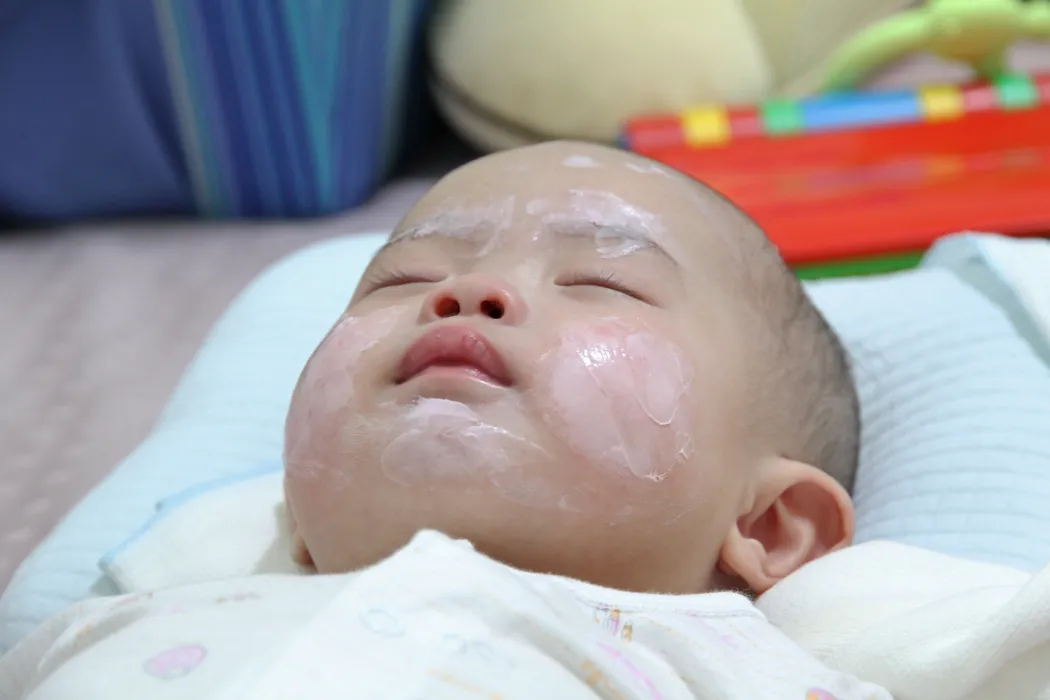
4. Apply a Very Thin Layer: When using diaper rash cream on face patches, less is more. You do not need the thick, white frosting-like layer you use for their bottom. Gently rub a tiny, pea-sized amount over the affected area until it is mostly transparent.
5. Avoid the Eyes and Lips: Keep the cream strictly on the cheeks, chin, and neck. Make sure it is not close enough to their mouth that they will easily lick it off.

When to See a Doctor?

Most minor facial rashes, especially drool rashes, will clear up within a few days of gentle barrier cream application. However, you should contact your paediatrician if you notice any of the following warning signs:

  • The rash is warm to the touch or spreading rapidly.
  • Your baby develops a fever.
  • The rash features fluid-filled blisters, pus, or honey-colored crusts.
  • Your baby seems overly fussy, lethargic, or in pain.
  • You have used a gentle diaper rash cream for face irritation for over a week with absolutely no improvement.

Your paediatrician can properly diagnose the rash and prescribe an appropriate topical treatment if a standard over-the-counter barrier cream is not enough.

Load more products

Conclusion

While many diaper rash creams are formulated with gentle ingredients like zinc oxide, you should always exercise caution when applying any product near a baby's eyes, nose, or mouth.

While certain diaper creams can provide a protective barrier against drool rash or dry patches, they aren't a one-size-fits-all solution for facial skin issues. When in doubt, a paediatrician-approved moisturiser or petroleum jelly is often a safer, more versatile bet for a baby's delicate facial skin.

FAQS

Does diaper rash cream help with baby acne?

No, you should avoid putting thick barrier creams on baby acne. Diaper creams contain heavy ingredients like zinc oxide and petroleum jelly, which can easily clog the tiny pores on your baby’s face and make the acne worse. Stick to washing the face gently with plain water.

Can diaper rash cream soothe a drool rash?

Yes! A drool rash occurs when wet saliva irritates the skin. Applying a thin layer of a gentle, fragrance-free diaper cream creates a waterproof barrier on your baby's chin and cheeks, preventing the saliva from causing further irritation.

Is zinc oxide safe for a baby's delicate face?

Yes, zinc oxide is generally very safe and is widely used in both diaper creams and baby sunscreens. It is a gentle mineral that sits on top of the skin rather than absorbing into the bloodstream. Just be sure to keep it out of your baby's eyes and mouth.

What happens if my baby gets diaper rash cream in their mouth?

Most standard diaper creams (made of zinc oxide or petroleum jelly) are non-toxic in very small amounts. If your baby licks a tiny bit off their chin, they will likely be fine, though it may cause mild stomach upset or loose stools. However, if they eat a large amount, wipe out their mouth and call Poison Control or your doctor immediately for guidance.

How long should I leave diaper rash cream on my baby's face?

You do not need to aggressively wash the cream off, as scrubbing will worsen the rash. Simply leave the thin layer of cream on until it wears off naturally. You can gently wipe away any residue during their normal daily bath time using warm water and a soft cloth.

Apollo 247 Floating Action Button