If you have a baby, you are likely already familiar with the occasional redness or irritation in the diaper area. While most diaper rashes clear up quickly with basic care, it can be worrying when a rash lingers despite frequent changes and regular use of barrier creams.
In such cases, the cause may not be simple irritation. You might be dealing with a fungal diaper rash, which requires a slightly different approach to treatment.
Although it can look uncomfortable and persistent, this condition is quite common and usually responds well to the right care. Understanding the difference between a regular rash and a fungal one can make a big difference in how quickly your baby’s skin heals.
In this guide, we will take you through what leads to a baby yeast-related diaper rash, how to recognise its distinct signs, and the most effective ways to treat and prevent it, so your baby can feel comfortable again.
Fungal Diaper Rash: How to Identify & Treat It?
Learn how to identify fungal diaper rash in babies, its causes, symptoms, and the best treatment options. Discover expert tips to soothe irritation and prevent recurrence.
Dr. Bhanu Prakash
What Causes a Fungal Diaper Rash?
To treat this condition effectively, it helps to understand what is happening under the diaper. Most common diaper rashes are caused by irritation from moisture, friction, or prolonged contact with urine and stool. These usually improve quickly with basic care.
A fungal diaper rash, however, develops differently. It is caused by an overgrowth of Candida, a type of yeast that naturally lives on the skin and in the body. Under normal conditions, it remains harmless. But in warm, moist environments, like the diaper area, it can multiply rapidly and lead to infection.
Several factors may increase the chances of this type of rash developing:
- Antibiotic use: If your baby is taking antibiotics, or if you are breastfeeding and on antibiotics, it may disrupt the balance of good bacteria. This can allow yeast to grow more easily, leading to a fungal rash.
- Prolonged moisture: Leaving a wet or soiled diaper on for longer periods creates the ideal environment for yeast to thrive. Even highly absorbent diapers may still leave enough moisture to irritate the skin.
- Chafing and skin damage: When the skin becomes irritated or slightly broken due to friction, it becomes more vulnerable. A simple irritant rash can sometimes progress into a fungal infection if yeast takes hold.
- Thrush: If your baby has oral thrush, the same yeast can pass through their digestive system and appear in their stool. This may lead to a rash in the diaper area that is harder to clear with regular creams.
Because fungal rashes often develop on top of already irritated skin, recognising the cause early can help you choose the right treatment and prevent the rash from worsening.
How to Identify: Diaper Rash vs Yeast Infection
One of the most confusing parts for parents is figuring out what type of rash they are dealing with. At first glance, all rashes may look similar, but there are a few clear differences between a standard irritant rash and a fungal (yeast) infection.
Understanding these visual clues can help you decide whether simple home care is enough or if your baby may need a different kind of treatment.
Signs of a Standard Irritant Diaper Rash
A typical irritant rash is usually mild and tends to improve quickly with basic care. It develops due to friction, moisture, or prolonged contact with urine and stool.
- Colour: Usually light pink to mild red, with a relatively even appearance across the affected area.
- Location: Commonly seen on areas that directly touch the diaper, such as the buttocks, lower tummy, and upper thighs.
- Skin folds: The deep creases are usually spared, as these areas are less exposed to rubbing.
- Response to treatment: Improves within a few days with frequent diaper changes and the use of barrier creams.
Signs of a Fungal Infection Diaper Rash
A fungal rash tends to look more intense and behaves differently from a standard rash. It often appears when irritation persists or worsens over time.
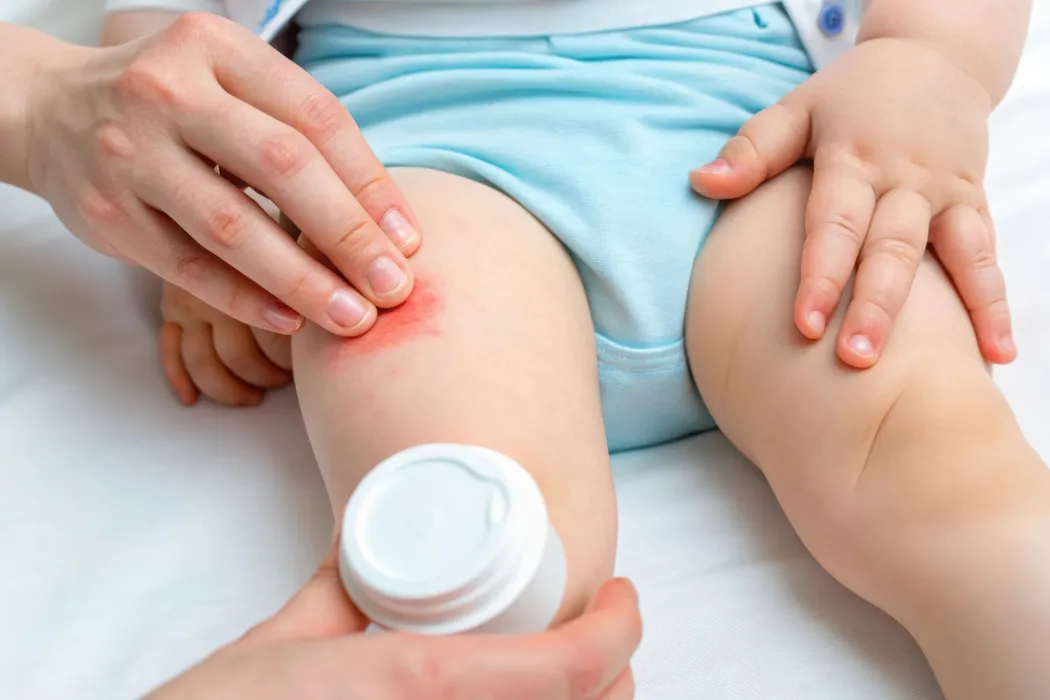
- Colour: Typically deep, bright red, sometimes described as a more “angry” appearance.
- Location: Commonly affects the skin folds of the groin and thighs, where moisture tends to get trapped.
- Borders: The edges are often well-defined, slightly raised, or scaly rather than blending into surrounding skin.
- Satellite spots: Small red bumps or pimples may appear just outside the main rash area, which is a key identifying feature.
- Texture: The skin may look shiny, raw, or slightly peeling, and in some cases, small whitish patches can be noticed.
- Persistence: Does not improve with regular diaper creams and may continue to spread if untreated.
If the rash involves the folds, looks unusually red, or is not improving despite proper care, it may be fungal in nature and worth getting checked by a paediatrician.


How to Treat Yeast Diaper Rash?
If your baby’s symptoms suggest a fungal cause, the treatment approach needs to change slightly. Regular barrier creams help protect the skin, but they do not treat the underlying yeast. Targeted care is needed to clear the infection effectively.
1. Choose the Right Over-the-Counter Cream
The first step is selecting an appropriate antifungal cream. These creams are designed to stop the growth of yeast and help the skin heal.
Look for products containing ingredients such as clotrimazole or miconazole. These are commonly used antifungal agents and are generally considered safe for use in the diaper area when used as directed.
With consistent application, you may begin to notice improvement within a couple of days, although it is important to continue treatment for the full recommended duration to prevent the rash from returning.
2. How to Apply the Cream?
Using the cream correctly plays a key role in how quickly the rash improves.
Start by gently cleaning the area with lukewarm water and a soft cloth. Avoid scrubbing, as the skin is already sensitive. Pat the area dry completely, as moisture can worsen the condition.
Apply a thin layer of the antifungal cream directly over the affected skin, making sure to cover the folds where yeast tends to collect. After allowing it to settle for a short while, you can apply a thicker layer of a barrier cream, such as one containing zinc oxide, on top. This helps protect the skin from further irritation while the medication works underneath.
3. Maximise Diaper-Free Time
Air exposure can significantly help the healing process. Since yeast thrives in warm, moist environments, allowing the skin to stay dry and exposed may slow its growth.
Try giving your baby short periods without a diaper during the day. Placing them on a clean, absorbent mat can make this easier while reducing mess. Even brief sessions of 15 to 30 minutes can make a noticeable difference over time.
4. Switch to Gentler Cleaning Options
During a fungal rash, the skin can become extra sensitive. Some commercial wipes may contain fragrances or preservatives that further irritate the area.
Switching to soft cotton cloths with warm water, or using fragrance-free, water-based wipes, may help reduce stinging and support faster healing. Gentle care during each diaper change can go a long way in preventing the rash from worsening.
Prevention: Keeping the Fungal Diaper Rash Away
Once your baby’s skin has healed, maintaining a consistent routine can help prevent the rash from returning. Since yeast thrives in moisture and warmth, keeping the diaper area clean and dry is the most effective long-term strategy.
- Change diapers frequently: Avoid letting your baby sit in a wet or soiled diaper for long periods. Prompt changes reduce prolonged exposure to moisture and irritants.
- Dry the skin thoroughly: Before putting on a fresh diaper, make sure the area is completely dry. Gently pat the skin with a soft cloth, or allow a few moments of air drying to ensure no moisture is trapped.
- Avoid tight diapers: Fastening diapers too snugly can trap heat and moisture. A slightly looser fit allows better airflow and reduces friction against the skin.
- Use a protective barrier: Applying a thin layer of barrier cream with each diaper change may help shield the skin from moisture and irritation. Products containing zinc oxide or petroleum jelly are commonly used for this purpose.
By keeping the area dry, minimising irritation, and maintaining a gentle skincare routine, you can significantly reduce the chances of a fungal diaper rash recurring.
When to See a Doctor?
Most fungal diaper rashes improve with the right antifungal treatment and good diaper care. However, there are times when medical guidance is necessary to ensure your baby heals safely and comfortably.
You should consult your paediatrician if you notice any of the following:
- No improvement within a few days: If the rash does not start improving after about 2 to 3 days of using an antifungal cream, it may need a different treatment approach.
- Worsening skin condition: Oozing, bleeding, crusting, or open sores can indicate a more severe infection or secondary bacterial involvement.
- Fever: The presence of fever along with a rash may suggest that the infection is not limited to the skin and requires prompt evaluation.
- Spreading rash: If the rash extends beyond the diaper area to the stomach, back, face, or limbs, it should be assessed by a doctor.
- Very young infants: Babies under 6 weeks of age should always be evaluated by a doctor if they develop a rash, as their skin is especially delicate and infections can progress quickly.
In such cases, your paediatrician may recommend a stronger topical treatment or, in more severe situations, additional medication to clear the infection effectively.
Conclusion
A fungal diaper rash can feel frustrating, especially when it does not respond to the usual creams and care. However, once you understand what you are dealing with, it becomes much easier to manage. With the right antifungal treatment, good hygiene practices, and a little extra attention to keeping the area clean and dry, most rashes improve quickly.
The key is to recognise the signs early and adjust your approach accordingly. Small changes, like allowing more air exposure or using the correct medication, can make a noticeable difference in your baby’s comfort.
If something does not seem right or the rash is not improving, it is always best to seek advice from your paediatrician. With timely care and a consistent routine, your baby’s skin can return to being soft, healthy, and irritation-free.
FAQS
FAQS
How long does a fungal diaper rash take to clear up?
With the right antifungal treatment, you may start noticing improvement within 2 to 3 days. However, complete healing can take around 7 to 10 days. Even after the rash appears to clear, continuing the cream for a couple of extra days may help prevent recurrence.
Can I use regular diaper cream on a yeast infection?
Regular barrier creams help protect the skin but do not treat the underlying fungal infection. They can be used alongside antifungal creams, but not as a replacement. Typically, the antifungal is applied first, followed by a protective layer of barrier cream.
Is a fungal diaper rash contagious?
It is not usually considered highly contagious, but the yeast can spread through contact. Good hygiene is important. Washing your hands thoroughly after diaper changes helps reduce the risk of transferring the yeast to other areas, especially during breastfeeding.
Can teething cause a fungal diaper rash?
Teething itself does not directly cause a fungal infection. However, increased saliva and changes in stool during this phase may irritate the skin. This can weaken the skin barrier, making it easier for yeast to grow.
Can I treat a fungal diaper rash naturally at home?
While gentle care like keeping the area dry and allowing air exposure is helpful, applying household remedies directly to irritated skin is not usually recommended. Some substances may worsen irritation or introduce infection. Using a suitable antifungal cream along with proper hygiene remains the most reliable approach.


