Losing weight can often feel like an overwhelming journey, especially with so much conflicting information available online. You might find yourself wondering what to eat, when to eat, and how much to eat. This is exactly where a healthy diet for weight loss comes in handy. Instead of relying on restrictive starvation diets or fads, creating a structured, balanced eating plan helps you lose weight safely and sustainably. Following a healthy diet chart for weight loss simplifies your daily routine. It takes the guesswork out of grocery shopping and meal prep, allowing you to focus on nourishing your body with the right foods. According to leading health organisations, the safest and most effective way to shed pounds is through a combination of a balanced diet and regular physical activity. In this comprehensive guide, we will break down the essentials of nutrition, provide a sample meal plan, and answer your most pressing questions. Whether you are just starting your journey or looking to overcome a plateau, this guide will help you create a reliable, healthy diet for weight loss chart that works for your unique lifestyle.
Healthy Diet Chart for Weight Loss - A Complete Guide
Discover a healthy diet chart for weight loss with balanced meals, nutrition tips, and lifestyle advice to help you lose weight safely and maintain long-term health.
Dr. Kamran
Why You Need a Healthy Diet for Weight Loss Chart?
When people try to lose weight without a plan, they often fall into the trap of under-eating or making impulsive, unhealthy food choices when hunger strikes. Adopting a reliable health diet chart for weight loss gives you a roadmap to success. The Centres for Disease Control and Prevention (CDC) states that people who lose weight gradually and steadily (about 1 to 2 pounds per week) are much more successful at keeping that weight off long-term. A structured plan helps you achieve this steady progress.
Here are a few reasons why having a visual guide or chart is so beneficial:
- Portion Control: A healthy weight loss chart helps you visualise what a proper plate should look like, preventing overeating.
- Nutritional Balance: It ensures you are getting a good mix of vitamins, minerals, proteins, and healthy fats.
- Consistency: Having a clear plan reduces decision fatigue, making it easier to stick to your goals.
Core Components of a Proper Healthy Diet Chart for Weight Loss
Building a proper, healthy diet chart for weight loss requires understanding the basic building blocks of nutrition. Your body needs fuel to function, and the quality of that fuel matters immensely. According to guidelines from Harvard Health Publishing, a balanced plate should be rich in the following components:
1. Lean Proteins
Protein is the building block of your muscles. When you are losing weight, you want to lose fat, not muscle mass. Furthermore, protein takes longer to digest, keeping you feeling full and satisfied for hours.
Great sources: Skinless chicken breast, turkey, fish, eggs, tofu, lentils, and Greek yoghurt.
2. Complex Carbohydrates and Fibre
Carbs are not the enemy; refined carbs are. Complex carbohydrates provide long-lasting energy and are usually packed with dietary fibre. Fibre slows down digestion and helps regulate blood sugar spikes.
Great sources: Oats, quinoa, brown rice, sweet potatoes, and plenty of fresh vegetables.
3. Healthy Fats
Your body needs fat to absorb essential vitamins and protect your heart. A well-rounded weight loss healthy diet chart will always include moderate amounts of healthy, unsaturated fats.
Great sources: Avocados, olive oil, almonds, walnuts, chia seeds, and salmon.
4. Hydration
Water is the unsung hero of weight loss. Sometimes, our bodies confuse thirst with hunger. Staying hydrated keeps your metabolism functioning optimally. Aim for at least 8 to 10 glasses of water a day.
Foods to Limit or Avoid
To maximize your healthy diet chart weight loss results, it is important to know which foods to minimise. You do not have to banish them forever, but limiting them will speed up your progress:
- Sugary Beverages: Sodas, sweetened teas, and energy drinks are packed with empty calories.
- Refined Grains: White bread, white pasta, and pastries digest quickly and leave you hungry.
- Highly Processed Foods: Packaged snacks and fast food often contain hidden trans fats, high sodium, and added sugars.
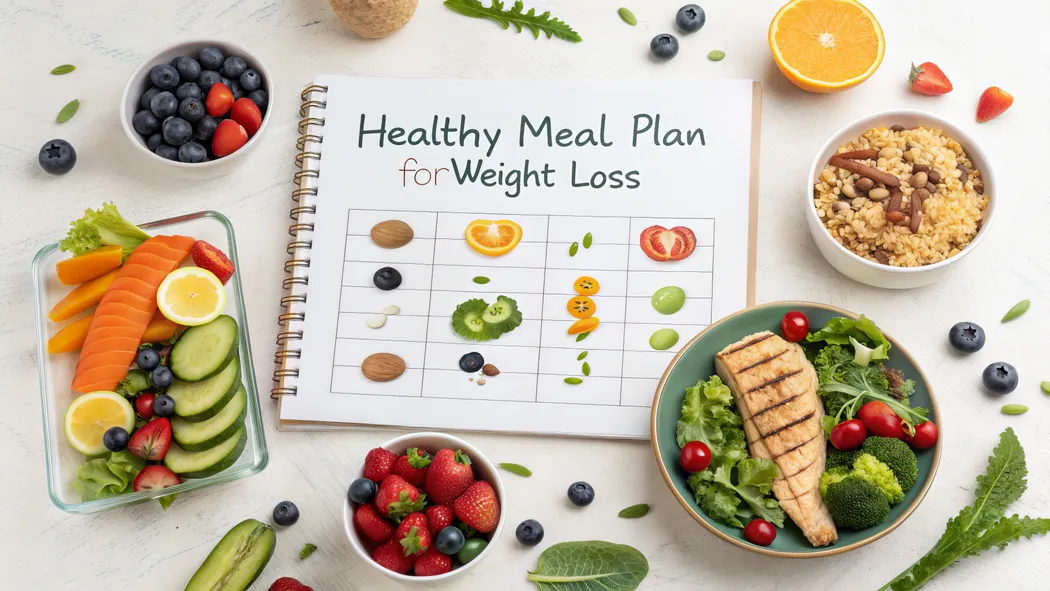
Your Sample Healthy Weight Loss Diet Chart
Creating a daily routine doesn't have to be complicated. Below is a simple, flexible, and healthy weight loss diet chart you can adapt to your personal tastes.
Breakfast (Choose One)
- Option 1: Oatmeal cooked with water or almond milk, topped with a handful of berries, a sprinkle of chia seeds, and a dash of cinnamon.
- Option 2: Two scrambled eggs with spinach and tomatoes, served with one slice of whole-grain toast.
Mid-Morning Snack (Choose One)
- Option 1: A medium-sized apple with one tablespoon of natural peanut butter.
- Option 2: A small bowl of plain Greek yoghurt with a few almonds.
Lunch (Choose One)
- Option 1: A large mixed green salad with grilled chicken breast, cucumbers, cherry tomatoes, and a light olive oil and lemon dressing.
- Option 2: A whole-wheat wrap filled with turkey slices, hummus, shredded carrots, and leafy greens.
Afternoon Snack (Choose One)
- Option 1: Carrot and celery sticks with two tablespoons of hummus.
- Option 2: A small handful of unsalted mixed nuts.
Dinner (Choose One)
- Option 1: Baked salmon filet with a side of steamed broccoli and a small portion of quinoa.
- Option 2: A hearty lentil and vegetable stew, packed with zucchini, bell peppers, and spinach.
Note: Portion sizes should be adjusted based on your individual caloric needs, age, gender, and activity level.
Lifestyle Tips to Boost Your Results
Food is only one piece of the puzzle. To keep your body functioning well and completely healthy, a healthy diet chart for weight loss plans must be paired with positive lifestyle changes.
1. Get Moving
The World Health Organisation (WHO) recommends at least 150 minutes of moderate-intensity aerobic physical activity throughout the week. This could be brisk walking, cycling, or swimming. Exercise not only burns calories but also boosts your mood and cardiovascular health.
2. Prioritise Sleep
The Mayo Clinic highlights a strong connection between lack of sleep and weight gain. When you are sleep-deprived, your body produces more of the hunger hormone (ghrelin) and less of the fullness hormone (leptin). Aim for 7 to 9 hours of quality sleep each night to keep your hormones balanced.
3. Manage Stress
High stress levels trigger the release of cortisol, a hormone that can increase appetite and cause your body to store fat, particularly around the belly. Incorporate stress-reducing activities into your day, such as deep breathing, meditation, or light stretching.
Conclusion
Embarking on a weight loss journey is a commendable step toward better long-term health. By utilising a healthy diet for weight loss chart, you empower yourself with the structure and knowledge needed to make nourishing choices every day. Remember that perfection is not the goal; consistency is. Focus on filling your plate with wholesome, unprocessed foods, stay hydrated, keep your body active, and be patient with yourself. Over time, these small, daily habits will add up to incredible, lasting transformations
FAQS
FAQS
Can I customise my healthy diet for weight loss chart?
Yes, absolutely. A healthy diet for weight loss chart is meant to be a flexible guide, not a rigid rulebook. You can swap out proteins, vegetables, and grains based on your dietary preferences, allergies, or cultural foods, as long as you maintain healthy portion sizes and balanced nutrients.
What drinks are allowed on a healthy diet chart for weight loss?
Water is the best choice. However, you can also enjoy unsweetened green tea, black coffee, and herbal teas. Try to avoid fruit juices, sodas, and alcohol, as they contain high amounts of liquid calories that can easily derail your weight loss progress.
Do I need to count calories to lose weight?
While you don't strictly have to count every single calorie, having a general awareness of your caloric intake is very helpful. Following a healthy diet chart for weight loss naturally aids in calorie control by emphasising nutrient-dense, filling foods over high-calorie processed items.
How fast will I lose weight on this plan?
Healthy, sustainable weight loss typically occurs at a rate of 1 to 2 pounds per week. While crash diets might promise faster results, they often lead to muscle loss and a quick rebound in weight. Patience and consistency are your best friends on this journey.
Are cheat days allowed?
Rather than thinking of them as "cheat days," consider them "treat meals." Incorporating an occasional indulgence helps prevent cravings and keeps your relationship with food positive. Just be mindful of portion sizes so that one treat doesn't turn into a weekend-long binge.


