Feeding a newborn is one of the most frequent and important parts of early parenting, but many parents quickly realise that feeding does not end when the milk is finished. Burping is often an essential step after or during feeds because babies commonly swallow air while breastfeeding or bottle-feeding. That swallowed air can collect in the stomach and create pressure, discomfort, and fussiness. Sometimes it leads to crying, arching of the back, frequent spit-ups, or interrupted feeding. Learning the right burping technique can therefore make feeding more comfortable for both the baby and the parent. Although burping may look simple, many new parents worry when the baby does not burp quickly, spits up milk, or becomes unsettled after feeding. This guide explains why burping matters, when it is needed, the most effective positions, and what to do if your newborn does not burp.
How to Burp a Newborn Baby: Positions & Tips
Learn how to burp a newborn baby correctly, the best burping positions, when to burp during feeds, and what to do if your baby does not burp.
Dr. Kamran
Why Is Burping Important for a Newborn?
A newborn’s digestive system is still developing during the first months of life. The stomach is small, the swallowing reflex is still maturing, and the digestive tract can easily trap air during feeding. Babies swallow air for several reasons:
- Fast sucking during feeding
- Shallow latch during breastfeeding
- Bottle nipples allowing excess air intake
- Crying before feeding
- Feeding while lying flat
That trapped air can create pressure inside the stomach and may lead to discomfort. Burping helps release this trapped air before it moves lower into the intestines, where it may cause gas and abdominal discomfort. According to Mayo Clinic infant feeding guidance, burping is particularly useful during the newborn period because babies often swallow more air than older infants.


Signs Your Baby Needs to Burp
Not every baby burps after every feed, but many show clear signs when trapped air is present. Common signs include:
- Pulling away from the breast or bottle
- Fussiness during feeding
- Squirming or arching the back
- Grimacing
- Clenching fists
- Mild crying after a few minutes of feeding
- Small spit-ups
Sometimes babies appear suddenly uncomfortable halfway through feeding because a gas bubble is preventing them from continuing comfortably. In such cases, pausing to burp often helps them feed better.
When to Burp a Newborn?
Timing matters because some babies swallow air throughout feeding rather than only at the end.
During Breastfeeding
A good time to burp is:
- When switching breasts
- If the baby pauses repeatedly
- If fussiness starts mid-feed
During Bottle Feeding
A practical approach is to burp after every 60 to 90 ml (2 to 3 ounces). Bottle-fed babies often swallow more air depending on nipple flow.
After Feeding
Even if the baby seems calm, holding upright and attempting a short burp after feeding often helps reduce spit-up.
Best Positions to Burp a Newborn
Different babies respond differently, so parents often need to try more than one position.
1. Over the Shoulder Position
This is the most commonly used method. Hold the baby upright against your chest so the chin rests gently on your shoulder.
How to Do It?
- Support the baby’s bottom with one hand
- Keep the neck stable
- Use the other hand to gently pat or rub the upper back
The gentle pressure from your shoulder against the baby’s tummy often helps release trapped air. A burp cloth should always be placed on your shoulder because spit-up is common.
Why Does This Position Work Well?
Gravity helps air rise upward naturally when the baby remains upright.
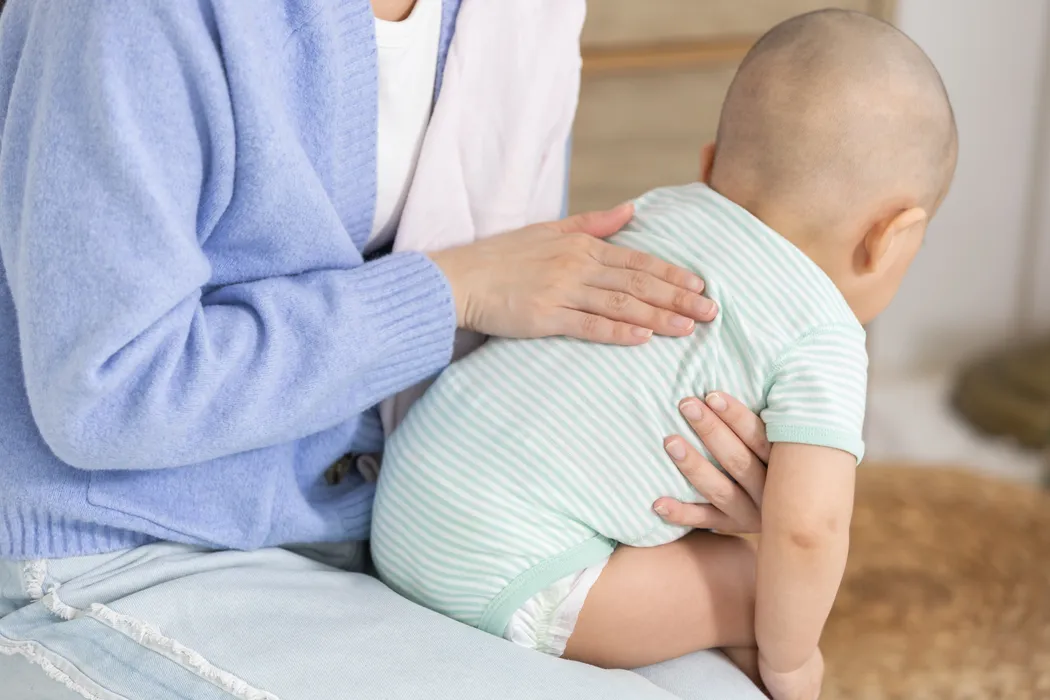
2. Sitting Upright on Your Lap
This position is especially useful when you want more control of the baby’s posture. Sit the baby upright on your lap.
How to Support Safely?
Use one hand to support:
- Chest
- Chin
- Jaw
Avoid pressing on the throat. Lean the baby slightly forward. Use the other hand to pat or rub the back gently.
Why Does This Position Help?
A slight forward tilt creates gentle abdominal pressure that may release air.
3. Face Down Across Your Lap
This often helps when other methods fail. Lay the baby face down across your thighs.
Position Carefully
- Head slightly higher than chest
- Chin supported gently
- Airway kept clear
Pat or rub the back gently.
Why Can It Be Effective?
This creates slightly deeper tummy pressure, which may move stubborn gas.
Patting vs Rubbing: Which Is Better?
Both methods can work.
Gentle Patting
Use rhythmic soft pats between the shoulder blades.
Circular Rubbing
Use upward circular movements from lower back to upper back. Some babies respond better to rubbing than patting. A combination often works best.
How Long Should You Try to Burp?
Burping usually takes only a few minutes. If no burp happens after 5 minutes, it is reasonable to stop if the baby seems comfortable. Not every feed produces a burp. Some babies swallow very little air, especially if feeding calmly.
What If Your Baby Does Not Burp?
A newborn not burping is very common and usually not a problem if the baby remains comfortable.
Try Changing Position
Move from shoulder hold to lap sitting. Sometimes movement shifts the air bubble.
Pause and Retry
Lay the baby flat for a minute, then pick up again. Gravity changes can help air rise.
Bicycle Legs Exercise
Lay the baby on the back and gently move the legs in cycling motion. This helps move gas through the intestines.
Know When to Stop
If the baby appears relaxed and sleepy, forcing burping is unnecessary.
Why Do Babies Sometimes Spit Up During Burping?
Spit-up happens because the valve between the food pipe and stomach is still immature. When air rises, a small amount of milk may come up too. This is usually harmless if:
- Weight gain is normal
- Baby remains comfortable
- Spit-up is small
According to Cleveland Clinic infant digestion guidance, mild spit-up is very common in healthy newborns.
How to Reduce Air Swallowing During Feeding
Burping works best when feeding technique also reduces air intake.
During Breastfeeding
Ensure deep latch. The baby should take a large part of the areola, not only the nipple.
During Bottle Feeding
Keep the bottle tilted so milk fills the nipple fully. This prevents air pockets. Anti-colic bottles may also help.
Until What Age Do Babies Need Burping?
Most babies need regular burping until around 4 to 6 months. As digestion matures, babies naturally manage swallowed air better. Sitting upright independently also helps gas move naturally. Some babies stop needing burping earlier.
When to Consult a Paediatrician?
Seek medical advice if feeding discomfort becomes severe. Watch for:
- Frequent forceful vomiting
- Poor weight gain
- Persistent crying after feeds
- Refusal to feed
- Bloated abdomen
These symptoms may need assessment.
Conclusion
Burping is a simple but important part of newborn feeding because it helps release trapped air and improves comfort after milk feeds. Every baby responds differently, so parents often need to experiment with positions before finding what works best. If your baby does not burp every time, that is often completely normal as long as feeding remains comfortable and the baby appears settled.
FAQS
FAQS
How long should I try to burp my baby after a feeding?
You generally only need to try burping your baby for about a few minutes. If you have been patting their back for 5 to 10 minutes and nothing happens, and your baby appears comfortable and relaxed, you can safely stop. Not every single feeding will result in a burp.
What happens if my baby falls asleep before burping?
It is incredibly common for newborns to fall asleep while feeding. If your baby drifts off, sit them upright for a few minutes and gently rub their back. If they still don't burp, it is generally safe to lay them down to sleep. Just be sure to always place them flat on their back to reduce the risk of Sudden Infant Death Syndrome (SIDS). If they wake up fussy shortly after, pick them up and try burping them again.
Is it normal for babies to spit up when burping?
Yes, it is completely normal. The valve between a newborn's esophagus and stomach is not fully developed, so milk often escapes along with the air bubble. This is known as reflux or "spitting up." As long as your baby is gaining weight, seems happy (often called a "happy spitter"), and the spit-up is effortless, there is usually no cause for concern. If the spit-up is forceful (projectile vomiting) or green, contact your paediatrician immediately.
Can I over-burp my baby?
You cannot necessarily "over-burp" a baby, but overly aggressive patting can cause unnecessary discomfort or trigger them to spit up more milk than usual. Always use a gentle touch. Furthermore, spending too much time trying to force a burp when the baby doesn't need to can unnecessarily interrupt their sleep cycle or feeding time.
How do I know if the gas has passed into their intestines?
If the air does not come up as a burp, it will travel through the digestive tract. You might notice your baby has a tight, bloated-feeling tummy, passes gas (flatulence), or draws their knees up to their chest. If this happens, gently massaging their tummy in a clockwise direction or doing the "bicycle legs" exercise can provide quick relief.


