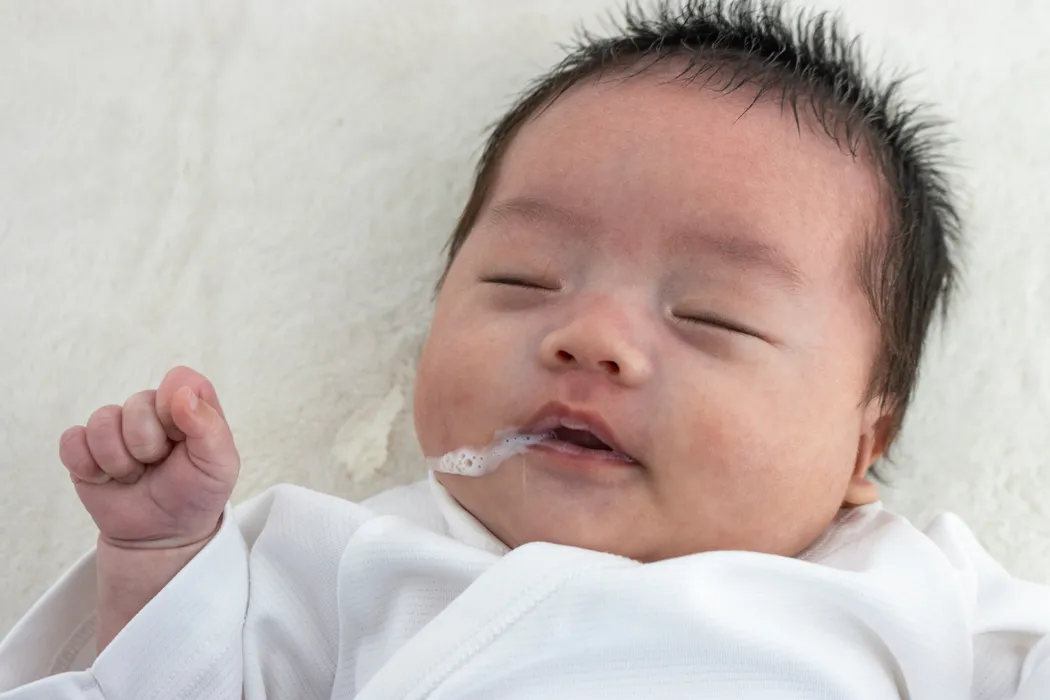
As babies grow and their diets change, the reasons for throwing up evolve. Here is a breakdown of what to expect at different stages when dealing with baby vomiting after food.
The Infant Stage (0–6 Months)
Around the three-month mark, babies are drinking larger volumes of milk. If you have a 3 month old baby vomiting after every feed, it is often a sign of overfeeding or severe acid reflux. A 3 month baby vomiting after feeding might just need smaller, more frequent meals. Always make sure to burp your baby halfway through the feed and keep them upright for 20 to 30 minutes afterward.
Starting Solids (6–12 Months)
Introducing solid foods is a fun but messy milestone. It can also bring new digestive challenges. If you notice an 8 month-old baby vomiting after eating solids, it could be due to an overly sensitive gag reflex adapting to new textures. Similarly, a 9 month-old baby vomiting after eating solids might be experiencing a mild intolerance to a new food ingredient.
By the time they are a bit older, a 10 month old baby vomiting after eating solids might simply be eating too much, too fast. Always introduce new foods one at a time over several days so you can easily identify any food allergies or intolerances.
Toddler Troubles (1 to 3 Years)
When dealing with toddlers, baby vomiting after eating is frequently tied to viral stomach bugs (gastroenteritis) or eating rapidly while playing.
- A 1 year baby vomiting after feeding may have swallowed too much air while crying or running around.
- A 1.5 year baby vomiting after eating could be reacting to greasy or overly rich foods.
- If you are dealing with a 2 year baby vomiting, they might have picked up a common daycare stomach bug.
No matter the age, maintaining a calm environment during meals can significantly reduce vomiting episodes.