Watching your baby struggle with their first cold can be stressful for any parent. A stuffy nose, mild cough, and restless sleep often make caregivers search for quick and trusted remedies. For many families, Vicks VapoRub has long been a household solution for congestion and cough relief. However, when it comes to infants, especially newborns, parents must be extremely cautious. If you are searching for information about newborn Vicks or whether vapor rub is safe for babies, it is important to understand the potential risks before using any product.
Babies have delicate skin, developing immune systems, and extremely narrow airways. Because of this, their bodies can react very differently to strong ointments and topical medications compared to adults. In this guide, we will explain whether Vicks is safe for babies, why traditional vapor rubs can be harmful for infants, and what pediatrician-approved alternatives can help relieve your baby’s congestion safely.
Is Vicks Safe for Babies? Risks, Precautions & Safe
Learn whether Vicks is safe for babies, the risks of using vapor rub on newborns, and paediatrician-approved alternatives to relieve baby congestion safely.
Dr. Bhanu Prakash
The Big Question: Can You Use Vicks on a Newborn?
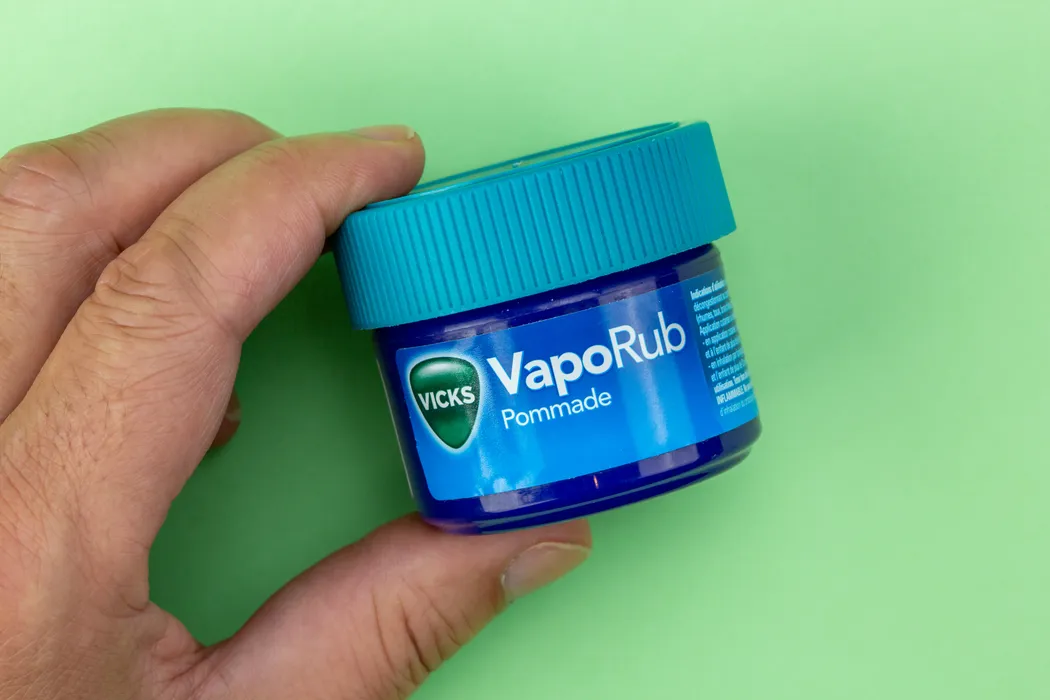
The simple answer is no. Standard Vicks VapoRub should never be used on babies under two years of age, and it should absolutely not be used on newborns (babies under three months old). Many parents search for products like “Vicks for newborn baby” or “newborn Vicks”, but medical experts strongly warn against using traditional vapor rubs on infants. The active ingredients in regular Vicks products are too strong for a baby’s delicate skin and sensitive respiratory system. Even specialised baby versions of vapor rub are not recommended for newborns. Most paediatricians advise avoiding any vapor rub during the first three months of life. During this early stage, babies require gentler, medication-free approaches to manage cold symptoms.


Why Can Standard Vicks Be Dangerous for Infants?
Vicks works well for adults and older children because it contains strong ingredients that produce a cooling sensation and stimulate the respiratory passages. However, these ingredients can be harmful or dangerous for babies.
The main concern comes from three ingredients:
- Camphor
- Menthol
- Eucalyptus oil
1. Camphor Toxicity
Camphor is a key ingredient in standard Vicks VapoRub. While it is safe for adults when used properly, it can be toxic for infants.
If camphor is absorbed through a baby’s delicate skin or accidentally ingested, it can cause serious symptoms such as:
- Vomiting
- Confusion
- Seizures
Because babies often touch their chest or feet and place their fingers in their mouths, the risk of ingestion is higher.
2. The Menthol “Cooling” Effect
Menthol creates the familiar cooling sensation associated with vapor rubs. This sensation makes breathing feel easier, but it does not actually open the airways. Instead, menthol can act as an irritant. In babies, irritation may cause the body to produce more mucus, which can worsen congestion.
3. Extremely Narrow Airways
Infants have very small airways, sometimes only as wide as a drinking straw. Even a small increase in mucus can make breathing difficult. For this reason, irritants like menthol or eucalyptus oil may trigger respiratory distress in infants.
Vicks VapoRub vs. Vicks BabyRub
Many parents confuse standard Vicks with baby versions of vapor rub.
Understanding the difference is essential.
Vicks VapoRub (Standard Formula)
This traditional formula contains:
- Camphor
- Menthol
- Eucalyptus oil
Because of these ingredients, it is not recommended for children under two years old.
Vicks BabyRub
Vicks BabyRub is a milder product designed specifically for infants. Unlike the standard version, it does not contain camphor or menthol. Instead, it includes soothing ingredients such as:
- Aloe vera
- Coconut oil
- Mild fragrances like lavender and rosem
However, it is still important to note that Vicks BabyRub is only recommended for babies three months and older.
For newborns younger than three months, even baby versions should generally be avoided.
Safe Alternatives to Vicks for Newborns
If vapor rub is not safe for newborns, how can parents help relieve congestion? Fortunately, paediatricians recommend several safe and effective methods that do not involve strong medications.
1. Saline Drops and Nasal Suction
This is one of the most recommended treatments for infant congestion.
Babies primarily breathe through their noses, so clearing nasal passages can significantly improve comfort.
How to use saline drops safely:
Lay your baby on their back.
Place 1-2 drops of saline solution in each nostril.
Wait about one minute for the mucus to loosen.
Use a bulb syringe or nasal aspirator to gently remove mucus.
This method can make feeding and sleeping much easier for your baby.
2. Use a Cool-Mist Humidifier
Dry air can worsen congestion and irritate a baby’s throat.
Running a cool-mist humidifier in your baby's room adds moisture to the air, which helps:
- Thin mucus
- Soothe irritated nasal passages
- Improve breathing during sleep
Always choose cool-mist humidifiers instead of warm-mist vaporisers to avoid burn risks.
3. The Steamy Bathroom Method
If you do not have a humidifier available, steam can also help relieve congestion.
To try this method:
- Turn on the hot shower.
- Allow the bathroom to fill with steam.
- Sit in the steamy room with your baby for about 10-15 minutes.
The moist air helps loosen mucus and may reduce nasal blockage. Make sure your baby stays safely away from hot water.
4. Keep Your Baby Hydrated
Fluids help thin mucus and keep the body functioning properly.
- For babies under six months: Offer breast milk or formula more frequently
- For babies older than six months: Small amounts of water may be added along with milk
Proper hydration can make it easier for babies to clear mucus naturally.
Understanding Baby Colds
Colds are very common during a baby’s first year of life. Most are caused by viruses and usually resolve without medication.
Typical symptoms include:
- Runny or stuffy nose
- Mild cough
- Sneezing
- Slight fever
Because these infections are viral, antibiotics will not help. The goal of treatment is simply to keep the baby comfortable and hydrated while their immune system fights the virus.
When to See a Doctor?
While most infant colds are mild, newborns can become sick quickly. Certain symptoms require immediate medical attention.
Contact a doctor immediately if your baby shows signs such as:
- Fever of 100.4°F (38°C) or higher in babies under 3 months
- Difficulty breathing or rapid breathing
- Skin pulling inward around the ribs during breathing
- Flaring nostrils or grunting sounds
- Blue lips or face
- Refusal to feed
- Fewer than three wet diapers in 24 hours
These symptoms may indicate a more serious condition that requires urgent care.

Conclusion
Although Vicks VapoRub is a trusted remedy for many adults, it is not safe for newborns or young infants. The ingredients in traditional vapor rubs can irritate delicate airways and potentially cause serious health problems. Instead, parents should rely on safe, paediatrician-approved methods such as saline drops, nasal suction, humidifiers, and proper hydration to ease congestion. If your baby shows signs of severe illness or breathing difficulty, always consult your paediatrician immediately. With the right care and patience, most baby colds resolve naturally while keeping your little one comfortable and safe.
FAQS
FAQS
Can I put Vicks on my baby’s feet?
No. Standard Vicks VapoRub should never be applied anywhere on a baby under two years old, including the feet. Camphor can still be absorbed through the skin. If your baby is over three months old, you may use Vicks BabyRub, but keep the feet covered with socks to prevent ingestion.
Are essential oils safe for newborn congestion?
Most paediatricians recommend avoiding essential oils around newborns. Strong scents like peppermint or eucalyptus can irritate sensitive airways and trigger breathing problems. Stick with safer options like saline drops and humidified air.
Why does Vicks warn against use in children under two years old?
Standard Vicks contains camphor and menthol, which can irritate infant airways and increase mucus production. Camphor can also be toxic if absorbed or ingested in large amounts.
How long does a newborn cold usually last?
Most infant colds peak within three to four days and improve gradually within 10 to 14 days. If symptoms worsen or last longer than two weeks, consult a paediatrician.
Should I use a warm-mist or cool-mist humidifier?
Health experts, including paediatricians, recommend cool-mist humidifiers. Warm-mist vaporisers carry a higher risk of burns if tipped over.


