0

Milk Allergy Rash In Babies: Symptoms & What To Do Guide

Learn how to पहचान milk allergy rash in babies, its symptoms, causes, treatment options, and when to see a doctor. A complete guide for concerned parents.
 

article image

Dr. Abdul Kalam

As a parent, few things are as alarming as suddenly noticing a bright, angry rash on your little one’s delicate skin. Because babies have highly sensitive skin and developing immune systems, rashes are incredibly common during the first year of life. However, if you notice an irritation popping up right after feeding, you might be dealing with a cow’s milk protein allergy (CMPA).

Spotting a milk allergy baby rash on face can naturally cause anxiety, but rest assured, it is a very manageable condition. A milk allergy occurs when your baby’s immune system mistakenly identifies the proteins found in cow's milk as a threat and reacts to fight them off. This can happen whether your baby is drinking cow's milk-based infant formula or exclusively breastfeeding, as dairy proteins from the mother’s diet can pass into her breast milk.

In this comprehensive guide, we will break down the signs of a milk allergy, how to tell it apart from standard baby skin issues, and the exact steps you should take to help your baby feel comfortable, healthy, and happy again.
 

What Does a Milk Allergy Baby Rash on Face Look Like?

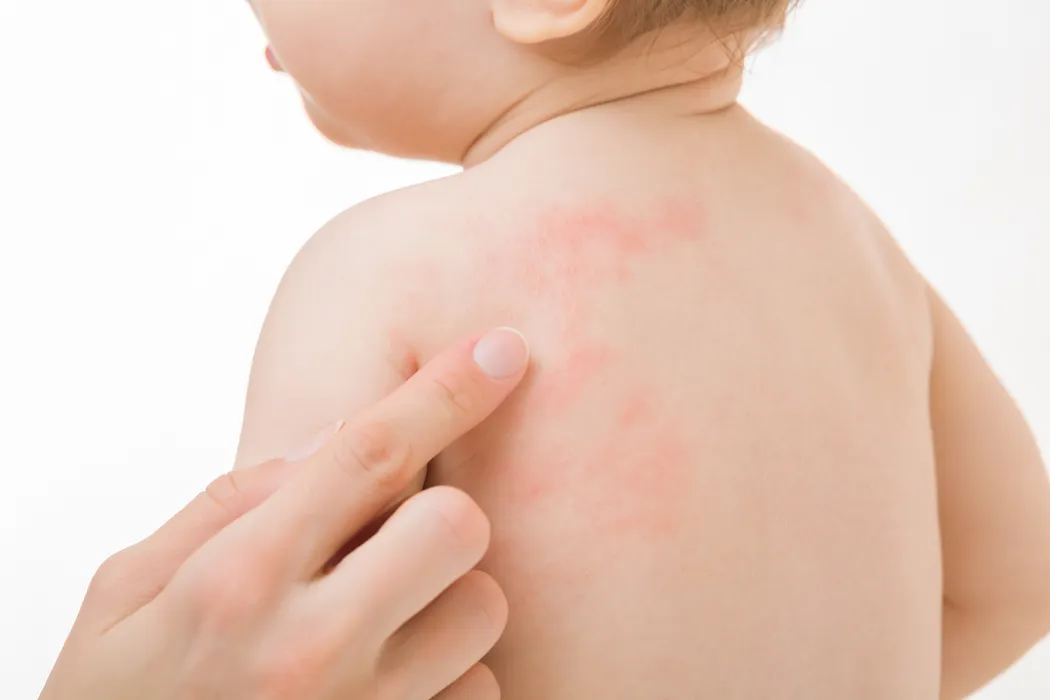
When a baby has an allergic reaction to milk, their skin is often the first place to show signs of distress. However, not all allergic rashes look exactly the same. The appearance of a milk allergy baby rash on face generally falls into two categories, depending on how quickly the body reacts:

  • Hives (Urticaria): This is a rapid-onset reaction. Within minutes to a few hours after consuming milk protein, your baby may develop raised, red, and extremely itchy welts on their face, specifically around the mouth, cheeks, and chin.
  • Red, Flushed Skin: Sometimes, the rash doesn't form distinct welts but instead makes your baby's cheeks look highly flushed, inflamed, and irritated.
  • Dry, Scaly Patches: In delayed allergic reactions, the rash may take hours or even days to appear, often resembling severe dry skin or rough, inflamed patches on the cheeks and forehead.

While searching the internet for milk allergy baby rash pictures can give you a helpful baseline for comparison, it is important to remember that every baby is unique. A visual comparison online should never replace a professional diagnosis from a paediatrician.

Distinguishing Between Baby Acne and Milk Allergies

During the first few weeks of life, many infants develop small, red, or white bumps on their cheeks, nose, and forehead. This is commonly known as baby acne. Because they appear in similar areas, parents often struggle to tell the difference between normal infant breakouts and an allergy.

When trying to determine if you are looking at standard newborn breakouts or an acne milk allergy baby rash on face, look at your baby's overall behaviour. Baby acne does not cause discomfort, itching, or fussiness. It is simply a hormonal response that typically clears up on its own by the time the baby is three to four months old. On the other hand, a rash caused by a milk allergy will be intensely itchy. Your baby may rub their face against your shoulder or their crib mattress to seek relief, and the rash will likely be accompanied by digestive issues.

The Link Between Eczema and Milk Allergies

Atopic dermatitis, commonly known as eczema, is another skin condition closely linked to food allergies. For some infants, a cow’s milk allergy directly triggers or worsens eczema flare-ups.

An eczema milk allergy baby rash on face usually appears as dry, scaly, and red patches on the cheeks. In severe cases, these patches might weep clear fluid or crust over. If your baby has persistent eczema that does not respond to standard moisturising treatments and steroid creams, paediatricians will often recommend investigating a potential food allergy, with cow's milk being the most common culprit.
 

Other Symptoms of a Cow’s Milk Protein Allergy (CMPA)

A milk allergy baby rash on face rarely occurs in isolation. Because the milk protein travels through the baby’s digestive tract, most infants with a milk allergy will exhibit other physical and behavioural symptoms. If your baby has a milk allergy, you may also notice:

Digestive Symptoms

  • Frequent spitting up or severe acid reflux.
  • Vomiting (beyond the normal baby spit-up).
  • Diarrhoea, which may appear watery or contain mucus.
  • Blood in the baby's stool (often looking like tiny red specks or streaks).
  • Severe gas and abdominal bloating.

Respiratory Symptoms

  • A chronic runny nose or congestion that isn't tied to a cold.
  • Wheezing or a chronic cough.
  • Behavioural Signs
  • Extreme fussiness or colic-like crying, especially right after feeding.
  • Arching of the back during or after feeds (a sign of severe reflux and tummy pain).
  • Poor weight gain or failure to thrive due to refusing to eat.

Explore Baby Rash Solutions Here
 

Load more products

What to Do If You Suspect a Milk Allergy Baby Rash on Face?

If you believe your infant is reacting to milk proteins, it is vital to take a calm, step-by-step approach to get them the care they need. Here is what you should do:

1. Consult Your Paediatrician

Never attempt to diagnose or treat a suspected food allergy on your own. Schedule an appointment with your baby's paediatrician. They may refer you to a pediatric allergist or gastroenterologist. The doctor will evaluate the milk allergy baby rash on face, review your baby's symptoms, and may suggest a stool test (to check for microscopic blood) or allergy testing.

2. Adjust the Breastfeeding Diet (With Doctor Approval)

If you are exclusively breastfeeding, your doctor will likely advise you to begin an elimination diet. This means completely removing all dairy from your own diet.

  • Read Labels: Cow’s milk protein hides in many processed foods. You will need to avoid milk, cheese, yoghurt, butter, and ingredients like casein, whey, and nougat.
  • Be Patient: It can take up to two to four weeks for milk proteins to entirely leave your system and your baby's system. You may not see the milk allergy baby rash on face clear up overnight, but gradual improvement is a great sign.
  • Supplement Nutrients: Ask your doctor about taking calcium and Vitamin D supplements to make up for the lack of dairy in your diet.

3. Switch Formulas Safely

If your baby is formula-fed, standard cow’s milk formulas will continue to trigger the allergy. Your paediatrician will recommend a specialised formula:

  • Extensively Hydrolysed Formula: The milk proteins in these formulas are broken down into tiny pieces, making it easier for the baby's immune system to tolerate them.
  • Amino Acid-Based Formula: If your baby still reacts to hydrolysed formula, they may need an amino-acid formula, where the proteins are entirely synthesised and contain no dairy chains whatsoever.
  • Note: Do not switch to soy, goat's milk, or almond milk formulas without doctor supervision. Many babies with a cow's milk allergy also react to soy and goat's milk, and standard plant-based milk does not contain the nutrition an infant needs.

4. Soothe the Skin Gently

While you wait for the dietary changes to take effect, you can soothe your baby's skin. Wash their face with lukewarm water - avoid hot water, which strips the skin of moisture.

 Gently pat the skin dry with a soft towel, and apply a thick, fragrance-free, hypoallergenic emollient cream recommended by your paediatrician. Keep your baby's fingernails trimmed short or use cotton scratch mittens to prevent them from scratching the rash and causing an infection.
 

When to Seek Immediate Medical Help?

While most milk allergies cause mild to moderate discomfort, they can occasionally trigger a severe, life-threatening allergic reaction known as anaphylaxis. You should call 911 or go to the nearest emergency room immediately if your baby's milk allergy baby rash on face is accompanied by:

  • Swelling of the lips, tongue, or throat.
  • Difficulty breathing, rapid breathing, or wheezing.
  • Skin that turns unusually pale or bluish.
  • Sudden lethargy, floppiness, or loss of consciousness.
     
Load more products

Conclusion

A milk allergy rash in babies can be distressing to see, but with the right knowledge and timely action, it is a highly manageable condition. Recognising the early signs, especially when the rash appears after feeding, can help you take the necessary steps to identify and address the root cause.

Whether your baby is breastfed or formula-fed, small dietary adjustments and proper medical guidance can lead to significant improvement. Alongside this, gentle skin care can help keep your baby comfortable while the allergy is being managed.

Most importantly, never ignore persistent symptoms or attempt to self-diagnose. Always consult your paediatrician for an accurate diagnosis and personalised treatment plan. With the right care and attention, your baby can grow, feed, and thrive comfortably without ongoing discomfort.
 

FAQS

How long does a milk allergy baby rash on face last?

Once the milk protein is completely removed from the baby's diet (or the breastfeeding mother's diet), the rash will begin to fade. Hives may disappear within hours to a few days, while eczema-like rashes may take two to four weeks to fully clear up.

Will my baby have this milk allergy forever?

Thankfully, no! The vast majority of infants with a cow's milk protein allergy will outgrow it. Research shows that most children build a tolerance to milk proteins by the time they are 3 to 5 years old. Your paediatrician will guide you on when and how to safely reintroduce dairy later in childhood.

Is a milk allergy the same as lactose intolerance?

No, they are very different. A milk allergy is an immune system reaction to the protein in milk. Lactose intolerance is a digestive issue where the body lacks the enzyme needed to break down lactose, the sugar in milk. Lactose intolerance is incredibly rare in infants, while milk protein allergies are much more common.

Should I stop breastfeeding if my baby has a milk allergy?

Absolutely not. Breast milk is still the best source of nutrition for your baby. You will simply need to adjust your own diet to eliminate dairy. Always consult your doctor or a registered dietitian to ensure you are maintaining a healthy diet while nursing.

What is the best cream to use on an allergic baby rash?

It is best to use fragrance-free, dye-free, and hypoallergenic ointments or thick creams. Products containing ceramides or colloidal oatmeal can be very soothing for eczema-like patches. However, if the rash is severe, your paediatrician may prescribe a mild, baby-safe topical hydrocortisone cream to quickly reduce the inflammation.

Apollo 247 Floating Action Button