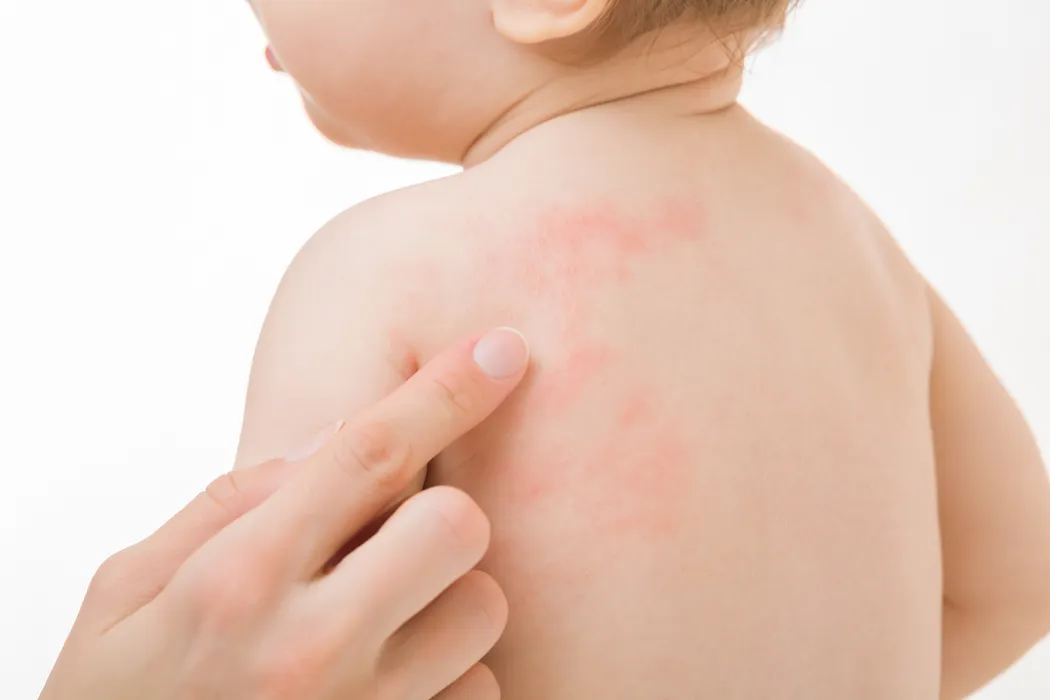
When a baby has an allergic reaction to milk, their skin is often the first place to show signs of distress. However, not all allergic rashes look exactly the same. The appearance of a milk allergy baby rash on face generally falls into two categories, depending on how quickly the body reacts:
- Hives (Urticaria): This is a rapid-onset reaction. Within minutes to a few hours after consuming milk protein, your baby may develop raised, red, and extremely itchy welts on their face, specifically around the mouth, cheeks, and chin.
- Red, Flushed Skin: Sometimes, the rash doesn't form distinct welts but instead makes your baby's cheeks look highly flushed, inflamed, and irritated.
- Dry, Scaly Patches: In delayed allergic reactions, the rash may take hours or even days to appear, often resembling severe dry skin or rough, inflamed patches on the cheeks and forehead.
While searching the internet for milk allergy baby rash pictures can give you a helpful baseline for comparison, it is important to remember that every baby is unique. A visual comparison online should never replace a professional diagnosis from a paediatrician.
Distinguishing Between Baby Acne and Milk Allergies
During the first few weeks of life, many infants develop small, red, or white bumps on their cheeks, nose, and forehead. This is commonly known as baby acne. Because they appear in similar areas, parents often struggle to tell the difference between normal infant breakouts and an allergy.
When trying to determine if you are looking at standard newborn breakouts or an acne milk allergy baby rash on face, look at your baby's overall behaviour. Baby acne does not cause discomfort, itching, or fussiness. It is simply a hormonal response that typically clears up on its own by the time the baby is three to four months old. On the other hand, a rash caused by a milk allergy will be intensely itchy. Your baby may rub their face against your shoulder or their crib mattress to seek relief, and the rash will likely be accompanied by digestive issues.
The Link Between Eczema and Milk Allergies
Atopic dermatitis, commonly known as eczema, is another skin condition closely linked to food allergies. For some infants, a cow’s milk allergy directly triggers or worsens eczema flare-ups.
An eczema milk allergy baby rash on face usually appears as dry, scaly, and red patches on the cheeks. In severe cases, these patches might weep clear fluid or crust over. If your baby has persistent eczema that does not respond to standard moisturising treatments and steroid creams, paediatricians will often recommend investigating a potential food allergy, with cow's milk being the most common culprit.