0

Newborn Baby Skin Rashes: Types & Treatment

Learn about common newborn baby skin rashes, their causes, types, and safe treatment options to keep your baby’s skin healthy and comfortable.

article image

Dr. Yusuf

Welcoming your baby into the world is a joyful experience, but it can also come with moments of concern, especially when you notice changes in their delicate skin. Many parents expect smooth, flawless skin, so the appearance of rashes or tiny bumps can feel alarming at first.
If you have spotted new born baby skin rashes, there is usually no need to panic. A newborn’s skin is still adjusting to the outside world after being protected in the womb. This transition often leads to temporary skin changes that may look unusual but are usually harmless.

It is completely natural to feel worried when you see a new spot, patch, or redness. However, most skin rashes in newborns are mild, short-lived, and do not cause discomfort to the baby. From small red spots to slightly dry or flaky patches, these changes are a common part of early development.
In this guide, we will walk you through the different types of skin rashes in newborn babies, what may cause them, and how to care for your baby’s skin safely. Understanding what is normal and what may need attention can help you feel more confident and at ease during these early weeks.

Common Causes of Rashes in Newborn Baby

It is natural to wonder why your baby’s skin reacts so quickly. The answer lies in how delicate and developing newborn skin truly is. A baby’s skin is significantly thinner than an adult’s and has a weaker protective barrier, which means it can lose moisture easily and react more strongly to everyday exposures.

In many cases, what may seem like a skin allergy in new born baby is simply a temporary reaction to normal environmental factors. As your baby’s immune system and skin barrier mature, these sensitivities often reduce on their own.
Common triggers for rashes in new born baby include:

  • Heat and sweat: Sweat can get trapped in skin folds such as the neck, underarms, and thighs. This may lead to small red bumps or prickly heat, especially in warm or humid conditions.
  • Friction: Constant rubbing from tight diapers, seams, or rough fabrics may irritate the outer layer of the skin, causing redness or mild inflammation.
  • Hormonal changes: Hormones passed from the mother during pregnancy can temporarily affect the baby’s skin. This may result in small pimples or new born baby face rashes, which usually resolve on their own.
  • Chemical irritants: Products like strongly scented soaps, detergents, or wipes may disrupt the skin’s natural balance. In some cases, this can trigger irritation that resembles a new born baby skin allergy.

Recognising these triggers can help you make small adjustments in your baby’s daily care routine. With gentle handling and the right products, most rashes tend to settle without the need for medical treatment.

Recognising the Types of New Bornbaby Rashes

Not all bumps or spots on your baby’s skin mean the same thing. Learning to identify common rashes can help you stay calm and respond appropriately. Most newborn rashes are harmless and temporary, even if they look concerning at first glance.
Here is a closer look at the most common types of new born baby rashes you may notice during the early months:

Erythema Toxicum: Red Spots on Newborn Baby

This condition may sound alarming, but it is one of the most common and harmless newborn rashes. It typically appears within the first few days after birth as blotchy red patches with tiny white or yellow centres. These spots may resemble insect bites and can appear on the chest, back, face, and limbs.
The rash may come and go over a few days and usually settles on its own within one to two weeks. It does not cause discomfort to the baby and does not require any treatment. Gentle skin care and avoiding unnecessary products is all that is needed.

Baby Acne: Newborn Baby Rashes on Face

Baby acne appears as small red or white pimples on the cheeks, forehead, chin, or sometimes the scalp. It is fairly common and is linked to hormonal changes after birth. These hormones may stimulate the baby’s oil glands, leading to temporary breakouts.
Although it may look similar to teenage acne, it is completely harmless. The condition usually improves within a few weeks to months without treatment. It is important not to squeeze or apply adult acne products, as this may irritate the skin further.

Milia: Red Dots on Newborn Baby

Milia are tiny white or slightly yellowish bumps that often appear on the nose, cheeks, or chin. They form when dead skin cells get trapped beneath the surface of the skin. In some cases, they may appear slightly reddish depending on the surrounding skin tone.
These spots are very common and do not cause any pain or itching. They typically clear up naturally within a few weeks as the baby’s skin matures. Gentle cleansing with plain water is usually sufficient, and no special treatment is required.

Diaper Rash: Baby Rash on Body

Diaper rash appears as red, inflamed skin in the nappy area, including the buttocks, thighs, and genital region. It often develops due to prolonged exposure to moisture, friction from nappies, or contact with urine and stool.
The skin may look sore or irritated, and in some cases, the baby may seem uncomfortable during nappy changes. Keeping the area clean and dry, allowing some nappy-free time, and applying a protective barrier cream may help soothe the skin and support healing.

Baby Eczema: Baby Dry Skin Rash

Eczema appears as dry, rough, and sometimes itchy patches on the skin. It often affects the cheeks, scalp, and folds of the arms or legs. The skin may look red, slightly swollen, or flaky, and flare-ups can come and go.
This condition is linked to a sensitive skin barrier and may be influenced by genetics or environmental triggers. Regular use of thick, fragrance-free moisturisers may help maintain skin hydration and reduce irritation. In more persistent cases, a doctor may recommend medicated creams.

Understanding these common rashes can make a significant difference in how you respond. While most of them settle on their own, staying observant and maintaining gentle skin care practices can help keep your baby comfortable and protected.
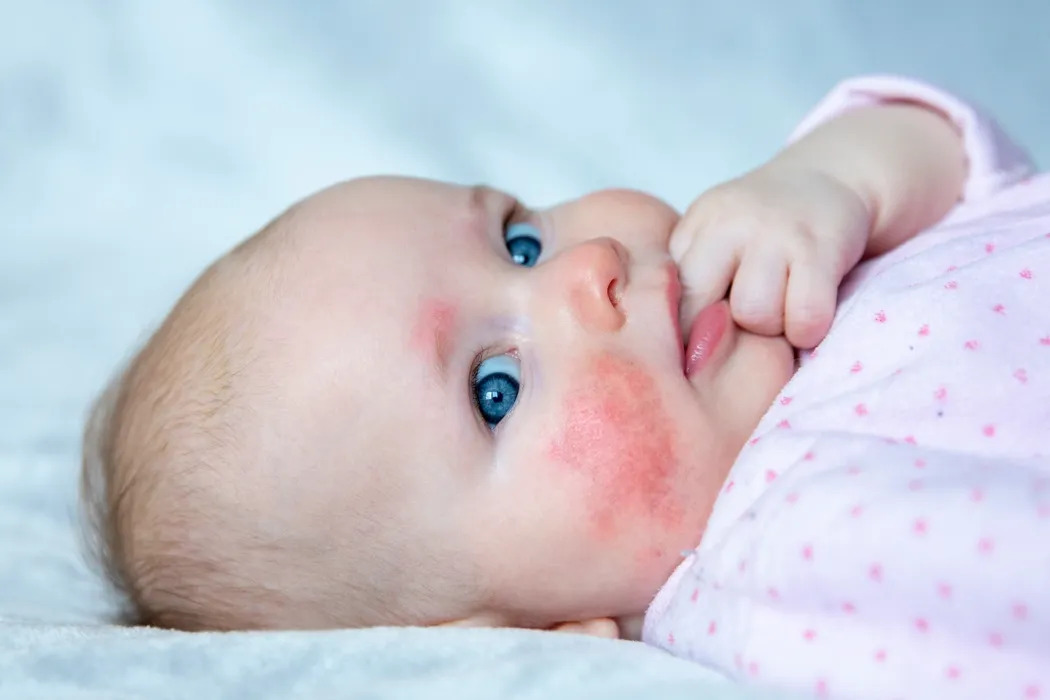
Is It a Newborn Baby Skin Allergy or Infection?

It can feel overwhelming trying to understand whether your baby’s rash is something harmless or a sign of a more serious issue. While most newborn rashes are mild and temporary, it is important to recognise when a reaction may need closer attention.

A true allergy in the first few weeks of life is relatively uncommon, but it can occur. These reactions are often triggered by direct contact with certain products such as fragranced lotions, detergents, fabric dyes, or wipes. This is known as contact dermatitis. In such cases, the rash usually appears exactly where the skin has come into contact with the irritant. You may notice redness, mild swelling, or small bumps in a clearly defined area.

In contrast, a new born baby skin infection may look more severe and tends to worsen without treatment. Fungal infections, such as yeast-related nappy rash, often appear as deep red, shiny patches with small red spots spreading beyond the main rash area. These can persist despite using regular barrier creams.

Bacterial infections may present differently. The skin might look swollen, warm to the touch, or develop yellow crusting, oozing, or small blisters. In some cases, the baby may seem more uncomfortable than usual.

If you notice signs that suggest a skin infection in new born baby, it is important to seek medical advice promptly. Early diagnosis and appropriate treatment can help prevent the condition from worsening and ensure your baby remains comfortable.

Gentle Treatments for Newborn Baby Rashes on Body

When caring for new born baby rashes on body, the most important principle is simplicity. A baby’s skin is still developing, so using too many products or harsh treatments may worsen irritation rather than improve it. Gentle, consistent care is usually all that is needed.
Here are some of the safest and most effective ways to manage rashes on new born baby body:

  • Keep it clean and gently dry: Bathe your baby using lukewarm water and a mild, fragrance-free cleanser. After the bath, gently pat the skin dry with a soft towel. Avoid rubbing, as this can irritate sensitive areas further.
  • Skip powders: Talc-based and even some scented baby powders are not recommended. Fine particles may be inhaled and irritate a baby’s lungs. It is safer to rely on creams or simple air exposure instead.
  • Dress comfortably: Choose loose, soft cotton clothing that allows the skin to breathe. Tight outfits or synthetic fabrics may trap heat and moisture, which can trigger or worsen rashes.
  • Use protective barrier creams: For rashes in the nappy area, applying a thick layer of a zinc oxide or petroleum-based cream during each nappy change may help protect the skin from moisture and irritation.
  • Moisturise regularly: If your baby has dry or slightly rough skin, applying a gentle, fragrance-free moisturiser after bathing may help lock in hydration and support the skin barrier.

With these simple measures, most newborn rashes tend to improve on their own. If a rash persists, spreads, or appears uncomfortable for your baby, it is always best to seek medical advice.

Tips to Prevent Skin Rashes in Newborn Baby

While not every rash can be avoided, a few simple daily habits may go a long way in protecting your baby’s delicate skin. Consistent, gentle care can help reduce irritation and keep the skin healthy and comfortable.
Here are some practical tips to help prevent skin rashes in new born baby:

  • Wash new clothes first: Always wash new clothes, blankets, and towels before use. Fabrics may carry dust, dyes, or finishing chemicals that could irritate your baby’s sensitive skin. Using a mild, fragrance-free detergent may help minimise this risk.
  • Keep the temperature comfortable: Babies can overheat quickly, which may lead to heat rashes. Keeping the room at a cool, well-ventilated temperature and dressing your baby in light layers may help prevent excess sweating.
  • Change nappies frequently: Prolonged exposure to moisture is one of the most common causes of irritation. Changing nappies regularly and cleaning the area gently may help reduce the chances of developing a rash.
  • Avoid harsh chemicals: Choose baby care products that are free from strong fragrances, dyes, and alcohol. Gentle, skin-friendly formulations may help maintain the natural balance of your baby’s skin and reduce the risk of reactions.

Building these habits into your routine may help minimise flare-ups and support your baby’s skin as it gradually becomes stronger and more resilient.

When to See a Doctor for New Bornbaby Skin Rashes?

Most newborn skin changes are harmless and tend to settle as your baby grows. However, certain signs may indicate that the rash needs medical attention. Knowing when to seek help can ensure your baby receives timely care and stays comfortable.

You should contact your doctor or seek immediate medical care if you notice any of the following:

  • A rash with fever: If your baby develops a rash along with a fever, it may signal an underlying infection. In babies under 3 months, a rectal temperature of 38°C or higher is considered a medical emergency and requires urgent evaluation.
  • Blisters or crusting: Fluid-filled blisters, yellow crusts, or pimples that appear infected may indicate a bacterial or viral condition that needs treatment.
  • Rapidly spreading rash: A rash that suddenly spreads across large areas of the body should not be ignored, especially if it appears alongside other symptoms.
  • Petechiae: Tiny red or purple spots that do not fade when you press on them may point to a more serious condition and should be assessed immediately.
  • Changes in behaviour: If your baby is unusually fussy, difficult to console, refusing feeds, or appears very drowsy, these may be warning signs that something more than a simple rash is present.
  • Signs of infection: Severe redness, swelling, warmth, or oozing from the skin may suggest a developing infection that requires medical treatment.

Trusting your instincts as a parent is important. If something does not feel right, it is always safer to have your baby examined by a healthcare professional.

Conclusion

Caring for your newborn’s skin is a gentle learning curve that unfolds day by day. It calls for patience, careful observation, and a simple, consistent routine. Because every baby’s skin is different, what works well for one child may not suit another, and that is perfectly normal.
In most cases, less intervention and more gentle care may help the skin adjust naturally over time. Paying attention to small changes, keeping routines simple, and choosing mild, skin-friendly products can make a meaningful difference in maintaining your baby’s comfort.
Most importantly, trust your instincts. If a rash looks unusual, persists, or causes concern, reaching out to your healthcare provider is always the right step. Paediatricians are well accustomed to these concerns and can offer the reassurance or treatment needed to keep your baby’s skin healthy and protected.

Disclaimer: This article is for informational purposes only and does not substitute for professional medical advice. Always consult your paediatrician for any concerns about your baby’s health and medical needs.

FAQS

How long do common newborn rashes usually last?

Most common newborn rashes, such as baby acne and erythema toxicum, tend to settle on their own within a few weeks to a couple of months. Diaper rash, when managed with proper care and barrier creams, may improve within 2 to 3 days.

Should I pop the pimples on my baby’s face?

No, you should never squeeze or scrub baby acne or milia. This may irritate the skin, introduce bacteria, and potentially lead to infection or scarring. Gentle cleansing is all that is needed.

Can applying breast milk help soothe baby rashes?

Some parents use a small amount of breast milk on mild rashes, as it contains natural protective components. While it may help in certain cases, it is always best to check with your paediatrician before trying home remedies.

How often should I bathe my newborn to prevent skin issues?

Newborns usually only need a bath two to three times a week. Bathing too frequently may strip the skin of its natural oils, which could lead to dryness or irritation. Gentle cleansing on non-bath days is usually sufficient.

Is peeling skin in newborns considered a rash?

No, peeling skin is a normal process and not a rash. It often occurs in the first few weeks after birth as the baby sheds the outer layer of skin. This typically resolves on its own without any treatment.

Apollo 247 Floating Action Button