A newborn’s diaper pattern provides some of the earliest and most reliable clues about hydration, feeding adequacy, and overall health. For new parents, it is common to watch every diaper closely and wonder whether the baby is urinating enough, whether the colour is normal, or whether a temporary change needs medical attention. Because newborns cannot explain discomfort, urine output becomes one of the most practical daily indicators doctors use to assess whether feeding is going well, especially during the first week of life. A sudden reduction in wet diapers may suggest low milk intake, while unusual colour changes can sometimes point to dehydration or temporary newborn adjustment. This guide explains normal urine frequency, common colour changes, what is expected during the first week, and when urine patterns suggest a problem.
In this article
- Why Does Urine Output Matter in a Newborn?
- How Often Should a Newborn Pass Urine?
- Why Do Wet Diapers Increase After the First Week?
- How to Recognise a Properly Wet Diaper?
- Normal Urine Colour in a Newborn
- When Does It Need Medical Review?
- Why May a Baby Cry During Urination?
- How to Prevent Urine-Related Problems?
- When to Consult a Paediatrician?
- Conclusion
Newborn Baby Urine: Normal Frequency, Color & Problems
Learn how often a newborn should pass urine, what urine colour is normal, signs of dehydration, and when urine changes may need medical attention.
Dr. Vasantha Sree
Why Does Urine Output Matter in a Newborn?
Urine output reflects how well a baby is receiving and processing fluids. In the newborn period, this mainly depends on:
- Breast milk intake
- Formula intake
- Kidney function
- Hydration status
Healthy urine output usually means feeding is adequate and circulation is stable. According to World Health Organization newborn feeding guidance, diaper output remains one of the most practical indicators of early feeding success.


How Often Should a Newborn Pass Urine?
Urine frequency changes rapidly during the first days because milk intake gradually increases.
First 4 Days of Life
A simple day-by-day pattern often helps parents understand what is expected.
- Day 1: At least 1 wet diaper in the first 24 hours.
- Day 2: At least 2 wet diapers.
- Day 3: At least 3 wet diapers.
- Day 4: At least 4 wet diapers.
This pattern reflects increasing milk intake.
After Day 5
Once mature milk supply is established or formula feeding increases, most healthy babies produce:
- 6 to 8 wet diapers every 24 hours
This becomes the usual normal range.
Why Do Wet Diapers Increase After the First Week?
As feeding improves:
- Milk volume increases
- Kidney output increases
- Urine becomes more diluted
This usually makes diapers noticeably heavier.
How to Recognise a Properly Wet Diaper?
Disposable diapers absorb extremely well, so wetness can be difficult to judge.
Useful Signs
Here are some useful signs:
- Wetness indicator line changes colour
- Diaper feels heavier
- Inner lining feels damp
A fully wet diaper often feels much heavier than a dry one.
Normal Urine Colour in a Newborn
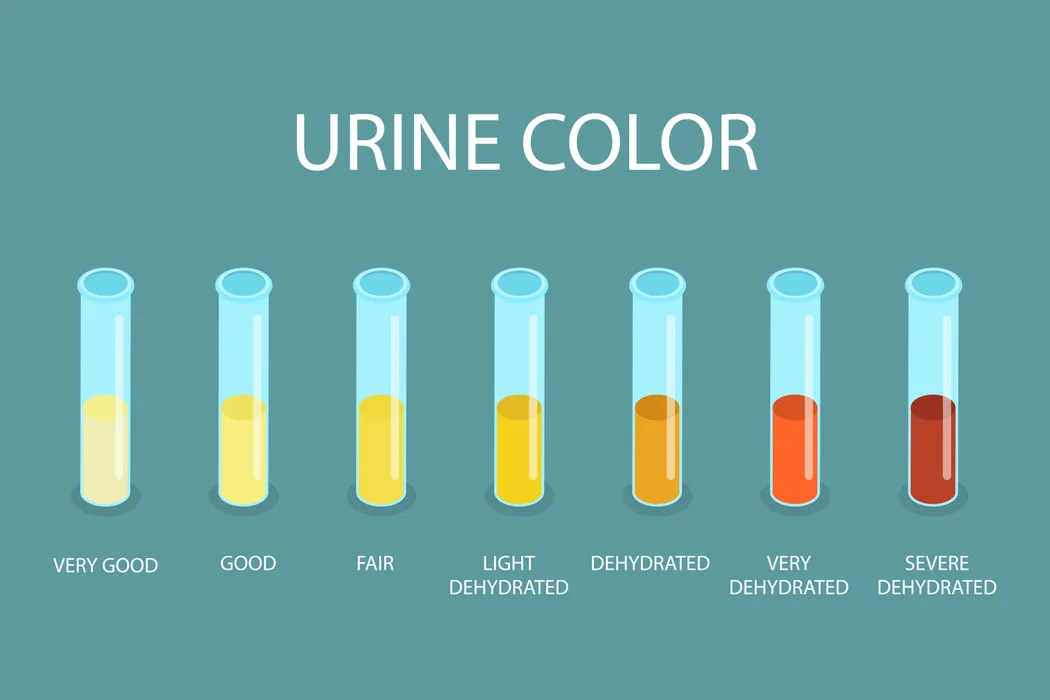
Urine colour changes depending on hydration and age.
Pale Yellow or Clear Urine
This is the most reassuring normal colour. It usually means the baby is well hydrated.
Slightly Dark Yellow Urine
A deeper yellow colour may happen:
- After long sleep
- In early days before milk fully increases
Mild concentration can still be normal temporarily.
When Does Dark Yellow Urine Colour Need Attention?
Very dark yellow urine may suggest reduced fluid intake. If this happens repeatedly, feeding should be reviewed. According to Mayo Clinic dehydration guidance, dark concentrated urine is one of the earliest signs of reduced hydration.
Pink, Orange, or Rust-Coloured Stains: Brick Dust
Many parents become alarmed when they see pink or orange stains in the diaper. In most early newborn cases, this is not blood.
What Causes Brick Dust?
The stain usually comes from urate crystals. These crystals form when urine is highly concentrated. They are common during the first few days when fluid intake is still increasing.
When Is Brick Dust Normal?
Brick dust is often normal during:
- Day 1
- Day 2
- Day 3
It usually disappears as milk intake rises.
When Does It Need Medical Review?
If pink or rust stains continue after day 5, a doctor should review feeding and hydration.
Is Blood in Urine Ever Possible?
True blood is uncommon and needs attention. Possible causes include:
- Urinary tract infection
- Kidney issues
- Local irritation
In newborn girls, a small amount of vaginal bleeding may also appear briefly because of maternal hormone withdrawal.
When a Newborn Is Not Passing Urine?
A reduced number of wet diapers needs close attention.
Warning Signs
Call a doctor if your baby goes:
- More than 6 to 8 hours without urine
- Much longer than usual without wet diapers
Signs of Dehydration That May Appear Together
- Dry lips
- Sunken soft spot on the head
- Very sleepy baby
- No tears when crying
The Centers for Disease Control and Prevention advises urgent review when reduced urine occurs with feeding difficulty.
Why May a Baby Cry During Urination?
Crying is your baby's only way to communicate, but certain types of crying can point to specific issues. Anxious parents frequently search the internet asking, "why new born baby crying during urinating?" Normally, peeing is a painless, passive process for an infant. If you consistently notice your new born baby crying during urinating, it is a sign that they are experiencing discomfort. There are two primary reasons for this:
1. Severe Diaper Rash: The most common reason a baby cries when peeing is because they have a raw, irritated diaper rash. Urine is highly acidic. When it touches broken, sensitive skin on a baby's bottom, it stings badly. Applying a thick barrier cream (like zinc oxide) and giving your baby some "diaper-free" time to air out can help heal the skin.
2. Urinary Tract Infection (UTI): If the skin looks perfectly clear, but the crying persists, your baby might have a UTI. A UTI causes a burning sensation in the urethra. Other signs of a UTI include an unexplained fever, foul-smelling urine, and vomiting. UTIs in newborns require prompt antibiotic treatment from a medical professional.
When to Consult a Paediatrician?
Seek medical advice if:
- Wet diapers suddenly decrease
- Urine remains dark
- Pink stains persist
- Baby seems sleepy or feeds poorly
Conclusion
Urine output is one of the simplest and most reliable ways to monitor newborn hydration during the first weeks of life. A steady increase in wet diapers, pale urine colour, and regular feeding usually indicate healthy adjustment after birth. Temporary colour changes such as urate crystals are often harmless, but reduced urine or persistent abnormal colour should always be checked early.
FAQS
FAQS
How do I know if my baby’s wet diaper is wet enough?
A heavily wet diaper should feel noticeably heavier than a dry one. For disposable diapers, it should feel similar to pouring two to three tablespoons of water into it. The wetness indicator line turning blue is also a reliable sign.
Is it normal for my newborn's urine to have a strong smell?
Normal newborn urine should have a very mild odour. If the urine smells very strong, pungent, or like ammonia, it is usually a sign of dehydration or a possible Urinary Tract Infection (UTI). Offer more milk and consult your paediatrician if the smell persists.
What should I do if my baby hasn't peed all night?
While older babies might start holding their pee through the night, newborns (under one month old) should urinate around the clock. If your newborn wakes up with a completely dry diaper after a 6-to-8-hour stretch, contact your healthcare provider to rule out dehydration.
Can medications or maternal diet change the colour of a baby's urine?
If you are breastfeeding, your diet primarily affects the baby's stool rather than their urine. However, certain maternal vitamins (like B vitamins) can sometimes give the baby's urine a slightly brighter yellow tint. Always mention any medications or supplements you are taking to your baby’s doctor.
How long do urate crystals (brick dust) last in a newborn's diaper?
Urate crystals are normal in the first 3 to 5 days of life when urine is highly concentrated. Once the mother's mature milk comes in and the baby takes in larger volumes of liquid, the crystals should disappear. If you see pink stains after day 5, contact your paediatrician.


