0

Newborn Baby on Ventilator: Types, Duration & What to Expect

Having a newborn on a ventilator can be overwhelming. Learn about the types of respiratory support, how long babies typically stay on a ventilator, and what to expect during your NICU journey. Gain clarity on the recovery process and next steps for your baby’s health.
 

article image

Dr. Ezhilrasan

Having a baby admitted to the Neonatal Intensive Care Unit (NICU) can be an incredibly overwhelming experience for any parent. Seeing your precious little one surrounded by monitors, wires, and medical equipment often brings up feelings of fear and confusion. If your child's care team has mentioned that they need breathing support, you likely have many questions.

Understanding why a ventilator for a newborn baby is necessary can help ease your anxiety. In the NICU, a ventilator is a common, life-saving piece of equipment designed to help infants breathe while their delicate lungs heal and grow.

In this comprehensive guide, we will walk you through why ventilators are used, the different types of breathing support available, how long the process might take, and how you can continue to bond with your baby during this critical time.
 

Load more products

Why Would a Doctor Recommend a Ventilator for a Newborn Baby?

When a baby is born, their lungs must suddenly take over the job of providing oxygen to the body, a job previously handled by the mother’s placenta. For some infants, this transition is difficult. A doctor may recommend a ventilator for a newborn baby for several reasons:

  • Premature Lungs (Respiratory Distress Syndrome): Babies born before 34 weeks of pregnancy often lack a substance called surfactant. Surfactant coats the inside of the lungs and keeps the tiny air sacs open. Without enough of it, breathing becomes exhausting, and a ventilator is needed to do the heavy lifting.
  • Infections: Illnesses like pneumonia or sepsis can cause inflammation and fluid buildup in the lungs, making independent breathing too difficult for a newborn.
  • Meconium Aspiration Syndrome: Sometimes, a baby passes their first stool (meconium) while still in the womb and accidentally inhales it. This can block the airways and irritate the lungs, requiring temporary mechanical ventilation.
  • Apnea of Prematurity: Premature babies sometimes have immature brain centres that simply "forget" to tell the body to breathe. A ventilator provides consistent, safe breaths.
  • Surgical Recovery: If an infant requires surgery shortly after birth, they will likely need breathing support while under anaesthesia and during the initial recovery phase.

Buy Mucus Extractor 
 

Load more products

How Does a Ventilator Machine for a Newborn Baby Work?

It is entirely normal to feel intimidated by the complex machinery in the NICU. So, how exactly does a ventilator machine for a newborn baby work?

Simply put, a ventilator is a highly advanced machine that gently blows warm, humidified air and oxygen into the baby’s lungs. To connect the baby to the machine, a doctor or respiratory therapist will carefully place a tiny, soft plastic tube (called an endotracheal tube) through the baby’s nose or mouth and down into their windpipe.

The machine takes over the work of breathing. It ensures that the baby receives the exact amount of oxygen they need and helps remove carbon dioxide (a waste gas) from their body.

Understanding the Newborn Ventilator

Modern medical technology is incredible. A newborn ventilator is highly sensitive and specifically calibrated for the tiny, fragile lungs of an infant. The machine constantly monitors the pressure, volume of air, and the baby's oxygen levels. If the baby takes a spontaneous breath on their own, the machine is smart enough to synchronise with them, gently supporting their natural effort rather than fighting against it.

Incubator for Newborn Baby vs. Ventilator

While looking at your baby's setup, you might wonder about the other equipment surrounding them. It is important to distinguish between the breathing machines and the bed your baby is sleeping in.

An incubator for a newborn baby is the clear, plastic, enclosed bed where your baby rests. It is designed to mimic the womb by keeping the baby warm, protecting them from drafts, and maintaining a humid environment to keep their sensitive skin from drying out. While the incubator regulates temperature and protects against infection, the ventilator is strictly there to support the lungs. It is very common to see a baby resting safely inside an incubator while simultaneously connected to a ventilator.
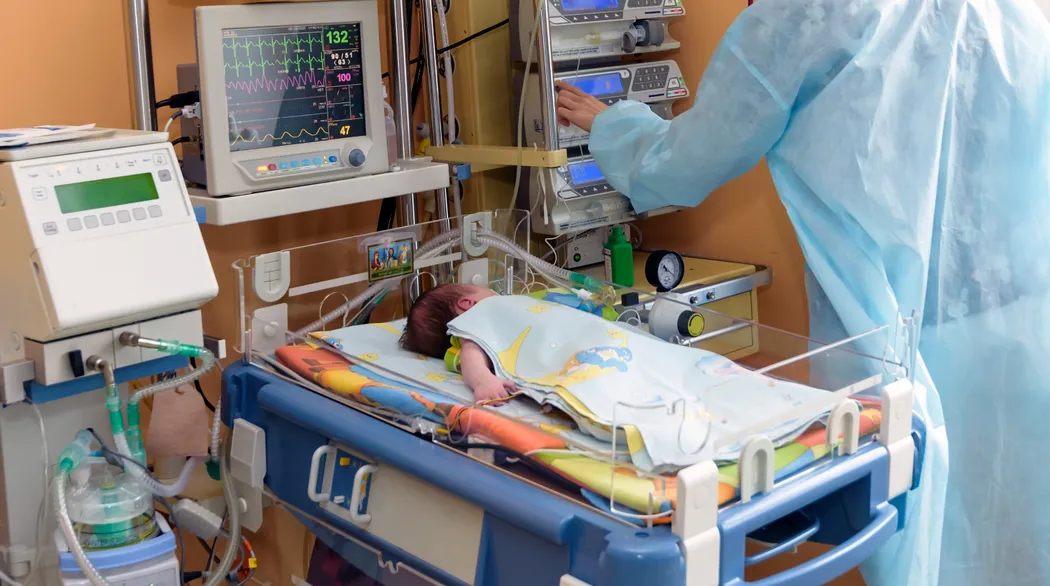
 

Types of Breathing Support in the NICU

Not all babies need the same level of help. The NICU team will select the best type of breathing support based on your baby's specific condition.

Conventional Mechanical Ventilation

This is the standard type of ventilator. It mimics normal breathing by delivering a set number of breaths per minute at a specific pressure.

High-Frequency Ventilation

If a conventional ventilator isn't providing enough support, doctors might use a high-frequency ventilator. Instead of regular, deep breaths, this machine delivers hundreds of tiny, rapid puffs of air per minute. It keeps the baby's lungs constantly open and reduces the risk of lung injury. To parents, it may look like the baby's chest is vibrating or "jiggling," which is completely normal for this highly effective treatment.

What About CPAP for a Newborn Baby?

As babies grow stronger, or if they only need mild support from the start, doctors may use CPAP for a newborn baby. CPAP stands for Continuous Positive Airway Pressure.

Unlike a mechanical ventilator that breathes for the baby through a tube in the windpipe, CPAP is non-invasive. It uses small, soft prongs placed just inside the baby's nostrils or a small mask over their nose. It gently blows a steady stream of air to keep the airways open, but the baby does all the actual breathing themselves. Transitioning from a mechanical ventilator to CPAP is a major, exciting milestone in a NICU baby's recovery!
 

How Long Does a newborn baby on a ventilator need to stay?

One of the most common questions parents ask is, "How long will my baby need this machine?"

There is no single answer. The time a newborn baby in ventilator care needs varies wildly from one infant to the next.

  • Short-term stays: A full-term baby recovering from a mild infection or minor surgery might only need the ventilator for a few days.
  • Long-term stays: Extremely premature babies whose lungs are severely underdeveloped may need ventilator support for several weeks or even months.

The NICU team practices a process called "weaning." Every day, they will assess your baby's blood tests, oxygen levels, and chest X-rays. As the baby's lungs grow stronger, the team will slowly turn down the settings on the machine, letting the baby do more of the work. They will only remove the breathing tube (a process called extubation) when they are confident the baby is strong enough to breathe with less support.


Seeing Your Newborn Baby on a Ventilator: What Parents Can Do?

Walking into the NICU and seeing your newborn baby on ventilator support can trigger intense feelings of helplessness. However, you are not just a visitor in the NICU; you are a vital part of your baby’s care team. Here is what you can do:

  • Provide a Gentle Touch: While you may not be able to pick up your baby easily, you can practice "containment holding." This involves gently placing one warm hand on your baby’s head and the other over their feet or tummy. This steady touch is incredibly soothing to them.
  • Talk and Read to Them: Your baby knows your voice from their time in the womb. Reading a book, humming a lullaby, or simply whispering words of encouragement helps them feel safe and aids in their brain development.
  • Supply Breast Milk: If you are able and choose to do so, pumping breast milk is one of the most powerful medicines you can provide. Even if your baby cannot nurse, the NICU nurses can deliver your milk directly to their tummy through a small feeding tube.
  • Ask About Kangaroo Care: Depending on how stable your baby is, some NICUs allow "Kangaroo Care" (skin-to-skin contact) even while the baby is intubated. A team of nurses and respiratory therapists will carefully move the baby onto your bare chest. This regulates the baby's heart rate, improves their oxygen levels, and promotes deep bonding.
  • Take Care of yourself: You cannot pour from an empty cup. Take breaks to eat, drink water, and sleep. Your baby needs you to be as healthy and rested as possible for the day they finally come home.
     

Conclusion

Having a baby in the NICU is a journey requiring immense patience and strength. While the sight of a ventilator for a newborn baby can be frightening at first, it is a remarkable tool that provides your little one with the time and support they need to heal, grow, and eventually thrive on their own. Lean on your medical team, ask questions, and remember that every small breath your baby takes is a step closer to coming home.
 

Load more products

FAQS

Is a ventilator for a newborn baby safe?

Yes. While all medical interventions carry some risks, modern ventilators are incredibly advanced and specifically designed to be safe for infants. Your baby is monitored 24/7 by specialised neonatologists, respiratory therapists, and NICU nurses who constantly adjust the machine to ensure it is providing the safest, most effective care.

Does being on a ventilator hurt my baby?

The breathing tube itself can be mildly uncomfortable, but the NICU team prioritises your baby's comfort. Doctors often provide safe, carefully dosed pain-relieving medications or mild sedatives to help the baby relax, sleep, and heal without fighting the machine.

How will my baby eat while on a ventilator?

Because there is a breathing tube in their mouth or nose, your baby cannot drink from a breast or bottle. Instead, they will receive nutrition either through an IV (fluids containing essential proteins, fats, and sugars) or through a tiny, soft feeding tube that goes through their nose or mouth directly into their stomach.

Will my baby be able to cry while the breathing tube is in?

You will likely see your baby make crying faces, but you will not hear any sound. This is because the endotracheal tube passes right between the vocal cords, preventing them from vibrating. Once the tube is successfully removed, you will be able to hear their beautiful, healthy cries again.

What happens when it is time to come off the ventilator?

When your baby is strong enough, the care team will gently remove the breathing tube. Most babies are then transitioned to a less invasive form of support, such as CPAP or a high-flow nasal cannula, to give them a little extra help as they get used to breathing on their own.

Apollo 247 Floating Action Button