Welcoming a new baby into the world is a deeply emotional experience, and when your little one arrives earlier than expected, it can bring both joy and uncertainty. In the Neonatal Intensive Care Unit, even the smallest increase in weight is seen as meaningful progress, offering reassurance that your baby is moving in the right direction. If you are trying to understand how your baby’s growth compares to expected patterns, a premature baby weight gain chart can provide helpful context.
Unlike full-term babies, premature infants have different nutritional requirements and follow a distinct growth pattern. Because they have had less time to develop in the womb, their early growth outside the womb is carefully monitored and supported.
In this guide, we will help you understand how premature baby weight gain charts work, what healthy growth may look like in kilograms, and how you can support your baby’s progress with confidence and care.
Premature Baby Weight Gain Chart in Kg: Growth Guide & Tips
Track your preterm baby's growth with a premature baby weight gain chart in kg. Learn expected gains, feeding tips, and how to support healthy development at home and in the NICU.
Dr. Abdul Kalam
Why Do Preemies Need a Special Growth Chart?
Babies born before 37 weeks of pregnancy are considered premature, and their growth journey is different from that of full-term infants. Comparing a baby born at 28 weeks to one born at 40 weeks can be misleading, as preemies are still developing essential functions such as digestion, temperature regulation, and fat storage outside the womb.
To monitor their progress accurately, doctors use specialised tools like a preterm baby weight gain chart. Commonly used references include the Fenton Preterm Growth Chart and the INTERGROWTH-21st standards. These charts allow healthcare providers to compare your baby’s weight, length, and head circumference with other babies born at the same gestational age, ensuring a more precise and meaningful assessment.
Understanding "Corrected Age"
To use a premature baby weight gain chart correctly, it is important to understand the concept of corrected age, also known as adjusted age. This ensures your baby’s growth is assessed according to their developmental stage rather than just their birth date.
Corrected age is calculated by subtracting the number of weeks your baby was born early from their chronological age.
For example:
Baby’s current age: 12 weeks
Weeks born early: 8 weeks
Corrected age: 12 − 8 = 4 weeks
This means your doctor will evaluate your baby’s growth based on what is expected for a 4-week-old baby, not a 12-week-old. This approach provides a clearer and more accurate understanding of your baby’s development and progress.
The Premature Baby Weight Gain Chart (in Kg)
While every infant grows at their own pace, having a general reference can help you understand expected weight ranges for preterm babies. The table below presents an approximate overview of average weights in kilograms based on gestational age at birth.
These values represent the 50th percentile, meaning they reflect the midpoint average. It is completely normal for a healthy baby to fall slightly above or below these ranges, as long as growth remains steady over time.
It is important to remember that this chart is only a general guide. Doctors focus more on consistent weight gain over time rather than a single number.
Always consult your paediatrician or NICU team for guidance tailored to your baby’s individual growth pattern. If you want a printable version for easy tracking, you can ask your hospital for a premature baby weight gain chart in kg PDF.


How Fast Should a Premature Baby Gain Weight?
Many parents feel concerned when their preterm baby loses weight in the first few days after birth. This initial drop is expected and happens because babies shed excess fluids. In most cases, both premature and full-term infants may lose around 10% to 15% of their birth weight during the first week.
As feeding becomes established and digestion improves, the focus shifts to steady weight gain that reflects the growth your baby would have experienced inside the womb.
- Daily Weight Gain Goal: Doctors generally aim for a gain of about 15 to 20 grams per kilogram of body weight per day. This gradual increase supports healthy development without overwhelming the baby’s system.
- Weekly Goal: Over the course of a week, this typically adds up to around 100 to 200 grams, depending on your baby’s size and overall health condition.
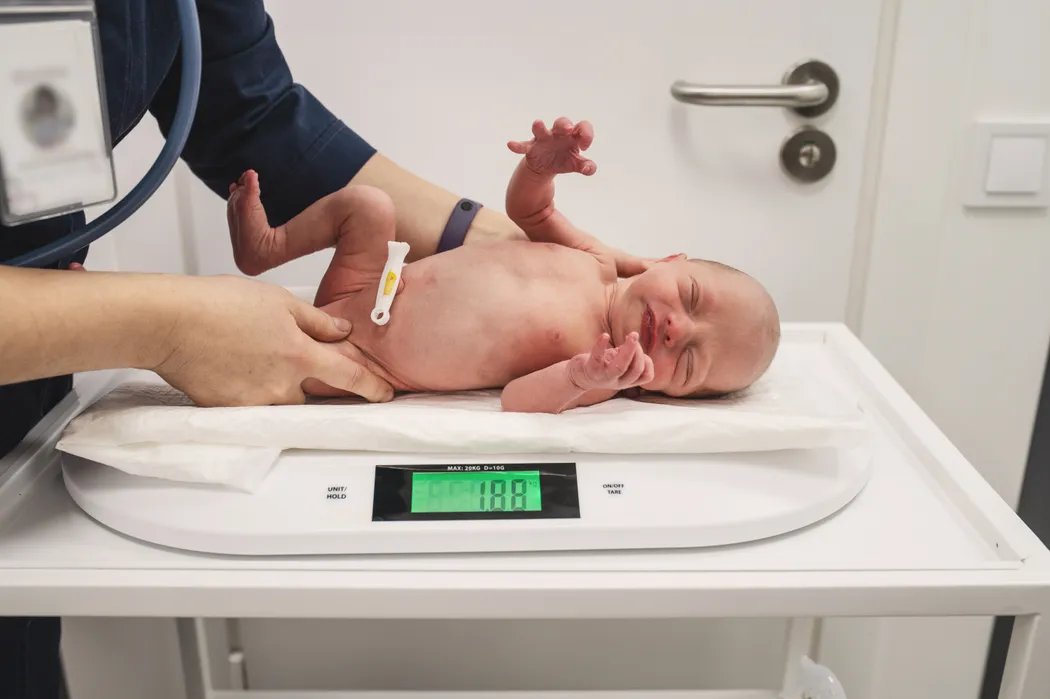
In the hospital setting, discharge is not based on weight alone. Many NICUs look for a minimum weight range of approximately 1.8 kg to 2.0 kg, along with other important milestones. Your baby should be able to breathe independently, maintain body temperature without external support, and feed effectively by mouth.
Consistent progress, rather than rapid gain, is what doctors consider most reassuring during this stage of growth.
Essential Premature Baby Weight Gain Tips
Watching your baby grow stronger each day can be incredibly reassuring. Supporting a preterm baby’s growth requires a combination of proper nutrition, gentle care, and consistency. Here are some effective ways to help promote healthy weight gain.
1. Prioritise Breast Milk (and Fortifiers)
Breast milk is especially beneficial for premature babies because it is easier to digest and rich in antibodies that help protect against infections. It also contains the right balance of nutrients needed for early development. Since preemies have higher nutritional requirements, doctors often recommend adding a human milk fortifier to expressed breast milk. This increases the calorie, protein, calcium, and vitamin content, helping support faster and more stable weight gain.
2. Practice Kangaroo Care (Skin-to-Skin)
Kangaroo care, or skin-to-skin contact, is a simple yet powerful way to support your baby’s growth. Holding your baby against your bare chest helps regulate their heartbeat, breathing, and body temperature. This stability reduces the amount of energy your baby uses to maintain basic functions. As a result, more energy can be directed toward growth and weight gain, while also strengthening the emotional bond between you and your baby.
3. Stick to a Consistent Feeding Schedule
Premature babies have small stomachs and can tire quickly during feeds, making it harder for them to take in enough milk at once. Offering smaller, more frequent feeds ensures they receive adequate nutrition throughout the day. Most preemies need to be fed every 2 to 3 hours, even if they do not wake up on their own. Maintaining a consistent feeding schedule helps prevent calorie deficits and supports steady, predictable weight gain.
4. Optimise Sleep and Minimise Stress
Sleep plays a crucial role in your baby’s growth, as important growth hormones are released during deep rest. In a busy environment like the NICU, reducing noise and bright light can help your baby conserve energy. Once at home, creating a calm, dim, and quiet space for sleep can continue to support recovery and development. When babies are well-rested and less stressed, their bodies are better able to focus on gaining weight.
5. Work Closely with a Dietitian or Lactation Consultant
Feeding a premature baby can sometimes be challenging, especially if they have difficulty latching or coordinating sucking, swallowing, and breathing. This can affect how much milk they are able to consume during each feed. Seeking guidance from a neonatal dietitian or lactation consultant can help you adjust feeding techniques and ensure your baby is receiving adequate nutrition. Ongoing support can make a significant difference in improving feeding efficiency and overall weight gain.
When Should Parents Worry?
Once your baby leaves the NICU, regular check-ups will help track their progress on a premature baby weight gain chart. Small fluctuations are normal, but certain signs may indicate that your baby needs closer medical attention.
- Weight Loss: Any sudden or ongoing drop in weight after the initial first-week fluid loss should be evaluated. Consistent weight gain is expected once feeding is established.
- Fewer Wet Diapers: A well-fed baby typically has at least 6 to 8 wet diapers a day. A noticeable decrease may suggest dehydration or that your baby is not feeding adequately.
- Extreme Lethargy: If your baby is unusually sleepy, difficult to wake for feeds, or falls asleep very quickly after starting to feed, it may indicate low energy levels or inadequate intake.
- Stagnant Growth: If your baby’s weight does not change over several weeks, it may suggest that they are not receiving enough calories to support growth.
If you notice any of these signs, it is best to consult your paediatrician promptly. Early intervention can help address feeding or health concerns before they affect your baby’s development.
Conclusion
Caring for a premature baby can feel overwhelming at times, especially in the early weeks when progress may seem slow. Tracking growth through a premature baby weight gain chart can offer reassurance and help you understand how your baby is developing over time.
Focusing on consistent feeding, regular monitoring, and supportive care can make a meaningful difference in your baby’s progress. Small, steady gains often indicate that your baby is moving in the right direction. With patience, attentive care, and guidance from your healthcare team, your preemie is likely to continue growing stronger and healthier with each passing week.
Disclaimer: This article is for informational purposes only and does not substitute for professional medical advice. Always consult your paediatrician for any concerns about your baby’s health and medical needs.
FAQS
FAQS
How long do doctors use a premature baby weight gain chart?
Doctors usually continue using a premature baby weight gain chart until your child reaches about 2 years of corrected age. By this time, many preterm babies have caught up in growth compared to full-term children. After that, your paediatrician may shift to standard growth charts to track ongoing development.
Why do premature babies lose weight right after birth?
Weight loss in the first few days is expected because babies are born with extra fluid in their bodies. As this fluid is naturally lost through urine and breathing, their weight temporarily drops. In premature babies, this loss may be slightly higher, but they generally begin regaining weight within the first couple of weeks as feeding improves.
Is formula better than breast milk for preemie weight gain?
Breast milk is usually preferred because it is easier to digest and supports immunity. However, since preterm babies need additional calories and nutrients, doctors often recommend fortifying breast milk. If breast milk is not available, specially designed high-calorie preterm formulas may be used under medical supervision.
How many kilograms does my premature baby need to be to go home?
While weight is one factor, discharge decisions are based on overall stability. Many hospitals look for a weight of around 1.8 kg to 2.0 kg, but your baby must also be able to feed well, breathe independently, and maintain body temperature without support.
How much weight should my preemie gain per week at home?
After discharge, a steady weight gain of around 100 to 200 grams per week is often expected during the early months. Your paediatrician will monitor this progress closely to ensure your baby is following a consistent and healthy growth pattern.


