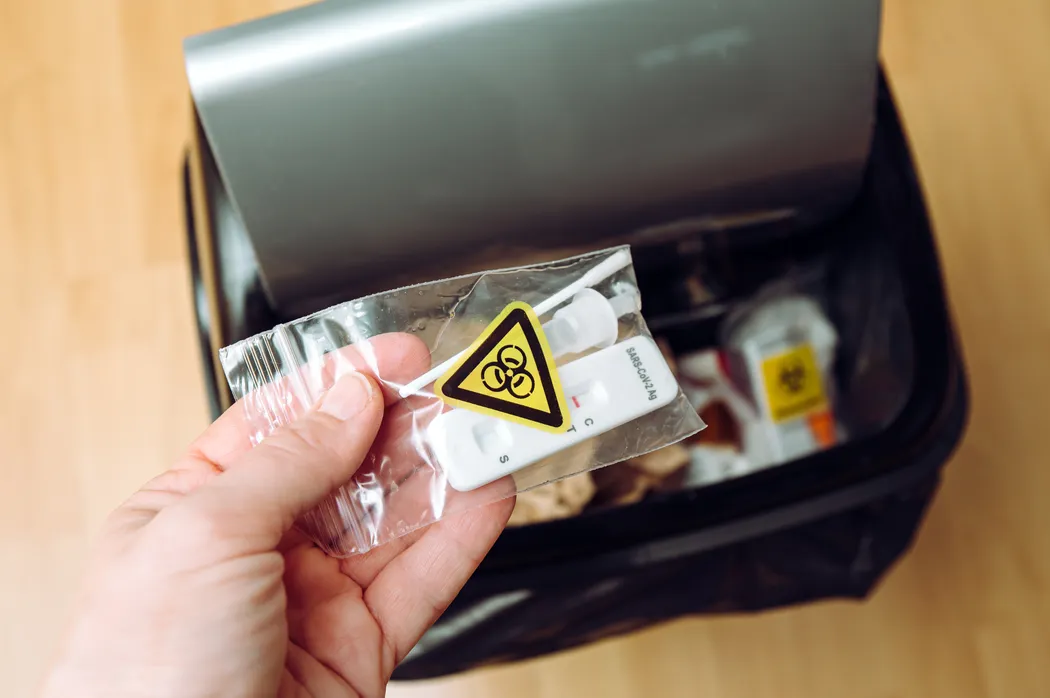
The moment of taking a home pregnancy test is often intensely personal and life-changing. Once you have your result, whether it brings joy, relief, or uncertainty, a crucial, often forgotten, step follows: proper disposal. A used pregnancy test kit is considered bio-waste because it contains bodily fluids. Ignoring proper procedures for pregnancy test kit disposal India can pose risks to sanitation workers and the environment. This comprehensive and supportive guide will provide detailed, easy-to-follow instructions to ensure the safe disposal of medical kits India, keeping your family and community protected.
Safe Disposal of Pregnancy Test Kits in India Guide
Saw a faint line pregnancy test India result? Learn the pregnancy kit line meaning India and the crucial next steps to confirm your pregnancy with support and clarity.
Apollo Pharmacy
Why Is Mindful Disposal Absolutely Essential?
Understanding the risks associated with general trash disposal helps underscore why special care is needed for pregnancy test kit disposal India.
- Protecting Sanitation Staff: Waste management workers frequently handle waste, and contact with bio-waste can be hazardous.
- Sharp edges on plastic test strips can cause cuts, leading to exposure to germs.
- Correct handling ensures the safe disposal of medical kits India for those who manage our trash.
- Preventing Biological Contamination: The test stick is soaked in urine, which is a biological fluid.
- Although the risk is low, traces of potential pathogens should be kept out of general waste streams.
- Addressing Privacy Concerns: An exposed used kit can reveal sensitive personal health information to others.
- Discreet, careful disposal ensures confidentiality and maintains your personal privacy.
- Mitigating Plastic Pollution: Tests are typically made of non-biodegradable plastics and often include electronic components (in digital kits).
- These materials persist in landfills for decades, contributing significantly to pollution problems.
- Upholding Civic Responsibility: Following waste management rules shows respect for public health and local sanitation systems.
- It contributes to better overall urban cleanliness and waste handling efficiency across the country.
Detailed Step-by-Step Guide for Home Disposal
For the common man in an urban setting, managing pregnancy test kit disposal India properly involves a few simple, common-sense layers of protection using materials readily available at home.
- Initial Containment: The First Layer: Immediately after reading the result, wrap the used test stick in tissue paper or newspaper.
- This primary layer absorbs any residual moisture and provides basic concealment.
- Secure Sealing: The Second Layer: Place the wrapped stick inside a small, opaque plastic bag—like a shopping carry bag or a sanitary disposal pouch.
- Knot the bag tightly or use adhesive tape to ensure it is completely sealed off.
- Adding Puncture Protection: To prevent the hard plastic edges from ripping the main garbage bag, add a final protective layer.
- Place the sealed bag inside a used shoebox, a sturdy cardboard carton, or an empty plastic bottle.
- Final Destination: General Waste: Place this securely contained and sealed package into your designated general (non-recyclable) waste bin.
- The used test must never be placed into recycling bins or flushed down the toilet, as this can cause blockages.
- Proper Hand Hygiene: Always wash your hands thoroughly with soap and water after handling the used kit and the waste bags.
- This final step completes the safe disposal of medical kits India process at your personal level.


The Special Case of Digital and Advanced Kits
While strip tests are straightforward, digital kits require a slightly different approach due to their complexity, which is important for pregnancy test kit disposal India.
- Digital Test Components: Digital tests contain a plastic casing, a paper testing strip, and a small circuit board with a battery.
- These electronic components complicate the disposal, as they cannot be simply landfilled.
- Battery Removal is Key: If possible and safe, open the plastic casing (usually involving a small snap mechanism) and remove the miniature battery.
- The battery should be placed in a designated electronics or hazardous waste collection point, if available in your city.
- Treating the Strip: The internal testing strip, which holds the urine, must be treated as bio-waste and double-wrapped before disposal.
- This bio-waste part follows the same rules as non-digital pregnancy test kit disposal India methods.
- Plastic Casing Disposal: The clean plastic casing itself can be placed into the general trash, or if your local municipality collects e-waste, dispose of it there.
- Never try to forcefully open the kit if you are unsure, as it can be dangerous to handle the circuit board.
- Prioritize Safety over Recycling: If separating the components is difficult or unsafe, dispose of the entire digital test, double-bagged, in the general waste.
Community and Clinic Disposal Rules
For professionals, pharmacies, or local clinics that manage higher volumes of tests, the procedure for safe disposal of medical kits India is non-negotiable and strictly regulated.
- Mandatory Biohazard Bins: All used clinical or commercial tests must be discarded into designated yellow biohazard bags or containers.
- These containers are lined and clearly labelled according to biomedical waste management rules.
- Segregation Compliance: The waste must be segregated from non-hazardous general waste immediately at the point of origin.
- This strict segregation ensures all materials that could pose an infection risk are managed correctly.
- Specialized Collection: Biohazard waste is collected by authorized municipal or private agencies, not regular trash collection.
- These agencies are licensed to transport and treat infectious waste safely.
- Final Treatment Process: Collected medical waste is typically treated using autoclaving (steam sterilization) or incineration (high-temperature burning).
- This process fully destroys all pathogens before the residue is safely landfilled or further recycled.
- Documentation and Training: Clinics must maintain records of waste disposal and ensure all staff are regularly trained on bio-waste management protocols.
Product Picks for Responsible Waste Management
While Apollo Pharmacy offers a wide range of pregnancy tests, they also provide accessories that aid in the responsible pregnancy test kit disposal India process.
- Concealing Products: Look for small, opaque sanitary disposal bags or compact waste pouches.
- These products are ideal for safely wrapping the used test strip before placing it in the trash.
- Basic Pregnancy Kits: Opting for simple strip-based pregnancy tests generates less complex waste than digital versions.
- Fewer complex components mean a much easier time ensuring safe disposal of medical kits in India.
- Strong Household Bags: Ensure you have thick, durable plastic garbage bags that are less likely to tear when discarding waste.
- A sturdy bag is essential for containing the entire sealed package securely within your general bin.
Conclusion
The result of your pregnancy test is momentous, but the journey of responsibility doesn't end there. By diligently following the simple wrapping and disposal steps outlined here, you are ensuring the proper pregnancy test kit disposal India requires. Taking this small step to ensure the safe disposal of medical kits India contributes greatly to community health and environmental preservation. Your thoughtful approach matters.


