Watching your baby grow and reach new milestones is an exciting journey. One of the most memorable stages is when your little one begins teething. However, along with those tiny new teeth often comes drooling, fussiness, and skin irritation. If you have noticed red patches or irritated skin on your baby’s face, you may be dealing with a teething rash on cheeks.
Seeing redness or irritation on your baby’s soft skin can naturally worry parents. The good news is that a teething rash, often referred to as a drool rash, is extremely common and usually harmless. It typically occurs because of constant drooling during the teething phase. In this guide, we will explain what causes a teething rash on cheeks, how to recognise it, safe remedies you can try at home, and when it is important to consult a paediatrician.
Teething Rash on Cheeks: Causes & Remedies
Learn what causes a teething rash on cheeks, how to identify drool rash in babies, safe home remedies, and when to see a paediatrician.
Dr. Yusuf
What Causes a Teething Rash on Cheeks?
Teething usually begins between four and six months of age. During this stage, babies produce significantly more saliva as their body responds to gum irritation caused by emerging teeth. While saliva helps soothe sore gums, the excess drool can irritate the sensitive skin around the mouth and cheeks. Here are the most common causes of a baby teething rash on cheeks:
- Excess Moisture: A baby’s skin is delicate and thin. When drool constantly stays on the cheeks, chin, or neck, the skin barrier becomes weakened, leading to redness and irritation.
- Digestive Enzymes in Saliva: Saliva contains digestive enzymes that help break down food. When these enzymes remain on a baby’s skin for long periods, they can damage the outer layer of the skin, resulting in chapped or inflamed patches.
- Friction: Babies frequently rub their faces against bedding, clothing, or toys. When their skin is already wet from drool, this friction can quickly cause irritation and lead to a drool rash.


Identifying the Irritation: Is It a Teething Rash?
Before starting treatment, it is important to determine whether the rash is truly related to teething.
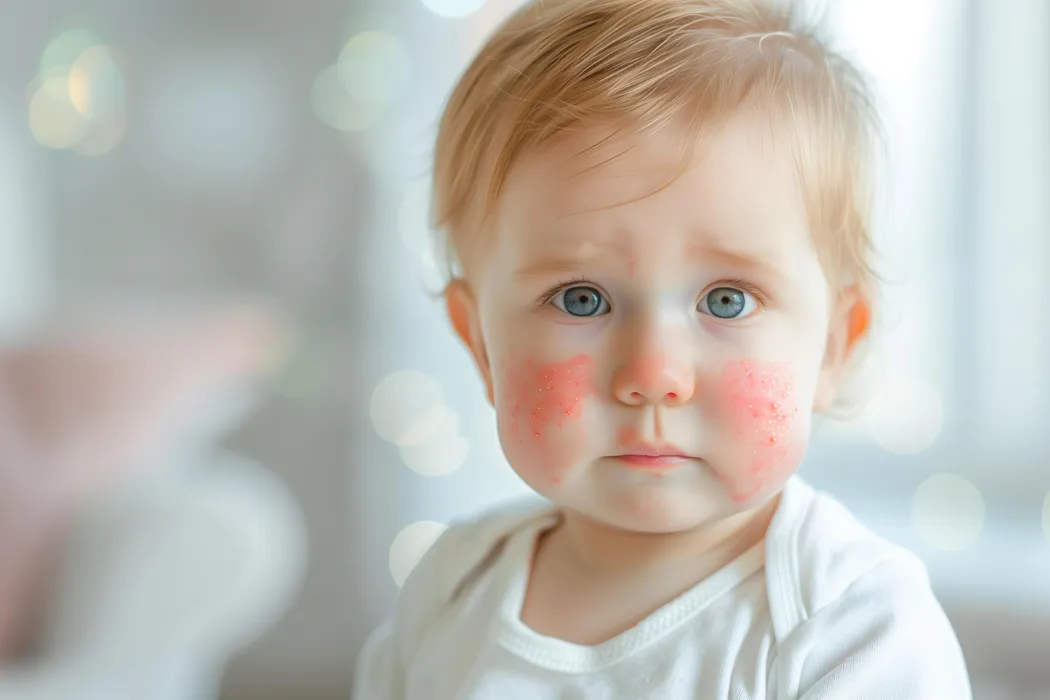
A typical teething rash on cheeks usually appears as:
- Red or slightly raised patches on the cheeks
- Dry or chapped skin around the mouth
- Mild bumps or rough texture
- Irritation around the chin and neck folds
The rash typically develops in areas where saliva frequently touches the skin, such as the cheeks, chin, and neck. However, drooling during teething can also affect other parts of your baby’s body.
What Does Teething Diaper Rash Look Like?
Many parents are surprised to learn that teething may also contribute to diaper rash. During teething, babies swallow large amounts of saliva. This extra saliva can sometimes change digestion slightly and cause loose stools. These stools may be more acidic, which can irritate the sensitive skin in the diaper area.
So, what does teething diaper rash look like?
- Bright red or inflamed skin around the diaper area
- Irritation near the anus and genitals
- Small red bumps or mild swelling
Unlike a yeast diaper rash, which often spreads with defined borders and satellite spots, a teething diaper rash typically appears where stool touches the skin. Frequent diaper changes and a thick zinc oxide barrier cream can help soothe this irritation.
7 Safe Remedies for a Teething Rash on Cheeks
In most cases, a mild teething rash can be treated at home using simple skincare methods. The main goal is to keep your baby’s skin dry and protect it from irritation.
1. Pat the Skin Dry Instead of Rubbing
When you notice drool on your baby’s face, avoid wiping it vigorously. Rubbing the skin increases friction and can worsen the rash.
Instead, gently pat the skin dry using a soft cotton cloth or burp cloth throughout the day.
2. Apply a Protective Barrier Ointment
Creating a protective barrier between saliva and skin can significantly help heal a teething rash on cheeks.
After gently drying the skin, apply a thin layer of a baby-safe barrier ointment such as:
- Petroleum jelly (Vaseline)
- Aquaphor Baby Healing Ointment
- Natural balms containing beeswax or shea butter
Apply the ointment before naps, bedtime, and outdoor exposure.
3. Use Absorbent Bibs
Drool often travels from the chin to the neck and chest. Soft bibs can help absorb the excess saliva before it irritates the skin. Choose waterproof-backed bibs and change them whenever they become damp.
4. Try a Cool Compress
If the rash appears red or inflamed, a cool compress can help soothe the skin.
Soak a soft washcloth in cool water, wring it out, and gently press it against your baby’s cheeks for a minute. Afterwards, pat the skin dry and apply a barrier ointment.
5. Clean the Face After Feeding
Milk, food particles, and drool together can worsen skin irritation. After feeding, gently rinse your baby’s face with lukewarm water and dry it carefully.
6. Avoid Harsh Skincare Products
Fragranced lotions, soaps, or products with essential oils may irritate already sensitive skin.
When dealing with a teething rash, it is best to:
- Avoid perfumed products
- Use gentle baby cleansers only when necessary
- Prefer thick ointments over light lotions
7. Provide Safe Teething Toys
Teething toys can help soothe sore gums and sometimes reduce drooling by giving babies something to chew.
Silicone teething rings chilled in the refrigerator (not the freezer) are often helpful and safe options.
How to Prevent a Teething Rash on Cheeks?
Preventing a teething rash is often easier than treating one. Since drooling cannot be completely avoided during teething, the focus should be on managing moisture and protecting the skin.
Here are a few prevention tips:
- Apply Protective Ointments Early: If your baby has started drooling heavily, apply petroleum jelly or a barrier cream to the cheeks and chin before irritation begins.
- Change Damp Clothing Quickly: Wet collars or clothing can rub against the neck and cheeks, causing irritation. Change your baby’s clothes whenever they become damp.
- Use Gentle Laundry Detergent: Because babies rub their faces on clothing and bedding, using fragrance-free and hypoallergenic laundry detergents can help prevent additional irritation.
When Should You See a Paediatrician?
Although a teething rash on cheeks is usually harmless, certain symptoms may require medical attention.
Consult your paediatrician if you notice:
- Signs of Infection: If the rash develops yellow crusting, oozing fluid, or pus-filled bumps, it may indicate a bacterial infection such as impetigo.
- Fever: A high fever (above 38°C or 100.4°F) is not typically caused by teething. Fever with a rash may suggest an infection.
- Severe Discomfort: If your baby seems unusually irritable, refuses to feed, or appears in significant pain, medical advice is recommended.
- No Improvement After Several Days: If the rash continues to worsen despite proper care, it could be eczema, an allergic reaction, or another skin condition requiring treatment.
Conclusion
Teething is an important milestone in your baby’s development, but it can sometimes come with minor challenges such as drooling and skin irritation. A teething rash on cheeks is extremely common and usually occurs due to constant moisture and sensitive skin. With simple measures like gently drying drool, applying protective ointments, and keeping the skin clean and dry, most teething rashes heal quickly. However, if the rash becomes severe, spreads, or shows signs of infection, it is always best to consult a paediatrician for proper evaluation. With the right care and attention, your baby’s skin will soon return to its soft and healthy glow.
FAQS
FAQS
How long does a teething rash last?
A teething rash can appear and disappear throughout the teething stage. However, with proper care such as keeping the skin dry and applying protective ointments, the rash usually improves within a few days.
Is a teething rash on cheeks itchy?
A teething rash is usually more sore or irritated than itchy. If the rash becomes very itchy or spreads, it may indicate eczema or an allergic reaction instead.
Can teething cause a rash on the whole body?
No. Teething rashes are generally limited to areas where drool touches the skin, such as the cheeks, chin, mouth, and neck. A rash that appears on other parts of the body may indicate a viral infection or allergy.
Can I apply hydrocortisone cream to a teething rash?
Hydrocortisone or steroid creams should not be used on a baby’s face unless prescribed by a doctor. These medications may thin delicate skin if used improperly.
Does teething always cause diaper rash?
Not all babies develop diaper rash during teething. However, some babies may experience loose or acidic stools due to swallowed saliva, which can irritate the diaper area.


