Ayurveda views the human body not just as a collection of parts, but as a living ecosystem where everything is interconnected. Central to this understanding is the concept of Dhatus. The seven dhatus in Ayurveda are the foundational body tissues in Ayurveda, which sustain, nourish, and support the entire physical structure. Learning about the Dhatus helps you understand the deep roots of your health. When the body tissues in Ayurveda are healthy and balanced, they lead to optimal vitality and immunity, creating a healthy and strong person.
What is Dhatu Theory in Ayurveda and Why It Matters?
Explore the seven dhatus in Ayurveda—vital body tissues that sustain health. Learn their functions, balance, and role in overall wellness for a deeper, holistic understanding of your body.
Apollo Pharmacy
In this article
- What are Dhatus?
- Each Dhatu Explained
- How Imbalance Shows?
- Herbal Support
- Apollo Supplement Ideas
- Conclusion
What are Dhatus?
What are Dhatus?
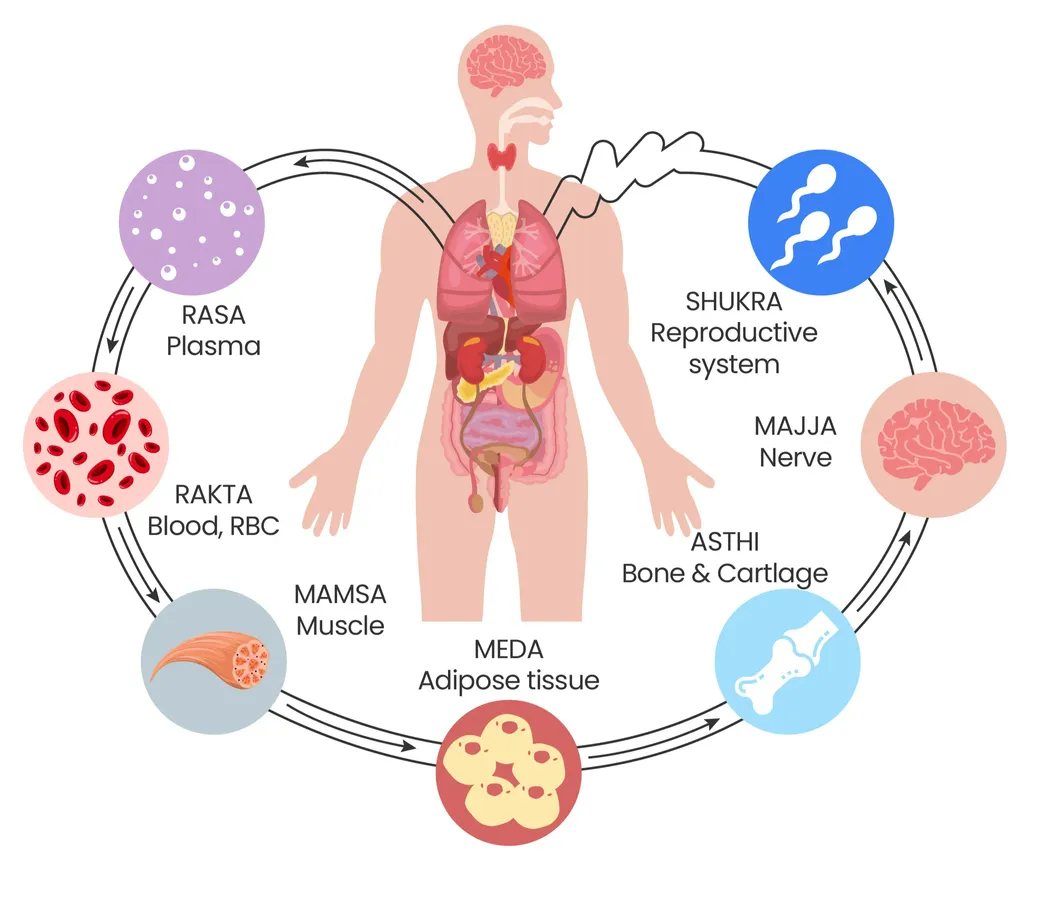
The seven dhatus in Ayurveda are the seven essential elements or structural components that make up the body. The term Dhatu literally means "that which supports the body."
- The Dhatus are formed sequentially, one after the other, through a precise process of nutritional transformation.
- The food you eat is first processed by the digestive fire (Agni) into Rasa (nutrient plasma).
- This Rasa then goes on to nourish and transform into the next Dhatu in the chain effectively.
- The chain reaction starts with the transformation of nutrients into plasma and ends with reproductive tissue.
- A healthy Dhatu provides specific strength, function, and stability to its corresponding organ system.
- The balanced state of the body tissues in Ayurveda is a direct reflection of perfect health and vitality.
Each Dhatu Explained
Each Dhatu Explained
The seven dhatus in Ayurveda are listed in the order they are formed, showing a progressive refinement of tissue quality. Each Dhatu has its own unique function.
1. Rasa Dhatu (Plasma/Nutrient Fluid): Formed immediately from digested food, nourishing all tissues and organs.
2. Rakta Dhatu (Blood/Red Blood Cells): Formed from Rasa, responsible for carrying oxygen, colour, and maintaining life.
3. Mamsa Dhatu (Muscle Tissue): Formed from Rakta, providing physical strength, structure, and protection to the body.
4. Meda Dhatu (Fat/Adipose Tissue): Formed from Mamsa, providing lubrication, insulation, and contributing to voice quality.
5. Asthi Dhatu (Bone/Connective Tissue): Formed from Meda, giving skeletal support, shape, and structure to the body.
6. Majja Dhatu (Bone Marrow/Nervous Tissue): Formed from Asthi, filling the bones and nourishing the spinal cord and brain.
7. Shukra/Artava Dhatu (Reproductive Tissue): The final and most refined Dhatu, responsible for reproductive health and Ojas (vitality).
How Imbalance Shows?
How Imbalance Shows?
When any of the body tissues in Ayurveda are deficient or excessive, specific physical and mental symptoms appear. This knowledge guides the true Ayurvedic diagnosis and treatment plan.
- Rasa Imbalance: Can lead to fatigue, low immunity, and pale skin colour due to lack of nourishment.
- Rakta Imbalance: May show up as blood disorders, dizziness, or inflammatory skin conditions.
- Mamsa Imbalance: Results in muscle weakness, reduced physical strength, or excessive muscle growth.
- Meda Imbalance: Often manifests as obesity, lethargy, or loss of lubrication in the body.
- Asthi Imbalance: Leads to conditions like osteoporosis, joint pain, or weak teeth and brittle nails.
- Majja Imbalance: Can cause nervous system issues, bone pain, or difficulty with concentration and clarity.
- Shukra Imbalance: Results in infertility, low vitality, or lack of sexual energy and immunity.
Herbal Support
Herbal Support
Ayurveda uses special herbs known as Rasayanas (rejuvenatives) to nourish and restore the balance of the seven dhatus in Ayurveda. These are highly potent, deep-acting herbal supplements.
- Ashwagandha: Excellent for nourishing Mamsa (muscle) and Majja (nervous) tissues effectively.
- Shatavari: A primary herb for women, it strongly supports Rasa and Artava (reproductive) tissues.
- Guggulu: Used widely to help balance Meda (fat tissue) and clear obstructions in the channels.
- Arjuna: Traditionally used to strengthen Rakta (blood) and support the heart health and circulation.
- Bala (Sida cordifolia): Known for deeply strengthening Mamsa and supporting bone health over time.
- Proper nourishment of these body tissues in Ayurveda directly leads to the creation of strong Ojas.
Apollo Supplement Ideas
Apollo Supplement Ideas
To support the health of your seven dhatus in Ayurveda, Apollo Pharmacy offers accessible, high-quality supplements. Prioritise whole-body nourishment and digestive strength.
- Look for pure herbal supplements like Apollo Life Ashwagandha or Shatavari capsules.
- Consider Ayurvedic formulations that focus on improving digestion, like Triphala, to better produce Rasa Dhatu.
- Product Recommendation: Apollo Life Triphala Tablets to support the initial digestive process.
- Always consult an Ayurvedic practitioner to find the right herbs for your specific Dhatu imbalance.


Conclusion
Conclusion
Understanding the seven dhatus in Ayurveda is key to managing your long-term health, as they govern your physical structure and vitality. By paying attention to the state of your body tissues in Ayurveda and using proper diet and herbs, you can ensure a strong foundation for lifelong well-being. Focusing on nourishing these fundamental tissues is the true path to deep and lasting health. Each dhatu plays a unique role, from providing strength and energy to supporting immunity and mental clarity. Maintaining their balance helps prevent disease, promotes optimal function, and enhances overall quality of life.


