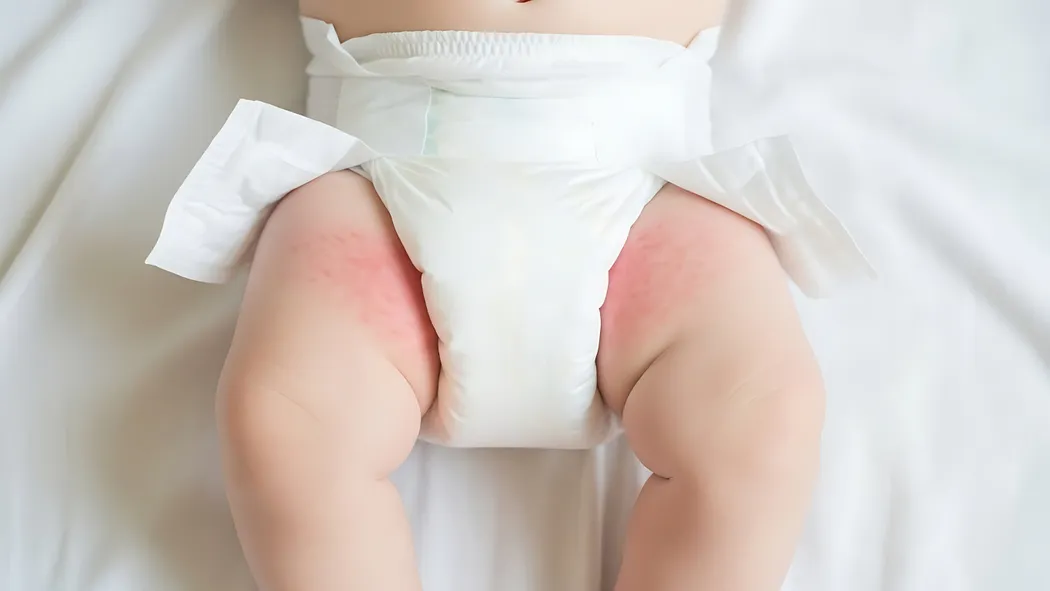
When you search for a specific diaper rash image online, you will notice a wide variety of symptoms, colors, and textures. Here is a breakdown of the visual characteristics to help you understand how diaper rash looks like across different medical conditions.
1. Irritant Contact Dermatitis (The Most Common Rash)
This is the single most frequent type of diaper rash. It occurs when a baby’s highly sensitive skin is exposed to wetness, urine, and feces for extended periods. The mixing of urine and stool creates ammonia, which harshly burns the skin.
- Visual Signs: If you look at standard diaper rash pictures illustrating irritant dermatitis, the rash typically appears as pink or red patches. Crucially, these patches are usually located on the convex (bulging) surfaces of the buttocks, thighs, and abdomen. It generally avoids the deep skin folds and creases because those areas do not directly rub against the soiled diaper.
- Treatment: Frequent diaper changes, gentle cleaning with water, and the application of a thick barrier cream containing zinc oxide or petroleum jelly.
2. Yeast (Candida) Infection
Warm, dark, and moist environments (like the inside of a wet diaper) are perfect breeding grounds for yeast. When exploring fungal diaper rash types, the Candida albicans infection is the most common culprit. It frequently occurs after a baby (or a breastfeeding mother) has taken antibiotics, which can disrupt the body's natural balance of good bacteria.
- Visual Signs: You will notice a deep, beefy red, shiny rash with sharply defined borders. A classic hallmark found in diaper rash photos of yeast infections is the presence of "satellite lesions" - smaller, distinct red bumps or pimples spreading outward from the main rash. You might also spot a diaper rash with white bumps or flaky scales. Unlike irritant dermatitis, a yeast infection thrives and settles deeply within the skin creases of the groin and thighs.
- Treatment: Over-the-counter or prescription antifungal creams (such as clotrimazole or nystatin) as recommended by your paediatrician. Standard diaper creams will not cure a yeast infection.
3. Bacterial Diaper Rash (Staph or Strep)
Sometimes, skin that is already irritated and cracked from a standard diaper rash becomes secondarily infected with bacteria, such as Staphylococcus or Streptococcus.
- Visual Signs: If you view pictures of severe diaper rash caused by bacterial infections, you might notice bright red skin accompanied by yellow crusting, oozing blisters, or large pimple-like sores that contain pus. A strep infection specifically often creates a distinct, bright red ring of diaper rash around anus.
- Treatment: This requires a prompt visit to your doctor. Bacterial infections typically need prescription antibacterial ointments or oral antibiotics to clear up safely.
4. Allergic Contact Dermatitis
Some babies have highly sensitive immune systems that react to fragrances, dyes, elastics, or chemicals found in specific brands of diapers, baby wipes, or lotions.
- Visual Signs: An allergic reaction will make the diaper rash look like a red, scaly, and intensely itchy patch. It will appear exactly in the areas where the irritating chemical or material touched the skin (for example, perfectly tracing the line of the diaper's elastic leg bands).
- Treatment: Identifying and eliminating the irritating product. Switching to fragrance-free, hypoallergenic wipes and diapers usually resolves the issue.