0

Types Of Diaper Rash: Identification Guide With Pictures

Explore different types of diaper rash with pictures to identify symptoms easily. Learn causes, treatment options, and when to consult a doctor for your baby’s skin health.

article image

Dr. Nallapu Siri

Parenting is filled with beautiful milestones, but finding a bright red, angry rash on your baby’s bottom can instantly cause stress and worry. If you are currently searching the internet for types of diaper rash pictures, you are definitely not alone. Diaper rash is one of the most common skin conditions infants experience, affecting nearly every baby at some point during their diaper-wearing years.

Understanding exactly what does diaper rash look like is the vital first step in helping your little one feel comfortable again. Because rashes can stem from various causes - ranging from simple friction to fungal infections - knowing how to identify the visual signs is essential. In this comprehensive guide, we will explore the different types of diaper rash, providing vivid visual descriptions so you can figure out exactly what is causing your baby's irritation and how to treat it effectively.

How Does Diaper Rash Look Like? 

Before we dive into a detailed breakdown of specific visual cues, you might be wondering, how does diaper rash look like in a general sense? Most often, a basic diaper rash presents as red, inflamed, tender, and warm skin directly in the diaper region.

However, the exact appearance can change drastically depending on the root cause. By reviewing the descriptions of baby diaper rash images below, parents and caregivers can learn to spot the subtle visual differences between a simple chafing issue and a stubborn infection. Knowing these differences helps you choose the right soothing creams or decide if it is time to call your paediatrician.

Visualising the Different Types of Diaper Rash

When you search for a specific diaper rash image online, you will notice a wide variety of symptoms, colors, and textures. Here is a breakdown of the visual characteristics to help you understand how diaper rash looks like across different medical conditions.

1. Irritant Contact Dermatitis (The Most Common Rash)

This is the single most frequent type of diaper rash. It occurs when a baby’s highly sensitive skin is exposed to wetness, urine, and feces for extended periods. The mixing of urine and stool creates ammonia, which harshly burns the skin.

  • Visual Signs: If you look at standard diaper rash pictures illustrating irritant dermatitis, the rash typically appears as pink or red patches. Crucially, these patches are usually located on the convex (bulging) surfaces of the buttocks, thighs, and abdomen. It generally avoids the deep skin folds and creases because those areas do not directly rub against the soiled diaper.
  • Treatment: Frequent diaper changes, gentle cleaning with water, and the application of a thick barrier cream containing zinc oxide or petroleum jelly.

2. Yeast (Candida) Infection

Warm, dark, and moist environments (like the inside of a wet diaper) are perfect breeding grounds for yeast. When exploring fungal diaper rash types, the Candida albicans infection is the most common culprit. It frequently occurs after a baby (or a breastfeeding mother) has taken antibiotics, which can disrupt the body's natural balance of good bacteria.

  • Visual Signs: You will notice a deep, beefy red, shiny rash with sharply defined borders. A classic hallmark found in diaper rash photos of yeast infections is the presence of "satellite lesions" - smaller, distinct red bumps or pimples spreading outward from the main rash. You might also spot a diaper rash with white bumps or flaky scales. Unlike irritant dermatitis, a yeast infection thrives and settles deeply within the skin creases of the groin and thighs.
  • Treatment: Over-the-counter or prescription antifungal creams (such as clotrimazole or nystatin) as recommended by your paediatrician. Standard diaper creams will not cure a yeast infection.

3. Bacterial Diaper Rash (Staph or Strep)

Sometimes, skin that is already irritated and cracked from a standard diaper rash becomes secondarily infected with bacteria, such as Staphylococcus or Streptococcus.

  • Visual Signs: If you view pictures of severe diaper rash caused by bacterial infections, you might notice bright red skin accompanied by yellow crusting, oozing blisters, or large pimple-like sores that contain pus. A strep infection specifically often creates a distinct, bright red ring of diaper rash around anus.
  • Treatment: This requires a prompt visit to your doctor. Bacterial infections typically need prescription antibacterial ointments or oral antibiotics to clear up safely.

4. Allergic Contact Dermatitis

Some babies have highly sensitive immune systems that react to fragrances, dyes, elastics, or chemicals found in specific brands of diapers, baby wipes, or lotions.

  • Visual Signs: An allergic reaction will make the diaper rash look like a red, scaly, and intensely itchy patch. It will appear exactly in the areas where the irritating chemical or material touched the skin (for example, perfectly tracing the line of the diaper's elastic leg bands).
  • Treatment: Identifying and eliminating the irritating product. Switching to fragrance-free, hypoallergenic wipes and diapers usually resolves the issue.
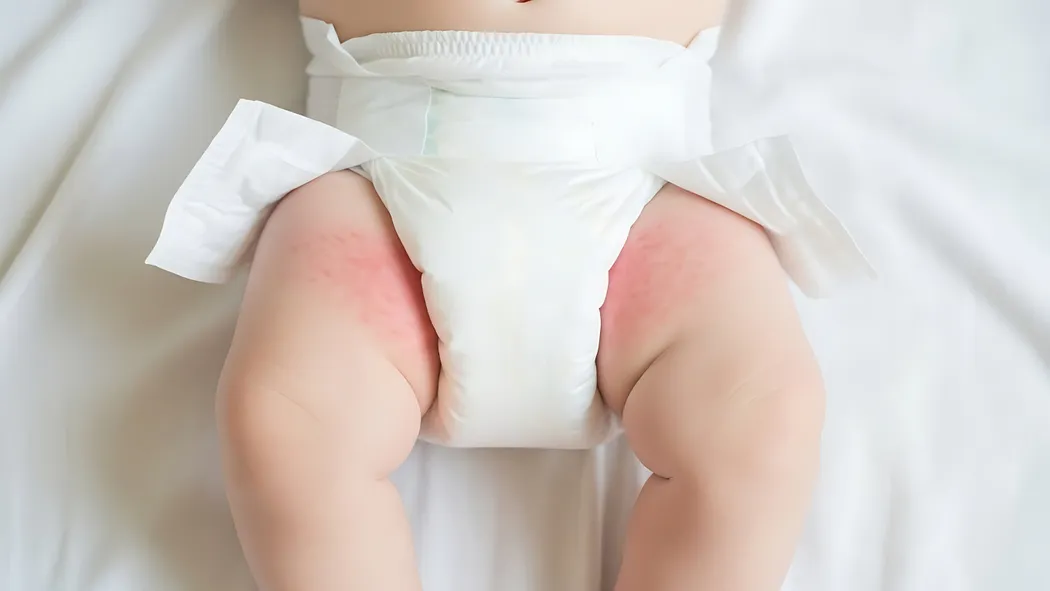
Using Types of Diaper Rash Pictures to Identify Special Cases

Parents frequently search for highly specific scenarios when looking up baby diaper rashes images. Understanding how does a diaper rash look like in these unique situations can save you a lot of guesswork.

Teething and Diaper Rash

It is an old wives' tale that teething directly causes diaper rash. However, teething does cause babies to produce excess drool. Swallowing large amounts of saliva can lead to looser, more acidic stools, which quickly irritate the skin. If you are searching for teething diaper rash pictures, you will generally see visual symptoms identical to standard irritant contact dermatitis - generalised redness on the cheeks of the bottom caused by the acidic diarrhoea.

Gender-Specific Concerns

Parents of little girls sometimes look for female diaper rash pictures to understand if rashes present differently. While the underlying rash is the same, female anatomy means that redness and irritation can easily spread to the labia and vaginal area. In these cases, it is incredibly important to always wipe from front to back to prevent transferring bacteria from the anus to the urinary tract.

Severe Diaper Rash

If you are wondering how diaper rash look like when it reaches a critical stage, extreme cases are highly alarming. Pictures of severe diaper rash show intense, beefy redness, bleeding, open and weeping sores, peeling skin, and extreme swelling. The baby will likely be in visible pain and cry whenever the area is touched or exposed to urine. Severe rashes demand immediate medical evaluation.

A Mental Guide to Baby Diaper Rash Types with Pictures

While we cannot display physical photographs in this text, keeping a mental checklist acts as a perfect alternative to actual types of diaper rash pictures. When comparing your baby’s skin symptoms to the diaper rash images baby health websites provide online, ask yourself the following diagnostic questions:

1. Location: Is the redness on the outer cheeks (irritant) or hidden deep in the folds (yeast)?
2. Texture: Is the skin smooth and flat, or is it raised, shiny, crusty, or blistered?
3. Colour: Is it a mild, light pink or a dark, angry, beefy red?
4. Additional Features: Are there satellite bumps spreading outward? Is there yellow pus?

By analysing these features and understanding types of diaper rash, you can confidently apply the correct at-home remedies or provide accurate information to your doctor.

Prevention and Care Tips

No matter which diaper rash types with pictures match your baby's current symptoms, prevention is always the best medicine. Implementing a great diapering routine can keep your baby’s skin healthy and soft.

  • Change Diapers Frequently: Do not let your baby sit in a wet or soiled diaper. Prompt changes reduce the time skin is exposed to irritating moisture and bacteria.
  • Embrace Diaper-Free Time: Whenever possible, lay your baby on a waterproof towel and let them go bare-bottomed. Air drying is incredibly effective at preventing and healing rashes.
  • Use Gentle Wipes: Avoid wipes that contain alcohol, heavy fragrances, or harsh chemicals. Plain warm water and a soft washcloth are excellent alternatives for sensitive skin.
  • Pat, Don't Scrub: When cleaning your baby's bottom, gently pat the skin dry. Scrubbing causes micro-tears in the skin, welcoming bacteria.
  • Apply Barrier Creams Liberally: At every diaper change, apply a thick layer of a barrier cream containing zinc oxide. You want to frost it on like icing on a cake - this creates a physical shield between the skin and the waste.
  • Ensure Diapers Fit Properly: Diapers that are too tight cause friction and trap unwanted moisture. Make sure there is room for air circulation.

Conclusion

Diaper rash may look alarming, but understanding the different types of diaper rash is the key to quick and effective relief. From mild irritant dermatitis to yeast and bacterial infections, each type has distinct visual clues that help guide the right treatment approach. Paying close attention to the location, texture, and colour of the rash can make it much easier to identify what your baby is experiencing.
While most diaper rashes can be managed at home with proper hygiene, frequent diaper changes, and barrier creams, some cases require medical attention. Persistent, severe, or unusual rashes should never be ignored, as early treatment can prevent discomfort and complications. With the right knowledge and a consistent diaper care routine, you can not only treat diaper rash effectively but also prevent it from coming back—keeping your baby’s skin healthy, soft, and irritation-free.

FAQS

What does a yeast diaper rash look like compared to a normal one?

A yeast diaper rash is typically a bright, shiny, beefy red colour and is primarily found deep inside the skin folds of the groin. Unlike a normal rash, it often features smaller red "satellite" bumps spreading outward from the main patch of redness.

Are there different types of diaper rash pictures I should use for reference?

Yes, referencing types of diaper rash pictures from credible medical sources can help you differentiate between irritant dermatitis (which appears as smooth redness on the buttocks) and bacterial infections (which may have yellow crusting, blisters, or pus).

How long does a normal diaper rash last?

With proper care, frequent diaper changes, and the liberal use of barrier creams, a standard irritant diaper rash usually clears up within 2 to 3 days. If it lasts longer, it may be a fungal or bacterial infection.

When should I take my baby to the doctor for a diaper rash?

You should consult a paediatrician if the rash bleeds, oozes yellow fluid, forms open sores, worsens after 2 to 3 days of home treatment, or is accompanied by a fever. These are signs of a potential infection that requires prescription medication.

Can I use baby powder to prevent diaper rash?

Paediatricians generally advise against using baby powder or talcum powder. Babies can easily inhale the fine powder particles, which can cause severe respiratory issues and lung damage. Stick to thick barrier creams and ointments instead.

Apollo 247 Floating Action Button