0

Why Do Newborn Babies Smile While Sleeping?

Wondering why newborn babies smile in their sleep? Learn the common reasons, science behind infant smiles, and when it is completely normal or needs attention.

article image

Dr. Mayank

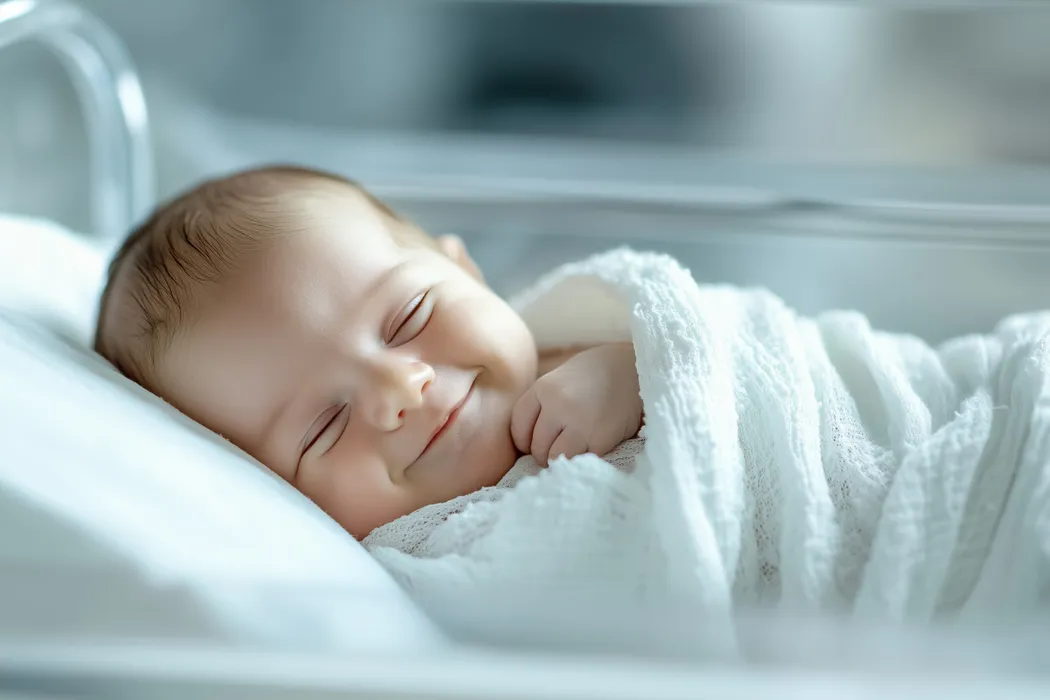
There is nothing quite as magical as watching a sleeping newborn. As they rest, their tiny faces go through a wide range of expressions. They might pout, frown, twitch, and, most wonderfully of all, flash a sudden, heart-melting smile. If you are a new parent, you have probably hovered over your baby's crib, captivated by these sweet expressions, and found yourself wondering: why new born babies smile while sleeping?

It is one of the most common questions new parents ask pediatricians. Does the baby recognize your voice? Are they having a happy dream about milk? Or is it, as the old wives’ tale suggests, simply a passing bout of gas?

In this comprehensive guide, we will explore the fascinating science of infant sleep, brain development, and the true medical reasons behind your baby's slumbering grins.

The Science of Sleep: Why New Born Babies Smile While Sleeping

To understand these adorable nocturnal grins, we first have to understand how a newborn baby sleeps. Newborns sleep a lot - typically between 14 to 17 hours a day, according to the World Health Organization (WHO) and the Centers for Disease Control and Prevention (CDC). However, their sleep cycles are very different from ours.

Human sleep is divided into two main categories: Non-Rapid Eye Movement (Non-REM) sleep and Rapid Eye Movement (REM) sleep.

What is REM Sleep?

REM sleep is the active phase of sleep. In adults, this is the stage where we experience vivid dreams. When adults sleep, we spend about 20% of the night in the REM stage. Newborn babies, however, spend up to 50% of their sleep time in REM sleep.

During REM sleep, a baby's brain is incredibly active. Their breathing may become irregular, their tiny eyes dart back and forth under their closed eyelids, and their bodies might twitch. This highly active brain state is the primary reason why new born babies smile while sleeping. As their brains process the incredible amount of information they are absorbing in their new world, electrical impulses cause their facial muscles to move, resulting in spontaneous, reflexive smiles.

Load more products

Reflex Smiles vs. Social Smiles

When discussing infant development, pediatricians generally categorize smiles into two types: reflex smiles and social smiles.

Reflex Smiles

For the first few weeks of life, any smile you see on your baby’s face is a reflex smile. Much like the rooting reflex (turning their head to find a breast or bottle) or the Moro reflex (the startle reflex), smiling is an involuntary muscle movement.

These reflex smiles tend to be brief. They occur randomly, most often during sleep or when the baby is drowsy. Understanding why new born baby smile in sleep comes down to recognizing that these early grins are natural, healthy signs that your baby's central nervous system is developing properly.

Social Smiles

A social smile is a conscious, intentional smile that a baby gives in response to something they see or hear - like the sound of your voice or the sight of your face. According to the Mayo Clinic, babies typically develop their first genuine social smile between 6 to 8 weeks of age.

So, while the reflex smiles in their sleep are beautiful to look at, they are entirely involuntary. The reason why new born babies smile while sleeping is different from why a three-month-old smiles when you play peek-a-boo.

Is It Just Gas? The Truth About Infant Sleep Smiles

If you ask a grandparent why do new born baby smile while sleeping, you will likely hear a very confident answer: "It is just gas!" But is there any medical truth to this long-standing folklore?

Yes and no. A baby's digestive system is immature at birth. As they learn to digest breast milk or formula, they often experience trapped gas, which can cause mild discomfort. When a baby successfully passes gas or a stool, it brings a sudden wave of physical relief. This relief causes their facial muscles to relax, which can sometimes resemble a peaceful smile.

However, medical experts at institutions like the Cleveland Clinic point out that gas is not the only - or even the main - reason for sleep smiles. Most sleep smiles are neurologically driven by REM sleep, not gastrointestinal relief.

Chuckles and Giggles: Why New Born Baby Laugh In Sleep

Sometimes, a quiet sleep smile escalates into a little giggle or a sudden, loud chuckle. This can be equally adorable and startling for parents. If you find yourself wondering why new born baby laugh in sleep, the answer is closely tied to the REM sleep cycle.

During active REM sleep, the brain is not only sending signals to the facial muscles to form a smile, but it may also send signals to the vocal cords and the diaphragm. Because the infant's neurological pathways are still forming, these signals can occasionally result in an involuntary laugh, a squeal, or even a sudden burst of crying that stops just as quickly as it started.

If you notice your baby chuckling in their sleep, do not wake them. It is a completely normal part of their physiological development.

Do Newborn Babies Dream?

If REM sleep is the phase where adults dream, does that mean babies are dreaming when they smile?

The mystery of infant dreams is a significant part of why new born babies smile while sleeping. While we cannot ask a baby what they are experiencing, neuroscientists and pediatric experts from Harvard Health Publishing suggest that newborns probably do not dream in the narrative, visual way that adults do.

Adult dreams are built on years of memories, complex emotions, and language. A newborn baby has not yet developed the cognitive capacity for this. Instead, experts believe that if babies "dream," they are likely experiencing a replay of basic sensory information:

  • The warmth of being held
  • The smell of their mother
  • The taste of milk
  • The sound of a soothing voice

These pleasant sensory memories, processed during REM sleep, could very well trigger the happy expressions we observe.

Healthy Sleep Habits for Your Smiling Baby

If you are curious about why do new born baby smile while sleeping, you likely also care deeply about ensuring your baby gets the highest quality of sleep possible. Since babies do most of their growing and brain development while asleep, establishing a safe sleep environment is vital.

The CDC and the American Academy of Pediatrics (AAP) recommend the following safe sleep guidelines for infants:

  • Back to Sleep: Always place your baby on their back to sleep, for naps and at night, to reduce the risk of Sudden Infant Death Syndrome (SIDS).
  • Firm Sleep Surface: Use a firm, flat mattress covered by a fitted sheet.
  • Keep the Crib Bare: Do not put soft blankets, pillows, bumper pads, or stuffed toys in the crib, as these pose a suffocation hazard.
  • Room Sharing, Not Bed Sharing: Keep the baby's sleep area in the same room where you sleep for at least the first six months, but do not share the same bed.
  • Pacifier Use: Offering a pacifier at nap time and bedtime may help reduce the risk of SIDS.

When your baby is resting safely, you can enjoy watching those precious sleep smiles with total peace of mind.

Should You Ever Worry About Sleep Smiling?

In the vast majority of cases, watching why new born babies smile while sleeping is a source of joy and reassurance that your baby's brain is developing healthily.

However, parents should always trust their instincts. You should consult your pediatrician if your baby's sleep smiles or laughs are accompanied by:

  • Rhythmic, uncontrollable jerking or twitching of the limbs that does not stop when you gently place a hand on them.
  • Signs of breathing distress, such as grunting, flaring nostrils, or the skin pulling in around their ribs.
  • Unusual eye movements that look like prolonged staring spells while awake.

In extremely rare cases, uncontrollable bouts of inappropriate laughing or smiling can be a sign of a neurological condition known as a gelastic seizure. However, these are exceptionally uncommon, and standard sleep twitches and grins are perfectly normal.

Load more products

Conclusion

Watching your newborn smile while sleeping is one of the most heartwarming experiences of early parenthood. While it may feel like your baby is dreaming of something joyful, these adorable expressions are usually the result of natural brain activity during REM sleep or simple reflexes as their nervous system develops.
In most cases, these sleep smiles are completely normal and even reassuring, as they indicate that your baby’s brain and body are growing just as they should. Over time, these involuntary smiles will gradually give way to meaningful social smiles as your baby begins to recognise and respond to you.
As long as your baby is feeding well, growing steadily, and sleeping safely, there is no need for concern. Instead, take a moment to enjoy these fleeting, magical expressions - they are a beautiful reminder of your baby’s healthy development and the many joyful milestones yet to come.

FAQS

When do babies start smiling in their sleep?

Babies can start smiling in their sleep from the very day they are born. These early smiles are involuntary reflexes tied to brain development and the active REM phase of sleep.

Is it true that a baby smiling in their sleep is just passing gas?

While passing gas can bring relief and cause a baby's facial muscles to relax into what looks like a smile, it is not the main reason. Most sleep smiles are actually caused by active brain impulses during REM sleep.

What is the reason why new born baby smile in sleep?

The primary reason is neurological development. During sleep, a newborn's brain processes information and sends involuntary electrical signals to facial muscles, resulting in brief, reflexive smiles.

Is it normal, or why new born baby laugh in sleep?

Yes, it is completely normal! Just as the brain sends signals to the facial muscles to smile, it can also send signals to the vocal cords. This results in brief giggles, chuckles, or even short cries while the baby remains asleep.

Do babies have happy dreams when they smile in their sleep?

While babies do not have visual, story-like dreams as adults do, experts believe they may process positive sensory experiences during sleep - such as the taste of milk or the feeling of being cuddled - which can trigger a reflex smile.

Apollo 247 Floating Action Button