
Welcome User
Login/Sign Up

Login/Sign Up
₹116
(Inclusive of all Taxes)
₹86 with coupons & bank offers*
Get Free delivery (₹99) with
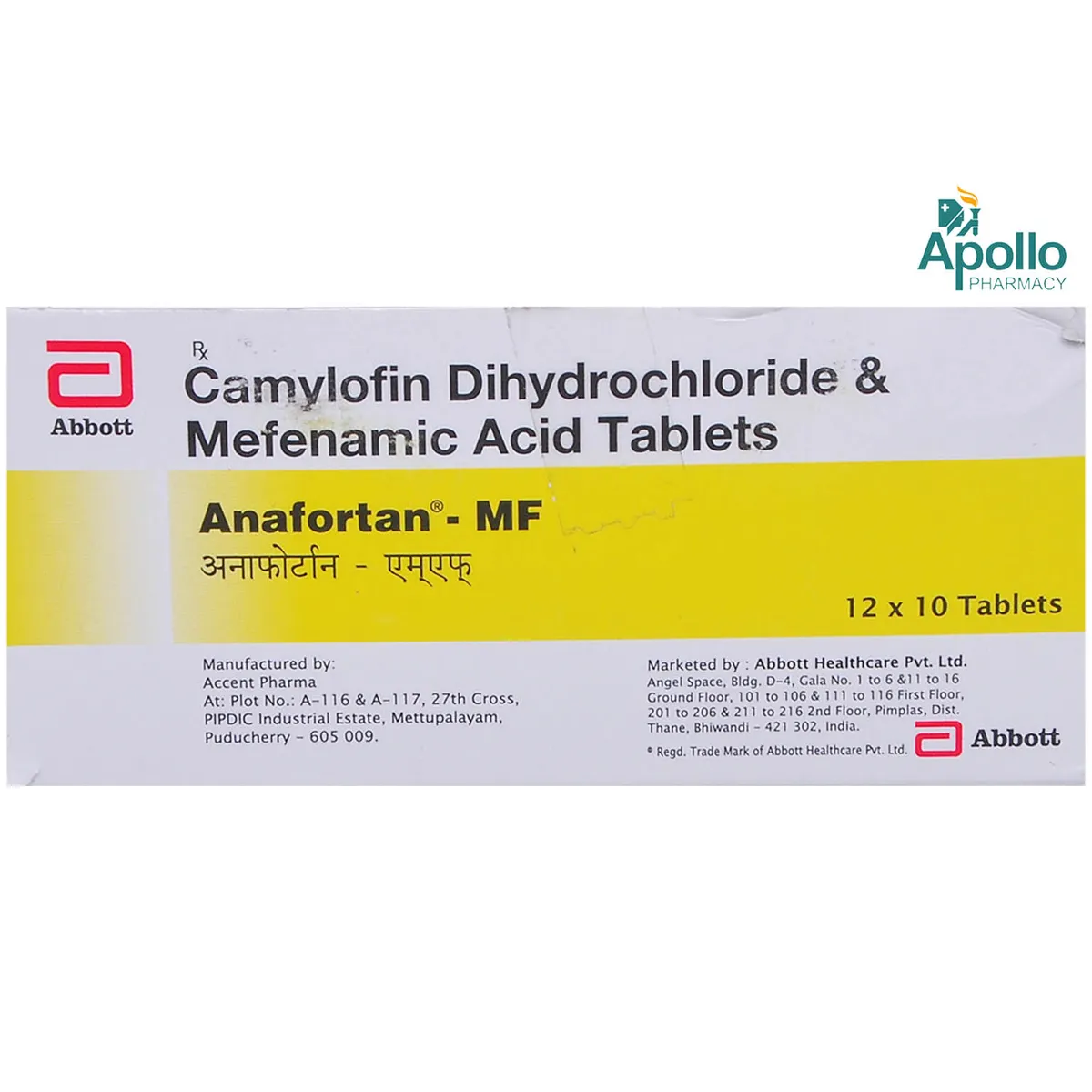
एनाफोर्टन एमएफ टैबलेट 10's एक संयोजन दवा है जिसका उपयोग मुख्य रूप से आंतों के शूल, पित्त शूल, गुर्दे के शूल, कष्टार्तव, अग्नाशयशोथ आदि के कारण होने वाले पेट दर्द को कम करने के लिए किया जाता है। शूल का दर्द आंतों, पित्त या गर्भाशय की चिकनी मांसपेशियों की ऐंठन या रुकावट के कारण हो सकता है। ऐंठन की नैदानिक प्रस्तुति तीव्र, उपतीव्र या पुरानी प्रकृति की हो सकती है। ये ऐंठन हल्के से गंभीर तक हो सकती हैं।
एनाफोर्टन एमएफ टैबलेट 10's में दो दवाएं शामिल हैं: कैमिलोफिन (ऐंठन-रोधी) और मेफेनामिक एसिड (दर्द निवारक)। मेफेनामिक एसिड एक एनएसएआईडी है जिसमें एनाल्जेसिक (दर्द कम करने वाला) और एंटीपायरेटिक (बुखार कम करने वाला) गुण होते हैं और यह सूजन को कम करता है। यह दर्द में एक रासायनिक संदेशवाहक को अवरुद्ध करता है जो व्यक्ति को दर्द महसूस कराने के लिए जिम्मेदार होता है। कैमिलोफिन एक एंटी-कोलीनर्जिक है जो पेट और आंत (आंत) की मांसपेशियों को आराम देता है और अचानक मांसपेशियों के संकुचन (ऐंठन) को रोकता है। ऐसा करने से ऐंठन, दर्द, सूजन और बेचैनी से राहत मिलती है। साथ मिलकर, वे प्रभावी रूप से दर्द को कम करते हैं।
एनाफोर्टन एमएफ टैबलेट 10's आमतौर पर सेवन करने के लिए सुरक्षित है। कुछ लोगों को चक्कर आना, मतली (बीमार महसूस करना), पाचन संबंधी समस्याएं (कब्ज, पेट फूलना, दस्त) और त्वचा संबंधी प्रतिक्रियाएं (जैसे दाने और पित्ती) का अनुभव हो सकता है। एनाफोर्टन एमएफ टैबलेट 10's के अधिकांश दुष्प्रभाव के लिए चिकित्सकीय ध्यान देने की आवश्यकता नहीं होती है और समय के साथ धीरे-धीरे ठीक हो जाते हैं। हालांकि, यदि दुष्प्रभाव बने रहते हैं, तो अपने डॉक्टर से संपर्क करें।
थायरोटॉक्सिकोसिस, प्रतिरोधी फेफड़ों की बीमारी या बुखार से पीड़ित व्यक्तियों और कार्डियक सर्जरी के दौरान एनाफोर्टन एमएफ टैबलेट 10's का उपयोग सावधानी के साथ किया जाना चाहिए। 65 वर्ष से अधिक उम्र के व्यक्तियों और मूत्र प्रतिधारण, हृदय की अपर्याप्तता, गर्भावस्था और स्तनपान से जूझ रहे व्यक्तियों में एनाफोर्टन एमएफ टैबलेट 10's का उपयोग सावधानी के साथ किया जाना चाहिए।
एनाफोर्टन एमएफ टैबलेट 10's का उपयोग आंतों के शूल, पित्त शूल, गुर्दे के शूल, कष्टार्तव, अग्नाशयशोथ और अन्य स्थितियों के इलाज के लिए किया जाता है। एनाफोर्टन एमएफ टैबलेट 10's के विस्तृत उपयोग इस प्रकार हैं:
एनाफोर्टन एमएफ टैबलेट 10's में दो दवाएँ शामिल हैं: कैमिलोफिन (ऐंठन-रोधी) और मेफेनामिक एसिड (दर्द निवारक)। मेफेनामिक एसिड एक एनएसएआईडी है जिसमें एनाल्जेसिक (दर्द कम करने वाला) और एंटीपायरेटिक (बुखार कम करने वाला) दोनों गुण होते हैं, और यह सूजन को कम करता है। यह दर्द में एक रासायनिक संदेशवाहक को अवरुद्ध करता है जो व्यक्ति को दर्द का अनुभव कराने के लिए जिम्मेदार होता है। कैमिलोफिन एक एंटी-कोलीनर्जिक है जो पेट और आंत (इंटेस्टाइन) की मांसपेशियों को आराम देता है और अचानक मांसपेशियों के संकुचन (ऐंठन) को रोकता है। ऐसा करने से ऐंठन, दर्द, सूजन और बेचैनी से राहत मिलती है। साथ मिलकर, वे प्रभावी रूप से दर्द को कम करते हैं।
असुरक्षित
आपको एनाफोर्टन एमएफ टैबलेट 10's के साथ शराब का सेवन न करने की सलाह दी जाती है क्योंकि इसमें मेफेनामिक एसिड होता है, जो एक साथ आपके लिवर को गंभीर रूप से नुकसान पहुंचा सकता है।
सावधानी
एनाफोर्टन एमएफ टैबलेट 10's का उपयोग गर्भावस्था के दौरान तभी करना चाहिए जब भ्रूण को होने वाले संभावित जोखिम से ज़्यादा संभावित लाभ हो।
सावधानी
एनाफोर्टन एमएफ टैबलेट 10's का उपयोग नहीं करना चाहिए यदि आप स्तनपान करा रही हैं। एनाफोर्टन एमएफ टैबलेट 10's स्तन के दूध में चला जाता है, इसलिए स्तनपान के दौरान इसका उपयोग करने की सलाह नहीं दी जाती है, जब तक कि आपके डॉक्टर इसे आवश्यक न समझें।
असुरक्षित
एनाफोर्टन एमएफ टैबलेट 10's से चक्कर आना, नींद आना और देखने में परेशानी हो सकती है, जिससे गाड़ी चलाने या मशीनरी चलाने की आपकी क्षमता प्रभावित हो सकती है। गाड़ी चलाने या मशीनरी चलाने से पहले सुनिश्चित करें कि आप प्रभावित नहीं हैं।
सावधानी
एनाफोर्टन एमएफ टैबलेट 10's को सावधानी से लेना चाहिए, खासकर अगर आपको पहले कभी लिवर से जुड़ी कोई बीमारी या समस्या रही हो। आपकी खुराक में आपके डॉक्टर को बदलाव करना पड़ सकता है।
सावधानी
एनाफोर्टन एमएफ टैबलेट 10's का उपयोग सावधानी से करें, खासकर यदि आपको किडनी (गुर्दे) से संबंधित कोई बीमारी या समस्या रही हो। आपकी खुराक को आपके डॉक्टर द्वारा समायोजित (एडजस्ट) किया जा सकता है।
असुरक्षित
एनाफोर्टन एमएफ टैबलेट 10's का उपयोग 12 वर्ष से कम उम्र के बच्चों में नहीं किया जाना चाहिए।
असुरक्षित
एनाफोर्टन एमएफ टैबलेट 10's को हृदय रोगियों में इसके प्रतिकूल प्रभावों के कारण सलाह नहीं दी जाती है। हालांकि, यदि निर्धारित किया गया हो, तो अत्यधिक सावधानी बरतनी चाहिए।
सावधानी
एनाफोर्टन एमएफ टैबलेट 10's बुजुर्ग मरीजों को बहुत सावधानी के साथ दिया जा सकता है, यदि डॉक्टर इसकी सलाह दें।
Have a query?
एनाफोर्टन एमएफ टैबलेट 10's लेते समय गैस्ट्रोइंटेस्टाइनल ब्लीडिंग, अल्सर का बनना आमतौर पर देखा जाता है, इसलिए डॉक्टर आपको उपलब्ध सबसे कम खुराक लिख सकते हैं। यदि आपको अस्थमा या दर्द निवारक दवाओं से एलर्जी है, हृदय, किडनी और लिवर की समस्या है, तो एनाफोर्टन एमएफ टैबलेट 10's न लें। एनाफोर्टन एमएफ टैबलेट 10's गर्भावस्था के दौरान या स्तनपान कराने वाली माताओं द्वारा नहीं लिया जाना चाहिए क्योंकि यह बच्चे को प्रभावित कर सकता है। अप्रिय दुष्प्रभावों से बचने के लिए आपको एनाफोर्टन एमएफ टैबलेट 10's के साथ शराब न लेने की सलाह दी जाती है। एनाफोर्टन एमएफ टैबलेट 10's लेने से उनींदापन या धुंधली दृष्टि हो सकती है, एनाफोर्टन एमएफ टैबलेट 10's लेने के बाद गाड़ी चलाने या कोई अन्य गतिविधि करने से बचें जिसमें एकाग्रता की आवश्यकता होती है। अपने डॉक्टर को चल रही दवाओं या उन दवाओं के बारे में हमेशा सूचित रखें जो आपने अतीत में ली हैं, जिनमें ओवर-द-काउंटर दवाएं और हर्बल दवाएं शामिल हैं। यदि आप कोई त्वचा पर चकत्ते या छाले बनते हुए देखते हैं तो तुरंत एनाफोर्टन एमएफ टैबलेट 10's लेना बंद कर दें और डॉक्टर से सलाह लें। एनाफोर्टन एमएफ टैबलेट 10's और एंटीविटामिन के (ब्लड थिनर) लेने वाले मरीजों की उचित जमावट और रक्तस्राव संबंधी जटिलताओं के लिए निगरानी की जानी चाहिए।
Login/Sign Up
Login/Sign Up
Disclaimer


