
0
Welcome User
Login/Sign Up

Login/Sign Up
₹135
(Inclusive of all Taxes)
₹100 with coupons & bank offers*
Get Free delivery (₹99) with
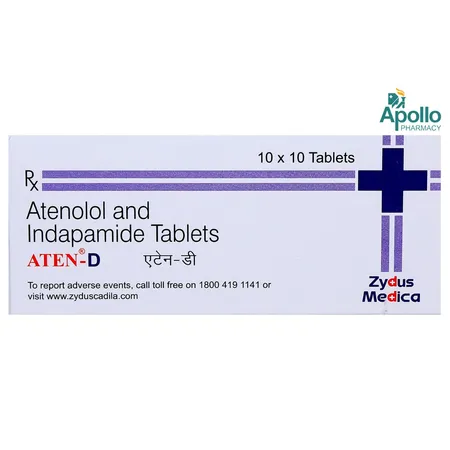
एटेन-डी टैबलेट 10's का उपयोग उच्च रक्तचाप (हाई ब्लड प्रेशर) के इलाज के लिए किया जाता है। उच्च रक्तचाप एक ऐसी चिकित्सीय स्थिति है जिसमें रक्त रक्त वाहिकाओं की दीवारों के खिलाफ उच्च दबाव (परिसंचारी रक्त द्वारा लगाया गया बल) डालता है। यह स्थिति हृदय को पूरे शरीर में रक्त पंप करने के लिए अधिक मेहनत करने पर मजबूर करती है। उच्च रक्तचाप से स्ट्रोक, हार्ट फेलियर, हार्ट अटैक और किडनी फेलियर सहित गंभीर स्वास्थ्य जटिलताएँ हो सकती हैं।
एटेन-डी टैबलेट 10's में एटेनोलोल (बीटा-ब्लॉकर) और इंडापामाइड (मूत्रवर्धक या वॉटर पिल) होता है। एटेनोलोल 'बीटा-ब्लॉकर्स' के वर्ग से संबंधित है और इसका उपयोग उच्च रक्तचाप, एनजाइना (सीने में दर्द) और अनियमित दिल की धड़कन (अतालता) के इलाज के लिए किया जाता है। यह हृदय गति को कम करता है और हृदय को पूरे शरीर में रक्त को कुशलता से पंप करने में मदद करता है। एटेनोलोल का उपयोग हार्ट अटैक के उपचार के दौरान हृदय की रक्षा के लिए भी किया जाता है। इंडापामाइड एक थायज़ाइड मूत्रवर्धक है जो शरीर में अतिरिक्त नमक के अवशोषण को रोकता है, जिसके परिणामस्वरूप मूत्र के माध्यम से क्लोराइड, सोडियम और पानी का उत्सर्जन बढ़ जाता है। यह ड्यूरेसिस प्रक्रिया (मूत्र उत्पादन में वृद्धि) और अतिरिक्त लवण और तरल पदार्थ को हटाने से रक्तचाप को कम करने में मदद मिलती है। इंडापामाइड का उपयोग कंजेस्टिव हार्ट फेलियर वाले रोगियों में द्रव प्रतिधारण और अधिभार (एडिमा) के इलाज के लिए भी किया जाता है।
आप एटेन-डी टैबलेट 10's को भोजन के साथ या भोजन के बिना ले सकते हैं। इसे एक गिलास पानी के साथ पूरा निगल लें। इसे चबाएँ, काटें या तोड़ें नहीं। आपके डॉक्टर आपकी चिकित्सीय स्थिति के आधार पर आपको कितनी बार एटेन-डी टैबलेट 10's लेना है, इसकी सलाह देंगे। कुछ मामलों में, आपको धुंधली दृष्टि, पसीना, थकान, निर्जलीकरण, कब्ज, चक्कर आना, सिरदर्द, मतली, ठंडे हाथ या पैर और मांसपेशियों में ऐंठन का अनुभव हो सकता है। एटेन-डी टैबलेट 10's के इनमें से अधिकांश दुष्प्रभाव के लिए चिकित्सीय ध्यान की आवश्यकता नहीं होती है और समय के साथ धीरे-धीरे ठीक हो जाते हैं। हालांकि, यदि दुष्प्रभाव बने रहते हैं, तो अपने डॉक्टर से संपर्क करें।
अपने डॉक्टर से परामर्श किए बिना एटेन-डी टैबलेट 10's लेना बंद न करें क्योंकि इससे आपकी स्थिति खराब हो सकती है और भविष्य में हृदय संबंधी समस्याओं का खतरा बढ़ सकता है। यदि आप किडनी, लीवर या हृदय रोग, मधुमेह, गाउट और अस्थमा से पीड़ित हैं तो अपने डॉक्टर को सूचित करें। कृपया अपने डॉक्टर को बताएं कि क्या आप कोई अन्य दवा ले रहे हैं या आपको एटेन-डी टैबलेट 10's से कोई एलर्जी है। आपके भोजन में टेबल नमक (सोडियम क्लोराइड) की मात्रा कम करने से अक्सर शरीर की सूजन कम हो जाती है। अपने डॉक्टर को बताएं कि क्या आप एटेन-डी टैबलेट 10's शुरू करने से पहले कोई भी निर्धारित और गैर-निर्धारित दवाएं ले रहे हैं, जिसमें विटामिन भी शामिल हैं। यदि आप गर्भवती हैं या स्तनपान करा रही हैं, तो कृपया अपने डॉक्टर को बताएं ताकि एटेन-डी टैबलेट 10's की खुराक तदनुसार निर्धारित की जा सके।
एटेन-डी टैबलेट 10's का उपयोग हाइपरटेंशन (उच्च रक्तचाप) के इलाज में किया जाता है। एटेन-डी टैबलेट 10's के विस्तृत उपयोग इस प्रकार हैं:
एटेन-डी टैबलेट 10's हाइपरटेंशन (उच्च रक्तचाप) का इलाज करता है और इसमें एटेनोलोल (बीटा-ब्लॉकर) और इंडापामाइड (मूत्रवर्धक या वॉटर पिल) शामिल हैं। एटेनोलोल एक 'बीटा-ब्लॉकर' है जो तनाव हार्मोन (जैसे एड्रेनालाईन या नॉन-एड्रेनालाईन) के स्राव को रोककर उच्च रक्तचाप का इलाज करता है, जिससे एनजाइना (सीने में दर्द) और अनियमित दिल की धड़कन (अतालता) से राहत मिलती है। इंडापामाइड एक थायज़ाइड मूत्रवर्धक है जो शरीर में अतिरिक्त नमक के अवशोषण को रोकता है, जिसके परिणामस्वरूप मूत्र के माध्यम से इलेक्ट्रोलाइट्स और पानी का उत्सर्जन बढ़ जाता है। इंडापामाइड का उपयोग कंजेस्टिव हार्ट फेलियर वाले रोगियों में द्रव प्रतिधारण (एडिमा) के इलाज के लिए भी किया जाता है। इस प्रकार, एटेन-डी टैबलेट 10's द्रव अधिभार (एडिमा) को कम करके और हृदय की रक्त-पंपिंग गतिविधि को कम करके बढ़े हुए रक्तचाप को कम करता है।
सावधानी
शराब आपके रक्तचाप को कम कर सकती है। इस दवा को लेते समय आपको शराब के सेवन से बचना चाहिए या उसे सीमित करना चाहिए।
सावधानी
एटेन-डी टैबलेट 10's में इंडापामाइड गर्भावस्था के दौरान लेने की सलाह नहीं दी जाती है। हालाँकि, यदि आप गर्भधारण करने की योजना बना रही हैं या गर्भवती हैं, तो एटेन-डी टैबलेट 10's का उपयोग करने से पहले चिकित्सकीय सलाह लेने की सलाह दी जाती है।
सावधानी
इस बारे में सीमित अध्ययन उपलब्ध हैं कि एटेन-डी टैबलेट 10's स्तनपान कराने वाले शिशुओं को कैसे प्रभावित करता है। हालाँकि, स्तनपान के दौरान एटेन-डी टैबलेट 10's में मौजूद इंडापामाइड स्तन के दूध में जा सकता है। यदि आप स्तनपान कराने वाली माँ हैं, तो एटेन-डी टैबलेट 10's का उपयोग करने से पहले कृपया अपने डॉक्टर से सलाह लें।
सावधानी
एटेन-डी टैबलेट 10's के कारण ब्लड प्रेशर कम हो सकता है, जिससे चक्कर आना या थकान महसूस होने जैसे साइड इफेक्ट्स हो सकते हैं। यदि इस दवा को लेने के बाद आपको चक्कर या थकान महसूस हो, तो ड्राइविंग न करें और किसी भी उपकरण या मशीन का उपयोग न करें।
सावधानी
एटेन-डी टैबलेट 10's का उपयोग करने से पहले, यदि आपको लिवर की किसी भी बीमारी का कोई इतिहास है, तो अपने डॉक्टर को ज़रूर बताएं।
सावधानी
एटेन-डी टैबलेट 10's का उपयोग करने से पहले, यदि आपको किडनी की बीमारी का कोई पुराना इतिहास रहा है, तो अपने डॉक्टर को ज़रूर बता दें।
असुरक्षित
एटेन-डी टैबलेट 10's का उपयोग 18 वर्ष से कम उम्र के लोगों में करने की सलाह नहीं दी जाती है।
अगर डॉक्टर ने इसे लेने की सलाह दी हो, तो यह सुरक्षित है।
एटेन-डी टैबलेट 10's आमतौर पर हृदय रोगियों के लिए सुरक्षित माना जाता है, बशर्ते इसे डॉक्टर द्वारा निर्धारित किया गया हो। हालांकि, इसका उपयोग हमेशा चिकित्सकीय देखरेख में ही करना चाहिए।
सावधानी
बुजुर्ग मरीज़ों को सावधानी बरतने और खुराक में बदलाव की आवश्यकता हो सकती है, क्योंकि एटेन-डी टैबलेट 10's से साइड इफेक्ट्स का खतरा बढ़ सकता है।
अपने वज़न को बॉडी मास इंडेक्स (बीएमआई) 19.5 और 24.9 के बीच रखकर नियंत्रण में रखें।
हर हफ़्ते कम से कम 150 मिनट या हफ़्ते के ज़्यादातर दिनों में लगभग 30 मिनट तक नियमित रूप से शारीरिक गतिविधि या व्यायाम करें। ऐसा करने से आपको अपना बढ़ा हुआ ब्लड प्रेशर लगभग 5 एमएम ऑफ़ एचजी तक कम करने में मदद मिल सकती है।
अपने रोज़ाना के आहार में सोडियम क्लोराइड (टेबल सॉल्ट) का सेवन 2300 मिलीग्राम प्रति दिन तक सीमित करें या ज़्यादातर वयस्कों के लिए 1500 मिलीग्राम से कम आदर्श है।
अगर आप शराब पीते हैं, तो महिलाओं के लिए केवल एक सर्विंग और पुरुषों के लिए दो सर्विंग का उपयोग करें।
हृदय रोगों के जोखिम को कम करने के लिए धूम्रपान छोड़ दें।
लंबे समय तक तनाव से बचें क्योंकि यह आपके ब्लड प्रेशर को बढ़ा सकता है। तनाव से निपटने के लिए अपने प्रियजनों के साथ समय का आनंद लेने और बिताने की कोशिश करें।
अपने ब्लड प्रेशर की रोज़ाना निगरानी करें, और अगर आपको बार-बार कोई उतार-चढ़ाव दिखाई देता है, तो कृपया तुरंत अपने डॉक्टर से संपर्क करें।
अपने रोज़ाना के आहार में हृदय-स्वस्थ ओमेगा 3 फैटी एसिड वाले खाद्य पदार्थों को शामिल करने का प्रयास करें। आप कम वसा वाले खाना पकाने के तेल जैसे ऑलिव ऑयल, सोयाबीन ऑयल, कैनोला ऑयल और कोकोनट ऑयल का भी उपयोग कर सकते हैं जो आपके बढ़े हुए ब्लड प्रेशर को कम करने में मदद करते हैं।
Have a query?
यदि आपको एटेन-डी टैबलेट 10's या इसके किसी भी घटक से एलर्जी है, तो इसका उपयोग न करें। अपने डॉक्टर को बताएं कि क्या आपको कभी गंभीर किडनी या लिवर की बीमारियाँ, पोटेशियम का निम्न स्तर (हाइपोकैलिमिया), सीने में दर्द (एनजाइना), खराब रक्त संचार या नियंत्रित हृदय विफलता, फर्स्ट-डिग्री हार्ट ब्लॉक, मधुमेह, थायरोटॉक्सिकोसिस (एक अतिसक्रिय थायरॉयड ग्रंथि के कारण होने वाली स्थिति), लिवर की समस्याएँ और अधिवृक्क ग्रंथि के रोग रहे हैं। अपने डॉक्टर को बताएं कि क्या आपको एटेन-डी टैबलेट 10's शुरू करने से पहले एनुरिया (किडनी मूत्र नहीं बना रही हैं), द्रव या इलेक्ट्रोलाइट असंतुलन, ल्यूपस एरिथेमेटोसस (एक ऑटोइम्यून सूजन संबंधी बीमारी जो त्वचा पर पपड़ीदार लाल धब्बे पैदा करती है), गाउट, असामान्य हृदय ताल, थायरॉयड विकार और अस्थमा है। एटेन-डी टैबलेट 10's का उपयोग करने से पहले अपने डॉक्टर को यह बताना ज़रूरी है कि क्या आप गर्भवती हैं या स्तनपान करा रही हैं। यदि आप गर्भधारण करने की योजना बना रही हैं या गर्भवती हैं, तो एटेन-डी टैबलेट 10's का उपयोग करने से पहले कृपया अपने डॉक्टर से पूछें। एटेन-डी टैबलेट 10's से चक्कर आने की संभावना बढ़ सकती है, इसलिए यदि आप बैठे/लेटे हुए हैं तो धीरे-धीरे उठें और किसी भी मशीन को चलाने या ऐसा कोई भी काम करने से बचें जिसमें मानसिक सतर्कता की आवश्यकता हो। एटेन-डी टैबलेट 10's 18 वर्ष से कम उम्र के लोगों के लिए अनुशंसित नहीं है।
Login/Sign Up
Login/Sign Up
Disclaimer
Recommended for a 30-day course: 3 Strips


