
0
Welcome User
Login/Sign Up

Login/Sign Up
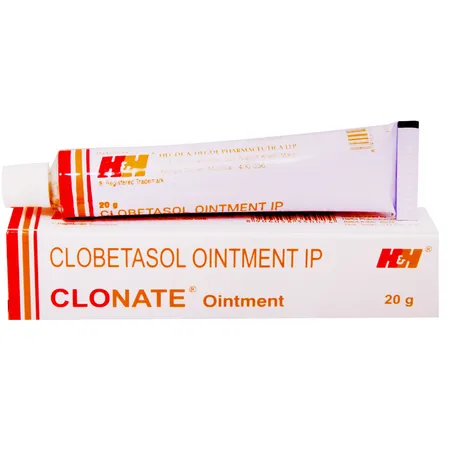
₹186.5
(Inclusive of all Taxes)
Get Free delivery (₹99) with
क्लोनेट ऑइंटमेंट 20 ग्राम का उपयोग ऑटोइम्यून स्किन डिसऑर्डर जैसे कि सोरायसिस (त्वचा पर पपड़ीदार, खुजली वाले और लाल चकत्ते), लाइकेन प्लानस (कलाई, अग्रबाहु या पैरों पर बैंगनी, खुजली वाले और चपटे उभार), डिस्कॉइड ल्यूपस एरिथेमेटोसस (स्कैल्प, गाल और कानों पर लाल, सिक्के के आकार के पपड़ी या पपड़ीदार परत), और एक्जिमा (लाल और खुजली वाली त्वचा) के इलाज के लिए किया जाता है।
क्लोनेट ऑइंटमेंट 20 ग्राम में क्लोबेटासोल (Clobetasol) होता है, जो शरीर में सूजन पैदा करने वाले कुछ केमिकल मैसेंजर के उत्पादन को रोककर सूजन, लालिमा और खुजली को कम करता है।
क्लोनेट ऑइंटमेंट 20 ग्राम के उपयोग से त्वचा का सूखा या पपड़ीदार होना, त्वचा का पतला होना, खुजली, लालिमा, सूजन, जलन, या लगाने वाली जगह पर जलन महसूस होने जैसे साइड इफेक्ट्स हो सकते हैं। यदि साइड इफेक्ट्स बने रहते हैं या बढ़ जाते हैं, तो सलाह के लिए अपने डॉक्टर से संपर्क करें।
यदि आपको क्लोबेटासोल (Clobetasol) या इस दवा में मौजूद किसी अन्य सामग्री से एलर्जी है, तो अपने डॉक्टर को बताएं। यदि आप गर्भवती हैं या स्तनपान करा रही हैं, तो अपने डॉक्टर से सलाह लें।
क्लोनेट ऑइंटमेंट 20 ग्राम का उपयोग त्वचा की विभिन्न सूजन और एलर्जी वाली स्थितियों के उपचार में किया जाता है। क्लोनेट ऑइंटमेंट 20 ग्राम के विस्तृत उपयोग इस प्रकार हैं:
सावधानी
क्लोनेट ऑइंटमेंट 20 ग्राम का अल्कोहल के साथ क्या प्रभाव हो सकता है, इसके बारे में जानकारी उपलब्ध नहीं है। यदि आपको कोई भी चिंता हो, तो अपने डॉक्टर से इस बारे में चर्चा करें।
सावधानी
कृपया अपने डॉक्टर से सलाह लें यदि आप गर्भवती हैं या आपको इसके बारे में कोई चिंता है; आपके डॉक्टर इसकी सलाह तभी देंगे जब इसके फायदे जोखिमों से ज़्यादा हों।
सावधानी
क्लोनेट ऑइंटमेंट 20 ग्राम स्तनपान पर कैसे प्रभाव डालता है, इसके बारे में सीमित जानकारी उपलब्ध है। यदि आप स्तनपान कराने वाली माता हैं, तो क्लोनेट ऑइंटमेंट 20 ग्राम का उपयोग करने से पहले कृपया अपने डॉक्टर से सलाह लें।
अगर डॉक्टर ने इसे लेने की सलाह दी हो, तो यह सुरक्षित है।
क्लोनेट ऑइंटमेंट 20 ग्राम का ड्राइविंग पर कोई प्रभाव नहीं पड़ता है। लेकिन अगर आपको अपनी दृष्टि (vision) में कोई समस्या महसूस हो, तो डॉक्टर से संपर्क करें। यदि क्लोनेट ऑइंटमेंट 20 ग्राम का उपयोग करने के बाद आपकी आँखों की रोशनी में कोई परेशानी आती है, तो ड्राइविंग न करें।
सावधानी
क्लोनेट ऑइंटमेंट 20 ग्राम का उपयोग करने से पहले अपने डॉक्टर को ज़रूर बताएँ यदि आपको लिवर की कोई बीमारी है। इसे प्रिस्क्राइब करने से पहले आपके डॉक्टर इसके संभावित जोखिमों का आकलन करेंगे।
सावधानी
अगर आपको किडनी की कोई बीमारी है, तो क्लोनेट ऑइंटमेंट 20 ग्राम इस्तेमाल करने से पहले अपने डॉक्टर को ज़रूर बताएं। इसे प्रिस्क्राइब करने से पहले आपके डॉक्टर इससे जुड़े संभावित जोखिमों की जांच करेंगे।
सावधानी
क्लोनेट ऑइंटमेंट 20 ग्राम का उपयोग 12 साल से कम उम्र के बच्चों में डॉक्टर की सलाह के बिना नहीं किया जाना चाहिए।
कृपया अपने डॉक्टर से सलाह लें।
अगर आपको पहले से दिल की कोई बीमारी है, तो क्लोनेट ऑइंटमेंट 20 ग्राम का इस्तेमाल करने से पहले कृपया अपने डॉक्टर से सलाह लें। आपके डॉक्टर क्लोनेट ऑइंटमेंट 20 ग्राम तभी लिखेंगे जब इसके फायदे जोखिमों से ज़्यादा हों।
कृपया अपने डॉक्टर से सलाह लें।
कृपया बुजुर्ग मरीजों को क्लोनेट ऑइंटमेंट 20 ग्राम देने से पहले डॉक्टर से सलाह लें। आपके डॉक्टर क्लोनेट ऑइंटमेंट 20 ग्राम तभी लिखेंगे जब इसके फायदे जोखिमों से ज़्यादा होंगे।
Have a query?
क्लोनेट ऑइंटमेंट 20 ग्राम को अपना असर दिखाना शुरू करने में लगने वाला समय: क्लोनेट ऑइंटमेंट 20 ग्राम के असर दिखने में कितना समय लगेगा, इसकी जानकारी उपलब्ध नहीं है।
क्लोनेट ऑइंटमेंट 20 ग्राम के असर की अवधि: क्लोनेट ऑइंटमेंट 20 ग्राम का असर कितने समय तक रहेगा, इसकी जानकारी उपलब्ध नहीं है।
Drug-Drug Interactions: Clonate Ointment may interact with HIV medication (ritonavir) and antifungal medication (itraconazole).
Drug-Food Interactions: No interactions found.
Drug-Disease Interactions: Clonate Ointment should be used with caution in patients with diabetes, eye problems, skin infections, and adrenal gland problems.
Login/Sign Up
Drug-Drug Interactions
Although Clonate Ointment is applied to the skin, it may interact with certain topical medications and treatments, including:
Drug-Disease Interactions
Certain medical and skin conditions may require special precautions when using Clonate Ointment, including:
Login/Sign Up
Praise Pharma
₹126.5
(₹2.53/ 1gm)
Rockmed Pharma Pvt Ltd
₹85
(₹2.83/ 1gm)
Gary Pharmaceuticals Pvt Ltd
₹123
(₹4.1/ 1gm)
Disclaimer


