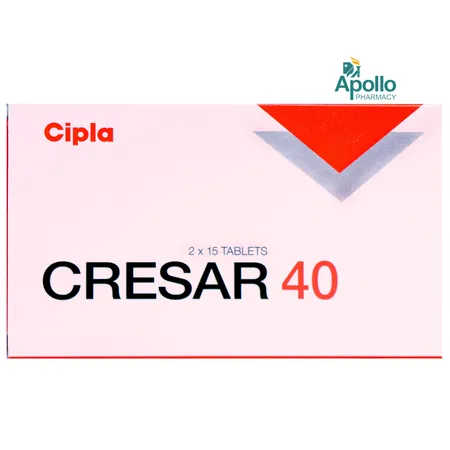
How does the drug interact with Cresar 40 Tablet:
Co-administration of Aliskiren with Cresar 40 Tablet can increase the risk of hyperkalemia (high potassium levels in the blood).
How to manage the interaction:
Taking Cresar 40 Tablet with Aliskiren can possibly lead to an interaction, please consult a doctor before taking it. Do not discontinue the medications without consulting a doctor.
How does the drug interact with Cresar 40 Tablet:
Co-administration of amiloride with Cresar 40 Tablet may increase potassium levels in the blood. (High potassium levels can cause hyperkalemia, which can lead to kidney failure, muscular paralysis, abnormal heart rhythm).
How to manage the interaction:
Although there is a possible interaction, amiloride may lead to an interaction but can be taken if prescribed by the doctor. However, consult the doctor if you experience nausea, vomiting, weakness, disorientation, tingling in your hands and feet, feelings of heaviness in your legs, a weak pulse, or a slow or irregular heartbeat. It is important to maintain proper fluid intake while taking these medications. Do not stop using any medications without talking to a doctor.
How does the drug interact with Cresar 40 Tablet:
Taking perindopril with Cresar 40 Tablet may increase the risk of side effects such as low blood pressure, kidney function impairment, and high blood potassium.
How to manage the interaction:
Although there is a possible interaction, Cresar 40 Tablet can be taken with perindopril if prescribed by the doctor. Consult the prescriber if you experience symptoms of high potassium such as nausea, vomiting, weakness, confusion, tingling of the hands and feet, feelings of heaviness in the legs, a weak pulse, or a slow or irregular heartbeat. Maintain adequate fluid intake during treatment with these medications. Do not discontinue the medications without consulting a doctor.
How does the drug interact with Cresar 40 Tablet:
Co-administration of Potassium acetate can make Cresar 40 Tablet more likely to cause high levels of potassium in the blood.
How to manage the interaction:
Although taking Potassium acetate and Cresar 40 Tablet together can evidently cause an interaction, it can be taken if your doctor has suggested it. Do not stop using any medications without a doctor's advice.
How does the drug interact with Cresar 40 Tablet:
Co-administration of Cresar 40 Tablet may significantly increase the blood levels of lithium.
How to manage the interaction:
Although there is a possible interaction, Cresar 40 Tablet can be taken with lithium if prescribed by the doctor. Consult the prescriber if you experience symptoms of lithium intoxication such as drowsiness, dizziness, confusion, loose stools, vomiting, muscle weakness, muscle incoordination, shaking of hands and legs, blurred vision, ringing in the ear, excessive thirst, or increased urination. Do not discontinue the medication without consulting a doctor.
How does the drug interact with Cresar 40 Tablet:
Taking lisinopril with Cresar 40 Tablet may increase the levels of potassium in blood.
How to manage the interaction:
Although there is a possible interaction, Cresar 40 Tablet can be taken with lisinopril if prescribed by the doctor. Consult the prescriber if you experience symptoms of high potassium such as nausea, vomiting, weakness, confusion, tingling of the hands and feet, feelings of heaviness in the legs, a weak pulse, or a slow or irregular heartbeat. Maintain adequate fluid intake during treatment with these medications.
How does the drug interact with Cresar 40 Tablet:
Taking quinapril with Cresar 40 Tablet may increase the risk of side effects such as low blood pressure, kidney function impairment, and high blood potassium.
How to manage the interaction:
Although there is a possible interaction, Cresar 40 Tablet can be taken with quinapril if prescribed by the doctor. Consult the prescriber if you experience symptoms of high potassium, such as nausea, vomiting, weakness, confusion, tingling of the hands and feet, feelings of heaviness in the legs, a weak pulse, or a slow or irregular heartbeat. Maintain adequate fluid intake during treatment with these medications. Do not discontinue the medications without consulting a doctor.
How does the drug interact with Cresar 40 Tablet:
Taking spironolactone with Cresar 40 Tablet may increase potassium levels in the blood.
How to manage the interaction:
Although there is a possible interaction, Cresar 40 Tablet can be taken with spironolactone if prescribed by the doctor. Consult the prescriber if you experience symptoms of high potassium such as nausea, vomiting, weakness, confusion, tingling of the hands and feet, feelings of heaviness in the legs, a weak pulse, or a slow or irregular heartbeat. Maintain adequate fluid intake during treatment with these medications. Do not discontinue the medications without consulting a doctor.
How does the drug interact with Cresar 40 Tablet:
Taking ramipril with Cresar 40 Tablet may increase the risk of side effects such as low blood pressure, kidney function impairment, and high blood potassium.
How to manage the interaction:
Although there is a possible interaction, Cresar 40 Tablet can be taken with ramipril if prescribed by the doctor. Consult the prescriber if you experience symptoms of high potassium such as nausea, vomiting, weakness, confusion, tingling of the hands and feet, feelings of heaviness in the legs, a weak pulse, or a slow or irregular heartbeat. Maintain adequate fluid intake during treatment with these medications. Do not discontinue the medications without consulting a doctor.
How does the drug interact with Cresar 40 Tablet:
Taking Potassium Iodide with Cresar 40 Tablet can make high levels of potassium in the blood more likely.
How to manage the interaction:
Although taking Potassium iodide and Cresar 40 Tablet together can evidently cause an interaction, it can be taken if your doctor has suggested it. Do not stop using any medications without a doctor's advice.