
0
Welcome User
Login/Sign Up

Login/Sign Up
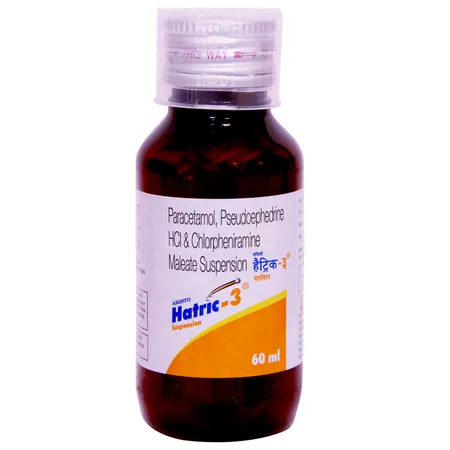
₹34.5
(Inclusive of all Taxes)
₹25 with coupons & bank offers*
Get Free delivery (₹99) with
हैट्रिक 3 सस्पेंशन 60 ml का मुख्य रूप से उपयोग सामान्य सर्दी और एलर्जी के लक्षणों जैसे छींकना, नाक बहना/बंद होना, बुखार, सिरदर्द, शरीर में दर्द, कफ या आँखों से पानी आने के इलाज के लिए किया जाता है। सामान्य सर्दी एक श्वसन संबंधी बीमारी है जो नाक और गले को प्रभावित करती है। यह ज्यादातर 'राइनोवायरस' नामक वायरस के कारण होती है। यह वायरस नाक, मुँह या आँखों के जरिए शरीर में प्रवेश करता है और जब बीमार व्यक्ति छींकता, खांसता या बात करता है, तो हवा में मौजूद बूंदों के माध्यम से आसानी से फैलता है।
हैट्रिक 3 सस्पेंशन 60 ml एक संयोजन दवा (combination medicine) है जो खांसी और जुकाम की दवाओं की श्रेणी में आती है जिसमें पैरासिटामोल (Paracetamol), सूडोएफेड्रिन (Pseudoephedrine), और क्लोरफेनिरामाइन (Chlorpheniramine) शामिल हैं। पैरासिटामोल एक एनाल्जेसिक (दर्द दूर करने वाला) और एंटीपायरेटिक (बुखार कम करने वाला) है जो मस्तिष्क में कुछ रासायनिक संदेशवाहकों, जिन्हें प्रोस्टाग्लैंडिंस कहा जाता है और जो दर्द तथा बुखार के लिए जिम्मेदार होते हैं, उनके उत्पादन को रोककर काम करता है। सूडोएफेड्रिन एक डिकंजेस्टेंट है जो नाक के मार्ग और वायुमार्ग की छोटी रक्त वाहिकाओं को सिकोड़कर और संकुचित करके काम करता है, जिससे नाक की बंद स्थिति या कफ से राहत मिलती है। क्लोरफेनिरामाइन एंटीहिस्टामाइन (एंटी-एलर्जिक दवा) की श्रेणी से संबंधित है जो हिस्टामाइन के प्रभाव को रोककर काम करता है, जो एलर्जी संबंधी प्रतिक्रियाओं का कारण बनने वाला पदार्थ है। यह छींकना, नाक बहना, आँखों से पानी आना, खुजली, सूजन और नाक बंद होने जैसे एलर्जी के लक्षणों को कम करने में मदद करता है।
अपने बच्चे को हैट्रिक 3 सस्पेंशन 60 ml उतनी ही मात्रा में दें जितनी आपके डॉक्टर ने सलाह दी है। आपके डॉक्टर बच्चे की चिकित्सीय स्थिति के आधार पर आपको बताएंगे कि हैट्रिक 3 सस्पेंशन 60 ml कितनी बार देना है। कुछ मामलों में, हैट्रिक 3 सस्पेंशन 60 ml के कारण मतली, नींद आना, एलर्जी संबंधी प्रतिक्रिया, चक्कर आना, सिरदर्द, बेचैनी, घबराहट और अनिद्रा (नींद आने में कठिनाई) जैसे दुष्प्रभाव हो सकते हैं। हैट्रिक 3 सस्पेंशन 60 ml के इनमें से अधिकांश दुष्प्रभावों के लिए चिकित्सा देखभाल की आवश्यकता नहीं होती है और वे समय के साथ धीरे-धीरे ठीक हो जाते हैं। हालांकि, यदि दुष्प्रभाव बने रहते हैं या बिगड़ जाते हैं, तो कृपया अपने डॉक्टर से सलाह लें।
यदि आपके बच्चों को हैट्रिक 3 सस्पेंशन 60 ml या किसी अन्य दवा से एलर्जी है, तो कृपया अपने डॉक्टर को बताएं। कृपया हैट्रिक 3 सस्पेंशन 60 ml की निर्धारित खुराक से अधिक न दें क्योंकि इससे लिवर को नुकसान हो सकता है और यह जानलेवा भी हो सकता है। यदि आपका बच्चा किसी चिकित्सीय स्थिति से जूझ रहा है या किसी विशिष्ट दवा का सेवन कर रहा है, तो इस दवा का उपयोग करने से पहले कृपया अपने डॉक्टर को सूचित करें।
हैट्रिक 3 सस्पेंशन 60 ml का उपयोग सामान्य सर्दी और एलर्जी के लक्षणों के इलाज के लिए किया जाता है। हैट्रिक 3 सस्पेंशन 60 ml के विस्तृत उपयोग इस प्रकार हैं:
हैट्रिक 3 सस्पेंशन 60 ml का उपयोग सामान्य सर्दी और एलर्जी के लक्षणों जैसे छींक आना, नाक बहना/नाक बंद होना, बुखार, सिरदर्द, शरीर में दर्द, कंजेशन (छाती या नाक में भारीपन) या आँखों से पानी आने के इलाज के लिए किया जाता है। पैरासिटामोल (Paracetamol) एक एनाल्जेसिक (दर्द कम करने वाला) और एंटीपायरेटिक (बुखार कम करने वाला) है, जो मस्तिष्क में प्रोस्टाग्लैंडिन्स (prostaglandins) नामक कुछ रासायनिक संदेशवाहकों के उत्पादन को रोककर काम करता है, जो दर्द और बुखार के लिए जिम्मेदार होते हैं। सूडोएफेड्रिन (Pseudoephedrine) एक डीकंजस्टेंट है जो नाक के मार्ग और श्वसन नली की छोटी रक्त वाहिकाओं को सिकोड़कर और संकीर्ण करके काम करता है, जिससे नाक की जकड़न या भारीपन से राहत मिलती है। क्लोरफेनिरामाइन (Chlorpheniramine) एंटीहिस्टामाइन (एलर्जी रोधी दवाओं) के वर्ग से संबंधित है जो हिस्टामाइन (histamine) के प्रभाव को रोककर काम करता है, जो एलर्जी प्रतिक्रिया पैदा करने वाला एक पदार्थ है। यह छींकने, नाक बहने, आँखों से पानी आने, खुजली, सूजन और नाक की जकड़न जैसे एलर्जी के लक्षणों को कम करने में मदद करता है।
लागू नहीं
-
लागू नहीं
-
लागू नहीं
-
लागू नहीं
-
सावधानी
हैट्रिक 3 सस्पेंशन 60 ml में पैरासिटामोल (paracetamol) है, जिसकी अनुशंसित खुराक से अधिक मात्रा लेने पर लिवर को नुकसान पहुँच सकता है। इसलिए, हैट्रिक 3 सस्पेंशन 60 ml देते समय सावधानी बरतें, खासकर यदि आपके बच्चे को लिवर से जुड़ी बीमारियों या समस्याओं का इतिहास रहा हो। आपकी आवश्यकता के अनुसार डॉक्टर इसकी खुराक बदल सकते हैं।
सावधानी
हैट्रिक 3 सस्पेंशन 60 ml का उपयोग सावधानी से करें, विशेष रूप से यदि आपके बच्चे को किडनी (गुर्दे) की बीमारियों या समस्याओं का इतिहास रहा है।
अगर डॉक्टर ने इसे लेने की सलाह दी हो, तो यह सुरक्षित है।
हैट्रिक 3 सस्पेंशन 60 ml बच्चों के लिए सुरक्षित है यदि इसका उपयोग डॉक्टर द्वारा बताई गई खुराक में किया जाए।
सावधानी
अगर आपके बच्चे को दिल की कोई समस्या है, तो अपने डॉक्टर को ज़रूर बताएं, क्योंकि पहले से मौजूद या दिल की बीमारी के इतिहास वाले बच्चों में हैट्रिक 3 सस्पेंशन 60 ml का इस्तेमाल बहुत सावधानी से किया जाना चाहिए।
लागू नहीं
हैट्रिक 3 सस्पेंशन 60 ml केवल बच्चों के लिए है।
Have a query?
यदि आपके बच्चे को हैट्रिक 3 सस्पेंशन 60 ml या किसी अन्य दवा से एलर्जी है, तो कृपया अपने डॉक्टर को बताएं। कृपया अपने बच्चे को हैट्रिक 3 सस्पेंशन 60 ml की निर्धारित खुराक से अधिक न दें क्योंकि इससे लिवर (यकृत) को नुकसान हो सकता है और यह जानलेवा भी हो सकता है। यदि आपका बच्चा किसी चिकित्सीय स्थिति से जूझ रहा है या किसी विशेष दवा का सेवन कर रहा है, तो इस दवा का उपयोग करने से पहले कृपया अपने डॉक्टर को सूचित करें।
Drug-Drug Interactions: Inform your doctor if your child is taking any other medicines.
Drug-Food Interactions: Avoid giving Hatric 3 Suspension with chocolate and caffeine-containing foods such as cocoa beans and tea leaves as they may increase the risk of severity of side effects to your child.
Drug-Disease Interactions: If your child has diabetes, hyperthyroidism (overactive thyroid), chronic bronchitis, asthma, chronic obstructive pulmonary disease (COPD), blockage in the stomach or intestines, pheochromocytoma (tumour in the adrenal glands), kidney, liver, heart or urinary problems, inform your doctor before taking Hatric 3 Suspension.
Login/Sign Up
Login/Sign Up
Disclaimer


