
0
Welcome User
Login/Sign Up

Login/Sign Up
₹259
(Inclusive of all Taxes)
Get Free delivery (₹99) with
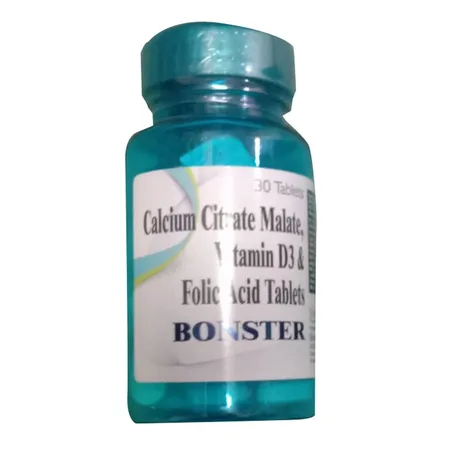
बॉनस्टर टैबलेट 30's पोषण संबंधी सप्लीमेंट्स नामक दवाओं के समूह से संबंधित है, जिनका उपयोग पोषण संबंधी कमियों, जैसे कैल्शियम और विटामिन डी की कमी के इलाज के लिए किया जाता है। पोषण संबंधी कमी तब होती है जब शरीर भोजन से पर्याप्त पोषक तत्वों को अवशोषित/प्राप्त नहीं कर पाता है। पोषक तत्व शरीर के विकास और बीमारियों की रोकथाम के लिए आवश्यक हैं।
बॉनस्टर टैबलेट 30's तीन सप्लीमेंट्स का एक संयोजन है: कैल्शियम साइट्रेट, कोलेकैल्सीफेरोल और फोलिक एसिड। कैल्शियम हड्डियों का घनत्व बढ़ाकर उन्हें मजबूत बनाता है। यह कैल्शियम के निम्न स्तर के इलाज और रोकथाम में मदद करता है। कोलेकैल्सीफेरोल कैल्शियम के अवशोषण में मदद करता है। फोलिक एसिड नई रक्त कोशिकाओं के उत्पादन और रखरखाव में मदद करता है। साथ मिलकर, बॉनस्टर टैबलेट 30's पोषण संबंधी कमियों के इलाज में मदद करता है।
आपको अपनी चिकित्सा स्थिति के आधार पर, जब तक आपके डॉक्टर ने सलाह दी है, तब तक बॉनस्टर टैबलेट 30's लेने की सलाह दी जाती है। कुछ मामलों में, आपको कुछ सामान्य दुष्प्रभाव जैसे पेट दर्द, कब्ज, मांसपेशियों में कमजोरी, मतली और उल्टी का अनुभव हो सकता है। इनमें से अधिकांश दुष्प्रभावों के लिए चिकित्सा ध्यान देने की आवश्यकता नहीं होती है और समय के साथ धीरे-धीरे ठीक हो जाएंगे। हालांकि, यदि आप इन दुष्प्रभावों का लगातार अनुभव करते हैं तो आपको अपने डॉक्टर से बात करने की सलाह दी जाती है।
बॉनस्टर टैबलेट 30's शुरू करने से पहले अपने डॉक्टर को बताएं कि क्या आप कोई अन्य दवाएं या हर्बल उत्पाद ले रहे हैं। यदि आपको बॉनस्टर टैबलेट 30's में किसी भी घटक से एलर्जी है, तो कृपया अपने डॉक्टर को सूचित करें। यदि आप गर्भवती हैं या स्तनपान करा रही हैं तो बॉनस्टर टैबलेट 30's लेने से पहले अपने डॉक्टर से सलाह लें। बॉनस्टर टैबलेट 30's बच्चों को केवल डॉक्टर की सलाह पर ही दिया जाना चाहिए। बॉनस्टर टैबलेट 30's के साथ शराब का सेवन करने से बचें।
बॉनस्टर टैबलेट 30's का उपयोग विभिन्न पोषण संबंधी कमियों के इलाज के लिए किया जाता है। इसके विस्तृत उपयोग इस प्रकार हैं:
सावधानी
बॉनस्टर टैबलेट 30's लेते समय शराब का सेवन न करें क्योंकि इससे फोलेट की कमी हो सकती है।
सावधानी
कृपया अपने डॉक्टर से सलाह लें यदि आप गर्भवती हैं या आपको इसके बारे में कोई चिंता है; आपके डॉक्टर इसकी सलाह तभी देंगे जब इसके फायदे जोखिमों से ज़्यादा हों।
सावधानी
यदि आप स्तनपान करा रही हैं, तो अपने डॉक्टर से सलाह लें; आपके डॉक्टर तय करेंगे कि स्तनपान कराने वाली माताएँ बॉनस्टर टैबलेट 30's ले सकती हैं या नहीं।
सावधानी
बॉनस्टर टैबलेट 30's से आपकी गाड़ी चलाने की क्षमता पर असर पड़ने की संभावना कम है। हालांकि, गाड़ी चलाएं या मशीनरी का संचालन करें तभी जब आप सतर्क हों।
कृपया अपने डॉक्टर से सलाह लें।
बॉनस्टर टैबलेट 30's का उपयोग हल्के से मध्यम लिवर रोग में सुरक्षित रूप से किया जा सकता है, जब इसे सुझाए अनुसार लिया जाए। हालांकि, गंभीर लिवर की खराबी में, विटामिन डी3 का चयापचय प्रभावित हो सकता है, इसलिए खुराक को समायोजित करने या आपके डॉक्टर द्वारा अधिक बारीकी से निगरानी करने की आवश्यकता हो सकती है।
कृपया अपने डॉक्टर से सलाह लें।
बॉनस्टर टैबलेट 30's का उपयोग किडनी के मरीज़ों में सावधानी के साथ करना चाहिए। हल्के से मध्यम मामलों में यह सुरक्षित हो सकता है, लेकिन गंभीर किडनी रोग वाले लोगों को करीब से निगरानी की आवश्यकता होती है, क्योंकि अतिरिक्त कैल्शियम या विटामिन डी से उच्च कैल्शियम स्तर या किडनी के कार्य का बिगड़ना जैसी जटिलताएँ हो सकती हैं।
कृपया अपने डॉक्टर से सलाह लें।
बॉनस्टर टैबलेट 30's बच्चों को केवल डॉक्टर की सलाह पर ही देना चाहिए।
यदि डॉक्टर द्वारा सुझाया गया हो तो सुरक्षित है।
बॉनस्टर टैबलेट 30's आमतौर पर हृदय रोगियों के लिए अनुशंसित खुराक में लेने पर सुरक्षित है, लेकिन इसका उपयोग करने से पहले अपने डॉक्टर से सलाह लें।
यदि डॉक्टर द्वारा सुझाया गया हो तो सुरक्षित है।
बॉनस्टर टैबलेट 30's को डॉक्टर की सलाह पर बुजुर्ग मरीजों के लिए आमतौर पर सुरक्षित माना जाता है। यदि आपको कोई भी शंका हो, तो कृपया अपने डॉक्टर से परामर्श करें।
Have a query?
बॉनस्टर टैबलेट 30's को असर दिखाना शुरू करने में लगने वाला समय: यह ज्ञात नहीं है कि बॉनस्टर टैबलेट 30's अपना असर कब दिखाना शुरू करती है। बॉनस्टर टैबलेट 30's के असर कितने समय तक रहते हैं: बॉनस्टर टैबलेट 30's का असर कितने समय तक रहता है, यह चिकित्सकीय रूप से अज्ञात है।
Inform your doctor if you are using any of the following medicines, as they may interact with Bonster Tablet .
Login/Sign Up
Login/Sign Up
Disclaimer
Recommended for a 30-day course: 4 Bottles


