
0
Welcome User
Login/Sign Up

Login/Sign Up
₹430.5
(Inclusive of all Taxes)
₹318 with coupons & bank offers*
Get Free delivery (₹99) with
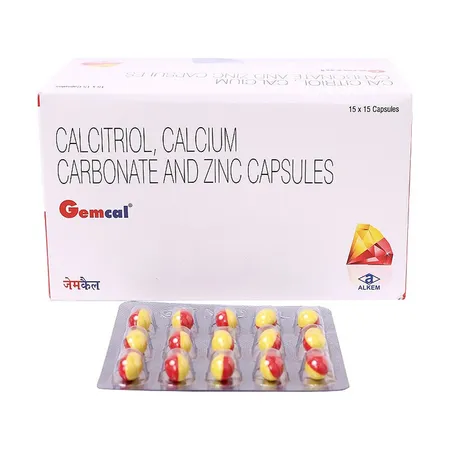
जेमकैल कैप्सूल 15's का उपयोग रक्त में कैल्शियम के निम्न स्तर के इलाज के लिए किया जाता है। यह शरीर में कैल्शियम के निम्न स्तर के कारण होने वाली विभिन्न स्थितियों, जैसे ऑस्टियोपोरोसिस (कमजोर और भंगुर हड्डियां), ऑस्टियोमलेशिया/रिकेट्स (कमजोर हड्डियां), हाइपोपैराथायरायडिज्म (पैराथायरायड हार्मोन का निम्न स्तर), और लेटेंट टेटनी (रक्त में कैल्शियम के निम्न स्तर के साथ एक मांसपेशी रोग) का प्रभावी ढंग से इलाज करता है।
जेमकैल कैप्सूल 15's गर्भवती, स्तनपान कराने वाली और रजोनिवृत्ति के बाद की महिलाओं को भी पर्याप्त कैल्शियम प्राप्त करने के लिए दिया जा सकता है। इसके अतिरिक्त, जेमकैल कैप्सूल 15's का उपयोग क्रोनिक किडनी रोग, सर्जरी या अन्य स्थितियों वाले लोगों में हाइपरपैराथायरायडिज्म (अतिसक्रिय पैराथायरायड ग्रंथियां) और मेटाबॉलिक हड्डी रोग के इलाज के लिए किया जाता है।
जेमकैल कैप्सूल 15's में तीन दवाएं शामिल हैं: कैल्शियम कार्बोनेट (खनिज), कैल्सीट्रियोल (विटामिन डी3), और जिंक (खनिज)। कैल्शियम हड्डियों के निर्माण और रखरखाव के लिए आवश्यक पोषक तत्व प्रदान करता है। कैल्सीट्रियोल आंत से कैल्शियम के अवशोषण में सुधार करने में मदद करता है। जिंक ऑस्टियोब्लास्टिक हड्डी के निर्माण और खनिजकरण को उत्तेजित करता है।
कुछ मामलों में, जेमकैल कैप्सूल 15's से कब्ज या पेट खराब, मतली, उल्टी, भूख न लगना, मूड में बदलाव, कमजोरी, थकान, तेज़ या धड़कन वाला दिल, हड्डी/मांसपेशियों में दर्द और सिरदर्द जैसे दुष्प्रभाव हो सकते हैं। इनमें से अधिकांश दुष्प्रभावों के लिए चिकित्सकीय ध्यान देने की आवश्यकता नहीं होती है और समय के साथ धीरे-धीरे ठीक हो जाते हैं। हालांकि, यदि ये दुष्प्रभाव लंबे समय तक बने रहते हैं, तो कृपया अपने डॉक्टर से परामर्श करें।
यदि आपको जेमकैल कैप्सूल 15's में किसी भी घटक से एलर्जी है, तो कृपया अपने डॉक्टर को सूचित करें। गर्भवती या स्तनपान कराने वाली महिलाओं को जेमकैल कैप्सूल 15's लेने से पहले अपने डॉक्टर से परामर्श करना चाहिए। संभावित अंतःक्रियाओं को रोकने के लिए अपने डॉक्टर को बताएं कि क्या आप कोई अन्य दवा ले रहे हैं या पहले से कोई चिकित्सीय स्थिति है।
जेमकैल कैप्सूल 15's कैल्शियम और विटामिन डी की कमी से होने वाली विभिन्न स्थितियों की रोकथाम और उपचार के लिए संकेतित है। जेमकैल कैप्सूल 15's के विस्तृत उपयोग इस प्रकार हैं:
सावधानी
जेमकैल कैप्सूल 15's का उपयोग करते समय शराब के सेवन को सीमित करने की सलाह दी जाती है, क्योंकि शराब पीने से कैल्शियम के अवशोषण (absorption) पर असर पड़ सकता है।
सावधानी
यदि आप गर्भवती हैं, तो अपने डॉक्टर से सलाह लें। जेमकैल कैप्सूल 15's की सिफारिश करने से पहले आपके डॉक्टर संभावित जोखिमों और लाभों का आकलन करेंगे।
सावधानी
जेमकैल कैप्सूल 15's स्तन के दूध में जा सकता है। यदि आप स्तनपान करा रही हैं, तो जेमकैल कैप्सूल 15's लेने से पहले अपने डॉक्टर से सलाह लें।
सुरक्षित
कोई इंटरेक्शन नहीं पाया गया/स्थापित किया गया।
सावधानी
जेमकैल कैप्सूल 15's लेने से पहले अपने डॉक्टर को बताएं कि क्या आपको लिवर से जुड़ी कोई बीमारी है। लिवर की खराबी/लिवर की बीमारी कुछ विटामिन डी के रूपों की मेटाबॉलिक और चिकित्सीय गतिविधि को बदल सकती है।
सावधानी
अगर आपको किडनी से जुड़ी कोई बीमारी है, जैसे कि किडनी स्टोन या आप डायलिसिस करवा रहे हैं, तो जेमकैल कैप्सूल 15's शुरू करने से पहले डॉक्टर की सलाह ज़रूर लें। जेमकैल कैप्सूल 15's में मौजूद कैल्सिट्रिऑल सीरम में अकार्बनिक फॉस्फेट के स्तर को बढ़ाता है; इसलिए, डायलिसिस करवा रहे मरीज़ों को पर्याप्त फॉस्फोरस स्तर बनाए रखने और एक्टोपिक कैल्सिफिकेशन (कैल्शियम जमाव) से बचने के लिए सावधानी बरतनी चाहिए।
सावधानी
जेमकैल कैप्सूल 15's का उपयोग बच्चों में सावधानी के साथ और केवल डॉक्टर की सलाह पर ही करना चाहिए।
कृपया अपने डॉक्टर से सलाह लें।
यदि आपको हृदय रोग (heart disease) का इतिहास रहा है, तो अपने डॉक्टर से बात करें। आपके डॉक्टर इसकी सलाह तभी देंगे जब इसके फायदे इसके जोखिमों से अधिक हों।
सावधानी
जेमकैल कैप्सूल 15's को बुजुर्ग मरीजों को देते समय सावधानी बरतनी चाहिए, क्योंकि उनमें साइड इफेक्ट्स (दुष्प्रभावों) का खतरा बढ़ सकता है। यदि आपको कोई शंका या चिंता है, तो कृपया अपने डॉक्टर से सलाह लें।
Have a query?
जेमकैल कैप्सूल 15's को असर दिखाने में कितना समय लगता है: जेमकैल कैप्सूल 15's के असर दिखने का सटीक समय अभी ज्ञात नहीं है।
जेमकैल कैप्सूल 15's का असर कितने समय तक रहता है: जेमकैल कैप्सूल 15's के असर की अवधि क्लिनिकली अज्ञात है।
The following medicines may interact with Gemcal Capsule and require caution, closer monitoring, or advice from your doctor:
Login/Sign Up
Some foods and drinks may affect how well Gemcal Capsule works.
Login/Sign Up
Disclaimer
Recommended for a 30-day course: 2 Strips


