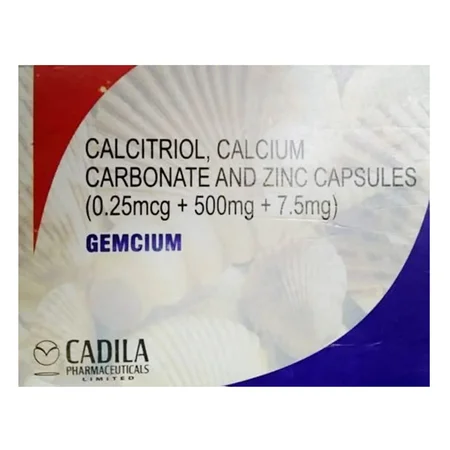
How does the drug interact with Gemcium Softgel Capsule:
Co-administration of Calcium carbonate with Ketoconazole may decrease the effects of Ketoconazole.
How to manage the interaction:
Although there is an interaction, Calcium carbonate can be taken with Ketoconazole if prescribed by the doctor. However, maintain a gap of 2 or more hours between both medicines. Do not discontinue the medication without consulting a doctor.
How does the drug interact with Gemcium Softgel Capsule:
Taking Calcitriol with Fosphenytoin can reduce the levels and efficacy of Calcitriol.
How to manage the interaction:
Taking Calcitriol with Fosphenytoin together can possibly result in an interaction, but it can be taken if a doctor has advised it. If you notice any symptoms of sudden dizziness, weakness, chest pain or pressure, abnormal body movements, uncontrollable eye movements, itching, burning, or tingling sensation, it's important to contact a doctor right away. Do not stop using any medications without a doctor's advice. Do not discontinue the medication without consulting a doctor.
How does the drug interact with Gemcium Softgel Capsule:
Co-administration of Calcitriol with Dihydrotachysterol can increase the risk of adverse effects.
How to manage the interaction:
Co-administration of Dihydrotachysterol with Calcitriol can possibly result in an interaction, but it can be taken if your doctor has advised it. If you notice any of these symptoms - irregular heartbeat, seizures, weakness, tiredness, headache, dizziness, ringing in the ears, loss of appetite, feeling sick, throwing up, constipation, dry mouth, strange taste in your mouth, muscle or bone pain, trouble coordinating movements, weak muscles, peeing a lot, feeling very thirsty, losing weight, eye infection, sensitivity to light, itching, or a higher body temperature - make sure to call a doctor right away. Do not discontinue any medications without consulting a doctor.
How does the drug interact with Gemcium Softgel Capsule:
Co-administration of calcitriol + calcium carbonate with digitoxin may increase the risk or severity of digitoxin toxicity and irregular heart rhythm.
How to manage the interaction:
Although there is an interaction, calcitriol + calcium carbonate can be taken with Digitoxin if prescribed by the doctor. Consult the prescriber if you experience symptoms that could indicate high blood calcium, such as weakness, fatigue, headache, dizziness, drowsiness, ringing in the ears, loss of appetite, nausea, vomiting, constipation, dry mouth, a metallic taste in the mouth, bone or muscle pain, incoordination, frequent urination, and weight loss. Also, seek medical attention if you experience symptoms of digitoxin toxicity, such as blurred vision, a slow pulse, or irregular heartbeats. Do not discontinue the medication without consulting a doctor.
How does the drug interact with Gemcium Softgel Capsule:
Co-administration of Paricalcitol and Calcitriol are forms of vitamin D, and taking too much vitamin D may lead to toxic effects related to excessive calcium levels in the blood and urine.
How to manage the interaction:
Concomitant use of Paricalcitol with Calcitriol can lead to an interaction, it can be taken if advised by a doctor. Consult the prescriber if you experience symptoms of vitamin D intoxication such as weakness, fatigue, headache, vertigo, drowsiness, ringing in the ears, loss of appetite, nausea, vomiting, constipation, dry mouth, metallic taste, muscle pain, bone pain, muscle incoordination, and low muscle tone. Do not discontinue the medication without consulting a doctor.
How does the drug interact with Gemcium Softgel Capsule:
Co-administration of Calcifediol and Calcitriol are forms of vitamin D, and taking too much vitamin D may lead to toxic effects related to increased calcium levels in the blood and urine.
How to manage the interaction:
Taking calcifediol with calcitriol can lead to an interaction; it can be taken if advised by a doctor. Consult the prescriber if you experience symptoms such as weakness, headache, fatigue, drowsiness, vertigo, ringing in the ears, loss of appetite, nausea, vomiting, constipation, dry mouth, metallic taste, muscle pain, bone pain, muscle incoordination, and low muscle tone. Do not discontinue the medication without consulting a doctor.
How does the drug interact with Gemcium Softgel Capsule:
Co-administration of calcitriol and burosumab may cause increases in phosphorus and vitamin D levels in the blood, which may lead to an increased risk of kidney stones.
How to manage the interaction:
There may be a possibility of interaction between Calcitriol and Burosumab, but it can be taken if prescribed by a doctor. If you have any of these symptoms like kidney stones, it's important to contact a doctor right away. Do not stop using any medications without a doctor's advice. Do not discontinue the medication without consulting a doctor.
How does the drug interact with Gemcium Softgel Capsule:
Co-administration of calcium carbonate +Zinc sulfate may interfere with the absorption of Raltegravir and reduce its effectiveness.
How to manage the interaction:
Taking calcium carbonate +Zinc sulfate with Raltegravir should be avoided. Consult the doctor if you have any concerns; the doctor may recommend alternatives that do not interact with raltegravir. Do not discontinue the medication without consulting a doctor.
How does the drug interact with Gemcium Softgel Capsule:
Co-administration of Doxercalciferol and Calcitriol are forms of vitamin D, and taking too much vitamin D may lead to toxic effects related to increased calcium levels in the blood and urine.
How to manage the interaction:
Taking Doxercalciferol with Calcitriol can lead to an interaction, it can be taken if advised by a doctor. Consult the prescriber if you experience symptoms of vitamin D intoxication such as weakness, fatigue, headache, vertigo, drowsiness, ringing in the ears, loss of appetite, nausea, vomiting, constipation, dry mouth, metallic taste, muscle pain, bone pain, muscle incoordination, and low muscle tone. Do not discontinue the medication without consulting a doctor.
How does the drug interact with Gemcium Softgel Capsule:
Co-administration of Orlistat with Calcitriol may reduce the levels of Calcitriol which can lead to low treatment outcomes.
How to manage the interaction:
Although there is an interaction, Calcitriol can be taken with Orlistat when prescribed by the doctor. Do not discontinue any medications without consulting a doctor.