apollo
logo
0
Select Delivery Location
compositionComposition:FEXOFENADINE-180MG
prescription
Prescription Medicine
info
Written By Bayyarapu Mahesh Kumar , M Pharmacy
Reviewed By Veda Maddala , M Pharmacy
OffersOffers & Discounts

Get Free delivery (₹99) with circle icon

Join Circle
Get Extra 18% Off with Coupons
Extra 10% Off with Bank Offers
bank offer
bank offer
bank offer

More about the Product

Composition :

FEXOFENADINE-180MG

Manufacturer/Marketer :

Sanofi Consumer Healthcare

Consume Type :

Oral

Expires on or after :

Jan-27

Return Policy :

Not Returnable

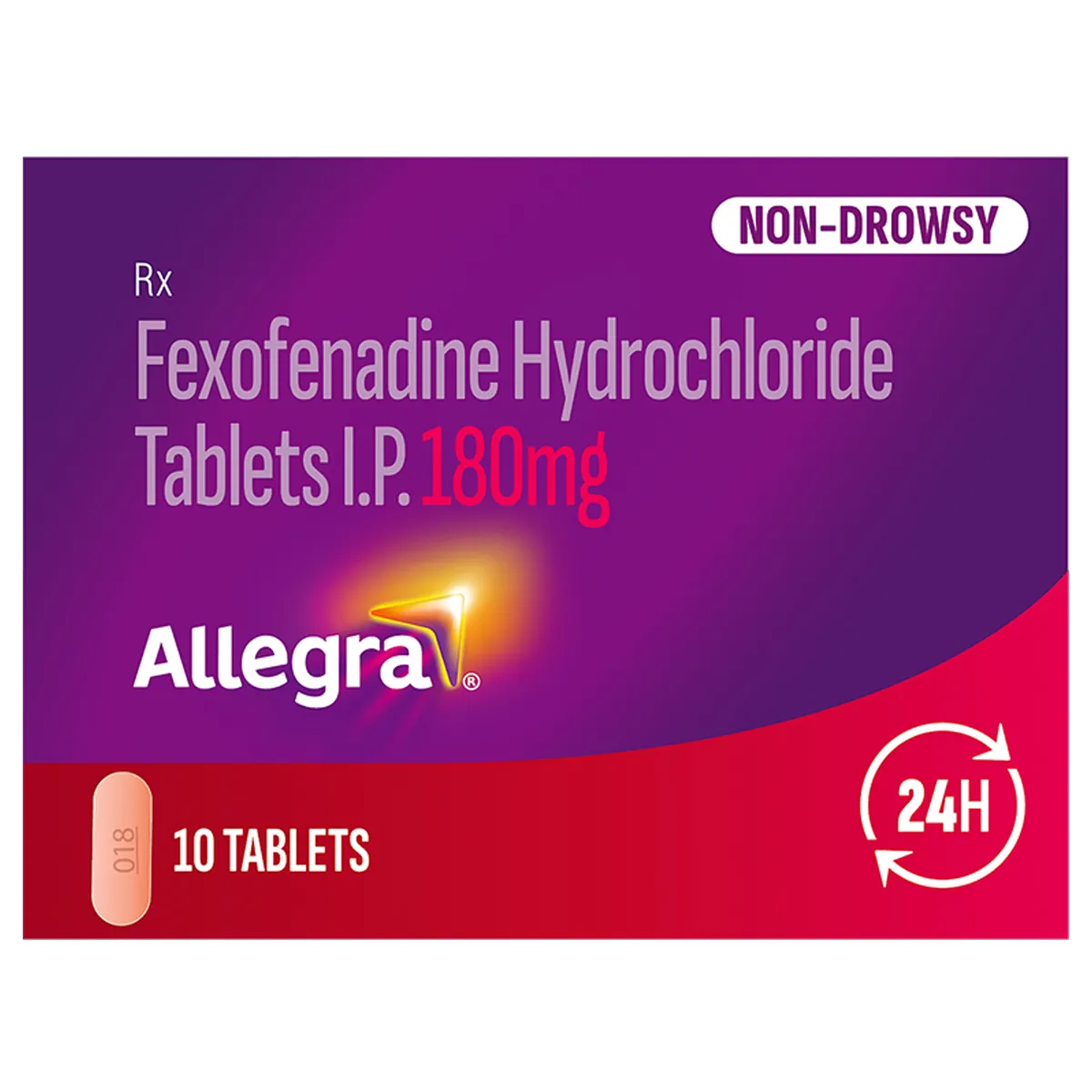
About Allegra 180 mg Tablet 10's

Allegra 180 mg Tablet 10's is an antihistamine medicine used to relieve symptoms of seasonal allergies and chronic, unexplained hives. It is commonly taken to manage frequent sneezing, a runny or itchy nose, watery eyes, and itchy skin rashes. By targeting the root cause of these allergic responses, this medicine helps you maintain your daily routine without discomfort.

To achieve the best results, Allegra 180 mg Tablet 10's is typically taken once or twice daily, depending on your specific needs and your doctor's recommendations. For consistent control of seasonal allergies, it is most effective when taken daily around the same time throughout the allergy season. You can take this medicine with or without food, but you should always take it with a full glass of water rather than fruit juice. Incorporating simple lifestyle adjustments, such as using an indoor air purifier and keeping windows closed when pollen counts are high, can significantly support the effectiveness of your treatment.

While this medicine is highly effective and generally well-tolerated, some individuals may experience mild side effects like headaches, drowsiness, or dry mouth. These symptoms are usually temporary and resolve on their own. However, if you experience rare but serious side effects—such as severe dizziness, swelling of your face or throat, or difficulty breathing—you should seek emergency medical care immediately and consult your doctor.

Before you begin taking Allegra 180 mg Tablet 10's, it is important to discuss your medical history with your healthcare provider. Talk to your doctor if you have kidney disease, as your body may require a modified dosing schedule. Do not take this medicine if you have had a known allergic reaction to it or any of its inactive ingredients in the past.

Certain substances can interfere with how this medicine works in your body. For instance, taking it alongside antacids containing aluminium or magnesium can reduce its absorption, making it less effective. Additionally, you should consult your doctor or pharmacist if you are pregnant, breastfeeding, or planning a pregnancy to ensure this treatment is appropriate for your situation.

Uses of Allegra 180 mg Tablet 10's

A doctor may prescribe or recommend Allegra 180 mg Tablet 10's for the following conditions:

  • Seasonal Allergic Rhinitis: Helps relieve outdoor allergy symptoms, including sneezing, runny nose, itchy throat, and red, watery eyes.
  • Chronic Idiopathic Urticaria: Reduces the severity of ongoing, unexplained hives, including skin swelling, redness, and intense itching.

Key Benefits

Allegra 180 mg Tablet 10's provides reliable relief from bothersome allergy symptoms, helping you return to your normal daily activities. Key benefits include:

  • Non-Drowsy Relief: Unlike older allergy medications, this formula does not easily cross into the brain, meaning it provides effective relief without causing significant drowsiness. This allows you to stay alert and focused at work, school, or while driving.
  • Long-Lasting Control: A single dose provides up to 24 hours of continuous protection, preventing allergy symptoms from returning throughout the day or night.
  • Rapid Action: The medicine begins working within one to two hours, quickly easing discomfort from sudden allergy flare-ups or hives.
Side effects of Allegra 180 mg Tablet
To prevent, manage, and treat Constipation caused by medication usage, follow these steps:
  • Preventing Vomiting (Before it Happens)
  • Take medication exactly as prescribed by your doctor. This can help minimize side effects, including vomiting.
  • Having a small meal before taking your medication can help reduce nausea and vomiting.
  • Talk to your doctor about taking anti-nausea medication along with your prescribed medication.
  • Managing Vomiting (If it Happens)
  • Try taking ginger in the form of tea, ale, or candy to help alleviate nausea and vomiting.
  • What to Do if Vomiting Persists
  • Consult your doctor if vomiting continues or worsens, consult the doctor for guidance on adjusting your medication or additional treatment.
Dealing with Medication-Induced Headache:
  • Hydrate your body: Drink enough water to prevent dehydration and headaches.
  • Calm Your Mind: Deep breathing and meditation can help you relax and relieve stress.
  • Rest and Recharge: Sleep for 7-8 hours to reduce headache triggers.
  • Take rest: lie down in a quiet, dark environment.
  • Cold or warm compresses can help reduce tension.
  • Stay Upright: Maintain good posture to keep symptoms from getting worse.
  • To treat headaches naturally, try acupuncture or massage therapy.
  • Over-the-counter pain relievers include acetaminophen and ibuprofen.
  • Prescription Assistance: Speak with your doctor about more substantial drug alternatives.
  • Severe Headaches: Seek emergency medical assistance for sudden, severe headaches.
  • Frequent Headaches: If you get reoccurring headaches, consult your doctor.
  • Headaches with Symptoms: Seek medical attention if your headaches include fever, disorientation, or weakness.
Here are the steps to manage the medication-triggered Cough:
  • Tell your doctor about the cough symptoms you're experiencing, which may be triggered by your medication.
  • Your doctor may adjust your treatment plan by changing your medication, adding new medications, or providing guidance on managing your cough symptoms.
  • Practice good hygiene, including frequent handwashing, avoiding close contact with others, and avoiding sharing utensils or personal items.
  • Stay hydrated by drinking plenty of fluids, such as water, tea, or soup, to help thin out mucus and soothe your throat.
  • Get plenty of rest and engage in stress-reducing activities to help your body recover. If your cough persists or worsens, consult your doctor for further guidance.
Here are the precise steps to cope with diarrhoea caused by medication usage:
  • Inform Your Doctor: Notify your doctor immediately about your diarrhoea symptoms. This allows them to adjust your medication or provide guidance on managing side effects.
  • Stay Hydrated: Drink plenty of fluids to replace lost water and electrolytes. Choose water, clear broth, and electrolyte-rich drinks. Avoid carbonated or caffeinated beverages to effectively rehydrate your body.
  • Follow a Bland Diet: Eat easy-to-digest foods to help firm up your stool and settle your stomach. Try incorporating bananas, rice, applesauce, toast, plain crackers, and boiled vegetables into your diet.
  • Avoid Trigger Foods: Steer clear of foods that can worsen diarrhoea, such as spicy, fatty, or greasy foods, high-fibre foods, and dairy products (especially if you're lactose intolerant).
  • Practice Good Hygiene: Maintain good hygiene to prevent the spread of infection. To stay healthy, wash your hands frequently, clean and disinfect surfaces regularly, and avoid exchanging personal belongings with others.
  • Take Anti-Diarrheal Medications: If your doctor advises, anti-diarrheal medications such as loperamide might help manage diarrhoea symptoms. Always follow your doctor's directions.
  • Keep track of your diarrhoea symptoms. If they don't get better or worse or are accompanied by severe stomach pain, blood, or dehydration signs (like extreme thirst or dark urine), seek medical help.
Managing back pain as a side effect of medication requires a combination of self-care techniques, lifestyle modifications, and medical interventions. Here are the steps:
  • Talk to your doctor about your back pain and potential medication substitutes or dose changes.
  • Try yoga or Pilates and other mild stretching exercises to increase flexibility and strengthen your back muscles.
  • To lessen the tension on your back, sit and stand upright and maintain proper posture.
  • To alleviate discomfort and minimize inflammation, apply heat or cold packs to the afflicted area.
  • Under your doctor's supervision, think about taking over-the-counter painkillers like acetaminophen or ibuprofen.
  • Make ergonomic adjustments to your workspace and daily activities to reduce strain on your back.
  • To handle tension that could make back pain worse, try stress-reduction methods like deep breathing or meditation.
  • Use pillows and a supportive mattress to keep your spine in the right posture as you sleep.
  • Back discomfort can worsen by bending, twisting, and heavy lifting.
  • Speak with a physical therapist to create a customized training regimen to increase back strength and flexibility.
Here's a comprehensive approach to managing medication-triggered fever:
  • Inform your doctor immediately if you experience a fever after starting a new medication.
  • Your doctor may adjust your medication regimen or dosage as needed to minimize fever symptoms.
  • Monitor your body temperature to monitor fever progression.
  • Drink plenty of fluids, such as water or electrolyte-rich beverages, to help your body regulate temperature.
  • Get plenty of rest and engage in relaxation techniques, such as deep breathing or meditation, to help manage fever symptoms.
  • Under the guidance of your doctor, consider taking medication, such as acetaminophen or ibuprofen, to help reduce fever.
  • If your fever is extremely high (over 103°F), or if you experience severe symptoms such as confusion, seizures, or difficulty breathing, seek immediate medical attention.

Directions for Use

To ensure you get the maximum benefit from Allegra 180 mg Tablet 10's, follow these steps carefully:

  • Swallow the tablet whole with a full glass of water. Do not crush, chew, or break the tablet, as this can interfere with how the medicine is released into your body.
  • If you are taking the liquid suspension form, shake the bottle well before each dose to distribute the medicine evenly.
  • Always use the special dose-measuring spoon, syringe, or cup provided with the liquid medicine. Do not use a regular household spoon, as it may not provide the correct dose.
  • Take this medicine with or without food, but always avoid taking it with fruit juices.

Always take this medicine exactly as directed by your doctor or as outlined on the product packaging.

How Allegra 180 mg Tablet 10's Works

Allegra 180 mg Tablet 10's belongs to a class of medicines known as second-generation antihistamines. When your body encounters an allergen, such as pollen, dust mites, or pet dander, it releases a natural chemical called histamine. Histamine binds to specific receptors in your tissues, causing blood vessels to expand and fluids to leak, which leads to typical allergy symptoms like sneezing, watery eyes, swelling, and itching. The active ingredient, fexofenadine, works by selectively blocking these histamine receptors throughout the body. By preventing histamine from binding to these sites, the medicine stops the allergic response. Because it target-blocks peripheral receptors and does not significantly enter the central nervous system, it delivers powerful relief without the sedating effects common in older antihistamines.
bannner image

Alcohol

Unsafe

Avoid alcohol consumption while taking Allegra 180 mg Tablet 10's as it may cause increased drowsiness.

bannner image

Pregnancy

Consult your doctor

Allegra 180 mg Tablet 10's should not be used during pregnancy unless clearly necessary. Please consult your doctor.

bannner image

Breast Feeding

Consult your doctor

Caution should be exercised, it is advisable to consult a doctor before using it.

bannner image

Driving

Unsafe

Drive only if you are physically stable and mentally focussed, If you experience drowsiness after taking Allegra 180 mg Tablet 10's you should not drive or operate any machinery or vehicles.

bannner image

Liver

Caution

Allegra 180 mg Tablet 10's to be taken with caution, especially if you have a history of liver disease.

bannner image

Kidney

Caution

Allegra 180 mg Tablet 10's to be taken with caution, especially if you have a history of kidney disease. The dose may have to be adjusted by your doctor.

bannner image

Children

Unsafe

Allegra 180 mg Tablet 10's is not recommended for use in children below 12 years of age.

bannner image

Heart

Safe if prescribed

Allegra 180 mg Tablet 10's can be used safely in heart patients if prescribed by the physician. Please consult your physician if you have any concerns.

bannner image

Geriatrics

Consult your doctor

Please consult a doctor before giving Allegra 180 mg Tablet 10's to geriatric patients. Your doctor will prescribe Allegra 180 mg Tablet 10's if the benefits outweigh the risks

What if I have taken an overdose of Allegra 180 mg Tablet 10's

Do not take more than the prescribed dose of Allegra 180 mg Tablet 10's as it may cause overdose. The symptoms of overdose include dizziness, dry mouth or drowsiness. If you suspect you have taken overdose or notice signs of overdose, please consult a doctor immediately.

Diet & Lifestyle Advise

Implementing these practical, evidence-based habits can help manage your allergy symptoms and support your treatment:

  • Avoid fruit juices: Do not drink grapefruit, orange, or apple juice within two hours before or after taking your medicine, as these juices contain compounds that significantly decrease how much medicine your body can absorb.
  • Monitor pollen counts: Keep doors and windows closed on days when pollen counts are high, and use an air conditioner with a clean filter to keep indoor air clean.
  • Shower after being outdoors: Wash your hair and skin after spending time outside to remove pollen and other outdoor allergens that can cling to your body.
  • Manage indoor allergens: Wash your bed linens weekly in hot water (at least 130°F or 54°C) to eliminate dust mites, and keep pets out of your bedroom to minimise dander exposure.

Have a query?

How Soon It Starts Working

The time required for Allegra 180 mg Tablet 10's to start to work: Allegra 180 mg Tablet 10's ideally shows its action within 1 to 2 hours after administration. The time for which the effects of Allegra 180 mg Tablet 10's last: The effect of Allegra 180 mg Tablet 10's lasts for 12 to 24 hours.

What if you forget to take Allegra 180 mg Tablet 10's

If you miss a dose of Allegra 180 mg Tablet 10's, take it as soon as you remember. However, if it is almost time for the next dose, skip the missed one and continue with your regular schedule. Do not take a double dose to make up for the missed one.

Storage

• Store the tablets and liquid suspension at room temperature, ideally between 20°C and 25°C (68°F to 77°F). • Keep the medicine in its original container, tightly closed, to protect it from moisture and direct light.

Drug Warnings

  • Avoid Antacids Around Dosing: Do not take antacids containing aluminium or magnesium within two hours of taking Allegra 180 mg Tablet 10's, as they may significantly reduce its effectiveness.
  • Use the Correct Measuring Device: Always use the calibrated measuring device provided with the oral suspension, as household spoons may result in inaccurate dosing.
  • Stop Before Allergy Skin Tests: Discontinue Allegra 180 mg Tablet 10's at least three to four days before undergoing allergy skin testing, as antihistamines may interfere with test results.
  • Consult Your Doctor if Symptoms Persist: Speak with your doctor if your allergy symptoms or hives do not improve after a few days of regular use.
  • Check the Expiry Date: Verify the expiration date before each use and do not take the medicine if it has expired.

Drug-Drug Interactions

verifiedApollotooltip

Drug-Drug Interactions

Inform your doctor if you are taking any of the following medicines, as they may interact with Allegra 180 mg Tablet 10's: 

  • Aluminium or magnesium antacids: Taking these antacids within two hours of your dose can decrease the absorption of Allegra 180 mg Tablet 10's, making it less effective.
  • Erythromycin or ketoconazole: These medications may increase the concentration of Allegra 180 mg Tablet 10's in your blood, though this rarely leads to an increase in side effects.


Drug-Food Interactions

The following foods and beverages may interact with Allegra 180 mg Tablet 10's and affect its safety or effectiveness: 

  • Fruit juices: Grapefruit, orange, and apple juices can lower the amount of medicine your body absorbs, reducing its overall effectiveness. Take your dose with water instead.


Drug-Disease Interactions

Inform your doctor if you have a history of the following conditions before taking Allegra 180 mg Tablet 10's, as they may require closer monitoring or dose adjustments: 

  • Kidney disease: Your kidneys are responsible for clearing this medicine from your body. If you have decreased kidney function, the medicine may clear more slowly, which could require your doctor to adjust your dose.
FexofenadineEluxadoline
Severe

Drug-Drug Interactions

Login/Sign Up

FexofenadineEluxadoline
Severe
How does the drug interact with Allegra 180 mg Tablet:
When Allegra 180 mg Tablet and Eluxadoline are taken together, increase levels of Allegra 180 mg Tablet by decreasing metabolism.

How to manage the interaction:
Taking Allegra 180 mg Tablet with Eluxadoline together can possibly result in an interaction, but it can be taken if a doctor has advised it. If you notice any symptoms related to your condition, it's important to contact a doctor right away. Do not stop using any medications without talking to a doctor.
How does the drug interact with Allegra 180 mg Tablet:
Allegra 180 mg Tablet can considerably increase blood levels of bosutinib. This may exacerbate the adverse effects of bosutinib.

How to manage the interaction:
Although there is a possible interaction between Bosutinib and Allegra 180 mg Tablet, you can take these medicines together if prescribed by your doctor. Do not discontinue any medications without consulting your doctor.

Drug-Food Interactions

verifiedApollotooltip
No Drug - Food interactions found in our database. Some may be unknown. Consult your doctor for what to avoid during medication.

Drug-Food Interactions

Login/Sign Up

All Substitutes & Brand Comparisons

Habit Forming

No

Therapeutic Class

[ANTIHISTAMINE]

FAQs

Allegra 180 mg Tablet 10's is used to treat allergic conditions such as hay fever (an allergy caused by pollen or dust), conjunctivitis (red, itchy eye), eczema (dermatitis), hives (red, raised patches or dots), reactions to insect bites and stings and some food allergies.

Allegra 180 mg Tablet 10's contains fexofenadine (anti-histamine), which is used to treat allergies as it blocks the effects of a chemical messenger known as ‘histamine,’ which is naturally involved in allergic reactions.

Hay fever is an allergy caused due to outdoor or indoor allergens, such as pollen, dust mites, or tiny flecks of skin and saliva shed by cats, dogs, and other animals with fur or feathers (pet dander). It leads to cold-like symptoms (running nose, watery eyes).

Allegra 180 mg Tablet 10's is known as a non-drowsy antihistamine. It's less likely to make you sleepy than some other antihistamines; however, in some people, it may cause sleepiness and induce drowsiness during the day. Hence you are recommended to take it in the nighttime in case you are experiencing excessive drowsiness during the day.

You should not take Allegra 180 mg Tablet 10's if you have had an allergic reaction to Allegra 180 mg Tablet 10's, food additives containing E218 or E216, are intolerant to lactose or sorbitol, have liver or kidney failure, epilepsy (fits), or difficulty in peeing. Tell your doctor that you are taking Allegra 180 mg Tablet 10's and have booked an allergy test as it might affect the diagnostic result.

Take the missed dose as soon as you remember. If it is almost time for your next dose, wait until then to take Allegra 180 mg Tablet 10's and skip the missed dose. Do not take extra medicine to make up the missed dose.

Depending upon the severity of allergic conditions due to allergens, Allegra 180 mg Tablet 10's can be safely taken daily until you get complete relief and as long as your doctor has advised you to take it.

While taking Allegra 180 mg Tablet 10's, avoid drinking grapefruit, orange, or apple juice. It may increase your chances of experiencing side effects.

No, do not take two doses of Allegra 180 mg Tablet 10's at the same time. Take Allegra 180 mg Tablet 10's only as per the dose and duration prescribed by the doctor.

Inform the doctor if you are allergic to any medicines, have any other medical conditions or if you are pregnant or breastfeeding.

Allegra 180 mg Tablet 10's should not be taken by people who are allergic to any of its components.

Do not discontinue Allegra 180 mg Tablet 10's without consulting your doctor. Continue taking Allegra 180 mg Tablet 10's for the prescribed duration even though you feel better.

No, Allegra 180 mg Tablet 10's is not an antibiotic. It contains fexofenadine, an antihistamine used to treat allergy conditions.

Allegra 180 mg Tablet 10's may cause side effects like headaches, nausea, or dizziness. If the side effects are persistent, reach out to your doctor.

Yes, you can take Allegra 180 mg Tablet 10's with or without food. However, always take it with water and avoid taking it with fruit juices like apple, orange, or grapefruit juice, as they can reduce the medicine's absorption. Talk to your doctor or pharmacist if you are unsure.

This medicine typically starts working within one to two hours of taking a dose. Its effects generally last for up to 24 hours, providing all-day relief. Talk to your doctor if your symptoms do not improve after a few days of use.

While this medicine is non-drowsy, it is generally recommended to limit or avoid alcohol during treatment. Combining alcohol with antihistamines can sometimes increase the risk of side effects like dizziness or mild drowsiness. Talk to your doctor for specific advice.

You should consult your healthcare provider before taking this medicine if you are pregnant, planning to become pregnant, or breastfeeding. They will help you evaluate the risks and benefits to determine the safest option. Talk to your doctor before starting this medication.

Yes, Allegra 180 mg Tablet 10's is available in strengths and formulations suitable for children, such as an oral liquid suspension. The dose depends on the child's age and weight. Always consult a paediatrician before giving any medication to a child. Talk to your doctor for proper dosing instructions.

You must temporarily stop taking Allegra 180 mg Tablet 10's at least three to four days before your scheduled allergy skin test. Antihistamines can suppress the skin swelling and redness that the test is looking for, resulting in inaccurate findings. Talk to your doctor or the testing clinic for exact instructions.

Disclaimer

While we strive to provide complete, accurate, and expert-reviewed content on our 'Platform', we make no warranties or representations and disclaim all responsibility and liability for the completeness, accuracy, or reliability of the aforementioned content. The content on our platform is for informative purposes only, and may not cover all clinical/non-clinical aspects. Reliance on any information and subsequent action or inaction is solely at the user's risk, and we do not assume any responsibility for the same. The content on the Platform should not be considered or used as a substitute for professional and qualified medical advice. Please consult your doctor for any query pertaining to medicines, tests and/or diseases, as we support, and do not replace the doctor-patient relationship.

Country of origin

India

Manufacturer/Marketer address

3rd floor, Sanofi house, CTS NO 117-B, L&T Business Park, Saki Vihar road, Powai, Mumbai-400072
Other Info - ALL0003
whatsapp Floating Button
Buy Now
Add to Cart