
0
Welcome User
Login/Sign Up

Login/Sign Up
₹96
(Inclusive of all Taxes)
₹71 with coupons & bank offers*
Get Free delivery (₹99) with
Atecard D Tablet belongs to the class of medicines called 'antihypertensive agents' used to treat high blood pressure. Hypertension is a chronic medical condition when blood pressure is too high. Blood pressure is the measurement of the force that the heart uses to pump blood to all body parts. If the blood pressure becomes uncontrolled, it may cause serious heart diseases like brain damage (stroke), heart attack, and kidney failure.
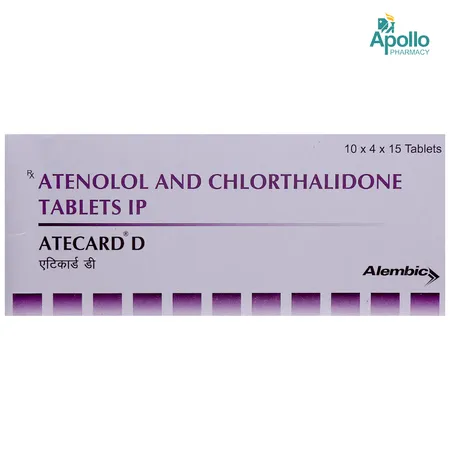
Atecard D Tablet contains Atenolol and Chlorthalidone. Atenolol is a beta-blocker that acts by altering the response to nerve impulses in the heart. Consequently, the heart beats slower and lowers the blood pressure. Chlorthalidone is a diuretic (water pill) that reduces the amount of water (fluid) in the body by boosting the volume of urine produced by the kidneys, which helps to lower blood pressure. As a result, Atecard D Tablet aids in blood pressure regulation.
Take Atecard D Tablet as prescribed. Some people may experience low heart rate (slower-than-expected heart rate), cold extremities, diarrhoea, nausea, and fatigue (feeling tired). Most of these side effects do not need medical treatment and fade away with time. If the side effects persist or worsen, consult the doctor.
Do not take Atecard D Tablet if you are allergic to atenolol, chlorthalidone, or any other ingredients in this medication, or if you have ever had second or third-degree heart block, very slow or uneven heartbeats, severe kidney disorder, metabolic acidosis (higher than normal levels of acid in the blood), or phaeochromocytoma (a tumour of adrenal glands). It is not recommended to take Atecard D Tablet if you are pregnant or breastfeeding. Please inform your doctor if you are taking any other medications or are allergic to any medications. Atecard D Tablet should not be given to children.
Atecard D Tablet is used in the treatment of High blood pressure (hypertension). The detailed uses of Atecard D Tablet are as follows:
Atecard D Tablet belongs to the class of medicines called 'antihypertensive agents' used to treat high blood pressure. Atecard D Tablet contains Atenolol and Chlorthalidone. Atenolol is a beta-blocker that acts by altering the response to nerve impulses in certain regions of the body, such as the heart. Consequently, the heart beats slower and lowers the blood pressure. When blood pressure is reduced, the amount of blood and oxygen delivered to the heart increases. On the other hand, Chlorthalidone is a diuretic (water pill) that reduces the amount of water (fluid) in the body by boosting the volume of urine produced by the kidneys, which helps to lower blood pressure. As a result, Atecard D Tablet aids in blood pressure regulation.
Unsafe
You are recommended not to consume alcohol while using Atecard D Tablet .
Unsafe
Do not take the Atecard D Tablet if you are pregnant or trying to get pregnant. Please consult the doctor if you have any concerns.
Unsafe
Do not take Atecard D Tablet if you are breastfeeding. Seek medical advice from the doctor if you have any concerns.
Caution
Atecard D Tablet may cause dizziness or fatigue. Do not drive or use machinery until you are alert.
Caution
Atecard D Tablet to be taken with caution, especially if you have a history of Liver diseases/conditions. Please consult the doctor. The doctor will prescribe only if the benefits outweigh the risks.
Caution
Dose adjustment may be necessary. Please consult the doctor if you have any concerns.
Unsafe
The safety and efficacy of Atecard D Tablet in children have not been established. Atecard D Tablet is not recommended in children.
Caution
Atecard D Tablet should be taken with caution in patients with heart problems. Therefore, please inform your doctor before using Atecard D Tablet .
Consult your doctor
Limited information available about the use of Atecard D Tablet in geriatric patients. Please consult your physician.
Regular exercise reduces blood pressure by supporting the health of your heart and blood vessels.
Eat healthy by consuming plenty of fruits and vegetables, whole grains, fat-free or low-fat dairy products, and lean proteins.
Stop smoking since it raises your heart rate and blood pressure.
Reduce alcohol consumption as it elevates blood pressure and worsens heart failure.
Chronic stress should be avoided because it can raise your blood pressure. To cope with stress and practise mindfulness techniques, try to appreciate and spend time with your loved ones.
Include heart-healthy omega-3 fatty acid-containing foods & beverages in your daily diet.
Limit the intake of table salt in your regular diet.
Have a query?
Do not take Atecard D Tablet if you are allergic to atenolol, chlorthalidone, or any other ingredients in this medication, or if you have ever had second or third-degree heart block, very slow or uneven heartbeats, severe kidney disorder, metabolic acidosis (higher than normal levels of acid in your blood), or phaeochromocytoma. If you have asthma or wheezing, consult your doctor before using this medication. It is not recommended to take Atecard D Tablet if you are pregnant or breastfeeding. Please inform your doctor if you are already taking any other medications or are allergic to any medications. Atecard D Tablet is not recommended in children as the safety and efficacy of Atecard D Tablet in children have not been established.
Drug-Drug Interactions: Atecard D Tablet may interact with medicines used to treat high blood pressure (diltiazem, verapamil, nifedipine, clonidine), medicines used to treat heart problems (digoxin, disopyramide, amiodarone), heart stimulant (adrenaline), muscle relaxant (baclofen), anti-diabetics (insulin), pain killers (ibuprofen), anti-psychotic (lithium), and drugs used to treat glaucoma (betaxolol, carteolol, levobunolol and timolol).
Drug-Food Interactions: Atecard D Tablet may interact with grapefruit and rich protein foods.
Drug-Disease Interactions: Inform your doctor if you have renal dysfunction, bradyarrhythmia/AV block, cardiogenic shock/hypotension, CHF (congestive heart failure), diabetes, hypersensitivity, ischemic heart disease, PVD (Peripheral vascular disease), anuria, electrolyte losses, liver disease, lupus erythematosus.
Login/Sign Up
Login/Sign Up
Disclaimer
Recommended for a 30-day course: 2 Strips


