
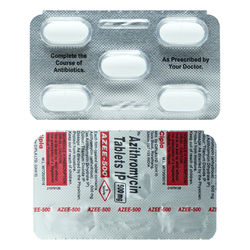
Azee-500 Tablet 5's




₹126.5
 ₹19.0Cashback (15%)
(Inclusive of all Taxes)
₹88 with coupons & bank offers*
 Offers & Discounts
Get Free delivery (₹99) with


Delivery Information
More about the Product
Composition :
Manufacturer/Marketer :
Consume Type :
Expires on or after :
Return Policy :
NPPA :


About Azee-500 Tablet
Azee-500 Tablet is an oral antibiotic medication prescribed to treat a wide variety of bacterial infections. It works by stopping the growth of bacteria, allowing your body's immune system to naturally clear the infection. Doctors frequently prescribe it for infections of the lungs, throat, sinuses, and skin.
To ensure the medicine works effectively, you must take Azee-500 Tablet consistently at the same time each day as directed by your doctor. You can take this medication with or without food, though taking it with a meal can help prevent stomach upset. Eating a balanced diet and resting well can also help your body recover faster from the infection.
While taking this medication, you may experience mild side effects like nausea, vomiting, or diarrhoea. However, if you develop severe watery diarrhoea, a very fast heartbeat, or yellowing of your skin or eyes, you should contact your doctor right away.
Before you begin taking Azee-500 Tablet, talk to your doctor if you have a history of liver disease, kidney problems, or heart rhythm disorders. Do not take this medication if you are allergic to it or similar antibiotics, or if you have previously suffered liver damage from using this type of medicine.
Azee-500 Tablet is also commonly prescribed for certain bacterial infections in children. The dose is usually calculated according to the child's body weight and must be determined by a doctor or pharmacist.
This medication can interact with other substances; for example, taking it with antacids can lower its absorption, making it less effective. If you are pregnant, breastfeeding, or managing health conditions as an elderly individual, consult your doctor or pharmacist before starting treatment.
Uses of Azee-500 Tablet
Azee-500 Tablet is used to treat a wide variety of bacterial infections affecting different parts of the body. The detailed uses of Azee-500 Tablet are as follows:
- Chest infections: Azee-500 Tablet is used to treat certain bacterial chest infections, including community-acquired pneumonia and bacterial flare-ups of chronic bronchitis. Many cases of acute bronchitis are caused by viruses and do not require antibiotic treatment.
- Throat and sinus infections: It clears bacterial infections in the tonsils, throat, and sinuses, reducing swelling and painful congestion.
- Skin infections: It helps treat certain mild to moderate bacterial skin infections caused by susceptible bacteria. Some skin infections caused by resistant bacteria may require different antibiotics based on your doctor's assessment.
- Ear infections: It treats middle ear infections by destroying the bacteria causing painful fluid buildup behind the eardrum.
- Sexually transmitted infections (STIs): Azee-500 Tablet may be used to treat certain sexually transmitted bacterial infections, such as chlamydia, or as part of combination treatment regimens for other infections when recommended by a doctor.
Key Benefits
Azee-500 Tablet provides reliable relief from bacterial infections, allowing you to return to your daily life feeling healthy and energised. Some of the key benefits of this treatment include:
- Faster symptom relief: By quickly targeting and stopping the growth of bacteria, it reduces fever, eases body aches, and relieves pain in just a few days.
- Shorter treatment course: This medicine remains active in your body long after the final dose, which often allows for a shorter overall course of treatment compared to other antibiotics.
- Broad protection: It is highly effective against many different types of bacteria, making it a highly versatile and dependable option for multiple types of infections.
- Inform Your Doctor: Notify your doctor immediately about your diarrhoea symptoms. This allows them to adjust your medication or provide guidance on managing side effects.
- Stay Hydrated: Drink plenty of fluids to replace lost water and electrolytes. Choose water, clear broth, and electrolyte-rich drinks. Avoid carbonated or caffeinated beverages to effectively rehydrate your body.
- Follow a Bland Diet: Eat easy-to-digest foods to help firm up your stool and settle your stomach. Try incorporating bananas, rice, applesauce, toast, plain crackers, and boiled vegetables into your diet.
- Avoid Trigger Foods: Steer clear of foods that can worsen diarrhoea, such as spicy, fatty, or greasy foods, high-fibre foods, and dairy products (especially if you're lactose intolerant).
- Practice Good Hygiene: Maintain good hygiene to prevent the spread of infection. To stay healthy, wash your hands frequently, clean and disinfect surfaces regularly, and avoid exchanging personal belongings with others.
- Take Anti-Diarrheal Medications: If your doctor advises, anti-diarrheal medications such as loperamide might help manage diarrhoea symptoms. Always follow your doctor's directions.
- Keep track of your diarrhoea symptoms. If they don't get better or worse or are accompanied by severe stomach pain, blood, or dehydration signs (like extreme thirst or dark urine), seek medical help.
- Inform your doctor about the nausea and discuss possible alternatives to the medication or adjustments to the dosage.
- Divide your daily food intake into smaller, more frequent meals to reduce nausea.
- Opt for bland, easily digestible foods like crackers, toast, plain rice, bananas, and applesauce.
- Avoid certain foods that can trigger nausea, such as fatty, greasy, spicy, and smelly foods.
- Drink plenty of fluids, such as water, clear broth, or electrolyte-rich beverages like coconut water or sports drinks.
- Use ginger (tea, ale, or candies) to help relieve nausea.
- Get adequate rest and also avoid strenuous activities that can worsen nausea.
- Talk to your doctor about taking anti-nausea medication if your nausea is severe.
- Record when your nausea occurs, what triggers it, and what provides relief to help you identify patterns and manage your symptoms more effectively.
- Drink water or other clear fluids.
- To prevent worsening of pain, limit intake of tea, coffee, or alcohol.
- Include bland foods like rice, toast, crackers, and rice in your diet.
- Avoid lying down immediately after eating as it may cause indigestion or heartburn.
- Avoid acidic and spicy food as it may cause indigestion.
- Inform Your Doctor: Notify your doctor immediately about your diarrhoea symptoms. This allows them to adjust your medication or provide guidance on managing side effects.
- Stay Hydrated: Drink plenty of fluids to replace lost water and electrolytes. Choose water, clear broth, and electrolyte-rich drinks. Avoid carbonated or caffeinated beverages to effectively rehydrate your body.
- Follow a Bland Diet: Eat easy-to-digest foods to help firm up your stool and settle your stomach. Try incorporating bananas, rice, applesauce, toast, plain crackers, and boiled vegetables into your diet.
- Avoid Trigger Foods: Steer clear of foods that can worsen diarrhoea, such as spicy, fatty, or greasy foods, high-fibre foods, and dairy products (especially if you're lactose intolerant).
- Practice Good Hygiene: Maintain good hygiene to prevent the spread of infection. To stay healthy, wash your hands frequently, clean and disinfect surfaces regularly, and avoid exchanging personal belongings with others.
- Take Anti-Diarrheal Medications: If your doctor advises, anti-diarrheal medications such as loperamide might help manage diarrhoea symptoms. Always follow your doctor's directions.
- Keep track of your diarrhoea symptoms. If they don't get better or worse or are accompanied by severe stomach pain, blood, or dehydration signs (like extreme thirst or dark urine), seek medical help.
- Tell your doctor about your GAS symptoms. They may change your medication regimen or prescribe additional drugs to help you manage them.
- To manage GAS symptoms, eat a balanced diet of fibre, vegetables, and fruits.
- Drink enough water throughout the day to avoid constipation and treat GAS symptoms.
- Regular exercise like yoga and walking may help stimulate digestion and alleviate GAS symptoms.
- Take probiotics only if your doctor advises, as they may help alleviate GAS symptoms by promoting gut health.
- Take medication for GAS symptoms only if your doctor advises, as certain medications can interact with your existing prescriptions or worsen symptoms.
- If symptoms persist, worsen, or are accompanied by severe abdominal pain, vomiting, or bleeding, seek immediate medical attention.
- Avoid taking raw fruits, nuts and vegetables.
- Do not share your personal things with others like toothbrushes.
- Clean the wounds and cuts using soap and water.
- Wash your hands thoroughly and frequently and maintain hygiene.
- Get a good quality of sleep.
- Preventing Vomiting (Before it Happens)
- Take medication exactly as prescribed by your doctor. This can help minimize side effects, including vomiting.
- Having a small meal before taking your medication can help reduce nausea and vomiting.
- Talk to your doctor about taking anti-nausea medication along with your prescribed medication.
- Managing Vomiting (If it Happens)
- Try taking ginger in the form of tea, ale, or candy to help alleviate nausea and vomiting.
- What to Do if Vomiting Persists
- Consult your doctor if vomiting continues or worsens, consult the doctor for guidance on adjusting your medication or additional treatment.
Directions for Use
To get the best results from your treatment, follow these simple steps:
- Swallow the tablet or capsule whole with a full glass of water. Do not crush, chew, or break the medication unless specifically told to do so by your doctor.
- You can take this medicine with or without food. If you find that it upsets your stomach, try taking your dose alongside a light meal.
- If you are taking the liquid suspension form, shake the bottle thoroughly before each dose and use a proper medicine-measuring spoon or cup rather than a regular kitchen spoon.
- Continue taking this medicine for the full duration prescribed by your doctor, even if you start to feel better after a few days.
Always follow your doctor's exact instructions regarding how and when to take Azee-500 Tablet.
How Azee-500 Tablet Works

Alcohol
Consult your doctor
It is unknown whether Azee-500 Tablet interacts with alcohol or not. Therefore, inform your doctor if you are alcoholic before taking Azee-500 Tablet.

Pregnancy
Consult your doctor
There is insufficient information available about the use of Azee-500 Tablet during pregnancy. Therefore you should not use Azee-500 Tablet during pregnancy unless explicitly advised by your doctor.

Breast Feeding
Consult your doctor
Azee-500 Tablet is partially passed through the mother’s milk, therefore it should not be used if you are breastfeeding.

Driving
Caution
There are no data available about the influence of Azee-500 Tablet on the ability to drive or operate machines. However, Azee-500 Tablet may cause dizziness and seizures so make sure you are not affected before driving or operating machinery.

Liver
Consult your doctor
You should tell your doctor if you have liver problems as your doctor may need to alter the normal dose.

Kidney
Consult your doctor
You should tell your doctor if you have kidney problems as your doctor may need to alter the normal dose.

Children
Caution
Azee-500 Tablet is not recommended for children less than 6 months of age as the safety and efficacy are not established. For children above 6 months of age, Azee-500 Tablet can be used if the doctor has prescribed it.

Heart
Consult your doctor
Caution should be exercised while taking Azee-500 Tablet in patients with heart disease. Inform your physician on priority if you/your child have chest discomfort, palpitations or irregular heartbeat. Your physician may adjust the dose of the medicine based on your health condition.

Geriatrics
Safe
Azee-500 Tablet is safe for use in geriatric patients if recommended by the physician. Your doctor will decide the dose and duration of medicine.<br />
What if I have taken an overdose of Azee-500 Tablet
Diet & Lifestyle Advise
- Support your gut health: Antibiotics can temporarily reduce the friendly bacteria in your digestive system. Eat probiotic-rich foods like yoghurt or kefir, or consider taking a probiotic supplement a few hours after your dose to help maintain a healthy gut.
- Stay well-hydrated: Drink plenty of water and clear broths throughout the day, especially if you are recovering from a respiratory infection or experiencing mild diarrhoea.
- Avoid immediate antacid use: Do not take antacids containing magnesium, aluminium, or calcium at the same time as Azee-500 Tablet, as they may reduce how much medicine your body absorbs. Follow your doctor's or pharmacist's advice on spacing doses.
- Prioritise rest: Ensure you get adequate sleep each night to help your immune system fight off the infection and recover quickly.


Have a query?
How Soon It Starts Working
The time required for Azee-500 Tablet to start to work: The time required for Azee-500 Tablet to show its action is unknown. The time for which the effects of Azee-500 Tablet last: The duration of action for Azee-500 Tablet is unknown.
What if you forget to take Azee-500 Tablet
Storage
- Store Azee-500 Tablet tablets and dry powders at room temperature, between 15°C and 30°C (59°F to 86°F).
- Keep the medicine in its original container to protect it from light and moisture. If you are using the liquid suspension, store the reconstituted liqu.
Drug Warnings
- Finish the entire prescription: Always complete the full course of treatment, even if you feel completely recovered. Stopping early can allow surviving bacteria to mutate and become resistant to antibiotics.
- Inspect liquid formulations: If using the liquid suspension, shake the bottle thoroughly before measuring each dose. Ensure the liquid is uniformly mixed and check the expiry date before use.
- Protect your skin from the sun: This medication can make your skin highly sensitive to ultraviolet light. Avoid prolonged sun exposure, wear protective clothing, and apply sunscreen when outdoors.
- Avoid self-treating diarrhoea: If you experience severe, watery diarrhoea, do not take over-the-counter anti-diarrhoea medications without speaking to your doctor, as they can lock toxins in your gut and worsen the condition.
- Check your heart health: Contact your doctor immediately if you feel your heart racing, pounding, or beating irregularly while taking this medication.
Drug-Drug Interactions


Drug-Drug Interaction Summary:
Inform your doctor if you are taking any of the following medicines, as they may interact with Azee-500 Tablet:
- Antacids (containing magnesium, aluminium, or calcium): Can reduce the absorption of Azee-500 Tablet when taken at the same time, making the medicine less effective.
- Warfarin: May increase the risk of bleeding or bruising, requiring close monitoring of your blood clotting times.
- Digoxin: May increase the levels of digoxin in your blood, raising the risk of digoxin toxicity.
- Antiarrhythmic medicines (such as amiodarone): Taking these medicines with Azee-500 Tablet may increase the risk of serious heart rhythm problems, especially in people with existing heart disease.
- Certain antipsychotic medicines: Some antipsychotic medicines may also increase the risk of abnormal heart rhythms when taken with Azee-500 Tablet.
- Statins (such as atorvastatin): Taking Azee-500 Tablet with statins may rarely increase the risk of muscle-related side effects. Consult your doctor if you develop unexplained muscle pain, tenderness, or weakness.
- Colchicine: Azee-500 Tablet may increase colchicine levels in the body, raising the risk of colchicine-related side effects and toxicity.
Drug-Drug Interactions
Login/Sign Up
Co-administration of Azee-500 Tablet with Ziprasidone can increase the risk of irregular heart rhythm.
How to manage the interaction:
Although there is an interaction between Ziprasidone and Azee-500 Tablet but can be taken together if prescribed by a doctor. Contact a doctor immediately if you experience sudden dizziness, lightheadedness, fainting, shortness of breath. Do not discontinue any medications without consulting a doctor.
Azee-500 Tablet increases the levels of protamine in the blood, which may increase its effects.
How to manage the interaction:
Although taking Protamine and Azee-500 Tablet together may cause an interaction, it can be taken if a doctor has suggested it. Do not discontinue any medications without consulting a doctor.
Taking Azee-500 Tablet with leflunomide can cause liver problems.
How to manage the interaction:
Although there is an interaction between Azee-500 Tablet and leflunomide, they can be taken together if prescribed by a doctor. However, consult a doctor if you experience fever, chills, joint pain or swelling, unusual bleeding or bruising, skin rash, itching, less desire to eat, fatigue, nausea, vomiting, abdominal pain, and/or yellowing of the skin or eyes. Do not discontinue any medications without consulting a doctor.
Coadministration of Azee-500 Tablet with amiodarone may increase the risk of irregular heart rhythm and increases the blood levels of Amiodarone.
How to manage the interaction:
Although using Azee-500 Tablet with amiodarone can result in an interaction, it can be taken if a doctor has advised it. However, contact a doctor immediately if you experience sudden dizziness, lightheadedness, fainting, shortness of breath, or rapid heartbeat. Do not discontinue any medications without consulting a doctor.
Taking Azee-500 Tablet with anagrelide may increase the risk of an abnormal heart rhythm. If you're dealing with other cardiac illnesses, electrolyte imbalances (for example, magnesium or potassium loss likely due to serious or prolonged diarrhoea or vomiting), you may be at greater risk.
How to manage the interaction:
Although using Azee-500 Tablet and anagrelide together can possibly result in an interaction, it can be taken if your doctor has advised it. However, if you experience sudden dizziness, lightheadedness, fainting, breathing difficulty, or rapid heartbeat, consult the doctor immediately. Do not stop any medications without a doctor's advice.
Taking Azee-500 Tablet with dofetilide may increase the risk of an abnormal heart rhythm.
How to manage the interaction:
Although using Azee-500 Tablet alongside dofetilide can result in an interaction, it can be taken if a doctor has advised it. However, if you experience sudden dizziness, lightheadedness, fainting, shortness of breath, or heart palpitations, get medical treatment immediately. Do not discontinue any medications without consulting a doctor.
Taking Morphine with Azee-500 Tablet may raise blood levels and side effects of morphine.
How to manage the interaction:
Although administration of Azee-500 Tablet alongside morphine can result in an interaction, it can be taken if a doctor has advised it. However, if you experience dizziness, drowsiness, difficulty concentrating, and impairment in judgment, reaction speed and motor coordination contact a doctor. Do not discontinue any medications without consulting a doctor.
Co-administration of Azee-500 Tablet with Haloperidol can increase the risk of developing irregular heart rhythms.
How to manage the interaction:
Taking Azee-500 Tablet with Haloperidol together can result in an interaction, but it can be taken if a doctor has advised it. However, if you experience sudden dizziness, lightheadedness, fainting, breathing difficulty, or rapid heartbeat, consult the doctor immediately. Do not stop any medications without a doctor's advice.
Taking Azee-500 Tablet with hydroxychloroquine increases the risk of an abnormal heart rhythm.
How to manage the interaction:
Though administration of Azee-500 Tablet alongside hydroxychloroquine can result in an interaction, it can be taken if a doctor has advised it. However, if you experience sudden dizziness, lightheadedness, fainting, breathing difficulty, or rapid heartbeat, consult the doctor immediately. Do not stop any medications without a doctor's advice.
Taking Azee-500 Tablet with Panobinostat increases the risk of an abnormal heart rhythm.
How to manage the interaction:
Although administration of Azee-500 Tablet alongside Panobinostat can result in an interaction, it can be taken if a doctor has advised it. However, if you experience sudden dizziness, lightheadedness, fainting, breathing difficulty, or rapid heartbeat, consult the doctor immediately. Do not stop any medications without a doctor's advice.
Drug-Food Interactions
Drug-Food Interactions
Login/Sign Up

All Substitutes & Brand Comparisons
RX
Azikem 500 mg Tablet 3's
₹49.1
MRP ₹75.5
35% off
RX
Aquris Azithcin 500 Tablet 3's
₹50.6
MRP ₹67.5
25% off
RX
Azicip 500 Tablet 3's
₹52.9
MRP ₹75.5
30% off


Customers Also Bought

FAQs
Disclaimer
Author Details


Reference
- Electronic Medicines Compendium (EMC). Pil.2276 Patient Information Leaflet (PIL). Cheshire, UK: Datapharm; 2025. [Accessed on 02 Jun. 2026]Check here
- Drugs.com Clinical Review Team. Azithromycin Clinical Drug Monograph. Auckland, NZ: Drugs.com; 2026. [Accessed on 02 Jun. 2026]Check here
- U.S. Food and Drug Administration (FDA). 050670S036,050710S051,050711S050,050784S037Lbl [FDA Prescribing Information]. Silver Spring, MD: FDA; 2024. [Accessed on 02 Jun. 2026]Check here
- Azithromycin [EMC Label]. 2018. [Accessed on 31 Mar. 2019]Check here
- Azithromycin [Prescribing Information]. 2019. [Accessed on 09 Jun, 2023]Check here
- Lactmed.azithromycin. [Accessed on 15 Sep 2025] Drugs and Lactation Database (LactMed) [Internet]. Bethesda (MD): National Library of Medicine (US); 2006-. Azithromycin. [Updated 2019 May 1]Check here
- Ema.azithromycin. [Accessed on 15 Sep 2025]Check here
Country of origin
Manufacturer/Marketer address
Therapeutic Class
Habit Forming

