
0
Welcome User
Login/Sign Up

Login/Sign Up
₹177
(Inclusive of all Taxes)
₹140 with coupons & bank offers*
Get Free delivery (₹99) with
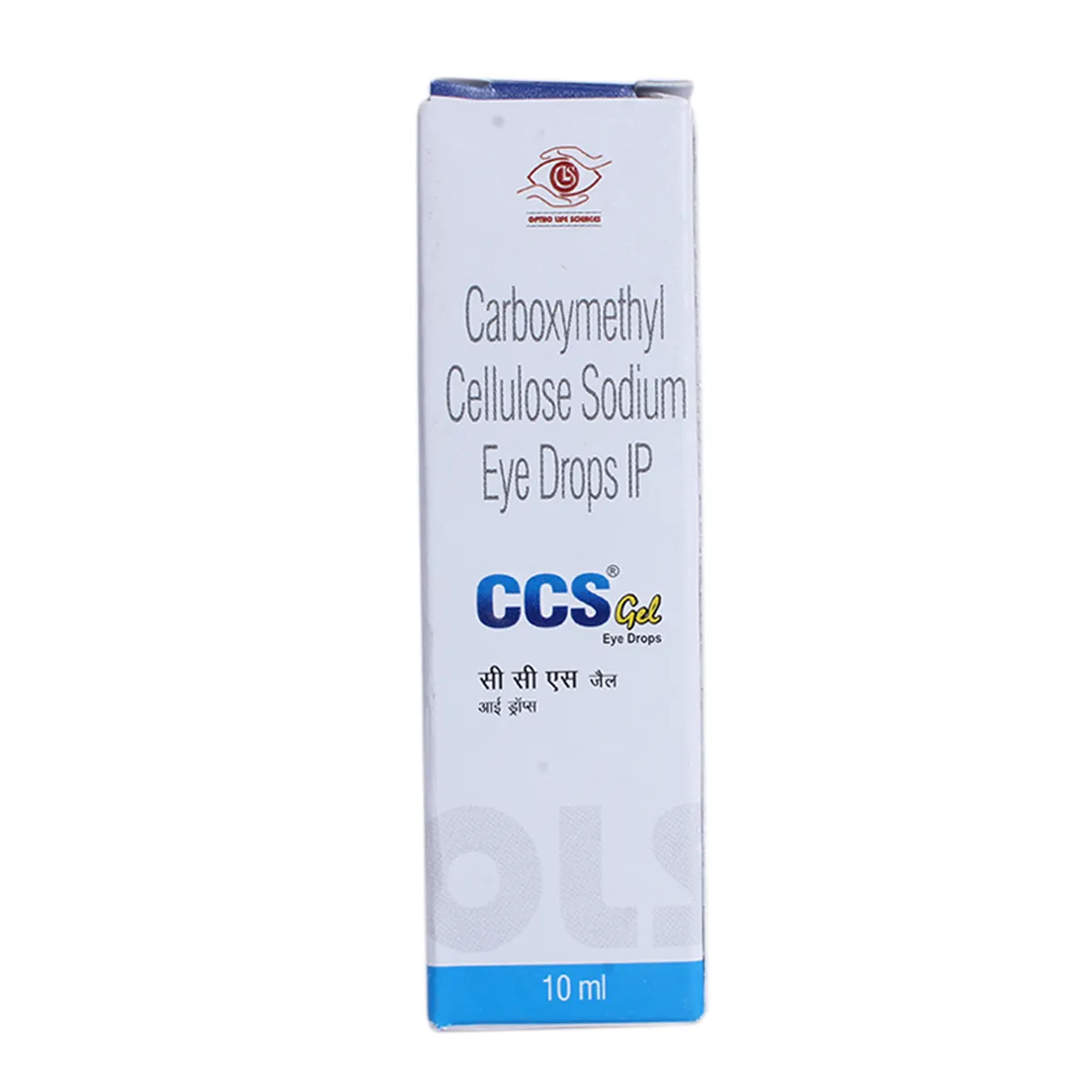
CCS Eye Gel is a sterile ophthalmic solution used to relieve dry, irritated eyes. It acts as a lubricant to protect your eyes from dryness, wind, sun, and computer screen strain. This medicine helps maintain the proper moisture balance on the surface of your eyes to prevent discomfort.
You can use CCS Eye Gel as often as needed throughout the day, or as directed by your doctor. It is typically applied as one or two drops in the affected eye(s) whenever you feel dryness or irritation. Making simple lifestyle adjustments, such as taking regular breaks during screen time and drinking plenty of water, can also significantly improve your comfort.
Most people use this medicine without any major issues, but you may experience temporary mild stinging or blurred vision immediately after applying it. If you experience severe eye pain, changes in your vision, or persistent redness, stop using the drops and consult your doctor right away.
Talk to your doctor before using CCS Eye Gel if you have an active eye infection, have recently had eye surgery, or are using other suggested eye medications. Do not use this medicine if you are allergic to any of the ingredients listed on the packaging.
If you use other eye drops or eye ointments, always wait at least 5 to 10 minutes between applying each product to prevent them from washing each other out. If you are pregnant, breastfeeding, or treating an elderly family member, it is best to consult your doctor or pharmacist before starting.
CCS Eye Gel is used to relieve dry, irritated eyes. The detailed uses of CCS Eye Gel are as follows:
CCS Eye Gel helps relieve the symptoms of dry eyes by restoring moisture and protecting the surface of the eyes. By acting like natural tears, it provides lasting lubrication, improves comfort, and supports healthy eye function.
Consult your doctor
CCS Eye Gel is not known to interact with CCS Eye Gel is taken together, but it should be taken in limit.
Consult your doctor
Due to the negligible systemic exposure and the lack of pharmacological activity, CCS Eye Gel can be used during pregnancy only when a doctor recommends it.
Consult your doctor
Due to the negligible systemic exposure and the lack of pharmacological activity, CCS Eye Gel can be used during pregnancy only when a doctor recommends it.
Caution
CCS Eye Gel may cause transient blurring of vision which may impair the ability to drive or operate machines. Patients should wait until their vision has cleared before driving or using machinery.
Safe if suggested
It can be used safely as CCS Eye Gel usually does not affect the liver.
Safe if suggested
It can be used safely as CCS Eye Gel usually does not affect the Kidney.
Consult your doctor
CCS Eye Gel can be given safely to children provided. However, please consult a doctor before giving CCS Eye Gel to children.
Consult your doctor
Please inform your doctor if you have a history of heart disease before using CCS Eye Gel. Your doctor will prescribe it only if the benefits outweigh the risks.
Consult your doctor
Limited information available for use of CCS Eye Gel in elderly patients. Please consult your doctor.
Have a query?
The time required for CCS Eye Gel to start to work: CCS Eye Gel starts to show its action within 5 to 15 minutes of instillation. The time for which the effects of CCS Eye Gel last: CCS Eye Gel effect lasts for 1 to 2 hours.
Login/Sign Up
No clinically significant food interactions are known with CCS Eye Gel when used as directed.
Login/Sign Up
Disclaimer


