
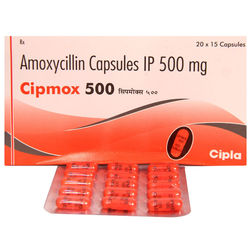


Cipmox 500 Capsule 15's
₹88.1
MRP ₹117.525% off
 ₹9.0Cashback (10%)
(Inclusive of all Taxes)
₹60 with coupons & bank offers*
 Offers & Discounts
Get Free delivery (₹99) with


Delivery Information
More about the Product
Composition :
Manufacturer/Marketer :
Consume Type :
Expires on or after :
Return Policy :
NPPA :
About Cipmox 500 Capsule
Cipmox 500 Capsule is a penicillin antibiotic used to treat a wide range of bacterial infections affecting different parts of the body, including the lungs, ears, throat, urinary tract, skin, and teeth. It works by killing the bacteria responsible for the infection, helping relieve symptoms and prevent the infection from spreading. This medicine is effective only against bacterial infections and does not work for viral illnesses such as the common cold or flu.
To get the best results, you must take Cipmox 500 Capsule regularly and at evenly spaced times throughout the day as prescribed. You can take this medicine with or without food, though taking it with a meal can help prevent an upset stomach. Drinking plenty of water and getting adequate rest will also help your body recover faster from the infection.
While taking Cipmox 500 Capsule , you may experience mild side effects like nausea or diarrhea. However, if you develop a severe skin rash, constant watery diarrhea, or swelling of your face, stop taking the medicine and seek immediate medical help.
Do not take this if you have a history of allergic reactions to penicillin or similar antibiotics. Before starting, talk to your doctor if you have kidney problems, asthma, or glandular fever, as these conditions may require a different treatment plan.
This medicine can interact with other treatments like gout medications or blood thinners, so it is important to share your full medication list with your pharmacist. If you are pregnant, breastfeeding, or caring for an elderly patient, consult your doctor to ensure this is the safest option for you.
Uses of Cipmox 500 Capsule
This medicine is used to treat a wide range of bacterial infections by stopping the growth of bacteria. The detailed uses of this medicine are as follows:
- Bacterial chest infections: Cipmox 500 Capsule helps treat chest infections such as pneumonia and bronchitis by killing the bacteria causing the infection.
- Ear, nose, and throat infections: It helps treat bacterial infections of the sinuses (sinusitis), middle ear (otitis media), and throat (tonsillitis).
- Urinary tract infections (UTIs): It helps eliminate bacteria in the bladder and kidneys, relieving symptoms such as burning during urination and frequent urination.
- Skin and soft tissue infections: It helps treat bacterial skin infections, reducing redness, swelling, and pain.
- Dental abscesses: It is commonly prescribed to treat bacterial infections of the teeth and gums.
- Stomach ulcers: When used with other medicines, it helps eliminate Helicobacter pylori bacteria, allowing stomach ulcers to heal.
Key Benefits
This medicine helps treat bacterial infections, relieve symptoms, and support a faster recovery. Its benefits include:
- Helps kill the bacteria causing the infection.
- Relieves symptoms such as pain, swelling, fever, and discomfort associated with bacterial infections.
- Helps prevent the infection from spreading or causing complications.
- Starts fighting the infection soon after treatment begins, with many people feeling better within a few days.
- Can be taken with or without food for added convenience.
- Supports a faster recovery when taken exactly as prescribed.
- Inform Your Doctor: Notify your doctor immediately about your diarrhoea symptoms. This allows them to adjust your medication or provide guidance on managing side effects.
- Stay Hydrated: Drink plenty of fluids to replace lost water and electrolytes. Choose water, clear broth, and electrolyte-rich drinks. Avoid carbonated or caffeinated beverages to effectively rehydrate your body.
- Follow a Bland Diet: Eat easy-to-digest foods to help firm up your stool and settle your stomach. Try incorporating bananas, rice, applesauce, toast, plain crackers, and boiled vegetables into your diet.
- Avoid Trigger Foods: Steer clear of foods that can worsen diarrhoea, such as spicy, fatty, or greasy foods, high-fibre foods, and dairy products (especially if you're lactose intolerant).
- Practice Good Hygiene: Maintain good hygiene to prevent the spread of infection. To stay healthy, wash your hands frequently, clean and disinfect surfaces regularly, and avoid exchanging personal belongings with others.
- Take Anti-Diarrheal Medications: If your doctor advises, anti-diarrheal medications such as loperamide might help manage diarrhoea symptoms. Always follow your doctor's directions.
- Keep track of your diarrhoea symptoms. If they don't get better or worse or are accompanied by severe stomach pain, blood, or dehydration signs (like extreme thirst or dark urine), seek medical help.
- Inform your doctor about the nausea and discuss possible alternatives to the medication or adjustments to the dosage.
- Divide your daily food intake into smaller, more frequent meals to reduce nausea.
- Opt for bland, easily digestible foods like crackers, toast, plain rice, bananas, and applesauce.
- Avoid certain foods that can trigger nausea, such as fatty, greasy, spicy, and smelly foods.
- Drink plenty of fluids, such as water, clear broth, or electrolyte-rich beverages like coconut water or sports drinks.
- Use ginger (tea, ale, or candies) to help relieve nausea.
- Get adequate rest and also avoid strenuous activities that can worsen nausea.
- Talk to your doctor about taking anti-nausea medication if your nausea is severe.
- Record when your nausea occurs, what triggers it, and what provides relief to help you identify patterns and manage your symptoms more effectively.
- Drink water or other clear fluids.
- To prevent worsening of pain, limit intake of tea, coffee, or alcohol.
- Include bland foods like rice, toast, crackers, and rice in your diet.
- Avoid lying down immediately after eating as it may cause indigestion or heartburn.
- Avoid acidic and spicy food as it may cause indigestion.
- Consult your doctor if you experience skin redness, itching, or irritation after taking medication.
- Your doctor may adjust your treatment plan by changing your medication or providing guidance on managing your erythema symptoms.
- Your doctor may recommend or prescribe certain medications to help alleviate symptoms.
- Apply cool compresses or calamine lotion to the affected skin area to reduce redness and itching.
- Stay hydrated by drinking plenty of water to help alleviate symptoms and keep your skin hydrated.
- Monitor your skin condition closely and promptly report any changes, worsening symptoms, or concerns to your healthcare provider.
- Skin rash caused by allergies is due to irritants or allergens. Therefore, avoid contact with such irritants.
- Consult your doctor for proper medication and apply an anti-itch medication. Follow the schedule and use the medication whenever needed.
- Protect your skin from extreme heat and try to apply wet compresses.
- Soak in the cool bath, which gives a soothing impact to the affected area.
- If you experience symptoms like itching, burning, redness, or discharge after taking medication, consult your doctor immediately and share your symptoms, medication regimen, and medical history.
- Your doctor will assess your medication regimen to determine if it's contributing to the moniliasis and identify the best course of action to manage your condition.
- Your doctor may prescribe antifungal medications or recommend other treatments to help clear up the infection. They may also suggest self-care measures to help manage symptoms and prevent future infections.
- If your condition doesn't improve or persists, consult your doctor and report it. Your doctor will assess your progress, adjust your treatment plan, and provide advice to ensure the best outcome.
Directions for Use
- Cipmox 500 Capsule can be taken with or without food or as advised by your doctor.
- Follow your doctor's instructions on the dosage and timing of this medication.
- Swallow Cipmox 500 Capsule as a whole with a glass of water.
- Do not crush, break, or chew it.
How Cipmox 500 Capsule Works

Alcohol
Unsafe
Do not drink too much while taking this medicine. Drinking a lot of alcohol may more likely to drowsiness, dizziness or sleepiness side effects.

Pregnancy
Caution
Cipmox 500 Capsule is a pregnancy category B drug. So, Cipmox 500 Capsule can be safely taken by pregnant women if prescribed by the doctor.

Breast Feeding
Safe if prescribed
Can safely give Cipmox 500 Capsule to breastfeeding mothers.

Driving
Caution
You may have side effects like dizziness after taking Cipmox 500 Capsule that may make you unfit to drive. So, it is advisable not to drive or operate machinery until you are feeling well.

Liver
Safe if prescribed
Cipmox 500 Capsule can be safely taken in case of liver disease if prescribed by the doctor. Your doctor will weigh the benefits and any potential risks before prescribing Cipmox 500 Capsule .

Kidney
Caution
Take Cipmox 500 Capsule with caution if you have severe kidney disease. Your doctor may reduce the dose of Cipmox 500 Capsule in patients with severe renal impairment (GFR less than 30 mL/min).

Children
Consult your doctor
Cipmox 500 Capsule can be safely given to to children, only if recommended by a child specialist only.

Heart
Safe if prescribed
Cipmox 500 Capsule is generally considered safe for individuals with heart conditions. However, it is advisable to consult your doctor before taking Cipmox 500 Capsule .

Geriatrics
Consult your doctor
Cipmox 500 Capsule should be given to elderly patients only if prescribed by a doctor. Seek medical advice if you have any concerns.
What if I have taken an overdose of Cipmox 500 Capsule
Diet & Lifestyle Advise
- Stay well-hydrated: Drink plenty of water throughout the day, especially if you experience mild diarrhea, to help maintain your fluid balance.
- Support your gut health: Consider taking a probiotic or eating yogurt with live cultures after completing your antibiotic course. Take probiotics at least 2 hours apart from your antibiotic.
- Avoid alcohol: Alcohol may increase stomach irritation, dizziness, and dehydration, which can slow your recovery.
- Rest and recover: Get enough sleep and avoid strenuous activities to help your body fight the infection and recover more quickly.
Health Queries


Have a query?
How Soon It Starts Working
- The time required for Cipmox 500 Capsule to start to work: Cipmox 500 Capsule ideally shows its action within 1 hour after administration.
- The time for which the effects of Cipmox 500 Capsule last: The effect of Cipmox 500 Capsule lasts for 6 to 8 hours.
What if you forget to take Cipmox 500 Capsule
Storage
Drug Warnings
- Complete the full course: Finish the entire course of Cipmox 500 Capsule , even if you start feeling better, to help prevent the infection from returning.
- Watch for allergies: Tell your doctor if you have ever had an allergic reaction to penicillin, cephalosporins, or other antibiotics before taking this medicine.
- Report severe diarrhea: Contact your doctor immediately if you develop severe, watery, or bloody diarrhea, as it may be a sign of a serious bowel condition.
- Do not share your medicine: Take this medicine only as prescribed for you and do not share it with others, even if they have similar symptoms.
- Check the expiry date: Always check the expiry date before use and do not take the medicine if it has expired.
Drug-Drug Interactions


Drug-Drug Interaction Summary:
- Blood thinners (such as warfarin): Taking Cipmox 500 Capsule with blood thinners may increase the risk of bleeding. Your doctor may monitor your blood clotting more closely.
- Allopurinol: Taking Cipmox 500 Capsule with allopurinol may increase the risk of developing a skin rash.
- Probenecid: Probenecid can reduce the removal of Cipmox 500 Capsule by the kidneys, increasing the amount of the medicine in your bloodstream. Your doctor may adjust your treatment if needed.
- Other antibiotics: Some antibiotics may interfere with how Cipmox 500 Capsule works, potentially reducing its effectiveness.
Drug-Drug Interactions
Login/Sign Up
Co-administration of BCG vaccine with Cipmox 500 Capsule may reduce the effect of BCG vaccine.
How to manage the interaction:
If you are about to receive BCG vaccine, inform the doctor that you are taking Cipmox 500 Capsule. Do not discontinue the medication without consulting a doctor.
Co-administration of Cipmox 500 Capsule and Cholera, live attenuated may reduce the activity of the vaccine.
How to manage the interaction:
If you are currently being treated with Cipmox 500 Capsule or have been treated within the last 14 days, talk to your doctor before receiving cholera vaccine, live. Do not discontinue the medication without consulting a doctor.
Co-administration of methotrexate with Cipmox 500 Capsule can increase the levels and side effects of methotrexate.
How to manage the interaction:
Although there is a possible interaction between methotrexate and Cipmox 500 Capsule, you can take these medicines together if prescribed by your doctor. However, if you experience any symptoms such as tiredness, dizziness, fainting, unusual bleeding or bruising, chills, fever, sore throat, body pains. Consult a doctor immediately. Do not stop using medications without a doctor's advice.
Co-administration of Cipmox 500 Capsule and Zalcitabine can be decreased when combined with Cipmox 500 Capsule.
How to manage the interaction:
There may be a possibility of interaction between Zalcitabine and Cipmox 500 Capsule, but it can be taken if prescribed by a doctor. Do not discontinue any medications without consulting a doctor.
Co-administration of Cipmox 500 Capsule with doxycycline may reduce the therapeutic effect of Cipmox 500 Capsule.
How to manage the interaction:
Although there is a possible interaction between Cipmox 500 Capsule and Doxycycline, you can take these medicines together if prescribed by your doctor. Do not stop using any medications without consulting a doctor.
Drug-Food Interactions
Drug-Food Interaction Summary:
- There are no major established interactions with specific foods. You can take this medicine with or without meals, though taking it with food can reduce stomach upset.
Drug-Food Interactions
Login/Sign Up

Customers Also Bought


FAQs
Disclaimer
Author Details


Reference
- National Health Service (NHS). Amoxicillin - NHS Medicines Reference Guide. London, UK: NHS; 2025. [Accessed on 02 Jun. 2026]Check here
- Drugs.com Clinical Review Team. Amoxicillin Patient Clinical Drug Monograph. Auckland, NZ: Drugs.com; 2026. [Accessed on 02 Jun. 2026]Check here
- U.S. Food and Drug Administration (FDA). 50542S02950754S01950760S01950761S016Lbl [FDA Prescribing Information]. Silver Spring, MD: FDA; 2024. [Accessed on 02 Jun. 2026]Check here
- Amoxycillin Amoxycillin. 2009. [Accessed on 29 Mar. 2019]Check here
- Amoxycillin Amoxycillin. 2006. [Accessed on 29 Mar. 2019]Check here
- Amoxicillin Amoxicillin. 2025. [Accessed on 08 Jan. 2026]Check here
- Augmentin Tablets USP [Internet]. Accessdata.fda.gov. 2025 [Accessed on 7 July 2025]Check here
Country of origin
Manufacturer/Marketer address
Therapeutic Class
Habit Forming

