
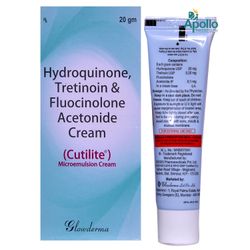
Cutilite Cream 20 gm




₹231.5
 ₹35.0Cashback (15%)
(Inclusive of all Taxes)
₹161 with coupons & bank offers*
 Offers & Discounts
Get Free delivery (₹99) with


Delivery Information
More about the Product
Manufacturer/Marketer :
Consume Type :
Expires on or after :
Return Policy :
About Cutilite Cream
Cutilite Cream is a topical skin cream prescribed to treat moderate-to-severe melasma, which causes dark, patchy discoloration on the face. It is formulated to help fade these stubborn dark spots and restore an even skin tone. This medication is typically prescribed for short-term use to target specific areas of discoloration.
For the best results, you must apply this medication consistently once daily at night, at least 30 minutes before bedtime. Because the active ingredients make your skin highly sensitive, you should apply it only to a clean, dry face. Incorporating daily sun protection and wearing wide-brimmed hats are essential lifestyle changes that will help maintain your progress.
While using Cutilite Cream, you may experience mild skin peeling, redness, or dryness as your skin adjusts to the treatment. These effects are usually temporary and manageable with a gentle moisturizer. However, you should consult your doctor immediately if you experience severe skin burning, swelling, or dark blue-black discoloration.
Do not use this cream if you have a known allergy to any of its ingredients or if you have an active skin infection. It is also important to talk to your doctor before starting this treatment if you have rosacea, broken skin, or a history of skin thinning. Pregnant and breastfeeding individuals must not use this medication, as it can be absorbed through the skin and may cause harm.
You should avoid using other drying or abrasive skin products, such as alcohol-based toners or strong exfoliating scrubs, while using Cutilite Cream because they can cause severe skin irritation. It is also wise to limit smoking and alcohol consumption, as they can impair your skin's natural healing process. If you are caring for elderly individuals, consult a doctor first, as older skin may be more sensitive to thinning.
Uses of Cutilite Cream
Cutilite Cream is a topical combination medicine used to treat melasma and other forms of skin hyperpigmentation by reducing inflammation, lightening dark patches, and promoting healthy skin cell renewal.
- Melasma: Cutilite Cream helps lighten dark, patchy skin discoloration typically found on the cheeks, forehead, upper lip, and chin.
- Post-inflammatory hyperpigmentation: Cutilite Cream reduces stubborn dark spots left behind by acne, skin injuries, or localized inflammation.
- Senile lentigines (age spots): Cutilite Cream helps fade flat, dark brown spots caused by chronic sun exposure and aging on the face.
Key Benefits
Cutilite Cream combines three complementary ingredients to reduce discoloration, calm inflammation, and improve overall skin appearance.
- Reduces dark patches: Hydroquinone decreases melanin production, helping to fade melasma and other forms of hyperpigmentation.
- Promotes skin renewal: Tretinoin speeds up skin cell turnover, improving skin texture and enhancing the fading of dark spots.
- Relieves redness and irritation: Fluocinolone acetonide reduces inflammation, redness, and irritation that may occur with skin pigmentation disorders or tretinoin use.
- Improves overall skin tone: With regular use as directed, this combination helps produce a clearer, smoother, and more even-looking complexion.
- Consult your doctor if you experience skin redness, itching, or irritation after taking medication.
- Your doctor may adjust your treatment plan by changing your medication or providing guidance on managing your erythema symptoms.
- Your doctor may recommend or prescribe certain medications to help alleviate symptoms.
- Apply cool compresses or calamine lotion to the affected skin area to reduce redness and itching.
- Stay hydrated by drinking plenty of water to help alleviate symptoms and keep your skin hydrated.
- Monitor your skin condition closely and promptly report any changes, worsening symptoms, or concerns to your healthcare provider.
- Moisturize frequently with thick, broad-spectrum moisturizers containing sunscreen.
- Use warm water for short baths, and gentle cleansers.
- Pat dry and apply moisturizer immediately.
- Use a humidifier to add moisture to the air, and choose breathable fabrics like cotton and silk.
- Wash clothes with fragrance-free detergents to minimize irritation.
- Report the itching to your doctor immediately; they may need to change your medication or dosage.
- Use a cool, damp cloth on the itchy area to help soothe and calm the skin, reducing itching and inflammation.
- Keep your skin hydrated and healthy with gentle, fragrance-free moisturizers.
- Try not to scratch, as this can worsen the itching and irritate your skin.
- If your doctor prescribes, you can take oral medications or apply topical creams or ointments to help relieve itching.
- Track your itching symptoms and follow your doctor's guidance to adjust your treatment plan if needed. If the itching persists, consult your doctor for further advice.
- Burning sensation is an abnormal side effect that needs medical attention. To relieve the burning feeling, your doctor may prescribe painkillers or antidepressants.
- Focused exercises can improve strength and reduce burning by soothing muscles.
- Change in lifestyle and improving nutrition can reduce the causes of burning sensation and provide relief.
- Your doctor may suggest nerve block injections as it is related to sensation in the skin.
- Burning feeling in a specific area would need mild electrical currents to reduce pain that targets the nerve affected. This practice must be done only if your doctor mentions it.
- Keep your skin clean by gently washing your face two times daily and after sweating. Choose a mild and non-abrasive cleanser.
- Use gentle alcohol-free skin care products. Avoid products that might irritate your skin such as exfoliants, astringents and toners.
- Acne may also occur due to oil in the hair. Thus, if you have oily hair, shampoo more frequently than you do now and keep your hair away from face.
- Keep your hands off your face as touching face throughout the day might worsen acne. Also, do not pick, squeeze or pop acne as it will prolong the healing process and increase the risk of dark spots and scarring.
- Avoid tanning by applying a broad spectrum sunscreen and wearing sun-protective clothing when outdoors.
Directions for Use
- Follow your doctor's instructions on the dosage and timing of this medication to ensure safety.
- Apply Cutilite Cream on the clean and dry affected area as your doctor advises.
- Wash your hands after using Cutilite Cream unless the treatment is for your hands.
How Cutilite Cream Works

Alcohol
Consult your doctor
The interaction of alcohol with Cutilite Cream is unknown. Please consult a doctor before consuming alcohol while using Cutilite Cream.

Pregnancy
Caution
The safety of Cutilite Cream in pregnant women is unknown and is given to a pregnant woman only if the doctor thinks the benefits outweigh the risks.

Breast Feeding
Caution
It is unknown whether Cutilite Cream is excreted in human milk. Please consult a doctor before using Cutilite Cream while breastfeeding.

Driving
Safe if prescribed
Cutilite Cream usually does not affect your ability to drive or operate machinery.

Liver
Consult your doctor
If you have any concerns regarding the use of Cutilite Cream in patients with liver problems, please consult a doctor.

Kidney
Consult your doctor
If you have any concerns regarding the use of Cutilite Cream in patients with kidney problems, please consult a doctor.

Children
Unsafe
Cutilite Cream is not recommended for children below 12 years of age, as the safety and effectiveness were not established.

Heart
Caution
Limited information was available regarding the use of Cutilite Cream in patients with heart problems. Please consult your doctor before using Cutilite Cream.

Geriatrics
Caution
Cutilite Cream should be used with caution in elderly patients due to an increased risk of side effects. Seek medical advice before using Cutilite Cream.
What if I have taken an overdose of Cutilite Cream
Diet & Lifestyle Advise
- Use Sunscreen Daily: Apply a broad-spectrum sunscreen with an SPF of 30 or higher every morning, even on cloudy days, as treated skin is highly sensitive to UV rays.
- Protect Your Skin from the Sun: Wear protective clothing, such as a wide-brimmed hat and sunglasses, and limit direct sun exposure, especially during peak sunlight hours.
- Avoid Harsh Skincare Products: Avoid using chemical peels, physical scrubs, alcohol-based toners, or other irritating skincare products unless recommended by your healthcare provider.
- Maintain a Skin-Healthy Diet: Stay well-hydrated and eat a balanced diet rich in antioxidants, including berries, leafy greens, and citrus fruits, to support healthy skin repair and overall skin health.
Health Queries


Have a query?
How Soon It Starts Working
- The time required for Cutilite Cream to start to work: Cutilite Cream ideally shows its action within 2 to 4 weeks of consistent use.
- The time for which the effects of Cutilite Cream last: The duration of action for Cutilite Cream is clinically unknown.
What if you forget to take Cutilite Cream
Storage
Drug Warnings
- Check the Product Before Use: Inspect the cream before each application. If it has turned dark brown or changed significantly in color, do not use it and consult your pharmacist.
- Apply a Thin Layer: Use only a small, pea-sized amount to cover the affected areas. Applying more than recommended will not improve results and may increase skin irritation.
- Avoid Hair Removal Procedures: Do not use waxing, chemical depilatories, or laser hair removal on treated areas, as the skin may become more sensitive and prone to injury.
- Do Not Cover the Treated Area: Avoid covering the treated skin with bandages, tight wraps, or dressings unless specifically instructed by your healthcare provider.
- Avoid Other Irritating Topical Products: Do not use products containing salicylic acid, sulfur, or resorcinol on the treated area unless advised by your healthcare provider, as they may increase skin irritation.
Drug-Drug Interactions


Drug-Drug Interaction Summary:
Inform your doctor if you are taking any of the following medicines, as they may interact.
- Topical exfoliants and acne treatments: Medications containing sulfur, salicylic acid, or benzoyl peroxide can severely increase skin dryness, peeling, and irritation when used with Cutilite Cream.
- Other topical corticosteroids: Using other steroid creams on the face at the same time can increase the risk of skin thinning and absorption into the bloodstream.
Drug-Drug Interactions
Login/Sign Up
Drug-Food Interactions
Drug-Food Interactions
Login/Sign Up

All Substitutes & Brand Comparisons


Customers Also Bought


FAQs
Disclaimer
Author Details


Reference
- Drugs.com Clinical Review Team. Hydroquinone Topical Clinical Drug Monograph. Auckland, NZ: Drugs.com; 2026. [Accessed on 02 Jun. 2026]Check here
- Mayo Clinic Staff. Drg 20060789 Inhalation and Dosage Monograph. Rochester, MN: Mayo Foundation for Medical Education; 2025. [Accessed on 02 Jun. 2026]Check here
- Drugs.com Clinical Review Team. Tretinoin Topical Clinical Drug Monograph. Auckland, NZ: Drugs.com; 2026. [Accessed on 02 Jun. 2026]Check here
- WebMD Medical Reference Review Board. Details Drug and Treatment Monograph. Atlanta, GA: WebMD; 2026. [Accessed on 02 Jun. 2026]Check here
- Fluocinolone acetonide, hydroquinone, and tretinoin [Prescribing Information]. 2014. [Accessed on 29 Apr. 2019]Check here
- Fluocinolone acetonide + hydroquinone + tretinoin [Prescribing Information]. 2013. [Accessed on 29 Apr. 2019]Check here
- CiplaMed CiplaMed. [Accessed on 14 Aug. 2024]Check here
Country of origin
Manufacturer/Marketer address
Therapeutic Class
Habit Forming

