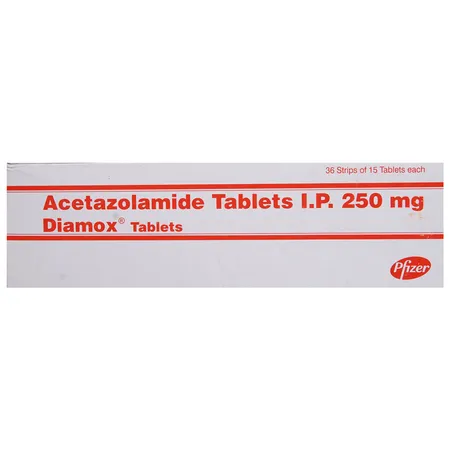
MRP ₹64.5
(Inclusive of all Taxes)
₹9.7 Cashback (15%)
Provide Delivery Location
About Diamox Tablet
Diamox Tablet is used to treat glaucoma (increased eye pressure), oedema (fluid retention), and epilepsy (seizures/fits). It is also used to reduce the severity and duration of altitude/mountain sickness symptoms.
Diamox Tablet contains acetazolamide, which inhibits an enzyme called carbonic anhydrase. This action lowers the production of fluid (aqueous humour) in the eye, thereby lowering eye pressure. It also helps reduce fluid retention in the body. Additionally, it reduces abnormal nerve activity in the brain, helping to treat epilepsy.
Diamox Tablet can be taken with or without food, as advised by your doctor. Swallow it whole with a glass of water, and do not crush or chew it. Diamox Tablet may sometimes cause common side effects such as nausea, vomiting, diarrhoea, headache, and increased urination. Please talk to your doctor if any side effects persist or worsen.
Inform your doctor about your health condition and any other medicines you are taking before starting Diamox Tablet to prevent potential side effects or interactions. Avoid taking Diamox Tablet if you are pregnant or planning to become pregnant. Consult your doctor if you are breastfeeding.
Uses of Diamox Tablet
Diamox Tablet used in the management of glaucoma, oedema, epilepsy, and mountain sickness. The detailed uses of Diamox Tablet are as follows:

Have a query?
Directions for Use
Medicinal Benefits
Diamox Tablet offers the following medicinal benefits:
For glaucoma:
For oedema:
For epilepsy:
For Mountain Sickness:
How Diamox Tablet Works
Storage
What if I have taken an overdose of Diamox Tablet
Drug Warnings
Drug-Drug Interactions
Login/Sign Up
Drug-Food Interactions
Login/Sign Up
Diet & Lifestyle Advise
Glaucoma:
Epilepsy:
Oedema:
Mountain sickness:
Habit Forming
Therapeutic Class
RXOrtin Laboratories Ltd
₹30
(₹2.7 per unit)
RX₹33
(₹2.97 per unit)
RXSunways (India) Pvt Ltd
₹36.5
(₹3.21 per unit)
Alcohol
Caution
Avoid or limit alcohol consumption, as it might lead to increased drowsiness.
Pregnancy
Unsafe
Diamox Tablet belongs to pregnancy category C. Avoid using Diamox Tablet if you are pregnant, think you are pregnant or are planning for pregnancy. Please consult your doctor if you have any concerns regarding this.
Breast Feeding
Caution
Consult your doctor if you are breastfeeding; your doctor will decide if Diamox Tablet can be taken by breastfeeding mothers or not.
Driving
Caution
Diamox Tablet might cause dizziness and drowsiness. Drive or operate machinery only if you are alert.
Liver
Caution
Dose adjustment may be needed. Avoid taking Diamox Tablet if you have severe liver problems. Please consult your doctor if you have any concerns regarding the usage of Diamox Tablet in patients with liver impairment.
Kidney
Caution
Dose adjustment may be needed. Avoid taking Diamox Tablet if you have/had severe kidney problems. Please consult your doctor if you have any concerns regarding the usage of Diamox Tablet in patients with kidney impairment.
Children
Unsafe
Diamox Tablet is not recommended for children, as its safety and effectiveness have not been established.
Heart
Caution
Diamox Tablet should be taken with caution in patients with heart problems. Therefore, please inform your doctor before using Diamox Tablet .
Geriatrics
Caution
Diamox Tablet should be given with caution in elderly patients due to an increased risk of side effects. Talk to your doctor if you have any concerns.
Diamox Tablet is used to treat glaucoma (increased eye pressure), oedema (fluid retention), and epilepsy (seizures/fits). It is also used to reduce the severity and duration of altitude/mountain sickness symptoms.
Diamox Tablet is used as an adjunct in the treatment of epilepsy. It inhibits the carbonic anhydrase enzyme; this helps retard abnormal, excessive discharge from central nervous system neurons, thereby helping treat seizures.
Diamox Tablet promotes diuresis of abnormal fluid retention due to congestive heart failure. Fluid retention or oedema is the accumulation of fluid in the body tissues.
Diamox Tablet helps reduce the severity and duration of symptoms of altitude/mountain sickness, such as headache, stomach upset, dizziness, drowsiness, fatigue, and shortness of breath.
To treat your condition effectually, continue taking Diamox Tablet for as long as your doctor has prescribed it. Do not be reluctant to speak with your doctor if you experience any difficulty while taking Diamox Tablet .
Diamox Tablet might make your skin sensitive to sunlight. Avoid unnecessary and prolonged exposure to sunlight or tanning beds. Wear protective clothing, sunscreen and sunglasses whilst going out.
Diamox Tablet inhibits carbonic anhydrase enzyme. This inhibitory action decreases the secretion of aqueous humour, thereby lowering intraocular pressure and helping treat glaucoma.
Yes, you can take Diamox Tablet after cataract surgery if it is prescribed by your eye doctor. Diamox Tablet is sometimes used prophylactically to prevent increased intraocular pressure (IOP) after cataract surgery. So, if your doctor recommends it, it's safe to use as directed.
The common side effects of Diamox Tablet include nausea, vomiting, diarrhoea, headache, and increased urination. Most of these side effects are mild and temporary, and they often resolve on their own without requiring medical attention. However, if the side effects persist or worsen over time, it's important to consult your doctor.
Diamox Tablet works by inhibiting the carbonic anhydrase enzyme, which has several effects on the body. It decreases aqueous humor secretion, lowers intraocular pressure, and treats glaucoma. It also reduces abnormal neuron discharge in the central nervous system, helping treat epilepsy. Additionally, it decreases fluid retention by reducing carbonic anhydrase activity, making it effective in treating oedema.
Certain individuals may not take Diamox Tablet , including those with end-stage kidney or liver problems, eye conditions, electrolyte imbalances, and allergies to any components present in Diamox Tablet . Additionally, if you're pregnant, breastfeeding, or planning pregnancy, it's essential to discuss your options with your doctor. They will help you make an informed decision and ensure your safety. Before starting Diamox Tablet , sharing your medical history with your doctor is crucial to ensure it's safe for you.
Diamox Tablet is effective when used as directed by your doctor. It is used to treat glaucoma, fluid retention (oedema), epilepsy (seizures), and mountain sickness. While it's effective, you may experience common side effects like nausea, vomiting, diarrhoea, headache, and increased urination. Most of these side effects are mild and temporary, but if they persist or worsen, be sure to talk to your doctor.
Be sure to consult your doctor before using Diamox Tablet ! It is important to follow their advice and complete the treatment course as recommended. Stopping suddenly or prematurely may lead to decreased effectiveness or other issues. Your doctor will help you determine when it's safe to stop using Diamox Tablet . Consult them before making any changes to your treatment.
Take the missed dose as soon as you remember unless it is almost time for your next dose. In this case, skip the missed dose and take your next dose at the regular time. Never take a double dose to make up for a missed one.
Country of origin
Manufacturer/Marketer address
We provide you with authentic, trustworthy and relevant information
Recommended for a 30-day course: 2 Strips