apollo
logo
0
Select Delivery Location
prescription
Prescription Medicine
info

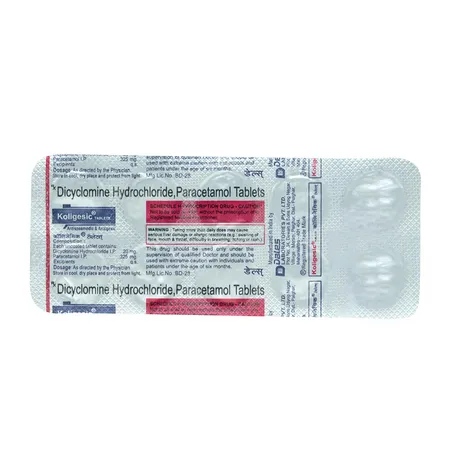
Koligesic Tablet is used to treat abdominal pain, dysmenorrhea (period pain), and colicky pain. It contains Dicyclomine and Mefenamic acid, which relieve contractions associated with the smooth muscles of the abdomen and reduce mild to moderate pain and inflammation. It may cause common side effects such as nausea, vomiting, diarrhoea, dry mouth, and weakness. Before taking this medicine, you should tell your doctor if you are allergic to any of its components or if you are pregnant/breastfeeding, and about all the medications you are taking and pre-existing medical conditions.

Read more
Written By Santoshini Reddy G , M Pharmacy
Reviewed By Veda Maddala , M Pharmacy
OffersOffers & Discounts

Get Free delivery (₹99) with circle icon

Join Circle
Get Extra 18% Off with Coupons
Extra 10% Off with Bank Offers
bank offer
bank offer
bank offer

More about the Product

Manufacturer/Marketer :

Dales Laboratories Pvt Ltd

Consume Type :

Oral

Expires on or after :

Jan-27

Return Policy :

Not Returnable

About Koligesic Tablet

Koligesic Tablet is a prescription oral medication primarily used to treat painful muscle spasms in the stomach and abdomen, as well as menstrual cramps. It works by targeting both the sudden muscle contractions in your digestive tract and the pain pathways in your body. It is highly effective for relieving discomfort associated with heavy cramping and abdominal spasms.

Koligesic Tablet is typically taken only when you experience symptoms or as a short-term course prescribed by your doctor. It is highly recommended to take Koligesic Tablet with or immediately after a meal to protect your stomach lining from irritation. Making small adjustments like eating smaller, frequent meals, staying hydrated, and applying gentle heat to your abdomen can further support muscle relaxation and improve your overall comfort during treatment.

While taking Koligesic Tablet , you may experience mild and temporary side effects like dry mouth, sleepiness, or mild dizziness. If you notice any serious issues, such as severe stomach pain, black or tarry stools, or signs of an allergic reaction, stop taking the medicine immediately and consult your doctor. Your safety is paramount, and these serious symptoms require prompt medical evaluation.

Talk to your doctor before taking Koligesic Tablet if you have a history of stomach ulcers, asthma, glaucoma, or severe kidney or liver issues. Do not take Koligesic Tablet if you have a complete blockage of your urinary tract or bowels, or if you have severe inflammatory bowel disease. Sharing your complete medical history ensures this treatment is safe for your body.

It is important to avoid alcohol while taking Koligesic Tablet , as alcohol can significantly increase your risk of stomach bleeding and make you feel more drowsy. Always discuss with your healthcare provider if you are taking blood thinners, other pain relievers, or if you are pregnant, breastfeeding, or managing health conditions as an older adult.

Uses of Koligesic Tablet

Koligesic Tablet is used in the treatment of abdominal pain, dysmenorrhea (period pain), and colicky pain. The detailed uses of Koligesic Tablet are as follows:

  • Stomach and abdominal cramps: Koligesic Tablet helps by relaxing the tight, spasming muscles in your stomach and intestines, providing quick relief from sharp pain.
  • Menstrual period pain: It reduces the severe cramping and pain that occurs during your menstrual cycle by targeting the chemicals that cause uterine contractions.
  • Irritable bowel syndrome (IBS) spasms: It calms the overactive gut muscles associated with IBS, helping to normalize digestion and reduce sudden, painful cramping.

Key Benefits

Koligesic Tablet helps relieve abdominal and menstrual pain by reducing muscle spasms and easing discomfort. Addressing both cramping and pain at the same time, it helps improve comfort and supports normal daily activities. Benefits may include:

  • Helps relieve abdominal cramps and spasm-related pain.
  • Reduces menstrual cramps and associated discomfort.
  • Helps relax smooth muscles and reduce painful contractions.
  • Provides relief from aching, cramping, and abdominal discomfort.
  • Supports comfortable movement and participation in daily activities.
  • Helps improve overall comfort and quality of life during episodes of cramping pain.
Side effects of Koligesic Tablet
Here are the steps to Dry Mouth (xerostomia) caused by medication:
  • Inform your doctor about dry mouth symptoms. They may adjust your medication regimen or prescribe additional medications to manage symptoms.
  • Drink plenty of water throughout the day to help keep your mouth moist and alleviate dry mouth symptoms.
  • Chew sugar-free gum or candies to increase saliva production and keep your mouth moisturized.
  • Use saliva substitutes, such as mouthwashes or sprays, only if your doctor advises them to help moisturize your mouth and alleviate dry mouth symptoms.
  • Avoid consuming smoking, alcohol, spicy or acidic foods, and other irritants that may aggravate dry mouth symptoms.
  • Schedule regular dental check-ups to keep track of your oral health and handle any dry mouth issues as they arise.
Overcome Medication-Induced Nausea: A 9-Step Plan
  • Inform your doctor about the nausea and discuss possible alternatives to the medication or adjustments to the dosage.
  • Divide your daily food intake into smaller, more frequent meals to reduce nausea.
  • Opt for bland, easily digestible foods like crackers, toast, plain rice, bananas, and applesauce.
  • Avoid certain foods that can trigger nausea, such as fatty, greasy, spicy, and smelly foods.
  • Drink plenty of fluids, such as water, clear broth, or electrolyte-rich beverages like coconut water or sports drinks.
  • Use ginger (tea, ale, or candies) to help relieve nausea.
  • Get adequate rest and also avoid strenuous activities that can worsen nausea.
  • Talk to your doctor about taking anti-nausea medication if your nausea is severe.
  • Record when your nausea occurs, what triggers it, and what provides relief to help you identify patterns and manage your symptoms more effectively.
Here are the 7 steps to manage Dizziness caused by medication:
  • Inform your doctor about dizziness symptoms. They may adjust your medication regimen or prescribe additional medications to manage symptoms.
  • Follow your doctor's instructions for taking medication, and take it at the same time every day to minimize dizziness.
  • When standing up, do so slowly and carefully to avoid sudden dizziness.
  • Avoid making sudden movements, such as turning or bending quickly, which can exacerbate dizziness.
  • Drink plenty of water throughout the day to stay hydrated and help alleviate dizziness symptoms.
  • If you're feeling dizzy, sit or lie down and rest until the dizziness passes.
  • Track when dizziness occurs and any factors that may trigger it, and share this information with your doctor to help manage symptoms.
  • Avoid driving or operating machinery or activities that require high focus until you know how the medication affects you.
  • Maintain a fixed sleeping schedule, create a relaxing bedtime routine and ensure your sleeping space is comfortable to maximize your sleep quality.
  • Limit alcohol and caffeine as these may worsen drowsiness and disturb sleep patterns.
  • Drink plenty of water as it helps with alertness and keeps you hydrated and for overall well-being.
  • Moderate physical activity can improve energy levels, but avoid intense workouts right before bedtime.
  • Rest well; get enough sleep.
  • Eat a balanced diet and drink enough water.
  • Manage stress with yoga and meditation.
  • Limit alcohol and caffeine.
  • Physical activities like walking or jogging might help boost energy and make you feel less tired.
Here are the steps to manage medication-triggered Nervousness:
  • Tell your doctor immediately if you experience symptoms of Nervousness, such as anxiety, jitteriness, or an increased heart rate, after taking medication or adjusting your medication regimen.
  • Your doctor may adjust your medication regimen to alleviate symptoms of Nervousness. This can include switching to a different medication, reducing the dosage, or temporarily stopping the medication. Your doctor may also recommend alternative techniques like relaxation, mindfulness meditation, or journaling. These techniques can help reduce anxiety and Nervousness.
  • Practice stress-reducing techniques, such as deep breathing exercises, yoga, or journaling, to help manage Nervousness.
  • Engage in regular physical activity, such as walking or jogging, to help reduce anxiety and improve mood.
  • Your doctor may advise considering cognitive-behavioural therapy (CBT) or other forms of talk therapy to address underlying anxiety or Nervousness.
  • You should maintain regular follow-up appointments with your doctor to monitor nervousness symptoms, adjust treatment plans as needed, and discuss any concerns or questions.

Directions for Use

  • Take Koligesic Tablet with food to avoid any stomach upset.
  • It is advised to take Koligesic Tablet once daily, or as directed by your doctor.
  • Swallow Koligesic Tablet as a whole with a glass of water.
  • Do not crush, chew, or break it.

How Koligesic Tablet Works

Koligesic Tablet contains Dicyclomine and Mefenamic Acid. • Dicyclomine: It helps relax the muscles of the stomach and intestines, relieving abdominal cramps, spasms, and discomfort. • Mefenamic Acid: It helps reduce pain, swelling, and inflammation by lowering the substances in the body that cause these symptoms. It is particularly effective in relieving menstrual pain and abdominal discomfort.
bannner image

Alcohol

Unsafe

Avoid consumption of alcohol while taking Koligesic Tablet as it may cause increased drowsiness. It can also increase the risk of stomach bleeding.

bannner image

Pregnancy

Caution

Please consult your doctor if you are pregnant or if you have any concerns regarding this; your doctor will prescribe only if the benefits outweigh the risks.

bannner image

Breast Feeding

Unsafe

It is not recommended to breastfeed while taking Koligesic Tablet . Consult your doctor before taking Koligesic Tablet if you are breastfeeding.

bannner image

Driving

Caution

Koligesic Tablet may cause drowsiness and dizziness. Do not drive or operate machinery unless you are alert.

bannner image

Liver

Caution

Dose adjustment may be needed in patients with liver impairment. Please consult your doctor if you have a liver impairment or any concerns regarding this.

bannner image

Kidney

Unsafe

Koligesic Tablet should not be used in patients with renal disease. Please consult your doctor if you have kidney impairment or any concerns regarding this.

bannner image

Children

Unsafe

Koligesic Tablet is not recommended for children as safety and effectiveness have not been established.

bannner image

Heart

Unsafe

This medicine is contraindicated in cardiac patients due to its adverse effects.

bannner image

Geriatrics

Caution

Koligesic Tablet can be given in elderly patients with extreme caution and only if prescribed by the doctor.

What if I have taken an overdose of Koligesic Tablet

If you suspect an overdose or experience severe symptoms like extreme drowsiness, vomiting, shallow breathing, or confusion, seek immediate medical attention or contact a local emergency room right away.

Diet & Lifestyle Advise

  • Stay hydrated: Drink plenty of water throughout the day to support normal digestion and prevent constipation, which can make abdominal cramps worse.
  • Eat smaller meals: Opt for small, frequent meals rather than large, heavy ones to avoid putting excess pressure on your digestive system.
  • Avoid trigger foods: Limit your intake of spicy, fatty, or highly processed foods, as well as caffeine and carbonated drinks, which can trigger painful muscle spasms in your gut.
  • Use gentle heat therapy: Applying a warm hot-water bottle or heating pad to your lower abdomen can help relax tight uterine and abdominal muscles naturally.
  • Engage in light movement: Gentle stretching or short, slow walks can help stimulate healthy digestion and reduce the severity of pelvic and menstrual cramps.
health query

Have a query?

How Soon It Starts Working

The time required for Koligesic Tablet to start to work: The time required for Koligesic Tablet to start to work is 60 minutes after administration.

The time for which the effects of Koligesic Tablet last: The effect of Koligesic Tablet lasts for 6 to 8 hours.

What if you forget to take Koligesic Tablet

If you miss a dose, take it as soon as you remember. However, if it is almost time for your next scheduled dose, skip the missed dose and continue with your regular schedule. Do not take a double dose to make up for the one you missed.

Storage

• Store in a cool and dry place away from sunlight. • Keep out of sight and reach of children. • Non cold chain - To be stored in cool places at 10ºC to 25ºC or below 30ºC.

Drug Warnings

  • Inspect the medicine before use: Do not take Koligesic Tablet if the blister pack is torn, damaged, or shows signs of tampering.
  • Use caution during activities requiring alertness: Koligesic Tablet may cause drowsiness, dizziness, or blurred vision. Avoid driving, operating machinery, or performing tasks that require clear vision until you know how the medicine affects you.
  • Avoid taking other NSAIDs without medical advice: Do not use medicines such as ibuprofen, naproxen, or other NSAIDs while taking Koligesic Tablet unless specifically advised by your doctor, as this may increase the risk of stomach irritation, ulcers, and bleeding.
  • Monitor breathing if you have asthma: If you have a history of asthma, pay close attention to any changes in breathing and seek medical advice if you experience wheezing, shortness of breath, or worsening respiratory symptoms.
  • Inform healthcare providers before procedures: Tell your doctor, dentist, or other healthcare professionals that you are taking Koligesic Tablet before undergoing any medical, surgical, or dental procedure.

Drug-Drug Interactions

verifiedApollotooltip

Drug-Drug Interactions

  • Blood thinners (e.g., warfarin): Taking these medicines alongside Koligesic Tablet may increase the risk of bleeding and bruising.
    Other pain relievers (e.g., aspirin, ibuprofen): Combining these with Koligesic Tablet may increase the risk of severe stomach irritation, ulcers, and bleeding.
  • Blood pressure medicines: Koligesic Tablet may reduce the effectiveness of certain blood pressure-lowering medicines.
  • Antacids: Taking antacids at the same time as Koligesic Tablet may reduce its absorption and effectiveness. Follow your doctor's advice regarding dose timing.

Drug-Food Interactions

  • Alcohol: Avoid consuming alcohol while taking Koligesic Tablet , as it can increase the risk of stomach ulcers, bleeding, dizziness, and severe drowsiness.

Drug-Disease Interactions

  • Stomach ulcers or gastrointestinal bleeding: Do not take Koligesic Tablet if you have active stomach ulcers or bleeding, as it may worsen these conditions.
  • Kidney disease: Patients with kidney impairment should use Koligesic Tablet cautiously, as it may increase the risk of kidney-related complications.
  • Liver disease: Reduced liver function may increase the risk of side effects and may require closer monitoring during treatment.
  • Glaucoma: Koligesic Tablet may increase pressure inside the eye and worsen symptoms in patients with glaucoma.
  • Urinary retention: Koligesic Tablet may make it more difficult to empty the bladder and can worsen existing urinary retention.
Critical

Drug-Drug Interactions

Login/Sign Up

Critical
How does the drug interact with Koligesic Tablet:
Co-administration of Pramlintide with Koligesic Tablet can increase the risk of stomach inflammation.

How to manage the interaction:
Taking Pramlintide with Koligesic Tablet is avoided, please consult your doctor before taking it. Contact your doctor if you experience stomach pain, vomiting, tarry stools, or weakness. Do not discontinue the medication without consulting a doctor.
How does the drug interact with Koligesic Tablet:
Co-administration of Potassium chloride with Koligesic Tablet can increase the risk of stomach inflammation.

How to manage the interaction:
Taking Potassium chloride with Koligesic Tablet is avoided as it can lead to an interaction, it can be taken if a doctor has prescribed it. However, if you experience severe stomach pain, bloating, sudden dizziness, vomiting (especially with blood), or tarry stools, consult the doctor immediately. Do not discontinue the medication without consulting a doctor.
How does the drug interact with Koligesic Tablet:
Coadministration of Ketorolac with Koligesic Tablet can increase the risk or severity of stomach inflammation and ulcers.

How to manage the interaction:
Taking Ketorolac with Koligesic Tablet is generally avoided as it can result in an interaction, it can be taken if your doctor has advised it. However, if you notice any unusual bleeding or bruising, black tarry stools, coughing up or vomiting blood, stomach pain, and weakness, you should contact a doctor immediately. Do not stop using any medications without talking to a doctor.
How does the drug interact with Koligesic Tablet:
Co-administration of Meloxicamc with Koligesic Tablet can increase the risk or severity of stomach inflammation.

How to manage the interaction:
Taking Meloxicamc with Koligesic Tablet is generally avoided as it can result in an interaction, it can be taken if a doctor has advised it. However, if you notice any unusual bleeding or bruising, black tarry stools, coughing up or vomiting blood, stomach pain, and weakness, contact a doctor immediately. Do not stop using any medications without talking to a doctor.
Critical
How does the drug interact with Koligesic Tablet:
Taking Potassium citrate with Koligesic Tablet can increase the risk of stomach inflammation.

How to manage the interaction:
Taking Potassium citrate with Koligesic Tablet is avoided, as it may lead to an interaction, it can be taken if prescribed by the doctor. However, if you experience severe stomach pain, sudden dizziness, vomiting with blood, or tarry stools, consult the doctor immediately. Do not discontinue any medications without a doctor's advice.
How does the drug interact with Koligesic Tablet:
Using Edoxaban with Koligesic Tablet may increase the risk of bleeding complications.

How to manage the interaction:
Although Edoxaban with Koligesic Tablet can lead to an interaction, it can be taken if your doctor has suggested it. If you notice any unusual bleeding, tarry stools, dizziness, or vomiting, contact a doctor right away. Do not stop using any medications without talking to a doctor.
How does the drug interact with Koligesic Tablet:
Coadministration of Everolimus with Koligesic Tablet can increase the risk or severity of kidney disease.

How to manage the interaction:
Taking Everolimus with Koligesic Tablet can result in an interaction, it can be taken if a doctor has advised it. However, if you notice any increased or decreased urination, swelling, shortness of breath, muscle cramps, or weakness you should contact a doctor immediately. Do not stop using any medications without talking to a doctor.
How does the drug interact with Koligesic Tablet:
Co-administration of Sirolimus with Koligesic Tablet can increase the risk or severity of kidney disorders.

How to manage the interaction:
Taking Sirolimus with Koligesic Tablet can result in an interaction, it can be taken if a doctor has advised it. However, if you notice any unusual bleeding or bruising, black tarry stools, coughing up or vomiting blood, severe headache, and weakness, you should contact a doctor immediately. Do not stop using any medications without talking to a doctor.
How does the drug interact with Koligesic Tablet:
Co-administration of Prasugrel with Koligesic Tablet can increase the risk or severity of stomach inflammation, and ulceration.

How to manage the interaction:
Taking Prasugrel with Koligesic Tablet can result in an interaction, it can be taken if your doctor has advised it. However, if you notice any unusual bleeding or bruising, black tarry stools, coughing up or vomiting blood, and weakness, you should contact a doctor immediately. Do not stop using any medications without talking to a doctor.
How does the drug interact with Koligesic Tablet:
Coadministration of Tenofovir disoproxil with Koligesic Tablet can increase the risk or severity of kidney problems.

How to manage the interaction:
Taking Tenofovir disoproxil with Koligesic Tablet can result in an interaction, it can be taken if a doctor has advised it. However, if you notice any unusual bleeding or bruising, black tarry stools, vomiting blood, severe headache, or weakness, you should contact a doctor immediately. Do not stop using any medications without talking to a doctor.

Drug-Food Interactions

verifiedApollotooltip
No Drug - Food interactions found in our database. Some may be unknown. Consult your doctor for what to avoid during medication.

Drug-Food Interactions

Login/Sign Up

All Substitutes & Brand Comparisons

Habit Forming

No

Therapeutic Class

[ANTISPASMODICS]

FAQs

Koligesic Tablet is used to treat abdominal pain, dysmenorrhea (period pain), and colicky pain.
Koligesic Tablet contains Dicyclomine and Mefenamic acid. Dicyclomine works by relieving contractions associated with the smooth muscles of the abdomen. Mefenamic acid works by blocking the action of certain chemical messengers that cause pain.
Diarrhoea might be a side-effect of Koligesic Tablet . Drink enough fluids and eat non-spicy food if you experience diarrhoea. Consult your doctor if you experience severe diarrhoea or if you find blood in your stools.
Koligesic Tablet is used to treat colicky pain. Colic is a pain that is usually intestinal or urinary in nature that comes and goes and intensifies and eases gradually.
Dry mouth could be a side effect of Koligesic Tablet . Limiting caffeine intake, avoiding smoking and mouthwashes containing alcohol, drinking water regularly, and chewing sugar-free gum/candy might help stimulate saliva and thereby prevent drying of the mouth.
Koligesic Tablet should not be taken for more than 7days. Do not take Koligesic Tablet for longer durations, as it might increase the risk of heart problems and stomach bleeding.
Koligesic Tablet is used to treat dysmenorrhea (period pain), pain due to heavy bleeding during periods, and menstrual cramps. Take Koligesic Tablet only as prescribed, and do not overdose.
No, Koligesic Tablet may not cause infertility. Consult the doctor if you have any concerns.
Yes, it is safe to use Koligesic Tablet during periods if prescribed by the doctor. It helps relieve period cramps.
Koligesic Tablet may prolong prothrombin time (blood test to measure blood clotting time). Therefore, frequent monitoring of prothrombin time is advised while taking this medication.
Most people begin to feel relief from abdominal spasms and pain within 30 to 60 minutes after taking the tablet. If your pain does not improve, do not take extra doses; talk to your doctor instead.
It is highly recommended to take Koligesic Tablet with or after food. Taking it on an empty stomach can increase the risk of stomach upset or irritation. Talk to your doctor or pharmacist if you experience severe digestive discomfort.
No, Koligesic Tablet is recommended for headaches and toothache. It is used to treat abdominal pain, dysmenorrhea (period pain), and colicky pain.
Yes, Koligesic Tablet can be taken with food or immediately after food.
No, Koligesic Tablet does not stop menstruation. It does not affect the menstrual bleeding or the duration of periods. It only helps relieve menstrual cramps.
Koligesic Tablet should be taken for as long as it has been prescribed by the doctor. The doctor will determine the duration of the treatment based on your condition.
Koligesic Tablet may cause drowsiness and dizziness. Do not drive or operate machinery unless you are alert.
Yes, Koligesic Tablet is a painkiller. It contains Dicyclomine (anti-spasmodic) and Mefenamic acid (NSAID). Koligesic Tablet helps relieve abdominal pain, colicky pain, and period pains.
Yes, Koligesic Tablet is safe if taken in the dose and duration prescribed by the doctor.
Koligesic Tablet is not recommended for children as safety and effectiveness were not established.
Koligesic Tablet should be used during pregnancy only if prescribed by the doctor. Please consult your doctor if you are pregnant or if you have any concerns regarding this; your doctor will prescribe only if the benefits outweigh the risks.
Koligesic Tablet may cause side effects such as nausea, vomiting, diarrhoea, dry mouth, and weakness. Talk to your doctor if these side effects persist or worsen.
Yes, Koligesic Tablet can cause drowsiness, dizziness, or blurred vision in some individuals. Avoid driving or operating machinery until you know how this medication affects you. Talk to your doctor if these symptoms persist.

Disclaimer

While we strive to provide complete, accurate, and expert-reviewed content on our 'Platform', we make no warranties or representations and disclaim all responsibility and liability for the completeness, accuracy, or reliability of the aforementioned content. The content on our platform is for informative purposes only, and may not cover all clinical/non-clinical aspects. Reliance on any information and subsequent action or inaction is solely at the user's risk, and we do not assume any responsibility for the same. The content on the Platform should not be considered or used as a substitute for professional and qualified medical advice. Please consult your doctor for any query pertaining to medicines, tests and/or diseases, as we support, and do not replace the doctor-patient relationship.

Country of origin

India

Manufacturer/Marketer address

101, Abhishek, C/5, Dalia Industrial Estate, Off Link Road, Near OberoiChambers, Andheri(West), Mumbai - 400058, India
Other Info - KOL0026
whatsapp Floating Button
Buy Now
Add to Cart