apollo
logo
0
Select Delivery Location
OffersOffers & Discounts

Get Free delivery (₹99) with circle icon

Join Circle
Get Extra 12% Off with Coupons
Extra 10% Off with Bank Offers
bank offer
bank offer
bank offer

More about the Product

Manufacturer/Marketer :

Intas Pharmaceuticals Ltd

Consume Type :

Oral

Expires on or after :

Jan-27

Return Policy :

Not Returnable

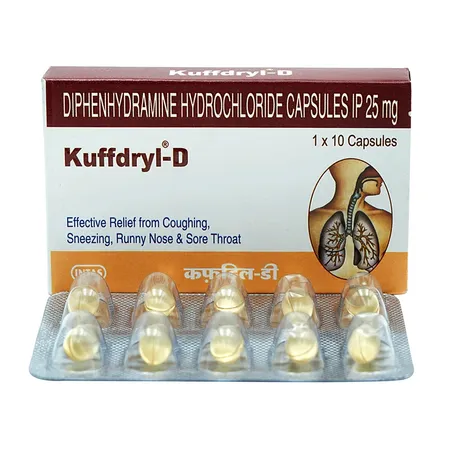
About Kuffdryl-D Softgel Capsule

Kuffdryl-D Softgel Capsule is an oral medication primarily used to relieve allergy symptoms, hives, runny nose, itchy eyes, and sneezing. It is also commonly used to treat temporary sleeplessness and to prevent or treat motion sickness. This medicine works quickly to provide relief from these uncomfortable symptoms.

You should take this medicine exactly as directed by your doctor or according to the package label, often on an as-needed basis when symptoms arise. It can be taken with or without food, though taking it with food or milk may help if it upsets your stomach. Making small adjustments, such as drinking plenty of fluids and using a humidifier, can also help soothe dry nasal passages while using this treatment.

While highly effective, Kuffdryl-D Softgel Capsule can cause some common side effects, most notably drowsiness and dry mouth. These are typically mild and temporary, but you should contact your doctor immediately if you experience serious side effects like a very fast heartbeat, severe confusion, or difficulty urinating.

Talk to your doctor before taking this medicine if you have certain health conditions, such as breathing problems like asthma, high pressure in the eye, or thyroid issues. Do not take this if you have a blockage in your bladder, a severe stomach obstruction, or if you are currently taking certain medications for depression called MAO inhibitors.

This medicine can interact with alcohol, causing extreme sleepiness, so you should avoid drinking alcoholic beverages while using it. It also interacts with other medications that cause drowsiness, such as sleep aids or muscle relaxants. If you are pregnant, breastfeeding, or an elderly individual, consult your doctor or pharmacist before starting this treatment to ensure it is safe for you.

Uses of Kuffdryl-D Softgel Capsule

Kuffdryl-D Softgel Capsule is used to manage allergic conditions, motion sickness, temporary sleeplessness, and certain movement-related symptoms. The detailed uses of Kuffdryl-D Softgel Capsule are as follows: 

  • Allergic reactions: Kuffdryl-D Softgel Capsule relieves sneezing, runny nose, itching, hives, and watery eyes caused by allergies or the common cold.
  • Temporary sleeplessness: It helps individuals who have trouble falling asleep get a restful night's sleep when used as a short-term sleep aid.
  • Motion sickness: It prevents and treats nausea, vomiting, and dizziness caused by travel.
  • Mild Parkinsonian symptoms: It can help reduce stiffness and mild tremors in the early stages of Parkinson's disease or when caused by certain other medicines.

Key Benefits

Kuffdryl-D Softgel Capsule helps relieve allergy symptoms, motion sickness, and occasional sleeplessness. The key benefits of Kuffdryl-D Softgel Capsule include: 

  • Provides Fast Symptom Relief: Works quickly to help relieve allergy symptoms and motion sickness, allowing you to return to daily activities with less discomfort.
  • Relieves Allergy Symptoms: Helps reduce sneezing, runny nose, watery eyes, and other allergy-related symptoms.
  • Reduces Itching and Irritation: Helps relieve itching and skin discomfort associated with allergic reactions.
  • Supports Short-Term Sleep Relief: May help you fall asleep faster when used for occasional sleeplessness, promoting restful sleep and recovery.
  • Dries Excess Nasal and Eye Secretions: Helps reduce excess fluid production in the nose and eyes, supporting clearer breathing and greater comfort.
Side effects of Kuffdryl-D Softgel Capsule
Overcome Medication-Induced Nausea: A 9-Step Plan
  • Inform your doctor about the nausea and discuss possible alternatives to the medication or adjustments to the dosage.
  • Divide your daily food intake into smaller, more frequent meals to reduce nausea.
  • Opt for bland, easily digestible foods like crackers, toast, plain rice, bananas, and applesauce.
  • Avoid certain foods that can trigger nausea, such as fatty, greasy, spicy, and smelly foods.
  • Drink plenty of fluids, such as water, clear broth, or electrolyte-rich beverages like coconut water or sports drinks.
  • Use ginger (tea, ale, or candies) to help relieve nausea.
  • Get adequate rest and also avoid strenuous activities that can worsen nausea.
  • Talk to your doctor about taking anti-nausea medication if your nausea is severe.
  • Record when your nausea occurs, what triggers it, and what provides relief to help you identify patterns and manage your symptoms more effectively.
Here are the steps to manage medication-triggered Nervousness:
  • Tell your doctor immediately if you experience symptoms of Nervousness, such as anxiety, jitteriness, or an increased heart rate, after taking medication or adjusting your medication regimen.
  • Your doctor may adjust your medication regimen to alleviate symptoms of Nervousness. This can include switching to a different medication, reducing the dosage, or temporarily stopping the medication. Your doctor may also recommend alternative techniques like relaxation, mindfulness meditation, or journaling. These techniques can help reduce anxiety and Nervousness.
  • Practice stress-reducing techniques, such as deep breathing exercises, yoga, or journaling, to help manage Nervousness.
  • Engage in regular physical activity, such as walking or jogging, to help reduce anxiety and improve mood.
  • Your doctor may advise considering cognitive-behavioural therapy (CBT) or other forms of talk therapy to address underlying anxiety or Nervousness.
  • You should maintain regular follow-up appointments with your doctor to monitor nervousness symptoms, adjust treatment plans as needed, and discuss any concerns or questions.
Here are the 7 steps to manage Dizziness caused by medication:
  • Inform your doctor about dizziness symptoms. They may adjust your medication regimen or prescribe additional medications to manage symptoms.
  • Follow your doctor's instructions for taking medication, and take it at the same time every day to minimize dizziness.
  • When standing up, do so slowly and carefully to avoid sudden dizziness.
  • Avoid making sudden movements, such as turning or bending quickly, which can exacerbate dizziness.
  • Drink plenty of water throughout the day to stay hydrated and help alleviate dizziness symptoms.
  • If you're feeling dizzy, sit or lie down and rest until the dizziness passes.
  • Track when dizziness occurs and any factors that may trigger it, and share this information with your doctor to help manage symptoms.
Dealing with Medication-Induced Headache:
  • Hydrate your body: Drink enough water to prevent dehydration and headaches.
  • Calm Your Mind: Deep breathing and meditation can help you relax and relieve stress.
  • Rest and Recharge: Sleep for 7-8 hours to reduce headache triggers.
  • Take rest: lie down in a quiet, dark environment.
  • Cold or warm compresses can help reduce tension.
  • Stay Upright: Maintain good posture to keep symptoms from getting worse.
  • To treat headaches naturally, try acupuncture or massage therapy.
  • Over-the-counter pain relievers include acetaminophen and ibuprofen.
  • Prescription Assistance: Speak with your doctor about more substantial drug alternatives.
  • Severe Headaches: Seek emergency medical assistance for sudden, severe headaches.
  • Frequent Headaches: If you get reoccurring headaches, consult your doctor.
  • Headaches with Symptoms: Seek medical attention if your headaches include fever, disorientation, or weakness.
  • Avoid driving or operating machinery or activities that require high focus until you know how the medication affects you.
  • Maintain a fixed sleeping schedule, create a relaxing bedtime routine and ensure your sleeping space is comfortable to maximize your sleep quality.
  • Limit alcohol and caffeine as these may worsen drowsiness and disturb sleep patterns.
  • Drink plenty of water as it helps with alertness and keeps you hydrated and for overall well-being.
  • Moderate physical activity can improve energy levels, but avoid intense workouts right before bedtime.

Directions for Use

Always take Kuffdryl-D Softgel Capsule exactly as directed by your doctor or according to the product packaging. Do not take more than the recommended amount.

  • Swallow the tablet or capsule whole with a full glass of water. Do not crush or chew it unless specified by the product packaging.
  • If you are taking the liquid form, use a special medical measuring spoon or cup to measure your dose accurately. Do not use a regular household spoon, as you may not get the correct amount.
  • To prevent motion sickness, take your dose 30 minutes to one hour before you start travelling.
  • If using this medicine as a sleep aid, take it about 30 minutes before bedtime.

Remember to consult your doctor or pharmacist if your symptoms do not improve within a few days, or if they get worse.

How Kuffdryl-D Softgel Capsule Works

Diphenhydramine in Kuffdryl-D Softgel Capsule works by blocking a natural substance in your body called histamine, which is released during an allergic reaction. Histamine is responsible for causing swelling, itching, sneezing, and watery eyes. By preventing histamine from binding to its receptors, this medicine stops these allergy symptoms at their source. In addition to blocking histamine, diphenhydramine has a drying effect in the body by blocking another natural chemical called acetylcholine. This action helps dry up watery eyes and a runny nose. It also directly affects the brain to produce a calming, sedative effect, which is why it is highly effective for inducing sleep and calming the inner ear system to prevent motion sickness.
bannner image

Alcohol

Unsafe

When combined with alcohol, diphenhydramine can induce deep sleep. You will be unable to breathe normally and may have difficulties waking up.

bannner image

Pregnancy

Caution

Please consult the doctor. Kuffdryl-D Softgel Capsule should be used in pregnant women only if clinically needed, and the benefits outweigh the risks. Only consume Kuffdryl-D Softgel Capsule if a doctor prescribes you.

bannner image

Breast Feeding

Caution

Let your doctor know if you are a nursing mother before taking Kuffdryl-D Softgel Capsule ; your doctor will decide whether Kuffdryl-D Softgel Capsule can be taken by breastfeeding mothers or not. Only consume Kuffdryl-D Softgel Capsule if a doctor prescribes you.

bannner image

Driving

Caution

Kuffdryl-D Softgel Capsule may affect driving as it causes dizziness and feeling sleepy. So, do not drive or operate machinery or tools if this happens to you.

bannner image

Liver

Caution

Tell your doctor before receiving the Kuffdryl-D Softgel Capsule if you have a history of liver diseases/conditions. Your doctor will weigh the benefits and potential risks before prescribing Kuffdryl-D Softgel Capsule .

bannner image

Kidney

Safe if prescribed

Tell your doctor before receiving the Kuffdryl-D Softgel Capsule if you have a history of kidney diseases/conditions. Your doctor will weigh the benefits and potential risks before prescribing Kuffdryl-D Softgel Capsule .

bannner image

Children

Safe if prescribed

Generally, Kuffdryl-D Softgel Capsule is not recommended for children below 16 years of age without a doctor's consent. If it has to be given, then the dose must be adjusted and recommended by a child specialist only.

bannner image

Heart

Caution

Exercise caution before using Kuffdryl-D Softgel Capsule in case of heart problems. Please consult your doctor if you have any concerns.

bannner image

Geriatrics

Unsafe

Kuffdryl-D Softgel Capsule should be avoided in geriatric patients as it can cause serious adverse effects.

What if I have taken an overdose of Kuffdryl-D Softgel Capsule

Do not take more than the prescribed dose of Kuffdryl-D Softgel Capsule as it may cause overdose. If you suspect you have taken overdose, please consult a doctor immediately.

Diet & Lifestyle Advise

  • Stay hydrated: Drink plenty of water throughout the day to help ease dry mouth, throat, and nasal passages caused by this medicine.
  • Suck on sugarless lozenges: If dry mouth becomes bothersome, sucking on sugar-free hard candies or chewing sugarless gum can help stimulate saliva flow.
  • Avoid alcohol: Do not consume beer, wine, or spirits while taking this medicine, as alcohol can dangerously increase drowsiness and dizziness.
  • Limit high-hazard tasks: Avoid driving, operating heavy machinery, or performing tasks that require sharp mental focus until you know how this medicine affects you.
  • Increase dietary fibre: Since this medicine can sometimes cause constipation, eating fibre-rich foods like fruits, vegetables, and whole grains can help keep your digestion regular.

Have a query?

How Soon It Starts Working

The time required for Kuffdryl-D Softgel Capsule to start to work: The time required for Kuffdryl-D Softgel Capsule to start to work is 15 to 30 minutes after administration. The time for which the effects of Kuffdryl-D Softgel Capsule last: The effect of Kuffdryl-D Softgel Capsule lasts for 4 to 6 hours.

What if you forget to take Kuffdryl-D Softgel Capsule

If you miss a dose, take it as soon as you remember. If it is almost time for the next dose, skip the missed dose and take the next dose at the scheduled time. Do not take a double dose.

Storage

•Store Kuffdryl-D Softgel Capsule at room temperature, ideally between 15°C and 30°C (59°F to 86°F). •Keep the medicine in its original container, tightly closed, to protect it from direct light and moisture. Avoid storing it in damp areas like the bathroom cabinet.

Drug Warnings

  • Check other medicine labels: Always read the labels of other over-the-counter cough, cold, or allergy products. Many contain the same active antihistamine ingredient, and combining them can lead to an accidental and dangerous overdose.
  • Use the correct measuring tool: Never use standard kitchen spoons for liquid doses. Always use the syringe, dropper, or medicine cup that came with the product to ensure accurate dosing.
  • Be cautious with elderly patients: Older adults are more sensitive to the side effects of this medicine, particularly dizziness, drowsiness, confusion, and low blood pressure, which can increase the risk of falls.
  • Avoid prolonged use for sleep: This medicine is only meant for short-term relief of occasional sleeplessness. Using it as a sleep aid for more than two weeks can lead to your body building a tolerance, making it less effective.
  • Watch for excitement in children: While this medicine typically causes drowsiness, it can sometimes cause the opposite effect in children, making them unusually excited, restless, or hyperactive.

Drug-Drug Interactions

verifiedApollotooltip

Drug-Drug Interactions

Inform your doctor if you are taking any of the following medicines, as they may interact with Kuffdryl-D Softgel Capsule : 

  • MAO inhibitors (for depression): Taking these with Kuffdryl-D Softgel Capsule can prolong and intensify its drying and sedative effects.
  • Other central nervous system depressants: Medicines like anxiety drugs, sedatives, muscle relaxants, or narcotic pain relievers can cause severe drowsiness and slow breathing when taken together.
  • Other anticholinergic medicines: Combining this medicine with drugs for overactive bladder or Parkinson's disease can increase the risk of severe dry mouth, constipation, and difficulty urinating.

Drug-Food Interactions

Certain foods and beverages may affect how Kuffdryl-D Softgel Capsule works or increase the risk of side effects. Examples include: 

  • Alcohol: Consuming alcohol while taking this medicine can severely increase drowsiness, dizziness, and mental confusion, making activities like driving highly dangerous.

Drug-Disease Interactions

Inform your doctor if you have a history of the following conditions before taking Kuffdryl-D Softgel Capsule , as it may worsen your condition or require additional monitoring: 

  • Glaucoma (narrow-angle): This medicine can increase pressure inside the eye, which may worsen this condition.
  • Enlarged prostate or urinary retention: It can make it even harder to urinate, leading to severe bladder discomfort.
  • Asthma or chronic bronchitis: The drying effect of this medicine can thicken mucus in your lungs, making it harder to breathe during a flare-up.
DiphenhydraminePotassium citrate
Critical
DiphenhydramineSodium oxybate
Critical

Drug-Drug Interactions

Login/Sign Up

DiphenhydraminePotassium citrate
Critical
How does the drug interact with Kuffdryl-D Softgel Capsule:
Taking Kuffdryl-D Softgel Capsule and Potassium citrate together can increase the risk of stomach ulcers, bleeding, and gastrointestinal injury.

How to manage the interaction:
Taking Kuffdryl-D Softgel Capsule with Potassium citrate is not recommended, as it may lead to an interaction, it can be taken if prescribed by the doctor. However, if you experience severe stomach pain, bloating, sudden lightheadedness or dizziness, nausea, vomiting (especially with blood), decreased hunger, or dark, tarry stools, consult the doctor immediately. Do not discontinue any medications without a doctor's advice.
DiphenhydramineSodium oxybate
Critical
How does the drug interact with Kuffdryl-D Softgel Capsule:
Taking Kuffdryl-D Softgel Capsule with Sodium oxybate can enhance the sedative effects on the central nervous system.

How to manage the interaction:
Taking Kuffdryl-D Softgel Capsule with Sodium oxybate is not recommended, but it can be taken if prescribed by a doctor. However contact your doctor if you experience shortness of breath, increased sweating, palpitations, or confusion. Do not stop using any medications without consulting a doctor.
How does the drug interact with Kuffdryl-D Softgel Capsule:
When Thioridazine is taken with Kuffdryl-D Softgel Capsule, it can slow down the way Kuffdryl-D Softgel Capsule is broken down in the body.

How to manage the interaction:
Taking Kuffdryl-D Softgel Capsule with Thioridazine is not recommended, please consult your doctor before taking it. It can be taken if your doctor advises it. Do not stop taking any medication without consulting your doctor.
DiphenhydramineEliglustat
Critical
How does the drug interact with Kuffdryl-D Softgel Capsule:
When Kuffdryl-D Softgel Capsule is taken with Eliglustat, it can cause a decrease in metabolism.

How to manage the interaction:
Taking Kuffdryl-D Softgel Capsule with Eliglustat is not recommended, please consult your doctor before taking it. It can be taken if prescribed by your doctor. Do not stop taking any medication without consulting your doctor.
How does the drug interact with Kuffdryl-D Softgel Capsule:
Taking Kuffdryl-D Softgel Capsule with Potassium chloride can increase the risk of stomach ulcers.

How to manage the interaction:
Taking Kuffdryl-D Softgel Capsule with Potassium chloride is not recommended, as it can lead to an interaction, but it can be taken if a doctor has prescribed it. However, if you experience severe stomach pain, bloating, sudden lightheadedness or dizziness, nausea, vomiting (especially with blood), decreased hunger, or dark, tarry stools, contact your doctor. Do not stop taking any medication without consulting your doctor.
How does the drug interact with Kuffdryl-D Softgel Capsule:
Topiramate can induce elevated body temperature and decreased sweating, which can be exacerbated when combined with drugs that have similar effects, such as Kuffdryl-D Softgel Capsule.

How to manage the interaction:
Although taking Kuffdryl-D Softgel Capsule with Topiramate can possibly result in an interaction, they can be taken together if prescribed by your doctor. It is essential to stay hydrated by drinking enough fluids, especially in hot weather and when doing physical activity. Contact your doctor immediately if you notice decreased sweating, fever, dizziness, drowsy, or lightheadedness. Do not discontinue using any medications without consulting a doctor.
DiphenhydramineBrexpiprazole
Severe
How does the drug interact with Kuffdryl-D Softgel Capsule:
Kuffdryl-D Softgel Capsule increases the blood levels of Brexpiprazole. This increases the risk of Side effects.

How to manage the interaction:
Taking Kuffdryl-D Softgel Capsule with Brexpiprazole together can possibly result in an interaction, but it can be taken if your doctor has advised it. If you notice any of these symptoms - feeling tired, unusual muscle movements, muscle spasms, shaking or jerking in your arms and legs, feeling dizzy or lightheaded, or fainting - contact your doctor right away. Do not stop using any medications without talking to a doctor.
DiphenhydramineEsketamine
Severe
How does the drug interact with Kuffdryl-D Softgel Capsule:
Taking Kuffdryl-D Softgel Capsule with Esketamine can increase the risk of adverse effects.

How to manage the interaction:
Co-administration of Kuffdryl-D Softgel Capsule with Esketamine can result in an interaction, but it can be taken if your doctor has advised it. However, contact your doctor if you experience drowsiness, confusion, or difficulty concentrating. Do not discontinue any medications without consulting a doctor.
How does the drug interact with Kuffdryl-D Softgel Capsule:
Coadministration of Zonisamide with Kuffdryl-D Softgel Capsule can induce elevated body temperature and decreased sweating.

How to manage the interaction:
Although taking Kuffdryl-D Softgel Capsule with Zonisamide can result in an interaction, they can be taken together if prescribed by your doctor. It is essential to stay hydrated by drinking enough fluids, especially in hot weather and when doing physical activity. Contact a doctor immediately if you notice decreased sweating, fever, dizziness, drowsy, or lightheadedness. Do not discontinue using any medications without consulting a doctor.
How does the drug interact with Kuffdryl-D Softgel Capsule:
Kuffdryl-D Softgel Capsule reduces the blood levels and effectiveness of tamoxifen.

How to manage the interaction:
Although taking Kuffdryl-D Softgel Capsule with Tamoxifen can possibly reduce the effectiveness of Tamoxifen, they can be taken together if prescribed by your doctor. Do not stop using any medications without first talking to your doctor.

Drug-Food Interactions

verifiedApollotooltip
No Drug - Food interactions found in our database. Some may be unknown. Consult your doctor for what to avoid during medication.

Drug-Food Interactions

Login/Sign Up

Habit Forming

No

Therapeutic Class

[ANTIHISTAMINE AND ANTITUSSIVE ANTIHISTAMINES]

FAQs

Kuffdryl-D Softgel Capsule is used to treat sneezing, running nose, itches, common cold symptoms, and cough.
Kuffdryl-D Softgel Capsule blocks a natural substance (histamine) during an allergic reaction. Besides this, drying effects of Kuffdryl-D Softgel Capsule on allergic symptoms (like watery eyes and runny nose) are caused by blocking another natural substance (acetylcholine). Together it helps relieve allergy symptoms like sneezing, running nose, watery eyes, itching, swelling, congestion, or stiffness.
Usually, Kuffdryl-D Softgel Capsule is prescribed for a short term treatment (up to 2 weeks) as an anti-allergy or sleep disturbance medication. However, taking it on your own for a long time without a doctor's consent can be fatal.
If you forget to take a dose of Kuffdryl-D Softgel Capsule , take the missed dose as soon as you remember it. However, if it is almost time for the next dose, skip the missed dose and continue your regular dosing schedule. Do not take a double dose to make up for a missed one.
No, it would be best if you did not stop taking Kuffdryl-D Softgel Capsule abruptly as it may worsen your condition. Please consult your doctor if you are feeling better for the best advice.
Do not take Kuffdryl-D Softgel Capsule if you have breathing problems like asthma, COPD or chronic bronchitis, or vision problems like glaucoma or difficulty in peeing due to enlarged prostate gland. Besides this, if you are taking alcohol, any sleeping pills or antianxiety pills immediately stop taking Kuffdryl-D Softgel Capsule as it might induce drowsiness and dizziness.
You should not take other medicines along with Kuffdryl-D Softgel Capsule without consulting your doctor. Inform your doctor about all other medications you are currently taking before starting Kuffdryl-D Softgel Capsule as some medicines may interact with Kuffdryl-D Softgel Capsule and increase the risk of side effects.
You are recommended to avoid driving after taking Kuffdryl-D Softgel Capsule if it affects you. Kuffdryl-D Softgel Capsule can cause dizziness, sleepiness, blurred vision, and coordination imbalance as a side effects, which can decreases your ability to drive safely. Therefore, it is best to avoid driving or operating heavy machinery until you know how Kuffdryl-D Softgel Capsule affects you.
Take Kuffdryl-D Softgel Capsule with or without food or as advised by your doctor. Do not exceed recommended dose.
Avoid alcohol as it can increase the side effects like drowsiness and also avoid caffeine or other stimulants, as they can interfere with the sedative effects of the Kuffdryl-D Softgel Capsule .
The common side effects of Kuffdryl-D Softgel Capsule are, dizziness, drowsiness, loss of coordination, dry mouth, constipation, dry eyes and blurred vision. If any of these side effects persist or worsen, please consult your doctor.
No, you should not take it every night. It is only meant for short-term, occasional sleeplessness. If you use it regularly, your body can quickly build a tolerance, meaning it will stop working as well. If your sleep problems last for more than two weeks, talk to your doctor.
Yes, drowsiness is one of the most common side effects of this medicine. Because of this, you should avoid driving, operating machinery, or performing any hazardous tasks after taking a dose until you know exactly how it affects you. Talk to your doctor if you need a non-drowsy allergy alternative.
It depends on the child's age and the specific product. You should never give this medicine to children under 2 years of age, and some oral products should not be given to children under 6 or 12 years without a doctor's advice. Always check the package label carefully and talk to your doctor or pharmacist before giving this medicine to a child.
While this medicine does not directly raise blood pressure in most people, some multi-symptom cold products containing it may also contain decongestants that can elevate blood pressure. If you have high blood pressure or heart disease, talk to your doctor or pharmacist to choose a safe formulation.
You should avoid taking it with other antihistamines, including those applied to the skin (like antihistamine creams). Doing so increases your risk of severe side effects like extreme drowsiness, dry mouth, and confusion. Talk to your doctor or pharmacist before combining any allergy medications.
When taken orally, this medicine usually begins working within 15 to 30 minutes. Its peak effects are typically felt within 1 to 2 hours, and its soothing actions generally last for about 4 to 6 hours. Talk to your doctor if your symptoms do not improve.
You should consult your healthcare provider before using this medicine if you are pregnant or breastfeeding. It can pass into breast milk and may cause drowsiness or unusual excitement in a nursing infant, and it may also reduce breast milk production. Talk to your doctor to discuss safer alternatives.
Dry mouth is a common effect of this medicine. You can manage this by drinking plenty of water, sucking on ice chips, or chewing sugar-free gum. If the dryness is severe, painful, or does not go away after you stop using the medicine, talk to your doctor.

Disclaimer

While we strive to provide complete, accurate, and expert-reviewed content on our 'Platform', we make no warranties or representations and disclaim all responsibility and liability for the completeness, accuracy, or reliability of the aforementioned content. The content on our platform is for informative purposes only, and may not cover all clinical/non-clinical aspects. Reliance on any information and subsequent action or inaction is solely at the user's risk, and we do not assume any responsibility for the same. The content on the Platform should not be considered or used as a substitute for professional and qualified medical advice. Please consult your doctor for any query pertaining to medicines, tests and/or diseases, as we support, and do not replace the doctor-patient relationship.

Country of origin

India

Manufacturer/Marketer address

Chinubhai Centre, Off. Nehru Bridge, Ashram Road, Ahmedabad - 380009. Gujarat. India.
Other Info - KUF0086
whatsapp Floating Button
Buy Now
Add to Cart