
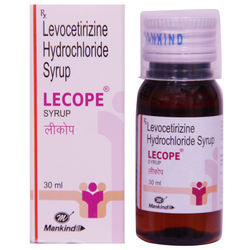
Lecope Syrup 30 ml




₹55.5
 ₹8.0Cashback (15%)
(Inclusive of all Taxes)
₹39 with coupons & bank offers*
 Offers & Discounts
Get Free delivery (₹99) with


Delivery Information
More about the Product
Composition :
Manufacturer/Marketer :
Consume Type :
Expires on or after :
Return Policy :
About Lecope Syrup
Lecope Syrup is a prescription syrup used to relieve allergy symptoms and chronic hives in children. It helps manage daily discomforts like sneezing, a runny nose, watery eyes, and itchy skin rashes. By targeting the natural chemical triggers of allergic reactions, this medicine helps children sleep and play more comfortably.
This syrup is typically taken once daily, either in the evening or as directed by your healthcare provider, and should be used consistently to achieve the best results. It can be taken with or without food, making it easy to fit into your child's routine. Alongside this medicine, keeping your home free of dust and pollen can significantly improve your child's allergy symptoms.
While this medicine is generally safe and well-tolerated, some children may experience mild side effects like sleepiness, dry mouth, or fatigue. These symptoms are usually temporary and improve as your child's body gets used to the medicine. However, you should consult your doctor immediately if you notice any unusual changes in behaviour or signs of a serious allergic reaction.
Before starting Lecope Syrup, talk to your doctor if your child has kidney problems or a history of bladder issues. Do not take this medicine if your child has severe kidney failure or is allergic to any of the ingredients in the syrup. It is always best to share your child's full medical history with their doctor to ensure safe use.
This syrup can interact with other medicines that cause drowsiness, such as cold or sleep remedies, which can make your child excessively sleepy. Although this is a paediatric formulation, if it is used by older teens or adults, they must avoid alcohol as it can severely increase drowsiness. If you are pregnant, breastfeeding, or managing elderly care, always consult your doctor before using this medicine.
Uses of Lecope Syrup
A doctor may prescribe Lecope Syrup to treat several allergic conditions in children. The main uses include:
- Allergic Rhinitis (Hay Fever): It helps relieve sneezing, a runny or stuffy nose, and itchy, watery eyes caused by seasonal outdoor allergens or indoor dust and pet dander.
- Chronic Hives (Urticaria): It reduces itchy skin swelling, redness, and hives, helping soothe irritated skin and prevent further breakouts.
Key Benefits
Lecope Syrup provides reliable, 24-hour relief from daily allergy discomforts, helping children feel more comfortable and active. The key benefits of Lecope Syrup include:
- All-Day Allergy Relief: It provides continuous relief from sneezing, a runny nose, itchy or watery eyes, and skin itching, helping children stay comfortable during school, play, and other daily activities.
- Improved Sleep Quality: By reducing nasal congestion and itching, it helps children sleep more peacefully through the night without frequent interruptions caused by allergy symptoms.
- Child-Friendly Syrup Formulation: The pleasant-tasting syrup is easy to swallow and allows parents to measure and give the correct dose to young children who have difficulty swallowing tablets or capsules.
- Avoid driving or operating machinery or activities that require high focus until you know how the medication affects you.
- Maintain a fixed sleeping schedule, create a relaxing bedtime routine and ensure your sleeping space is comfortable to maximize your sleep quality.
- Limit alcohol and caffeine as these may worsen drowsiness and disturb sleep patterns.
- Drink plenty of water as it helps with alertness and keeps you hydrated and for overall well-being.
- Moderate physical activity can improve energy levels, but avoid intense workouts right before bedtime.
- Inform your doctor about the common cold symptoms you're experiencing due to medication.
- Your doctor may adjust your treatment plan, which could include changing your medication, adding new medications, or offering advice on managing your symptoms.
- Practice good hygiene, including frequent handwashing, avoiding close contact with others, and avoiding sharing utensils or personal items.
- Drink plenty of fluids, such as warm water or soup, to help thin out mucus.
- Get plenty of rest and engage in stress-reducing activities to help your body recover. If your symptoms don't subside or worsen, consult your doctor for further guidance.
- Rest well; get enough sleep.
- Eat a balanced diet and drink enough water.
- Manage stress with yoga and meditation.
- Limit alcohol and caffeine.
- Physical activities like walking or jogging might help boost energy and make you feel less tired.
- Inform your doctor about dry mouth symptoms. They may adjust your medication regimen or prescribe additional medications to manage symptoms.
- Drink plenty of water throughout the day to help keep your mouth moist and alleviate dry mouth symptoms.
- Chew sugar-free gum or candies to increase saliva production and keep your mouth moisturized.
- Use saliva substitutes, such as mouthwashes or sprays, only if your doctor advises them to help moisturize your mouth and alleviate dry mouth symptoms.
- Avoid consuming smoking, alcohol, spicy or acidic foods, and other irritants that may aggravate dry mouth symptoms.
- Schedule regular dental check-ups to keep track of your oral health and handle any dry mouth issues as they arise.
- Inform your doctor immediately if you experience a fever after starting a new medication.
- Your doctor may adjust your medication regimen or dosage as needed to minimize fever symptoms.
- Monitor your body temperature to monitor fever progression.
- Drink plenty of fluids, such as water or electrolyte-rich beverages, to help your body regulate temperature.
- Get plenty of rest and engage in relaxation techniques, such as deep breathing or meditation, to help manage fever symptoms.
- Under the guidance of your doctor, consider taking medication, such as acetaminophen or ibuprofen, to help reduce fever.
- If your fever is extremely high (over 103°F), or if you experience severe symptoms such as confusion, seizures, or difficulty breathing, seek immediate medical attention.
- Tell your doctor about the cough symptoms you're experiencing, which may be triggered by your medication.
- Your doctor may adjust your treatment plan by changing your medication, adding new medications, or providing guidance on managing your cough symptoms.
- Practice good hygiene, including frequent handwashing, avoiding close contact with others, and avoiding sharing utensils or personal items.
- Stay hydrated by drinking plenty of fluids, such as water, tea, or soup, to help thin out mucus and soothe your throat.
- Get plenty of rest and engage in stress-reducing activities to help your body recover. If your cough persists or worsens, consult your doctor for further guidance.
Directions for Use
- Lecope Syrup can be administered with or without food as directed by the doctor.
- Follow your doctor's instructions on the dosage and timing of this medication to ensure safety.
- Administer the prescribed dose to the child using the measuring cup/dosing syringe/dropper.
- Shake well before use.
How Lecope Syrup Works

Alcohol
Not applicable
It is intended for Children.

Pregnancy
Not applicable
It is intended for Children.

Breast Feeding
Not applicable
It is intended for Children.

Driving
Not applicable
It is intended for Children.

Liver
Safe if prescribed
Inform your doctor if your child has liver problems. Your doctor may adjust the dose based on their condition.

Kidney
Safe if prescribed
Inform your doctor if your child has kidney problems. Your doctor may adjust the dose based on their condition.

Children
Safe if prescribed
It can be used safely in children if prescribed by a doctor. Your paediatrician may prescribe the dose based on the age, body weight and condition of your child.

Heart
Consult your doctor
Lecope Syrup may require dose adjustment in children with heart conditions. Therefore, please consult your doctor before administering Lecope Syrup.

Geriatrics
Not applicable
Lecope Syrup is for paediatric patients only.
What if I have taken an overdose of Lecope Syrup
Diet & Lifestyle Advise
- Keep Indoor Air Clean: Keep indoor air clean by using allergen-proof mattress and pillow covers to limit your child's exposure to dust mites.
- Reduce Indoor Allergens: Use a damp cloth to dust surfaces and vacuum regularly with a HEPA-filter vacuum to keep pet dander and pollen levels low inside the house.
- Limit Pollen Exposure: Keep windows closed during high-pollen seasons, especially in the morning when pollen counts are highest, and use air conditioning to cool the home instead.
- Remove Outdoor Allergens: Have your child wash their hands and face, or take a quick bath, after playing outdoors to remove pollen and other allergens from their skin and hair.
- Stay Well Hydrated: Offer your child plenty of water throughout the day to keep their throat hydrated and help soothe any mild dry mouth caused by the medicine.
Health Queries


Have a query?
How Soon It Starts Working
The time required for Lecope Syrup to start to work: Lecope Syrup ideally shows its action within 1 hour after administration.
The time for which the effects of Lecope Syrup last: The effect of Lecope Syrup lasts for 1 to 2 days.
What if you forget to take Lecope Syrup
Storage
- Store Lecope Syrup syrup at room temperature, ideally between 20°C and 25°C (68°F to 77°F).
- Do not freeze the syrup, as freezing can ruin the formulation.
Drug Warnings
- Inspect the Syrup: Always inspect the liquid before giving it to your child; it should be clear and free of any floating particles, cloudiness, or discolouration.
- Use the Correct Measuring Device: Always use the official dosing syringe or cup that comes with Lecope Syrup to ensure your child receives the exact prescribed amount.
- Monitor Your Child's Alertness: Keep a close eye on your child's behaviour and alertness levels, especially during the first few days of starting this medicine.
- Before Allergy Skin Testing: If your child is scheduled for an allergy skin test, talk to your doctor, as you may need to stop giving this medicine a few days before the test to ensure accurate results.
- Do Not Share the Medicine: Do not share this medicine with other children, even if they have similar allergy symptoms.
Drug-Drug Interactions


Drug-Drug Interaction Summary:
- Central Nervous System Depressants: May increase the risk of extreme drowsiness and fatigue when combined with medicines that affect the central nervous system, such as sleep aids, anxiety medicines, muscle relaxants, or other antihistamines.
Drug-Drug Interactions
Login/Sign Up
Using esketamine together with Lecope Syrup 30 ml may increase side effects (drowsiness, confusion, difficulty concentrating, and impairment in thinking, judgment, reaction speed, and motor coordination).
How to manage the interaction:
Taking Lecope Syrup 30 ml with Esketamine together can result in an interaction, but it can be taken if a doctor has advised it. Do not discontinue any medications without consulting a doctor.
Drug-Food Interactions
Drug-Food Interaction Summary:
- Alcohol: There are no major food interactions; however, if taken by older individuals, avoiding alcohol is necessary as it can severely increase drowsiness and impair coordination.
Drug-Food Interactions
Login/Sign Up

All Substitutes & Brand Comparisons
RX
L-Hist 2.5 mg Paediatric Syrup 60 ml
₹55.9
MRP ₹74.5
25% off
RX
Levocetrizen 30Ml Syp
₹33.6
MRP ₹42
20% off


FAQs
Disclaimer
Author Details


Reference
- Electronic Medicines Compendium (EMC). Product Summary of Product Characteristics (SmPC). Cheshire, UK: Datapharm; 2025. [Accessed on 02 Jun. 2026]Check here
- Electronic Medicines Compendium (EMC). Pil.9917 Patient Information Leaflet (PIL). Cheshire, UK: Datapharm; 2025. [Accessed on 02 Jun. 2026]Check here
- National Health Service (NHS). Cetirizine - NHS Medicines Reference Guide. London, UK: NHS; 2025. [Accessed on 02 Jun. 2026]Check here
- Levocitirizine [EMC SmPC]. 2019. [Accessed on 01 Apr. 2019]Check here
- Levocitrizine [Product Information]. 2025. [Accessed on 19 Jan. 2026]Check here
- Levocetirizine dihydrochloride [Prescribing Information]. 2008. [Accessed on 20 Feb. 2024]Check here
- MONTAIR LC & MONTAIR LC KID DT / Syrup [Internet]. CiplaMed. 2021 [Accessed on 13th Aug 25]Check here
Country of origin
Manufacturer/Marketer address
Therapeutic Class
Habit Forming

