
Welcome User
Login/Sign Up

Login/Sign Up
₹17.8
MRP ₹2734% off
(Inclusive of all Taxes)
₹16 with bank offers
Get Free delivery (₹99) with
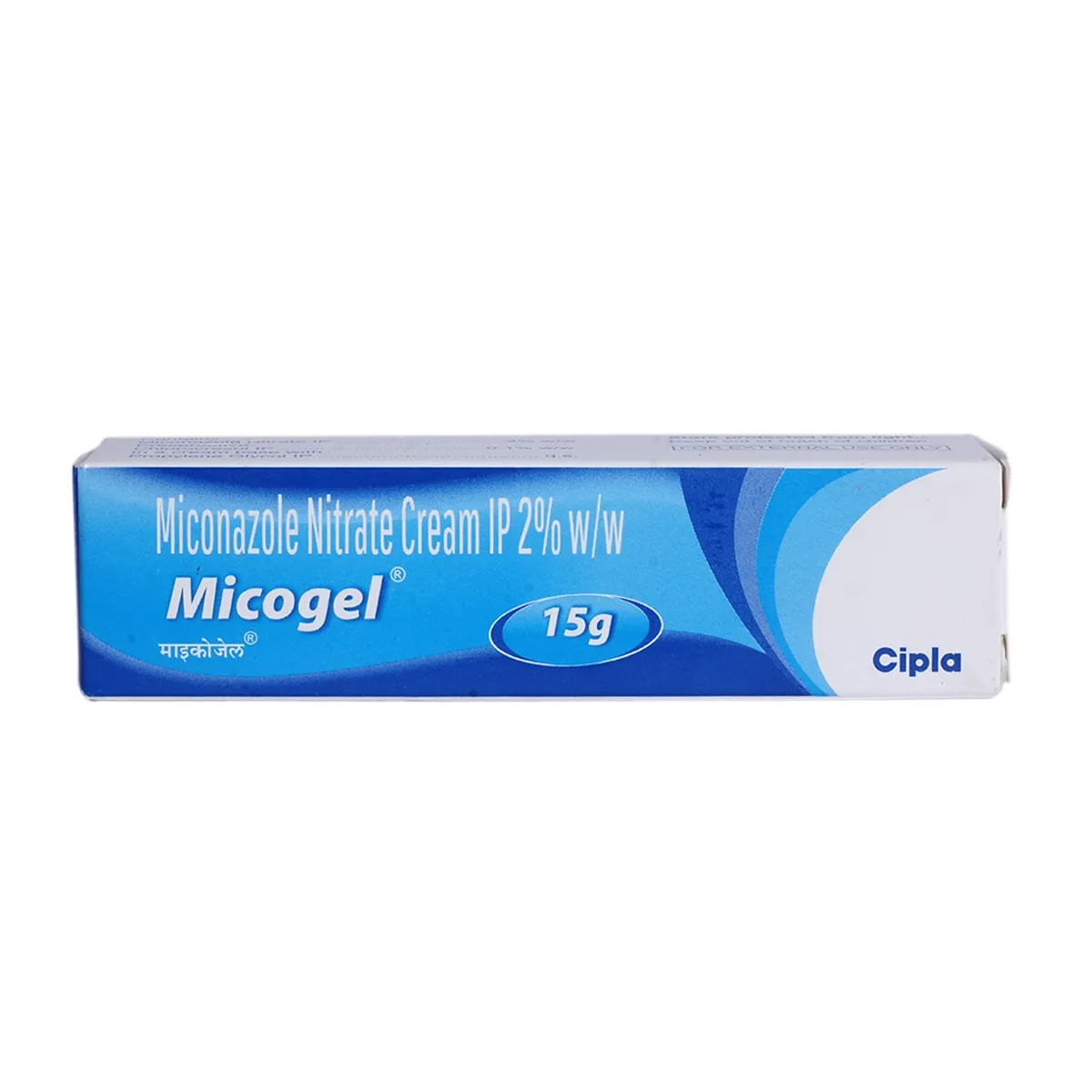
Micogel Cream is a topical antifungal medicine used to treat various fungal skin infections, such as athlete's foot, jock itch, and ringworm. It works by stopping the growth of the fungi causing the infection, helping to clear up the skin and relieve irritating symptoms. It is formulated to act directly on the skin surface to resolve the underlying issue.
For best results, you should apply Micogel Cream consistently, usually once or twice daily, as directed by your healthcare professional. Since this is a topical cream, it is applied directly to the skin and is not affected by food intake. Keeping the affected area clean and dry, wearing loose cotton clothing, and changing socks daily can significantly support your recovery and prevent reinfection.
While using Micogel Cream, you may experience mild skin irritation, itching, or redness at the application site. These side effects are usually temporary and go away as your skin adjusts to the treatment. However, if you notice severe blistering, swelling, or signs of a severe allergic reaction, stop using the product immediately and consult your doctor.
Do not use this medicine if you have a known allergy to similar antifungal products. Before starting, talk to your doctor if you have large areas of broken skin, deep open wounds, or highly sensitive skin, as this can affect how the medicine is absorbed. Your healthcare provider will help determine if this treatment is appropriate for your specific condition.
Inform your doctor about other skin treatments you are currently using, as some topical products may interfere with how Micogel Cream works on your skin. If you are pregnant, planning to become pregnant, breastfeeding, or treating an elderly patient, consult your healthcare provider before application to ensure maximum safety.
Micogel Cream may be used to treat the following fungal skin infections:
Micogel Cream helps treat fungal skin infections by eliminating the fungi responsible for the infection and relieving associated symptoms. Its targeted action promotes healing while minimising exposure to the rest of the body:
Follow these step-by-step instructions to ensure safe and effective use of this medication:
Caution
Alcohol may interact with Micogel Cream. Therefore, it is better to avoid alcohol while using Micogel Cream.
Caution
Micogel Cream should be used with caution in pregnant women.
Caution
Micogel Cream should be used with caution in breastfeeding women. The doctor may advise you to stop breastfeeding while using Micogel Cream, if necessary.
Safe if prescribed
Micogel Cream does not affect your ability to drive.
Consult your doctor
Micogel Cream can be used in patients with liver diseases only when prescribed by a doctor.
Consult your doctor
Micogel Cream can be given to patients with kidney problems only when prescribed by a doctor.
Caution
Micogel Cream should be used in children under 12 years of age only when prescribed by a child specialist.
Safe if prescribed
Micogel Cream is safe for use in heart patients if recommended by the physician.
Caution
Micogel Cream should be used with caution in elderly patients. Consult your doctor if you have any concerns.
Have a query?
Drug-Drug Interactions
Inform your doctor if you are using any of the following medicines or products, as they may interact with Micogel Cream:
Drug-Disease Interactions
Inform your doctor if you have any of the following conditions before using Micogel Cream:
Login/Sign Up
Login/Sign Up
Disclaimer


