apollo
logo
0
Select Delivery Location
prescription
Prescription Medicine
info
Written By Veda Maddala , M Pharmacy
Reviewed By Dr Aneela Siddabathuni , MPharma., PhD
OffersOffers & Discounts

Get Free delivery (₹99) with circle icon

Join Circle
Get Extra 18% Off with Coupons
Extra 10% Off with Bank Offers
bank offer
bank offer
bank offer

More about the Product

Manufacturer/Marketer :

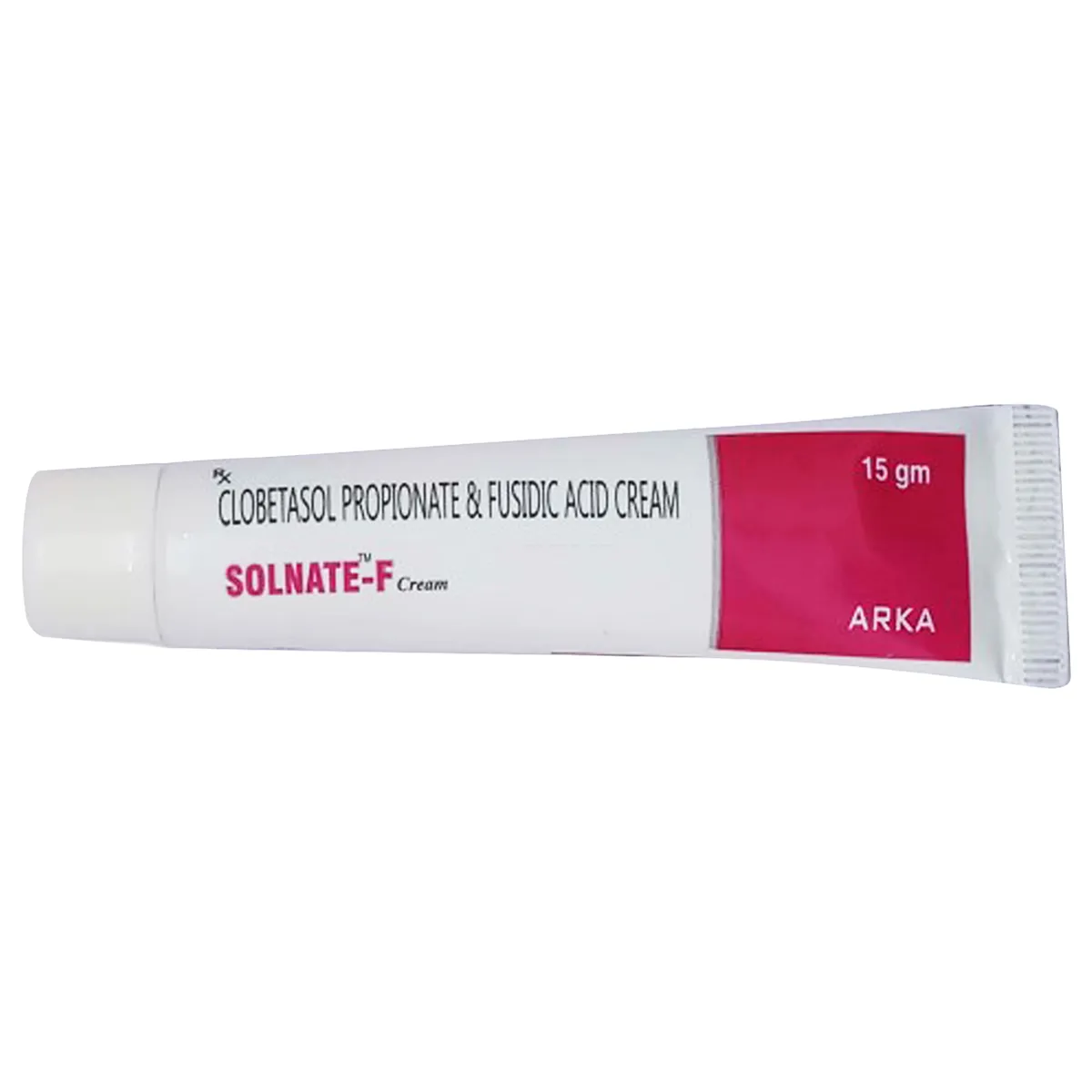
Arka Vital Science Pvt Ltd

Consume Type :

Topical

Expires on or after :

Jan-27

Return Policy :

Not Returnable

About Solnate-F Cream

Solnate-F Cream is a topical prescription medication used to treat bacterial skin infections that are accompanied by significant inflammation, redness, swelling, or severe itching. It is commonly prescribed for conditions where a skin infection has developed on top of an existing inflammatory skin issue, helping to clear the bacteria while calming down the skin's painful immune response.

For the best results, you should apply this medication consistently at the same times each day, exactly as directed by your doctor. It is typically applied once or twice daily directly to the clean, dry affected area. Making supportive lifestyle adjustments, such as wearing loose-fitting cotton clothing and avoiding aggressive scrubbing of the affected skin, can also help accelerate your skin's healing process.

While using Solnate-F Cream, you may experience some mild, temporary side effects at the application site, such as a slight burning or stinging sensation. However, if you notice any severe skin thinning, skin discoloration, or signs that your infection is spreading, you should contact your healthcare provider immediately.

Do not use this medication if you have a history of allergic reactions to similar topical treatments, or if you currently have an untreated viral skin infection (like cold sores or chickenpox) or fungal infection (like athlete's foot). It is also important to tell your doctor if you have skin conditions like rosacea or acne before starting treatment. If you are pregnant, breastfeeding, treating an elderly family member, or using this medicine in a child, consult your doctor or pharmacist first to ensure it is safe for use. In children, particularly those under 12 years of age, this medicine should only be used under close medical supervision and for the shortest duration necessary because children are more susceptible to steroid-related side effects. 

Uses of Solnate-F Cream

Solnate-F Cream is used to treat inflammatory skin conditions that are complicated by bacterial infections, including:

  • Infected eczema: It helps clear bacterial infections that frequently develop in raw, cracked skin affected by eczema while reducing severe redness, itching, and inflammation.
  • Infected dermatitis: It calms inflamed, irritated skin rashes resulting from contact dermatitis or other forms of dermatitis while helping control associated bacterial infections.
  • Infected psoriasis: It helps manage localized psoriasis plaques that have become infected with bacteria, reducing scaling, redness, swelling, and discomfort.

Key Benefits

Solnate-F Cream offers the following benefits when used as prescribed:

  • Treats bacterial skin infections: The antibiotic component helps eliminate susceptible bacteria responsible for skin infections and prevents the infection from worsening.
  • Reduces inflammation quickly: The corticosteroid component helps relieve redness, swelling, itching, and irritation associated with inflamed skin conditions.
  • Provides dual-action treatment: By treating both the infection and inflammation at the same time, it offers more comprehensive symptom relief.
  • Promotes faster skin healing: Controlling infection and inflammation together helps support the natural healing process of the skin.
  • Relieves itching and discomfort: It helps reduce persistent itching, soreness, and irritation, improving overall comfort during recovery.
  • Acts directly at the affected site: Because it is applied topically, the medicine delivers treatment directly where it is needed, helping to control symptoms effectively.
     
Side effects of Solnate-F Cream 15 gm
  • Avoid extreme heat or cold, like hot showers or cold winds, to prevent worsening skin discomfort.
  • Cool compresses: To reduce itch, redness, and swelling.
  • Avoid irritants like harsh chemicals or allergens to prevent worsening skin discomfort.
  • If you have severe itching, burning, or blistering seek medical attention.
  • Keep your skin clean by gently washing your face two times daily and after sweating. Choose a mild and non-abrasive cleanser.
  • Use gentle alcohol-free skin care products. Avoid products that might irritate your skin such as exfoliants, astringents and toners.
  • Acne may also occur due to oil in the hair. Thus, if you have oily hair, shampoo more frequently than you do now and keep your hair away from face.
  • Keep your hands off your face as touching face throughout the day might worsen acne. Also, do not pick, squeeze or pop acne as it will prolong the healing process and increase the risk of dark spots and scarring.
  • Avoid tanning by applying a broad spectrum sunscreen and wearing sun-protective clothing when outdoors.
  • Mild hair follicle inflammation often heals on its own without needing treatment.
  • You can apply a warm saltwater or vinegar solution to the affected area with a washcloth, or use over-the-counter antibiotics, oatmeal lotion, or hydrocortisone cream for relief.
  • Avoid making the affected area worse by not shaving, scratching, or wearing tight clothes.
  • Apply a warm compress to the area 3-4 times a day for 15-20 minutes to help speed up healing.
  • Do not scratch, squeeze, or pop any bumps, as this may lead to infection or other problems.
  • If self-care methods fail, consult a doctor for further treatment and advice.
  • Shield your skin from the sun by using sunscreen, seeking shade, and wearing protective clothing.
  • Please don't smoke, as it damages the skin and reduces blood flow.
  • Treat your skin gently by limiting bath time, using mild cleansers, and shaving carefully.
  • Eat a healthy diet of fruits, vegetables, whole grains, and lean proteins.
  • Stay hydrated by drinking plenty of water.
  • Manage stress through sleep, exercise, meditation, and enjoyable activities.
  • Additionally, use moisturizers to coat your skin with a protective barrier, and consider wearing sun-protective clothing.
  • Apply moisturizer immediately after showering or bathing.
  • Use a moisturizer containing lanolin, petroleum jelly, glycerine, hyaluronic acid or jojoba oil.
  • Do not use hot water for bathing. Instead use warm water and limit showers and bath to 5 to 10 minutes.
  • Apply a sunscreen with SPF-30 or higher.
  • Avoid harsh soaps, detergents and perfumes.
  • Do not scratch or rub the skin.
  • Drink adequate water to prevent dehydration.
  • Wear pants, full sleeves and a wide-brimmed hat while going out in the sun.

Directions for Use

To use Solnate-F Cream safely and effectively, follow these instructions carefully: 

  1. Wash your hands thoroughly with soap and water before applying the medicine.
  2. Gently clean and completely dry the affected skin area.
  3. Apply a thin layer of Solnate-F Cream to the affected area as directed by your healthcare provider.
  4. Gently rub the cream into the skin until it is completely absorbed.
  5. Wash your hands immediately after application, unless you are treating the skin on your hands.

Do not cover the treated area with bandages, tight dressings, or plastic wrap unless your doctor has specifically instructed you to do so. Always follow your doctor's exact instructions regarding how long to use this medicine.

How Solnate-F Cream Works

Solnate-F Cream is a combination medicine containing two active ingredients that work together to treat your skin condition. Each ingredient targets a different aspect of the inflamed, infected skin to help it heal. The first active component is clobetasol, a highly potent topical steroid. When applied to the skin, it stops the local cells from producing inflammatory chemicals. This action rapidly reduces redness, swelling, heat, and itching in the treated area. The second active component is fusidic acid, a targeted antibiotic. It works by entering the bacterial cells and stopping them from producing the essential proteins they need to grow and multiply. Once the bacteria can no longer grow, your body’s natural immune system can easily clear away the remaining infection.
bannner image

Alcohol

Consult your doctor

The interaction of Solnate-F Cream with alcohol is unknown. Please consult a doctor before consuming alcohol while using Solnate-F Cream.

bannner image

Pregnancy

Caution

The safety of Solnate-F Cream in pregnant women is unknown. Therefore, it is given to pregnant women only if the doctor thinks the benefits outweigh the risks.

bannner image

Breast Feeding

Caution

Do not apply Solnate-F Cream to the breast area. Solnate-F Cream is given to breastfeeding mothers only if the doctor thinks the benefits are greater than the risks.

bannner image

Driving

Not applicable

Solnate-F Cream usually does not affect your ability to drive or operate machinery.

bannner image

Liver

Caution

If you have any concerns regarding the use of Solnate-F Cream in patients with Liver problems, please consult a doctor.

bannner image

Kidney

Caution

If you have any concerns regarding the use of Solnate-F Cream in patients with Kidney problems, please consult a doctor.

bannner image

Children

Caution

Solnate-F Cream should be used with caution in children if prescribed by a doctor.

bannner image

Heart

Consult your doctor

Please consult your doctor before using Solnate-F Cream if you have pre-existing heart problems. Your doctor will prescribe Solnate-F Cream if the benefits outweigh the risks.

bannner image

Geriatrics

Consult your doctor

Please consult a doctor before giving Solnate-F Cream to geriatric patients. Your doctor will prescribe Solnate-F Cream if the benefits outweigh the risks.

What if I have taken an overdose of Solnate-F Cream

Do not apply Solnate-F Cream in large amounts or use it for longer than prescribed, as it does not give quick or better results, but increases the risk of side effects and makes skin more sensitive to Solnate-F Cream.

Diet & Lifestyle Advise

  • Avoid Scratching the Skin: Avoid scratching or picking at the healing skin, as this can introduce new bacteria, worsen inflammation, and lead to scarring.
  • Use Lukewarm Water for Bathing: Bathe or shower in lukewarm water rather than hot water, which can strip away your skin's natural oils and worsen irritation.
  • Choose Gentle Skincare Products: Use mild, fragrance-free skin cleansers and moisturisers to protect your healing skin barrier.
  • Wear Loose, Breathable Clothing: Wear loose, breathable cotton clothing over the treated area to prevent friction and sweat buildup.
     

Have a query?

How Soon It Starts Working

The time required for Solnate-F Cream to start to work: The time required for Solnate-F Cream to show its action is unknown.

The time for which the effects of Solnate-F Cream last: The duration of action for Solnate-F Cream is unknown.

What if you forget to take Solnate-F Cream

Apply the missed dose as soon as you can. If it is almost time for the next dose, skip the missed dose and follow your regular schedule. Do not apply an extra amount of Solnate-F Cream to make up for the missed dose.

Storage

•Store Solnate-F Cream at room temperature, preferably between 15°C and 25°C, or as directed on the product packaging. •Keep the tube tightly closed after each use to protect the medicine from contamination and drying out.

Drug Warnings

  • Avoid Sensitive Areas: Do not apply this medication to your face, groin, underarms, or other sensitive skin areas unless your doctor has explicitly told you to do so.
  • Watch for Signs of Worsening Skin Problems: If you develop new skin redness, scaling, white patches, worsening itching, or a rash that spreads during treatment, contact your doctor. Prolonged corticosteroid use can sometimes allow fungal infections to develop or become more noticeable.
  • Do Not Apply to Damaged Skin: Never apply Solnate-F Cream to open wounds, deep cuts, or severely burned skin.
  • Use Only for the Prescribed Duration: Do not use this cream for longer than the prescribed duration—typically no more than 1 to 2 weeks—to prevent skin thinning or antibiotic resistance.
  • Prevent Eye Contact: Avoid getting this cream in or near your eyes; if accidental contact occurs, rinse thoroughly with plenty of cool water.
  • Avoid Excessive Application: Applying this medicine to large areas of skin, using it for prolonged periods, or covering the treated area with airtight dressings may increase absorption of clobetasol into the bloodstream and raise the risk of serious steroid-related side effects.
  • Do Not Share Your Medication: Do not share this prescription medication with anyone else, even if they have skin symptoms that look similar to yours.

Drug-Drug Interactions

verifiedApollotooltip

Drug-Drug Interactions

The following medicines may affect the safety or effectiveness of Solnate-F Cream:

  • Other topical corticosteroids or antibiotics: Using additional steroid creams, ointments, or topical antibiotics at the same time may increase the risk of skin irritation, skin thinning, or excessive absorption of corticosteroids through the skin.
  • Medicines applied to the same area of skin: Applying multiple medicated creams or ointments to the same affected area without medical advice may alter how the medicine is absorbed or increase the likelihood of local side effects.

Drug-Disease Interactions

Some medical conditions may affect the safety or suitability of Solnate-F Cream, including:

  • Viral or fungal skin infections: Do not use this medicine on untreated viral infections (such as chickenpox, shingles, or herpes simplex) or fungal infections (such as ringworm), as the corticosteroid component can suppress the skin's immune response and worsen the infection.
  • Rosacea or perioral dermatitis: Applying this potent corticosteroid to the face may aggravate rosacea or perioral dermatitis and lead to worsening redness, irritation, and rash.
  • Skin atrophy or fragile skin: Prolonged use on areas of thin or damaged skin may increase the risk of skin thinning, stretch marks, and other steroid-related skin changes.
  • Hypersensitivity: Do not use this medicine if you have a known allergy to clobetasol, fusidic acid, or any of the formulation's ingredients.
     
No Drug - Drug interactions found in our data. We may lack specific data on this medicine and are actively working to update our database. Consult your doctor for personalized advice

Drug-Drug Interactions

Login/Sign Up

Drug-Food Interactions

verifiedApollotooltip
No Drug - Food interactions found in our database. Some may be unknown. Consult your doctor for what to avoid during medication.

Drug-Food Interactions

Login/Sign Up

All Substitutes & Brand Comparisons

Habit Forming

No

Therapeutic Class

[ANTIBACTERIAL AND CORTICOSTEROID]

FAQs

Solnate-F Cream is used to treat bacterial skin infections. It works by killing the infection-causing bacteria and inhibiting the release of certain chemical messengers that cause redness, itching, and swelling.

Yes, Solnate-F Cream may be used to treat eczema (redness and itching of the skin) and also dermatitis (swollen, dry and red skin) caused by bacteria. Solnate-F Cream is a combination of corticosteroid and antibiotic that stops the growth of bacteria and decreases redness and swelling.

Do not cover the treated area with bandages, dressings, plastic wraps, or similar coverings unless your doctor specifically advises you to do so. Covering the area can increase absorption of the medicine through the skin and raise the risk of side effects. In babies, nappies may act as dressings and increase absorption.

Use Solnate-F Cream exactly as prescribed by your doctor. Treatment is usually limited to 1–2 weeks. Prolonged use may increase the risk of side effects such as skin thinning, stretch marks, and bacterial resistance. If your condition does not improve or worsens within 1–2 weeks, consult your doctor.

You should use Solnate-F Cream on your face only if your doctor specifically advises you to do so. The skin on the face is thin and sensitive, making it more prone to side effects such as skin thinning and worsening of conditions like acne or rosacea. Do not use it on the face for more than 5 days unless instructed by your doctor, and avoid covering the treated area with dressings or bandages.

You are not recommended to use Solnate-F Cream for more than the prescribed time, as it may increase the risk of adverse effects and make skin more sensitive to Solnate-F Cream. Also, bacteria may become resistant to Solnate-F Cream.

No, you are not recommended to stop taking Solnate-F Cream without consulting your doctor as it may worsen the infection or cause recurring symptoms. Therefore, take Solnate-F Cream for as long as your doctor has prescribed it, and if you experience any difficulty while taking Solnate-F Cream, please consult your doctor.

No. Solnate-F Cream is intended for bacterial skin infections and does not treat fungal infections. In fact, the steroid component may worsen fungal infections by reducing the skin's natural ability to fight the fungus. Consult your doctor or pharmacist for appropriate antifungal treatment.

To use Solnate-F Cream, wash your hands, clean and dry the affected area, and apply a thin layer of cream 2-3 times a day or as directed by your doctor. Gently massage it into the skin until fully absorbed. Use it for the full recommended treatment period, and discontinue if you experience side effects or allergic reactions. Remember to follow the instructions provided by your doctor or pharmacist and read the product label carefully before use. If you have any questions, consult a healthcare professional.

When using Solnate-F Cream, it's essential to exercise caution and follow guidelines for safe usage. Avoid applying the cream to areas of healthy skin or sensitive zones, and take care to prevent accidental contact with your eyes, nose, or mouth. Thoroughly wash your hands after application, and be mindful of potential allergic reactions to the ingredients. Adhere to the recommended treatment duration and frequency to avoid overuse or underuse, and discontinue application if you experience any adverse effects like redness, itching, or burning sensations. If you're pregnant or breastfeeding, consult your doctor before using the cream, and ensure it's stored out of reach of children and pets to avoid any potential harm.

Store Solnate-F Cream at room temperature, away from direct sunlight, moisture, and heat. Keep it in its original packaging, tightly closed, and out of reach of children and pets. When disposing of the Solnate-F Cream, seal the tube or container and throw it away in a designated waste collection facility or a pharmacy that accepts old or expired medications. Don't throw it in the trash or down the drain.

Though Solnate-F Cream is a safe and powerful treatment, it's not suitable for everyone. If you're allergic to any of the ingredients, have open wounds or broken skin, or are struggling with severe skin infections, rosacea, or acne-prone skin, you should avoid using it. Additionally, pregnant or breastfeeding women should only use it under medical guidance. Be cautious when applying the cream to sensitive areas or damaged skin, and avoid mixing it with other steroid creams or ointments. By understanding these contraindications and cautions, you can use Solnate-F Cream safely and effectively to address your skin concerns."

If you are pregnant or breastfeeding, consult your doctor before using Solnate-F Cream. They will weigh the potential benefits against any risks to your baby and advise on the safest way to use it.

If your skin does not show signs of improvement after a few days of consistent use, or if the redness and swelling seem to get worse, stop using the cream and contact your healthcare provider. Talk to your doctor to re-evaluate your skin condition.

Skin thinning is a recognised side effect of potent topical steroids, but it generally only occurs if the cream is used for a prolonged period, applied to very thin skin areas, or covered with airtight dressings. Using it exactly as directed minimises this risk.

No, you should never use Solnate-F Cream to treat diaper rash in babies or young children. The highly potent steroid component is too strong for infant skin and can be absorbed into their bloodstream, causing serious developmental side effects. Talk to your doctor for safe paediatric alternatives.

Children are more likely than adults to absorb topical corticosteroids through their skin and develop side effects. This medicine should only be used in children when prescribed by a doctor, for the shortest duration necessary, and under close medical supervision. Talk to your doctor before using this medicine in any child.

Disclaimer

While we strive to provide complete, accurate, and expert-reviewed content on our 'Platform', we make no warranties or representations and disclaim all responsibility and liability for the completeness, accuracy, or reliability of the aforementioned content. The content on our platform is for informative purposes only, and may not cover all clinical/non-clinical aspects. Reliance on any information and subsequent action or inaction is solely at the user's risk, and we do not assume any responsibility for the same. The content on the Platform should not be considered or used as a substitute for professional and qualified medical advice. Please consult your doctor for any query pertaining to medicines, tests and/or diseases, as we support, and do not replace the doctor-patient relationship.

Country of origin

India

Manufacturer/Marketer address

No.3, First Floor, Sathiyanarayana Street, Kodambakkam, Chennai Chennai Tn 600024 In
Other Info - SOL0448
whatsapp Floating Button
Buy Now
Add to Cart