
Tacmod Ointment 30 gm


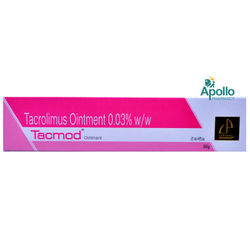


₹255
 ₹38.0Cashback (15%)
(Inclusive of all Taxes)
₹178 with coupons & bank offers*
 Offers & Discounts
Get Free delivery (₹99) with


Delivery Information
More about the Product
Composition :
Manufacturer/Marketer :
Consume Type :
Expires on or after :
Return Policy :
About Tacmod Ointment
Tacmod Ointment is a prescription ointment used to treat moderate to severe eczema (atopic dermatitis) in patients who do not have a compromised immune system. It is typically prescribed when other standard treatments have not worked well or are not suitable for the patient. This topical medication helps control the skin's reaction to eczema triggers, reducing inflammation and redness.
To get the best results, you must apply Tacmod Ointment consistently and exactly as your healthcare provider instructs. It is typically applied to clean, dry skin. Along with using this medication, simple lifestyle changes, such as keeping your skin well-hydrated with a gentle, fragrance-free moisturiser and identifying personal skin triggers, can help improve your overall results.
When you first start using Tacmod Ointment, you may experience some temporary skin burning, stinging, or redness at the application site. While these common side effects are usually mild and resolve within a few days, you should consult your doctor if you experience severe skin irritation, signs of a skin infection, or swollen lymph nodes.
Talk to your doctor before starting this medicine if you have any pre-existing health conditions, especially a weak immune system, kidney disease, or a genetic skin barrier defect. Do not use this medicine if you have a known allergy to any of its ingredients, or if you currently have a viral skin infection, such as herpes or shingles.
Avoid drinking alcohol while using Tacmod Ointment, as it can cause your face or skin to flush and feel hot. If you are pregnant, planning to become pregnant, breastfeeding, or caring for an elderly patient, talk to your doctor or pharmacist before using this medication to make sure it is safe for your situation.
Uses of Tacmod Ointment
Tacmod Ointment is used in the treatment of atopic dermatitis (eczema). The detailed uses of Tacmod Ointment are as follows:
- Atopic dermatitis (eczema): Tacmod Ointment helps by calming the overactive immune response in the skin, reducing redness, dryness, scaling, and itching, especially when other standard treatments have not worked well or are not appropriate.
- Severe skin itching: It directly targets the inflammatory pathways that cause the intense urge to scratch, allowing the skin to heal and preventing further damage.
Key Benefits
Tacmod Ointment helps relieve eczema symptoms, promotes skin healing, reduces flare-ups, and improves long-term symptom control when used as prescribed.
The following are the benefits of this medication:
- Helps relieve itching, redness, and skin irritation.
- Reduces eczema flare-ups and ongoing skin inflammation.
- Improves skin healing and restores a healthier skin appearance.
- Supports comfortable use on sensitive areas such as the face and neck.
- Promotes better sleep and daily comfort by easing itching.
- Provides a steroid-free treatment option for long-term eczema management when appropriate.
- Consult your doctor if you experience skin redness, itching, or irritation after taking medication.
- Your doctor may adjust your treatment plan by changing your medication or providing guidance on managing your erythema symptoms.
- Your doctor may recommend or prescribe certain medications to help alleviate symptoms.
- Apply cool compresses or calamine lotion to the affected skin area to reduce redness and itching.
- Stay hydrated by drinking plenty of water to help alleviate symptoms and keep your skin hydrated.
- Monitor your skin condition closely and promptly report any changes, worsening symptoms, or concerns to your healthcare provider.
- Avoid sharing personal care items and take precautions during outbreaks to prevent the infection spread.
- Eat well-balanced meals to support immune function.
- Stay hydrated by drinking plenty of water.
- Get enough rest and sleep to help manage symptoms.
- Reduce stress by practicing relaxation methods such as meditation, deep breathing, or yoga.
- Keep the affected area clean and dry.
- Opt for loose-fitting cotton underwear and loose pants to reduce irritation and discomfort.
- Practice good hygiene by washing your hands often.
- If you suspect you have herpes, seek medical attention immediately to receive prescription medications and counseling from a doctor.
- Mild hair follicle inflammation often heals on its own without needing treatment.
- You can apply a warm saltwater or vinegar solution to the affected area with a washcloth, or use over-the-counter antibiotics, oatmeal lotion, or hydrocortisone cream for relief.
- Avoid making the affected area worse by not shaving, scratching, or wearing tight clothes.
- Apply a warm compress to the area 3-4 times a day for 15-20 minutes to help speed up healing.
- Do not scratch, squeeze, or pop any bumps, as this may lead to infection or other problems.
- If self-care methods fail, consult a doctor for further treatment and advice.
- Avoid trigger foods that can cause allergic reactions, such as nuts, shellfish, or dairy products.
- Keep a food diary to track potential food allergens.
- Include omega-3 rich foods like salmon and walnuts to reduce inflammation.
- Wear loose, comfortable clothing made from soft fabrics like cotton.
- Apply cool compresses or take cool baths to reduce itching.
- Use gentle soaps and avoid harsh skin products.
- Reduce stress through relaxation techniques like meditation or deep breathing.
- Take cold water baths avoiding soap.
- Avoid scratching and scrubbing to prevent infections while itching.
- Use nets to prevent insects and mosquitoes.
- Stop using lotions and creams that cause irritation.
- Avoid alcohol and caffeine intake.
- Inform your doctor if you suspect a fungal skin infection for proper diagnosis and treatment.
- Wash the affected area with mild soap and water to prevent spreading.
- Avoid sharing personal items like towels, clothing, or makeup to prevent spreading.
- Wash your hands regularly, especially after touching the affected area.
- Avoid scratching, as it can worsen or spread the infection. Keep the area covered to prevent itching.
- If your symptoms worsen or don't get better, seek professional help.
Directions for Use
- Tacmod Ointment is for external use only.
- It is usually applied twice daily or as directed by your doctor.
- Check the label for directions before using this medicine.
- Clean and dry the affected area of the skin. Take a small amount of Tacmod Ointment on the fingertip and apply it as a thin layer on the affected area.
- Wash your hands before and after using Tacmod Ointment unless the treatment is for hands.
- If Tacmod Ointment accidentally comes into contact with the nose, mouth, eyes, or vagina, rinse with water thoroughly.
How Tacmod Ointment Works

Alcohol
Unsafe
Avoid alcohol consumption with Tacmod Ointment as it may cause skin or face to become flushed or red and feel hot.

Pregnancy
Caution
Tacmod Ointment is a Category C pregnancy drug and is given to a pregnant woman only if the doctor thinks the benefits outweigh the risks. Please consult your doctor if you are pregnant or planning for pregnancy before using Tacmod Ointment.

Breast Feeding
Consult your doctor
Please consult a doctor if you are a breastfeeding mother before using Tacmod Ointment.

Driving
Safe if prescribed
Tacmod Ointment usually does not affect your ability to drive or operate machinery.

Liver
Consult your doctor
Since it is a topical medication, the absorption into the bloodstream is generally lower compared to oral medications. This means the impact on liver function is typically less significant. However, in cases of severe liver disease, caution is still recommended because there may still be some systemic absorption. It's best to consult your healthcare provider before using it, as they can assess your specific liver condition and determine if the medication is safe for you. Regular monitoring might still be advised to ensure it doesn't cause any adverse effects.

Kidney
Consult your doctor
As Tacmod Ointment is a topical medication, it has minimal systemic absorption. However, in cases of severe kidney disease, caution is advised due to the possibility of some absorption affecting kidney function. Always consult your healthcare provider before use, as they may recommend monitoring kidney function during treatment for added safety.

Children
Caution
Tacmod Ointment is not recommended for children below two years of age. For children above two years, Tacmod Ointment should be used in dose and duration advised by a doctor only.

Heart
Consult your doctor
Please inform your doctor if you have a history of heart disease before using Tacmod Ointment. Your doctor will prescribe it only if the benefits outweigh the risks.

Geriatrics
Consult your doctor
Limited information available for use of Tacmod Ointment in elderly patients. Please consult your doctor.
What if I have taken an overdose of Tacmod Ointment
Diet & Lifestyle Advise
- Avoid alcohol: Do not drink alcohol while using this medicine, as it may cause facial flushing, redness, and a warm sensation.
- Moisturise your skin: Apply a gentle, fragrance-free moisturiser every day, but wait at least 2 hours after applying Tacmod Ointment before using the moisturiser.
- Avoid eczema triggers: Stay away from things that can worsen your eczema, such as certain soaps, detergents, perfumes, cosmetics, or tight synthetic clothing.
- Wear breathable clothing: Choose loose-fitting cotton clothing to reduce friction and help prevent sweating, which can irritate sensitive skin.

Have a query?
How Soon It Starts Working
The time required for Tacmod Ointment to start to work: The time required for Tacmod Ointment to show its action is unknown. The time for which the effects of Tacmod Ointment last: The duration of action for Tacmod Ointment is clinically unknown.
What if you forget to take Tacmod Ointment
Storage
Drug Warnings
- Apply to dry skin: Make sure the affected skin is completely dry before applying Tacmod Ointment. Do not apply it to wet or damp skin.
- Use the correct strength for your age: Do not use Tacmod Ointment in children younger than 2 years. Children aged 2 to 16 years should use only the strength recommended by their doctor.
- Protect your skin from sunlight: Avoid tanning beds and limit time in direct sunlight. This medicine can make your skin more sensitive to the sun.
- Wear sun protection: Wear protective clothing and use a broad-spectrum sunscreen with SPF 30 or higher whenever you go outdoors during treatment.
- Avoid contact with sensitive areas: Do not let the ointment get into your eyes, nose, mouth, or ears. If this happens, rinse the area well with cool water.
- Do not use on infected skin: Do not apply Tacmod Ointment to areas with active viral infections, such as chickenpox or cold sores. Speak to your doctor if you think your skin is infected.
- Use only as directed: Use Tacmod Ointment only for the duration recommended by your doctor. Attend regular check-ups so your doctor can monitor your progress and ensure the treatment remains safe and effective.
Drug-Drug Interactions


Drug-Drug Interaction Summary:
- Other topical creams, ointments, or skin care products: Applying these products to the same area as Tacmod Ointment may affect how well the medicine is absorbed or works.
- Immunosuppressants (e.g., Cyclosporine, Mycophenolate mofetil): Taking these medicines alongside Tacmod Ointment may increase the risk of infections and may require closer monitoring.
- Medications that block the CYP3A4 liver enzyme (e.g., Ketoconazole, Erythromycin): These medicines may increase Tacmod Ointment levels in the body, especially when they are applied to large areas of damaged skin.
Drug-Drug Interactions
Login/Sign Up
Drug-Food Interactions
Drug-Food Interaction Summary:
- Alcohol: Consuming alcohol while using Tacmod Ointment may cause temporary skin flushing, redness, and a feeling of warmth, especially on the face.
Drug-Food Interactions
Login/Sign Up

All Substitutes & Brand Comparisons


Customers Also Bought
FAQs
Disclaimer
Author Details


Reference
- Electronic Medicines Compendium (EMC). Pil.1612 Patient Information Leaflet (PIL). Cheshire, UK: Datapharm; 2025. [Accessed on 02 Jun. 2026]Check here
- Tacrolimus monohydrate [EMC SmPC]. 2018. [Accessed on 17 Apr. 2019]Check here
- Tacrolimus [Prescribing Information]. 2022. [Accessed on 01 Aug. 2023]Check here
- EMA. PIL. Tacrolimus. [[Accessed on 26.Feb].2020]Check here
- Webmd.Tacrolimus. [[Accessed on 26.Feb].2020]Check here
- Lactmed.TACROLIMUS. [[Accessed on 26.Feb].2020]Check here
Country of origin
Manufacturer/Marketer address
Therapeutic Class
Habit Forming

