apollo
0
  1. Home
  2. Medicine
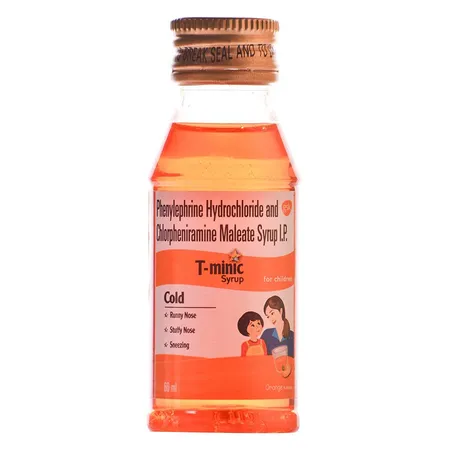
  3. T-Minic Syrup, 60 ml

Prescription drug
 Trailing icon
coupon
coupon
coupon
Extra 15% Off with Bank Offers
Written By Santoshini Reddy G , M Pharmacy
Reviewed By Dr Aneela Siddabathuni , MPharma., PhD
T-Minic Syrup is a combination medicine primarily used in the treatment of allergic rhinitis and common cold. This medicine works by inhibiting the action of histamine, a chemical messenger responsible for causing allergies. It helps relieve congestion, sneezing, nasal and sinus congestion, and nasal swelling caused due to allergies. Common side effects include drowsiness, dizziness, headache, dry mouth/nose/throat, upset stomach, constipation, or trouble sleeping.
Read more

Consume Type :

Oral

Expires on or after :

Return Policy :

Not Returnable

About T-Minic Syrup

T-Minic Syrup is used to treat symptoms of the common cold and allergies like sneezing, runny/stuffy nose, congestion, or watery eyes. The common cold is a respiratory illness affecting the nose and throat. It is mostly caused by viruses known as 'rhinovirus'. The virus enters the body through the nose, mouth or eyes and spreads easily through droplets in the air when the person who is sick sneezes, coughs or talks.

T-Minic Syrup contains Chlorpheniramine maleate and Phenylephrine hydrochloride. Chlorpheniramine maleate blocks the release of histamine in the body, which is known to cause allergic symptoms. Phenylephrine hydrochloride helps shrink the blood vessels in the nasal passage, thereby providing relief from a stuffy nose. Together, T-Minic Syrup helps provide relief from symptoms of allergy such as sneezing, running nose, watery eyes, itching, swelling, and nasal congestion.

Your doctor will decide the dose and duration of T-Minic Syrup depending on your condition. The most common side effects of T-Minic Syrup are drowsiness, dizziness, headache, dry mouth/nose/throat, upset stomach, constipation, or trouble sleeping. Most of these side effects of T-Minic Syrup do not require medical attention and gradually resolve over time. However, if the side effects persist or worsen, reach out to your doctor.

Inform your doctor if you are allergic to any of the components in T-Minic Syrup. Please tell your doctor before starting T-Minic Syrup if you have a liver problem, are pregnant, or are breastfeeding. T-Minic Syrup may cause drowsiness and sleepiness, so it is advised not to drive or operate machinery unless you are alert. Consumption of alcohol should be avoided as it may lead to excessive drowsiness and sleepiness. Do not take T-Minic Syrup with any MAO inhibitor (anti-depressant medication) as it may lead to serious drug interaction.

Uses of T-Minic Syrup

T-Minic Syrup is used in the treatment of the common cold and allergies. The detailed uses of T-Minic Syrup are as follows:

  • Relieves Common Cold and Allergic Symptoms: T-Minic Syrup helps block the action of histamine, thereby relieving symptoms such as sneezing, runny or stuffy nose, watery eyes, and nasal swelling.
  • Reduces Nasal Congestion: T-Minic Syrup helps narrow the blood vessels in the nasal passages, reducing swelling and congestion, and making breathing easier.
  • Eases Sinus Pressure and Headache: T-Minic Syrup helps relieve sinus congestion, which in turn reduces sinus-related headaches and facial pain.
  • Manages Seasonal Allergic Rhinitis: T-Minic Syrup may be effective in treating hay fever and other upper respiratory allergies caused by pollen, dust, or mold.

Have a query?

Directions for Use

  • T-Minic Syrup can be taken with or without food.
  • It is recommended to take T-Minic Syrup 3-4 times daily or as advised by your doctor.
  • Swallow the T-Minic Syrup as a whole with a glass of water.
  • Do not chew, crush, or break it.

Key Benefits

T-Minic Syrup contains Chlorpheniramine maleate (antihistamine/antiallergic) and phenylephrine hydrochloride (decongestant), primarily used to treat common cold symptoms like runny nose, congestion, watery eyes, and sneezing. Chlorpheniramine maleate is an antihistamine that blocks the action of histamine, which is known to cause common cold symptoms. Phenylephrine hydrochloride is a decongestant that helps shrink the blood vessels in the nasal passage, thereby reducing the stuffy nose. Together, T-Minic Syrup effectively reduces allergic and cold symptoms.

How T-Minic Syrup Works

T-Minic Syrup contains Chlorpheniramine maleate and Phenylephrine hydrochloride. Chlorpheniramine maleate blocks the release of histamine in the body, which is known to cause allergic symptoms. Phenylephrine hydrochloride helps shrink the blood vessels in the nasal passage, thereby providing relief from a stuffy nose. Together, T-Minic Syrup helps provide relief from symptoms of allergy such as sneezing, running nose, watery eyes, itching, swelling, and nasal congestion.

Storage

Store in a cool and dry place away from sunlight

What if I have taken an overdose of T-Minic Syrup

Avoid exceeding the recommended dose as it could lead to an overdose. Symptoms of overdose may include irregular heartbeat, hallucinations, seizures, and fainting. If you experience these symptoms or suspect you have taken an overdose, seek immediate medical attention.

Drug Warnings

Do not take T-Minic Syrup if you are allergic to any of its components. Please inform your doctor if you are pregnant or breastfeeding before starting T-Minic Syrup. Inform your doctor if you have cardiovascular disease, asthma, kidney or liver disease, diabetes, glaucoma, chronic obstructive pulmonary disease, or benign prostatic hyperplasia. Also, inform your doctor about all other medications you are taking before starting T-Minic Syrup. T-Minic Syrup may cause drowsiness and sleepiness, so it is advised not to drive or operate machinery unless you are alert. Consumption of alcohol should be avoided as it may lead to excessive drowsiness and sleepiness. Do not take T-Minic Syrup if you have taken an MAO inhibitor (anti-depressant medication) in the past 14 days.

Drug-Drug Interactions

verifiedApollo

Drug-Drug Interactions

Login/Sign Up

How does the drug interact with T-Minic Syrup, 60 ml:
Co-administration of Selegiline with T-Minic Syrup, 60 ml together can raise blood pressure.

How to manage the interaction:
Taking Selegiline with T-Minic Syrup, 60 ml is not recommended, it can be taken together if prescribed by a doctor. However, consult a doctor immediately if you experience any symptoms such as severe headache, blurred vision, confusion, fits, chest pain, nausea or vomiting, sudden numbness or weakness (especially on one side of the body), speech difficulties, fever, sweating, lightheadedness, and/or fainting Do not discontinue any medications without consulting a doctor.
How does the drug interact with T-Minic Syrup, 60 ml:
Co-administration of T-Minic Syrup, 60 ml with Sevoflurane can increase the levels of T-Minic Syrup, 60 ml and lead to side effects.

How to manage the interaction:
Taking T-Minic Syrup, 60 ml with Sevoflurane is not recommended, it can be taken if prescribed by the doctor. Do not discontinue the medications without consulting a doctor.
How does the drug interact with T-Minic Syrup, 60 ml:
Taking Tranylcypromine with T-Minic Syrup, 60 ml can increase the risk of high blood pressure.

How to manage the interaction:
Taking Tranylcypromine with T-Minic Syrup, 60 ml is not recommended, but can be taken together if prescribed by a doctor. However, consult a doctor if you experience severe headache, blurred vision, confusion, seizures, chest pain, nausea or vomiting, sudden numbness or weakness (especially on one side of the body), speech difficulties, fever, sweating, lightheadedness, and fainting Do not discontinue any medications without consulting a doctor.
How does the drug interact with T-Minic Syrup, 60 ml:
Taking T-Minic Syrup, 60 ml with Propofol may lead to increased levels of T-Minic Syrup, 60 ml leading to side effects like high blood pressure.

How to manage the interaction:
Taking T-Minic Syrup, 60 ml with Propofol is not recommended, but it can be taken if prescribed by the doctor. Do not discontinue the medications without consulting a doctor.
How does the drug interact with T-Minic Syrup, 60 ml:
Taking Furazolidone with T-Minic Syrup, 60 ml can cause an increase in high blood pressure.

How to manage the interaction:
Taking Furazolidone with T-Minic Syrup, 60 ml is not recommended, it can be taken if prescribed by the doctor. However, if you experience sudden and severe headache, blurred vision, confusion, seizures, chest pain, nausea or vomiting, sweating, lightheadedness, fainting, sudden numbness or weakness (especially on one side of the body), speech difficulties, fever, consult the doctor immediately. It is advised to use T-Minic Syrup, 60 ml only after 14 days of stopping Furazolidone.
ChloramphenicolFlibanserin
Critical
How does the drug interact with T-Minic Syrup, 60 ml:
Taking Flibanserin with T-Minic Syrup, 60 ml may significantly increases the blood levels of flibanserin

How to manage the interaction:
Taking T-Minic Syrup, 60 ml with Flibanserin is not recommended, but can be taken together if prescribed by a doctor. However, consult your doctor if you experience dizziness, lightheadedness, and fainting. Do not discontinue any medication without consulting a doctor.
ChloramphenicolLomitapide
Critical
How does the drug interact with T-Minic Syrup, 60 ml:
Taking lomitapide with T-Minic Syrup, 60 ml can significantly increase the blood levels of lomitapide.

How to manage the interaction:
Taking T-Minic Syrup, 60 ml with Lomitapide is not recommended, but can be taken together if prescribed by a doctor. However, consult your doctor if you experience fever, chills, joint pain or swelling, unusual bleeding or bruising, skin rash, itching, loss of hunger, weakness, nausea, vomiting, dark colored urine, light colored stools, and yellowing of the skin or eyes. Do not discontinue any medications without consulting a doctor.
Critical
How does the drug interact with T-Minic Syrup, 60 ml:
Taking T-Minic Syrup, 60 ml with triazolam can increased the effects of T-Minic Syrup, 60 ml.

How to manage the interaction:
Taking Triazolam with T-Minic Syrup, 60 ml is not recommended, but can be taken together if prescribed by a doctor. In case you experience any unusual symptoms, consult a doctor. However, if you experience any unusual symptoms contact your doctor. Do not discontinue any medications without consulting a doctor.
PhenylephrineDesipramine
Severe
How does the drug interact with T-Minic Syrup, 60 ml:
Taking Desipramine and T-Minic Syrup, 60 ml together may lead to side effects like increased blood pressure.

How to manage the interaction:
Although taking Desipramine and T-Minic Syrup, 60 ml together can result in an interaction, it can be taken if a doctor has prescribed it. However, if you experience any unusual symptoms, consult the doctor. Regular monitoring of blood pressure is advised. Do not discontinue any medications without a doctor's advice.
PhenylephrineIsoflurane
Severe
How does the drug interact with T-Minic Syrup, 60 ml:
Taking T-Minic Syrup, 60 ml with Isoflurane may lead to increased side effects of T-Minic Syrup, 60 ml.

How to manage the interaction:
Co-administration of T-Minic Syrup, 60 ml with Isoflurane can possibly result in an interaction, but it can be taken if a doctor has advised it. However, if you experience any unusual symptoms, consult the doctor. Do not discontinue any medications without a doctor's advice.

Drug-Food Interactions

verifiedApollo
No Drug - Food interactions found in our database. Some may be unknown. Consult your doctor for what to avoid during medication.

Drug-Food Interactions

Login/Sign Up

Diet & Lifestyle Advise

  • Staying hydrated is vital for those with a cough or cold. Drinking liquids at room temperature can alleviate cough, runny nose, and sneezing.

  • Exercise regularly, meditate, do deep breathing, and try progressive muscle relaxation techniques to relieve stress.

  • To stay fit and safe, try to sleep at least 8 hours each night.

  • It is advised to avoid contact with known allergens (allergy-causing agents) such as pollen, dust, etc. and certain food items known to cause allergies to you.

  • Maintain personal hygiene and keep your surroundings clean.

Habit Forming

No

Therapeutic Class

[ANTIALLERGIC]

All Substitutes & Brand Comparisons

bannner image

Alcohol

Safe if prescribed

T-Minic Syrup may cause excessive dizziness when taken with alcohol, so alcohol intake should be avoided.

bannner image

Pregnancy

Consult your doctor

Consult your doctor if you are pregnant or planning for pregnancy. Your doctor will prescribe only if the benefits outweigh the risks.

bannner image

Breast Feeding

Consult your doctor

Please consult the doctor if you are breastfeeding. Your doctor will prescribe only if the benefits outweigh the risks.

bannner image

Driving

Safe if prescribed

T-Minic Syrup is known to cause drowsiness and sleepiness. So, drive only if you are alert.

bannner image

Liver

Consult your doctor

T-Minic Syrup to be taken with caution, especially if you have a history of liver disease. The dose may have to be adjusted by your doctor.

bannner image

Kidney

Consult your doctor

T-Minic Syrup to be taken with caution, especially if you have a history of kidney disease. The dose may have to be adjusted by your doctor.

bannner image

Children

Safe if prescribed

T-Minic Syrup is not recommended for children below the age of 4 years. For children above four years, T-Minic Syrup should be used only when prescribed by a child specialist.

bannner image

Heart

T-Minic Syrup should be taken with caution in patients with heart problems. Please inform your doctor if you have any pre-existing heart problems before using T-Minic Syrup.

bannner image

Geriatrics

Consult your doctor

T-Minic Syrup should be given with caution in elderly patients due to an increased risk of side effects. Please talk to your doctor before use.

FAQs

T-Minic Syrup is used to treat common cold symptoms and allergies like sneezing, runny/stuffy nose, congestion, or watery eyes.

T-Minic Syrup contains Chlorpheniramine maleate and Phenylephrine hydrochloride. Chlorpheniramine maleate blocks the action of histamine, which is known to cause allergic symptoms. Phenylephrine hydrochloride helps shrink the blood vessels in the nasal passage, thereby reducing the stuffy nose. Together, T-Minic Syrup effectively reduces the symptoms of cold and allergies.

It is not recommended to take T-Minic Syrup with anti-depressant medication as it may lead to unpleasant side effects or drug interaction. Also, T-Minic Syrup should be taken at least 15 days after the last dose of anti-depressants.

Take the missed dose as soon as you remember. If it is almost time for your next dose, skip the missed dose and take the scheduled dose. Avoid taking a double dose.

T-Minic Syrup may cause drowsiness. It is not necessary for everyone taking T-Minic Syrup to experience this side effect. However, avoid driving or operating heavy machinery if you feel drowsy after taking T-Minic Syrup.

T-Minic Syrup is generally safe for most patients when used as directed by a doctor. However, some individuals may experience common side effects such as nausea, vomiting, headache, or drowsiness. If you notice any problem while taking T-Minic Syrup, consult your doctor.

Yes, the use of T-Minic Syrup can cause nausea and vomiting. Take it with milk, food, or antacids to avoid nausea. Avoid intake of fried or fatty foods to your child along with T-Minic Syrup. If vomiting occurs, drink plenty of water or other fluids by taking small frequent sips. If vomiting persists, consult your doctor.

No, do not take higher than the recommended dose of T-Minic Syrup as it may cause ataxia, excitement, tremors, psychosis, and hallucinations. However, if you experience these symptoms, consult your doctor.

T-Minic Syrup is contraindicated in individuals with known allergies to its ingredients, or in patients with heart conditions, who have recently used monoamine oxidase (MAO) inhibitors, or suffer from peripheral vascular insufficiency, hyperthyroidism, glaucoma, prostate issues, or pheochromocytoma.

Store T-Minic Syrup at room temperature below 25°C. Protect from light and moisture. Keep it out of reach of children.

No, T-Minic Syrup is not an antibiotic. It belongs to the class of medicines called antihistamines and decongestant combinations.

Pregnant women should consult a doctor before taking T-Minic Syrup. Your doctor prescribes T-Minic Syrup only when the benefits overweighs the risk. Do not self-medicate.

T-Minic Syrup should not be used in children under 4 years of age as safety is not established. For children above 4 years, use it as advised by the doctor. However, please consult the doctor before using T-Minic Syrup for children.

Take T-Minic Syrup only as per the dosages advised by the doctor. Do not exceed recommended daily dose.

T-Minic Syrup causes side effects such as drowsiness, dizziness, headache, dry mouth, stomach upset, constipation, or trouble sleeping. These do not require any medical treatment as they will gradually reduce over time. Please consult the doctor if these side effects persist for longer durations.

Country of origin

India

Manufacturer/Marketer address

24-25 Floor One Horizon Center, Golf Course Rd, Dlf Phase 5, Gurugram, Haryana 122002
Other Info - TMI0003

Disclaimer

While we strive to provide complete, accurate, and expert-reviewed content on our 'Platform', we make no warranties or representations and disclaim all responsibility and liability for the completeness, accuracy, or reliability of the aforementioned content. The content on our platform is for informative purposes only, and may not cover all clinical/non-clinical aspects. Reliance on any information and subsequent action or inaction is solely at the user's risk, and we do not assume any responsibility for the same. The content on the Platform should not be considered or used as a substitute for professional and qualified medical advice. Please consult your doctor for any query pertaining to medicines, tests and/or diseases, as we support, and do not replace the doctor-patient relationship.
whatsapp Floating Button
Buy Now
Add 1 Bottles