logo
0

17 Weeks Pregnant: Symptoms and Body Changes to Expect

Discover what's normal at 17 weeks pregnant — from round ligament pain to early movement. Doctor-reviewed guide to second trimester symptoms.

article image

Dr. Bhanu Prakash

Reaching 17 weeks pregnant, symptoms can feel like a mix of reassurance and new surprises. You are well into your second trimester now, which many women describe as the most manageable stretch of pregnancy. Early nausea has usually eased, energy is returning, and your baby is growing fast. This guide covers what is happening with your body and your baby right now, and what to watch for.

How Big Is Your Baby at 17 Weeks?

At 17 weeks, your baby is roughly the size of a pear, measuring around 13 cm from crown to rump and weighing approximately 140 to 150 grams.

The baby no longer looks like a tiny bean. Facial features are becoming more defined, eyes have moved to face forward rather than sitting on the sides of the head, and the ears are close to their final position. Unique fingerprints are forming on those tiny fingertips, and the skeleton is gradually hardening from soft cartilage into bone. A layer of fine, downy hair called lanugo now covers the skin, helping regulate body temperature until more fat develops later.

Your baby is also practicing swallowing amniotic fluid and may already be having hiccups. A 17 weeks pregnant ultrasound done around this time can often pick up these movements, and many parents get their first clear look at the baby's facial profile during a mid-pregnancy scan scheduled close to this stage.

Common Physical Symptoms at 17 Weeks Pregnant

Second trimester symptoms are generally milder than in the first trimester, but several new ones tend to appear around week 17.

  • Round ligament pain is one of the most common complaints. You may notice a sharp or aching sensation on one or both sides of your lower abdomen, especially when you stand up quickly, sneeze, or roll over in bed. Round ligament pain in pregnancy happens because the ligaments supporting your uterus are stretching as it grows rapidly.
  • Dizziness can occur because your cardiovascular system is working harder to support the pregnancy and blood pressure often runs slightly lower than usual. Rising slowly from a seated or lying position helps.
  • Nasal congestion affects many pregnant women due to increased blood flow and hormonal changes that cause the nasal passages to swell. This is sometimes called pregnancy rhinitis.
  • Increased appetite is very common now that first-trimester nausea has faded. Focus on nutrient-dense foods rather than eating for two in the literal sense.
  • Backache becomes increasingly common as your centre of gravity shifts. Supportive footwear and avoiding long periods of standing both help.
  • Mild swelling of the feet and ankles, particularly later in the day, is normal at this stage.
  • If any symptom feels severe or unusual, check with your doctor rather than waiting it out.

Can You Feel Baby Move at 17 Weeks?

Baby movement at 17 weeks is possible, but it varies a great deal from person to person. The first sensations of fetal movement are called quickening, and they are often described as gentle bubbles, flutters, or soft taps rather than the distinct kicks you will feel later.

Women who have been pregnant before often recognise baby movement at 17 weeks earlier than first-time mothers, sometimes as early as 16 weeks, because they already know what to look for. In a first pregnancy, quickening may not register clearly until 18 to 22 weeks.

If you have not felt anything yet, there is no cause for worry. The placenta's position, your body type, and the baby's activity patterns all affect when movement becomes noticeable. Your doctor will monitor fetal well-being at your routine check-ups.

Body Changes: Belly, Weight, and Skin

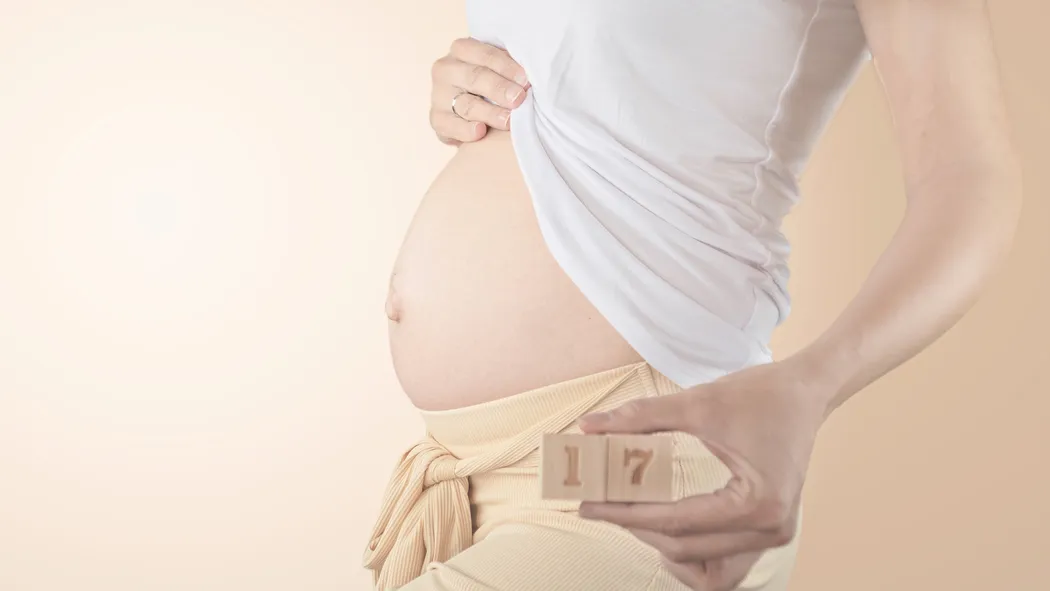
Your 17 Weeks Pregnant Belly


The 17-week pregnant belly is usually visible by now, especially in women who have been pregnant before. For first-time mothers, the bump may still be subtle depending on body type and how the uterus sits. The uterus is roughly the size of a small melon and sits just below the navel.

Weight Gain

Weight gain varies depending on your pre-pregnancy body weight. As a general guide, total gain by this point is typically around 2 to 5 kg for women with a normal pre-pregnancy BMI, though your doctor will give you personalised targets. Gaining steadily matters more than hitting any single number.

Skin Changes

Stretch marks may begin to appear on the abdomen, breasts, hips, or thighs as the skin stretches. Keeping skin moisturised can improve comfort, though stretch marks are largely genetic.

The linea nigra, a dark vertical line running down the centre of the abdomen, commonly appears during the second trimester due to hormonal shifts in pigmentation. It typically fades after delivery.

When to Contact Your Doctor?

Most 17-week pregnancy symptoms are normal, but certain signs need prompt medical attention. Contact your healthcare provider or go to the nearest emergency facility if you notice any of the following:

  • Vaginal bleeding, even if light
  • Severe or persistent abdominal cramping
  • Fever above 38 degrees Celsius
  • Sudden, severe headache with visual disturbances
  • Reduced or absent fetal movement after you have started feeling it regularly
  • Painful urination or other signs of a urinary tract infection
  • Significant swelling of the face or hands, which can indicate a blood pressure problem

Do not wait to see if a worrying symptom resolves on its own. When in doubt, call your doctor.

Contraindications and Precautions

Pregnancy changes how your body processes medicines and herbal products. This section is a general overview and is not an exhaustive list.

  • Avoid any new prescription medicine, over-the-counter drug, or herbal supplement without first checking with your doctor or pharmacist.
  • Non-steroidal anti-inflammatory drugs (NSAIDs) should generally be avoided during pregnancy, particularly in the later stages, unless specifically prescribed.
  • Certain antibiotics, antifungals, antihistamines, and high-dose vitamins carry restrictions during pregnancy. Do not assume a product is safe because it was safe before you were pregnant.
  • Traditional or herbal remedies are not automatically safe in pregnancy. Always disclose everything you are taking at your antenatal appointments.
  • Report adverse events to your healthcare provider or the relevant regulatory authority.

Planning early and reading up on newborn care tips for after delivery is a good way to use the calmer second trimester productively.

Conclusion

At 17 weeks pregnant, your baby is continuing to grow and develop while your body goes through noticeable changes. You may experience round ligament pain, backache, nasal congestion, increased appetite or mild swelling, while fetal movement may begin to become noticeable. Pregnancy experiences vary, so not having a particular symptom or feeling movement yet does not necessarily indicate a problem. Attend your regular antenatal appointments and contact your healthcare professional if you experience bleeding, severe abdominal pain, fever, significant swelling, or other concerning symptoms.

FAQS

Is 17 weeks considered the second trimester?

Yes. The second trimester runs from week 13 through week 26, so 17 weeks falls solidly in the middle of it. Most women find this the most comfortable phase of pregnancy.

What size is the baby at 17 weeks?

At 17 weeks, the baby is roughly the size of a pear, about 13 cm long and weighing around 140 to 150 grams. A 17-week ultrasound can give you a clearer picture of your baby's proportions and development at this stage.

Is it normal to have cramps at 17 weeks pregnant?

Mild cramping, often caused by round ligament pain in pregnancy as the uterus expands, is common and usually harmless. Severe, persistent, or worsening cramping, especially with bleeding or fever, warrants a call to your doctor.

How many months is 17 weeks pregnant?

Seventeen weeks is approximately four months pregnant. Because pregnancy months and calendar months do not align perfectly, your healthcare provider will typically track progress in weeks rather than months.

What should I avoid at 17 weeks pregnant?

Avoid alcohol, smoking, and raw or undercooked foods. Do not take any medicine or supplement, including herbal products, without your doctor's approval. Strenuous or high-impact activity should be discussed with your provider before continuing.

Apollo 247 Floating Action Button