logo
0

4 Weeks Pregnant hCG Levels Twins: Normal Ranges Explained

Learn what 4 weeks pregnant hCG levels in twins may look like, why hCG ranges overlap with singleton pregnancies, how levels are monitored and when ultrasound can confirm twins.

article image

Dr.Kamran

Finding out that you may be carrying twins can bring excitement as well as many questions, particularly when you are looking at your early pregnancy blood test results. If you are tracking 4 weeks pregnant hCG levels in twins, it is important to know that there is no specific hCG level that can confirm a twin pregnancy.

Human chorionic gonadotropin (hCG) rises rapidly during early pregnancy, but levels vary widely between healthy pregnancies. This article explains what hCG measures, how levels are interpreted at around 4 weeks, why twin and singleton levels can overlap and how an ultrasound confirms a multiple pregnancy.

What Is hCG and Why Is It Tested at 4 Weeks?

Human chorionic gonadotropin, or hCG, is a hormone produced by cells that develop into the placenta. It begins to be produced after the fertilised egg attaches to the lining of the uterus.

By around 4 weeks of pregnancy, hCG can usually be detected in the blood. A quantitative beta hCG blood test measures the amount of hCG present and may be used to:

  • Confirm pregnancy
  • Assess very early pregnancy when there is uncertainty about the timing or development
  • Monitor changes in hCG when there are concerns such as ectopic pregnancy or early pregnancy loss
  • Help interpret early pregnancy symptoms or bleeding alongside other clinical findings

hCG levels can be higher in pregnancies with more than one fetus, but this is not always the case. Twin pregnancies can have hCG levels within the range seen in singleton pregnancies.

What Are the Different Types of hCG Tests?

There are two main types of pregnancy tests that measure hCG.

  • A qualitative hCG test gives a positive or negative result. Most home pregnancy tests work this way.
  • A quantitative beta hCG test measures the actual amount of hCG in the blood, usually reported in mIU/mL. This test can be useful when your doctor needs to monitor how hCG changes over time.

A single beta hCG result cannot determine whether you are carrying one baby or twins. Repeated measurements may help assess how an early pregnancy is progressing, but an ultrasound is needed to confirm a multiple pregnancy.

What Are Normal hCG Levels at 4 Weeks?

There is no separate, reliable hCG reference range for twin pregnancies at 4 weeks. Twin and singleton pregnancies have considerable overlap in hCG levels, so a higher result does not by itself indicate twins.

For pregnancy at around 4 weeks, one commonly used clinical reference range is approximately 10 to 708 mIU/mL. However, reference ranges vary between laboratories and can also differ according to how pregnancy is dated.

The following points are important when interpreting an hCG result:

  • A level within the expected range does not rule out twins.
  • A higher-than-expected level does not confirm twins.
  • The exact timing of ovulation and implantation can affect the hCG level.
  • Pregnancy dating based on the last menstrual period may not reflect the exact timing of conception.
  • Results from different laboratories may not be directly comparable because testing methods can differ.

The most important point is that there is no specific 4-week hCG number that can diagnose twins.

How Does hCG Change in Early Pregnancy?

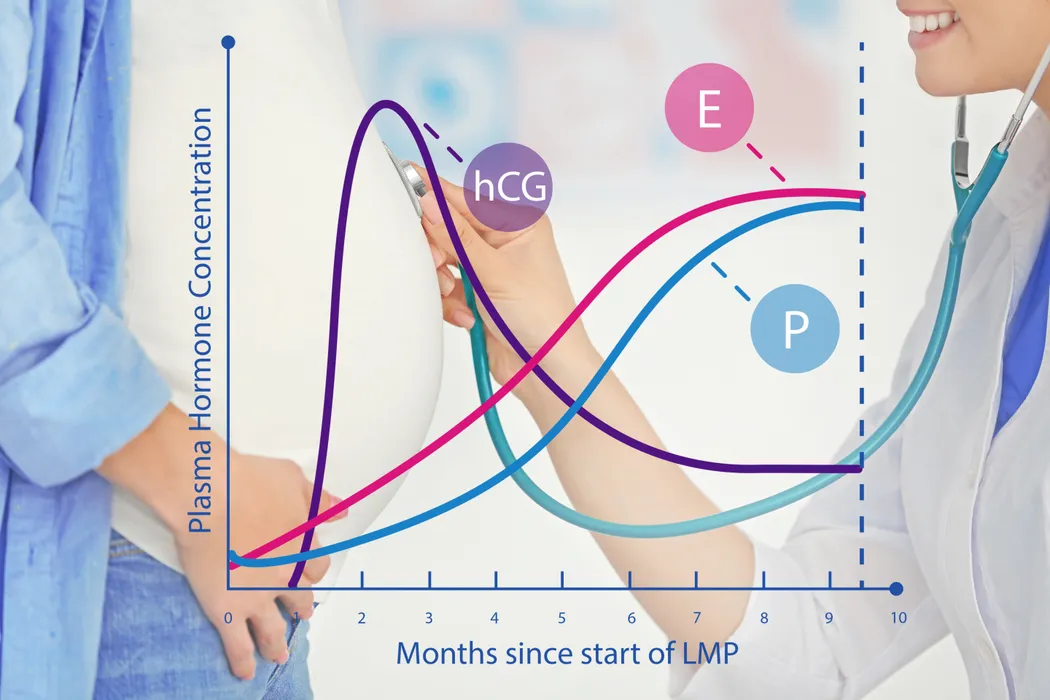
hCG generally rises rapidly during early pregnancy. The rate of increase can provide more information than a single result when your doctor is assessing an early pregnancy.

Your doctor may recommend repeat quantitative beta hCG testing when there is a reason to monitor the pregnancy closely. The tests may be taken about 48 hours apart, depending on your individual circumstances.

It is not accurate to expect hCG to double exactly every 48 hours in every healthy pregnancy. The rate of increase varies, particularly as the hCG level becomes higher.

A slower-than-expected rise, a plateau or a fall in hCG may require further assessment. However, hCG results should always be interpreted alongside your symptoms, gestational age and, when appropriate, ultrasound findings.

Can hCG Levels Tell You If You Are Having Twins?

No. hCG levels alone cannot confirm twins.

Twin pregnancies often have higher hCG levels than singleton pregnancies on average, but the ranges overlap substantially. A person carrying twins may have an hCG level that falls within the usual range for a singleton pregnancy, while a singleton pregnancy may have a relatively high hCG level.

Other factors can also cause hCG levels to vary, including:

  • The timing of ovulation
  • The timing of implantation
  • How far the pregnancy has progressed
  • Natural variation between pregnancies
  • Fertility treatment
  • The laboratory test used

An ultrasound is the appropriate way to confirm a multiple pregnancy and determine the number of gestational sacs and developing embryos. The timing of the scan depends on your clinical situation and how the pregnancy is progressing.

What Are the Early Signs of a Twin Pregnancy?

Some people carrying twins may experience stronger or earlier pregnancy symptoms, such as:

  • More pronounced nausea or vomiting
  • Increased tiredness
  • Greater breast tenderness
  • More noticeable abdominal bloating

However, these symptoms can also occur in singleton pregnancies. Their severity cannot reliably tell you whether you are carrying twins.

Some people with a twin pregnancy have mild symptoms or no unusual symptoms at all. The presence or absence of symptoms does not confirm the number of babies.

When Should You Speak With Your Doctor About Your hCG Results?

Your doctor may want to assess your hCG results further if:

  • Your hCG level is not rising as expected on repeat testing
  • Your hCG level is falling or remains at a similar level
  • You have vaginal bleeding or abdominal or pelvic pain
  • Your hCG result does not match your estimated stage of pregnancy
  • You have undergone fertility treatment and need early pregnancy monitoring

Seek urgent medical attention if you develop severe or one-sided abdominal or pelvic pain, heavy vaginal bleeding, dizziness, fainting or shoulder-tip pain. These symptoms can occur with an ectopic pregnancy and need prompt assessment.

A very high hCG level can have several explanations and does not automatically mean you are carrying twins. Rarely, very high levels may occur with conditions such as a molar pregnancy, which requires medical assessment.

What Precautions Should You Take During hCG Testing?

A beta hCG blood test does not usually require fasting or any special preparation. However, certain factors can affect how your result is interpreted.

  • Tell your doctor if you have recently had a miscarriage, abortion or delivery because hCG may remain detectable for some time afterwards.
  • Tell your doctor if you are receiving fertility treatment, particularly medicines that contain hCG, as these can temporarily increase the measured level.
  • Make sure your doctor knows the date of your last menstrual period and any known information about ovulation or embryo transfer.
  • If you have your tests repeated, using the same laboratory where possible can make changes in results easier to interpret.
  • Do not try to interpret a single hCG result as proof of twins or as confirmation that a pregnancy is progressing normally.
  • Do not assume that a high or low hCG level alone means that something is wrong. Your doctor will consider the result alongside your symptoms and other findings.

Conclusion

At 4 weeks of pregnancy, hCG levels can vary widely between healthy pregnancies. Although hCG may be higher on average in twin pregnancies, there is no specific hCG level that can confirm twins, and twin and singleton results can overlap considerably.

If your doctor recommends repeat beta hCG testing, the change in levels over time can provide useful information about an early pregnancy. An ultrasound is needed to confirm whether you are carrying twins. If you experience severe abdominal or pelvic pain, heavy bleeding, dizziness or fainting, seek medical attention promptly.

FAQS

What hCG level indicates twins at 4 weeks?

There is no specific hCG level that indicates twins at 4 weeks. Twin pregnancies can have higher hCG levels on average, but the range overlaps substantially with singleton pregnancies. An ultrasound is needed to confirm a twin pregnancy.

Can hCG levels be normal and still have twins?

Yes. A twin pregnancy can have an hCG level that falls within the usual range for a singleton pregnancy. hCG levels vary considerably between pregnancies, so a result within a typical range does not rule out twins.

Does a high hCG level always mean twins?

No. A high hCG level can occur in a normal singleton pregnancy and can also be influenced by the timing of pregnancy, fertility treatment or, rarely, certain pregnancy-related conditions. A high result alone cannot confirm twins.

How often should hCG be tested in early pregnancy?

Your doctor may recommend repeat beta hCG testing about 48 hours apart when monitoring an early pregnancy. The timing depends on your symptoms, initial result and medical history. Not every pregnancy requires serial hCG testing.

When can an ultrasound confirm twins?

An ultrasound can confirm a multiple pregnancy once the pregnancy is developed enough for the number of gestational sacs and embryos to be assessed. The appropriate timing varies depending on your individual circumstances, so your doctor can advise when an ultrasound is most useful.

Apollo 247 Floating Action Button